Best Table Saws for Cutting Large Solid-Wood Tabletops
What's inside
As an Amazon Associate I earn from qualifying purchases. This post may contain affiliate links at no extra cost to you.
Cutting a large solid-wood tabletop on a table saw is less about maximum horsepower than control. A 30-inch-wide, 8-foot slab can weigh more than 100 pounds, and it becomes awkward long before the saw runs out of power. The best setup keeps the panel flat, supports it before and after the blade, and lets you make a straight cut without pushing the work sideways into the fence.
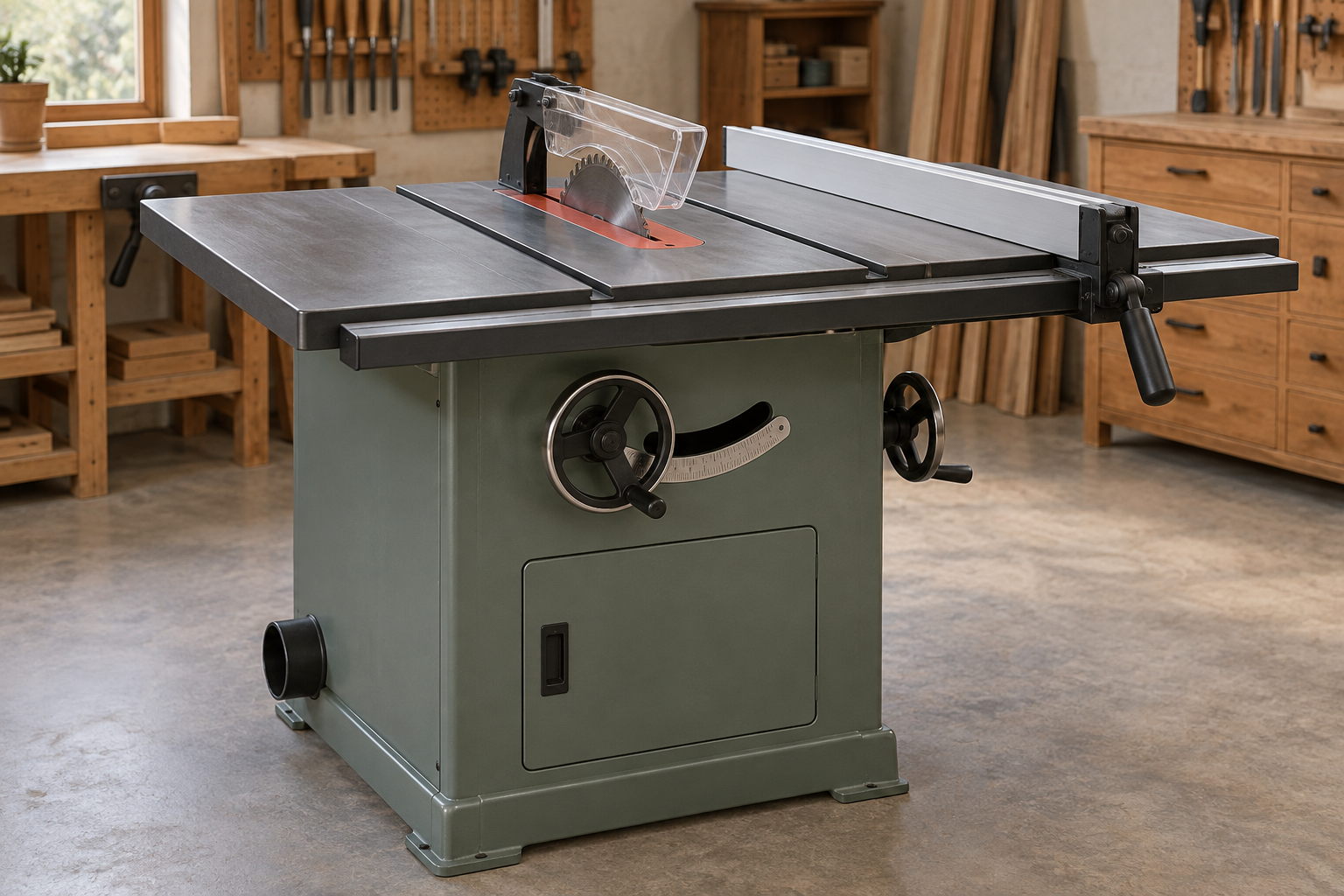
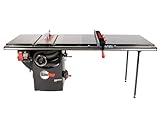
For most furniture builders, the right choice is a well-equipped cabinet saw or a sturdy hybrid saw with a 3-hp motor, at least 50 inches of rip capacity, a reliable fence, and substantial outfeed support. A contractor-style saw can work, but only if you add careful support and accept slower, more deliberate cuts.
As an Amazon Associate we earn from qualifying purchases at no extra cost to you.

Contents
What matters most for large tabletops
Rip capacity is not the same as usable capacity. A saw advertised with 50 inches of rip capacity may technically cut that far, but the tabletop still needs room to sit squarely on the left side of the blade and remain supported on the right. A 36-inch rip fence is adequate for many dining tables; 50 inches is more comfortable for wide panels and oversized work.
The table surface should be flat and long enough to prevent the workpiece from tipping as it passes the blade. Cast iron is excellent for stability, but a small table can be extended with a properly aligned outfeed table. Aim for at least 24 inches of outfeed support, and more for an 8-foot tabletop. Side support is equally important. A roller stand placed too close to the saw can steer the panel upward or sideways, so a fixed support wing or large auxiliary table is usually better.
A 3-hp cabinet table saw with a 50-inch fence is the most capable general-purpose option. It has enough power for thick hardwood, stays planted during a cut, and usually accepts a dependable fence system. A 1-3/4-hp hybrid saw is cheaper and can be entirely adequate for tabletops under roughly 1-1/2 inches thick, especially when using a sharp combination or ripping blade.
Table saw types compared
| Type | Best use | Strengths | Limitations |
|---|---|---|---|
| Cabinet saw, 3 hp | Frequent hardwood furniture work | Stable, powerful, accurate, strong dust collection | Heavy, expensive, often needs 240-volt power |
| Hybrid saw, 1-3/4 to 2 hp | Home shops and occasional tabletops | Good value, usually 120-volt, smaller footprint | Less reserve power and lighter construction |
| Contractor saw | Budget shops and portable setups | Lower price, easier to move, adequate for moderate stock | More vibration, weaker stands, less convenient wide-panel support |
| Jobsite saw | Construction and small parts | Portable and inexpensive | Narrow table, limited rip capacity, poor choice for large tabletops |
Features worth paying for
The fence is the most important component after the blade. It should lock firmly at the front and stay parallel to the miter slot. A fence that shifts by 1/16 inch over a long cut can pinch the workpiece, burn the edge, or produce a visibly tapered tabletop. Check the fence with a tape measure at the front and rear of the blade before making a wide cut.
Look for a riving knife that stays aligned with the blade and can be used with the guard removed for covered cuts. Solid wood can close on a blade because of internal stress, particularly when ripping near the pith or through wet stock. A riving knife reduces the chance of kickback. Never remove it simply because a cut feels routine.
Dust collection matters more than many buyers expect. A cabinet saw with an enclosed base and a 4-inch dust port captures much more debris than an open contractor stand. Fine dust from walnut, oak, and exotic species is a health concern, and a large tabletop can generate several minutes of continuous cutting. Use a dust collector capable of moving roughly 500 CFM at the machine, not just a small shop vacuum.
A quality table saw outfeed support system can be a better investment than upgrading from a good hybrid saw to a cabinet saw. The support must be level with, or just slightly below, the saw table. If it is high, the tabletop can lift as it exits; if it is low, the trailing end can drop and lever the leading edge into the blade.
Blade choice and setup
Use a sharp 10-inch, 24-tooth ripping blade for long cuts in thick hardwood, or a high-quality 40- to 50-tooth combination blade when the same blade must crosscut and rip. A ripping blade generally feeds more easily and produces less heat. A dull blade is a common cause of burning, wandering, and dangerous pushing force.
Set the blade height so the gullets are just above the tabletop, with the blade extending about 1/8 to 1/4 inch above the workpiece. Excessive height increases exposed tooth area and can worsen kickback. Before cutting, flatten or joint one reference edge. The fence cannot correct a bowed edge; it will simply reproduce the bow in the cut.
For a wide tabletop, make the first cut a shallow scoring or cleanup pass if the edge is rough, then make the full-depth cut. Do not try to force a bowed slab against the fence in one pass. A straightedge and circular saw may be safer for establishing the first reference edge, after which the table saw can finish parallel cuts.
When a cheaper saw is enough
A hybrid saw is the sensible buy when you build a few tables a year, work mostly with boards up to 1-1/2 inches thick, and have room for temporary infeed and outfeed tables. Spend the savings on a better fence, a flat support table, a sharp blade, and dust collection. Those upgrades directly affect the cut.
Choose a cabinet saw when you routinely process 8/4 hardwood, glue-up panels wider than 30 inches, or long stock that makes a lightweight saw move. Cabinet saws also tend to have better trunnions, smoother height adjustment, and more durable alignment. If your shop has only ordinary 120-volt circuits, confirm the saw’s electrical requirements before buying; a 3-hp machine may need a dedicated 240-volt circuit.
Whatever saw you choose, plan the workflow before switching it on. Support the panel, check blade and fence alignment, use push devices once your hands approach the blade, and have a helper support—not pull—the far end. If the tabletop is too large to control comfortably, break down the panel with a track saw and guide rail kit first. A smaller, controlled cut is preferable to forcing a massive workpiece through an undersized saw.