Best Router Table Combos for Accurate, Space-Saving Routing
What's inside
- Quick picks by workshop situation
- What separates a useful router table combo from a cheap table
- Head-to-head: compact table, full-size system, or included-router kit?
- Storage footprint and the real cost of ownership
- Setup details that improve accuracy
- Durability issues buyers often overlook
- Is a router table and saw combo a good idea?
- Related Guides
- Quick picks by workshop situation
- What separates a useful router table combo from a cheap table
- Head-to-head: compact table, full-size system, or included-router kit?
- Storage footprint and the real cost of ownership
- Setup details that improve accuracy
- Durability issues buyers often overlook
- Is a router table and saw combo a good idea?
- Related Guides
As an Amazon Associate I earn from qualifying purchases. This post may contain affiliate links at no extra cost to you.
The best router table combo for most woodworkers is a 24-by-32-inch benchtop system with a rigid fence, a lift or above-table height adjustment, and a cabinet or folding base that keeps the footprint below roughly 6 square feet; choose a smaller Bosch-style table for portability, a Kreg-style system for fence and accessory flexibility, or a router-and-table kit when you do not already own a compatible router.
As an Amazon Associate we earn from qualifying purchases at no extra cost to you.


Contents
- Quick picks by workshop situation
- What separates a useful router table combo from a cheap table
- Head-to-head: compact table, full-size system, or included-router kit?
- Storage footprint and the real cost of ownership
- Setup details that improve accuracy
- Durability issues buyers often overlook
- Is a router table and saw combo a good idea?
- Related Guides
Quick picks by workshop situation
| Situation | Best type of router table combo | Why it fits | Main compromise |
|---|---|---|---|
| Limited bench space | Compact benchtop table, such as the Bosch RA1181 | About 27 × 18 inches and easy to store on a shelf | Less support for large panels and long workpieces |
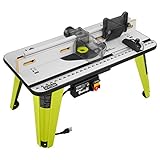
| Frequent furniture and cabinet work | Full-size system such as the Kreg Precision Router Table System | Approximately 24 × 32 inches, substantial fence, and better workpiece support | Needs a permanent or semi-permanent storage position |
| Occasional trim and edge routing | Small table with an existing compact router | Lower cost and quick setup for roundovers, rabbets, and chamfers | Limited bit capacity and less stable height adjustment |
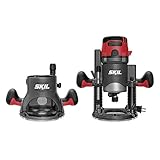
| No router yet | Router-and-table kit, such as the SKIL RT1323-01 | One purchase supplies the motor, table, fence, and basic accessories | Included routers and lifts usually offer less upgrade flexibility |
| Router and table must share a small shop | Foldable or benchtop table with a wall shelf or rolling cart | Can be stored vertically and brought out only when needed | Every setup requires alignment and dust-hose connection |
What separates a useful router table combo from a cheap table
Table size and rigidity
A table around 24 × 32 inches is a useful middle ground. It supports cabinet rails, narrow panels, and ordinary joinery without becoming difficult to store. Smaller tables around 18 × 27 inches are adequate for trim and molding, but a wide board can tip or lose contact with the fence before the cut is complete.
Look for a flat top made from cast aluminum, machined aluminum, or thick laminated MDF. Steel legs or a braced cabinet matter as much as the top material: vibration can leave ripples on an otherwise correctly set cut. A 1-inch MDF top is serviceable, but it needs protection from moisture and should be checked periodically for sagging.
Fence adjustability
The fence should move parallel to the miter slot and hold its setting without relying on hand pressure alone. Independent left and right fence faces are valuable because they let you close the opening around a small bit, compensate for a bearing, or set one face forward for a jointing-style cut.
Micro-adjustment is not essential for occasional work, but it becomes worthwhile when cutting repeated rabbets, cope-and-stick profiles, or drawer parts. A split fence with approximately 3 inches of height and at least 24 inches of usable width is a practical target. Avoid a fence that flexes when you press a board against it; that error transfers directly to the workpiece.
Router compatibility and lift quality
A router table with combo features is only useful if your motor fits its insert plate or lift. Full-size fixed-base and plunge routers commonly weigh between 7 and 13 pounds and often need a dedicated plate or compatible lift. Compact 1- to 1-1/4-horsepower routers are easier to mount but may not have enough power for large panel-raising bits.
The Kreg Precision Router Table System is designed around a separate router and insert plate, giving owners more choice, while the Bosch RA1181 accepts many common fixed-base routers through its mounting hardware. The SKIL RT1323-01 combines a table with a 10-amp router, which simplifies initial setup but makes the included motor the center of the system.
A true lift is preferable when the router will remain mounted. It allows bit-height changes from above the table and reduces the need to reach under the top. Check three details before buying: the lift’s motor-diameter range, whether your collet reaches above the table, and whether replacement insert rings are available. A lift that fits only one discontinued motor can turn a modest upgrade into a replacement project.
Dust collection
For cleaner cuts, the fence should have a 2-1/2-inch dust port, and a cabinet-style base should either have a second port or enough openings to pull air through the enclosure. A fence port alone captures chips from the bit area; a cabinet port also helps collect dust that falls below the table.
Use a dust extractor or shop vacuum with a separator when possible. Fine MDF dust fills filters quickly, and a clogged filter reduces airflow more than a larger hose can compensate for. Do not seal every opening around a table: a small amount of controlled makeup air helps maintain suction.
Head-to-head: compact table, full-size system, or included-router kit?
Compact benchtop system
The Bosch RA1181 represents the compact-table approach. Its approximately 27 × 18-inch work surface and aluminum top suit a small shop, jobsite-style storage, and edge profiles on modest boards. It is a sensible choice when the table will be put away after nearly every use.
The tradeoff is support. Long boards can hang beyond the table, and the fence offers less room for wide workpieces than a cabinet-sized system. Add an outfeed support or a level auxiliary table if you routinely route stock longer than about 36 inches.
Full-size modular system
The Kreg Precision Router Table System is the stronger choice for regular furniture work. Its approximately 24 × 32-inch top gives better support, while the split fence and modular insert arrangement make it easier to tune the opening and add accessories.
This configuration is best when you already own a suitable router and expect to use the table weekly. Its larger footprint is not wasted space if it prevents repeated setup errors. It is wasted space if it remains folded against a wall and is used twice a year.
Router-and-table kit
A kit such as the SKIL RT1323-01 can be attractive for a first-time buyer because the router, table, fence, miter gauge, and basic accessories are selected to work together. The value is highest when the alternative is buying every component separately.
Before choosing this route, inspect the height-adjustment method and the replacement-parts situation. If the router is permanently mounted but height changes require reaching underneath, the initial convenience may become frustrating during repeated operations.
Storage footprint and the real cost of ownership
Measure the stored footprint rather than the working footprint. A 24 × 32-inch top occupies about 5.3 square feet, but a fence, dust hose, and removable legs can require a storage volume closer to 28 × 36 inches. A folding stand saves floor area, yet it still needs a flat place where the top will not be damaged.
As a simple cost-per-use check, suppose a complete setup costs $300 and you expect 60 routing sessions over three years. The equipment cost is $5 per session before bits, electricity, and maintenance. If a cheaper $150 table encourages only 15 sessions because alignment is slow, its effective equipment cost is $10 per session. The more expensive system can be the economical choice when it is faster to set accurately.
Setup details that improve accuracy
- Level the insert plate with the tabletop. A plate that sits even 0.5 mm high can tilt a narrow board as it crosses the opening.
- Center the bit opening. Use the smallest suitable insert ring so the workpiece has maximum support near the cutter.
- Square and lock the fence. Measure from the miter slot to both ends of the fence; equal readings are more reliable than visual alignment.
- Set the bit height with a gauge. A setup block or digital height gauge makes repeated parts more consistent than estimating from a ruler.
- Make shallow passes. For hardwood, several passes of roughly 3 to 6 mm are usually easier on the router and produce a cleaner edge than one deep pass.
- Connect dust collection before switching on. Chips around the fence can interfere with the workpiece and obscure the cut line.
Durability issues buyers often overlook
The first parts to wear are commonly insert rings, fence faces, featherboard pads, collets, and the switch or power-cord connection—not the tabletop itself. Keep spare rings for the bit diameters you use most, replace damaged MDF fence faces, and inspect the collet for resin buildup. Never force a bit into a dirty collet; poor seating can create runout and vibration.
Waxing a metal tabletop can reduce friction, but keep wax away from unfinished work that will later be glued or finished unless you clean it thoroughly. Vacuum the cabinet and motor vents regularly, and check mounting screws after the first several sessions because vibration can loosen them.
Is a router table and saw combo a good idea?
A router table and saw combo can save space, but it is rarely the best choice for both operations. A table-saw-mounted router extension may be convenient for occasional edge work, yet it can provide less router support, less dust containment, and slower conversion between sawing and routing. Choose it when floor space is the overriding constraint. Choose a dedicated wood router table combo when accurate fence settings, repeatable bit height, and frequent routing matter more than having one shared machine.
In short, buy the smallest system that gives your longest workpieces stable support. Prioritize a rigid, independently adjustable fence and compatible above-table height adjustment before decorative accessories. Those two features determine whether the table remains a useful precision tool or becomes another piece of equipment that takes longer to set up than the cut itself.