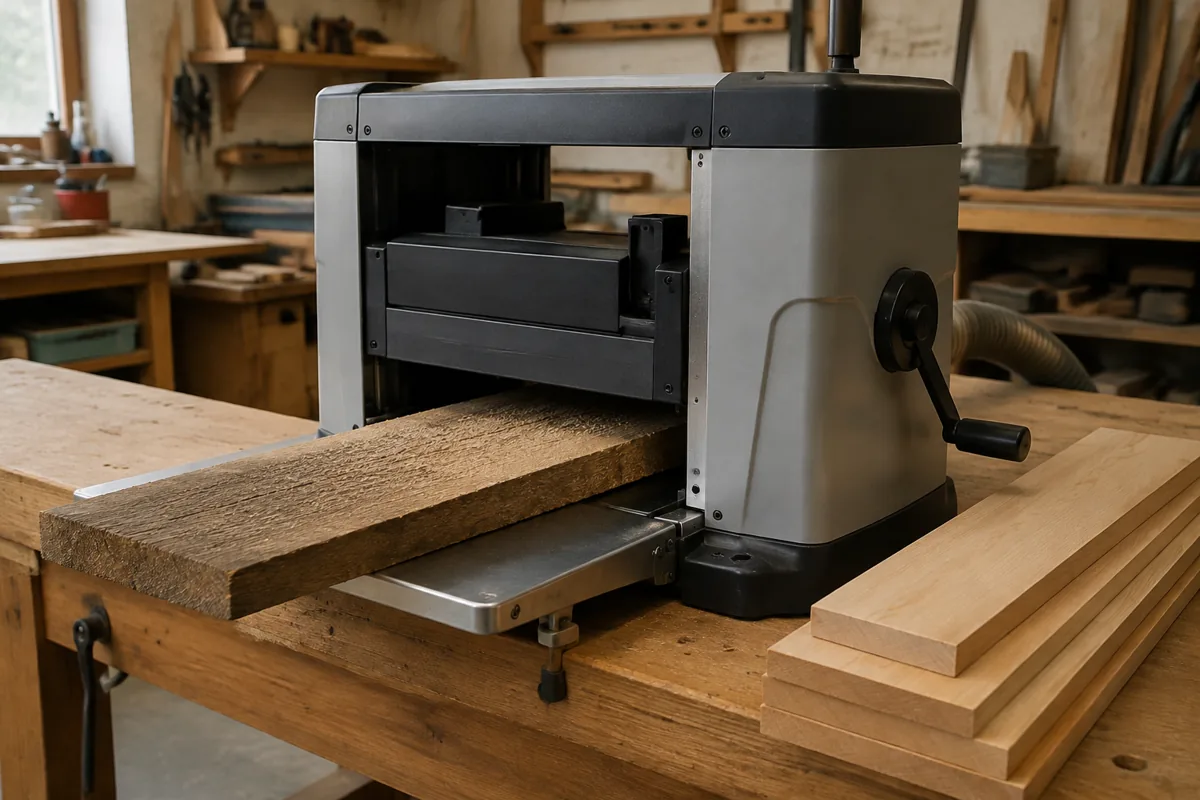
Best Planers for a Dedicated Hardwood Milling Station
What's inside
As an Amazon Associate I earn from qualifying purchases. This post may contain affiliate links at no extra cost to you.
A dedicated hardwood milling station needs more than a wide cutter. You need enough motor and feed capacity to take repeatable cuts without stalling, plus a way to handle long, heavy boards safely. For most small shops, the practical choice is a 15-inch, three-knife stationary planer. A two-speed model is useful if you regularly need a finer finish; a helical cutterhead is a worthwhile upgrade if you plane figured wood or value quieter operation. Neither feature can compensate for poor setup or dull knives.
Contents
Choose by workload, not the largest board you own
Start with the stock you mill most often. A 12-inch planer can do good work on narrower boards and costs less, but it cannot flatten a wider panel in one pass. A 15-inch machine covers more furniture stock and is a sensible size for a dedicated station. A 20-inch planer makes sense when wide slabs or production work are routine; it takes more floor space, demands more electrical capacity, and raises the cost of knives and handling equipment.
Width is only part of the decision. Check the machine’s maximum thickness, minimum practical thickness, cutterhead speed, feed rates, and the manufacturer’s stated motor requirements. A typical 15-inch class machine may need a 220–240-volt circuit, but verify the manual before buying. A planer that fits the stock but cannot be wired in your shop is not a bargain.
Compare the main stationary options
| Planer type | Best fit | Trade-off |
|---|---|---|
| 12-inch benchtop | Small shops and boards that stay under about 12 inches wide | Lower cost and easier to place; less capacity and typically less mass for heavy cuts |
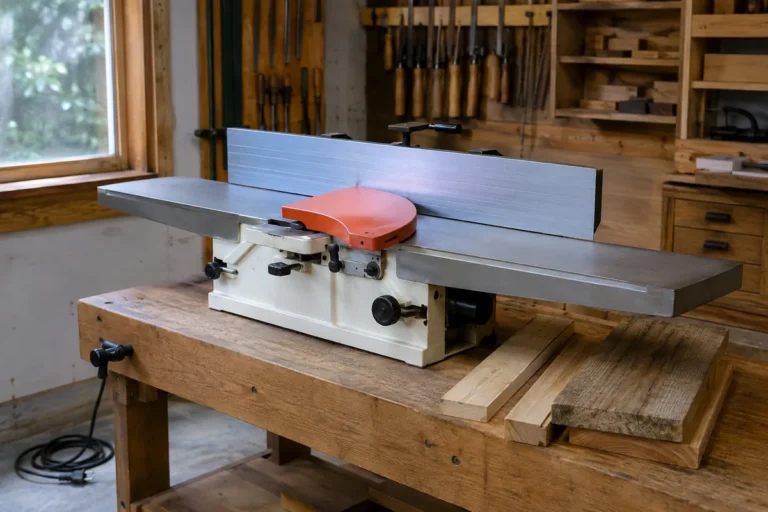
| 15-inch, three-knife | General furniture stock and regular hardwood milling | Strong value and straightforward knife changes; knives need periodic sharpening or replacement |
| 15-inch with helical head | Figured wood, lower noise, and users who prefer indexed inserts | Higher purchase price; damaged inserts can leave small defects and still require attention |
| 20-inch or wider | Wide stock and frequent production work | More capacity, but greater cost, electrical demands, and material-handling needs |
If most of your boards are 6 to 10 inches wide, a 15-inch planer may still be worth buying for headroom, but it will not automatically produce a better surface than a well-tuned 12-inch machine. Compare 12-inch benchtop thickness planers only if their width and duty cycle genuinely fit your work.
Knife or helical cutterhead?
Conventional straight knives cut cleanly when sharp and aligned. They are usually the cheaper route to buy, and replacement knives are simple to source. The downside is that a nick in a knife can leave a raised line along the board; a dull set can tear out figured grain and force you to spend more time sanding.
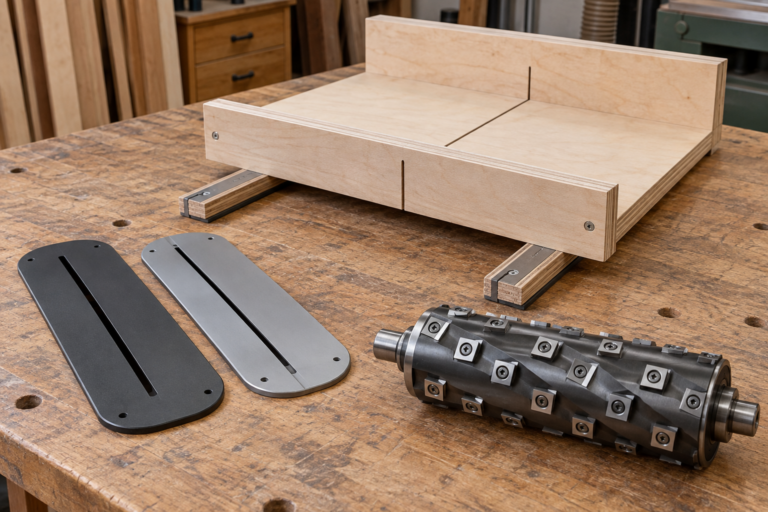
Helical heads use small indexed inserts arranged around the cutterhead. They tend to run quieter and can reduce tear-out on difficult grain, though results depend on feed direction and wood condition. If an insert chips, rotate or replace the affected insert rather than changing a full-width knife set. The extra cost is easiest to justify for frequent use, figured hardwood, or a shop where knife changes are a nuisance. For ordinary straight-grained boards and occasional milling, sharp straight knives are fine.
Look at feed rates and cut quality
Many stationary planers offer a faster feed for general dimensioning and a slower feed for more cuts per inch and a finer finish. A slower setting helps reduce visible scallops, but it does not fix tear-out caused by reversing grain. If a two-speed machine costs substantially more and you will sand or scrape every board anyway, the simpler single-speed option may be enough.
Plan on taking light passes in hardwood. Start around 1/32 inch per pass, then adjust to the machine’s instructions and the width and hardness of the stock. A deep cut across a wide board can bog the motor, leave a rough surface, or trigger snipe at the ends. Keep boards moving at a steady pace; forcing short or uneven stock through the rollers is a common way to get inconsistent results.
Budget for support, dust, and snipe control
A planer needs a stable stand, clear infeed and outfeed space, and dust collection. Chips accumulate quickly: a 15-inch machine can overwhelm a small shop vacuum during a long milling session. Check the dust-port diameter and collector requirements before purchase, and route a hose that will not catch long boards. A dedicated 15-inch planer with a helical cutterhead is appealing, but only if your electrical supply, dust system, and space can support it.
Snipe is a deeper cut near the board’s leading or trailing end. It is often caused by pressure changes as the board enters or leaves the rollers, and can be made worse by poor table setup. Support long stock level, keep the planer bed clean and waxed if the manual allows it, and feed boards end to end when practical. Leave extra length for trimming when the project permits. Do not count on extension rollers alone to eliminate snipe.
A practical buying checklist
Before ordering, confirm the planer’s actual capacity, voltage, breaker requirements, included knives or inserts, replacement-part availability, and warranty service in your area. Ask how the machine is shipped: a heavy stationary planer may arrive on a pallet and need more than one person or lifting equipment to unload. Also check whether the stand, mobile base, and extension tables are included or sold separately.
For regular hardwood milling, compare 15-inch three-knife thickness planers against helical-head alternatives at the price of replacement knives and inserts, not just the purchase price. If you are still building out the shop or mostly process narrow stock, a less expensive 12-inch stationary thickness planer can be the sensible choice. Buy enough capacity for the stock you routinely mill, then spend the remaining budget on sharp cutters, dust collection, and safe infeed and outfeed support.