Best Planers for Milling Dense Exotic Hardwood Stock
What's inside
As an Amazon Associate I earn from qualifying purchases. This post may contain affiliate links at no extra cost to you.
Contents
What dense wood demands from a planer
Planing dense exotic hardwood is less about chasing the biggest horsepower number and more about keeping the cutterhead engaged without crushing fibers, overheating edges, or feeding the board inconsistently. Species such as ipe, jatoba, and ebony vary in hardness and grain, but all can punish dull knives and weak feed systems. A planer that handles ordinary maple may still produce tear-out, chatter, or stalled stock when the cut is too deep.
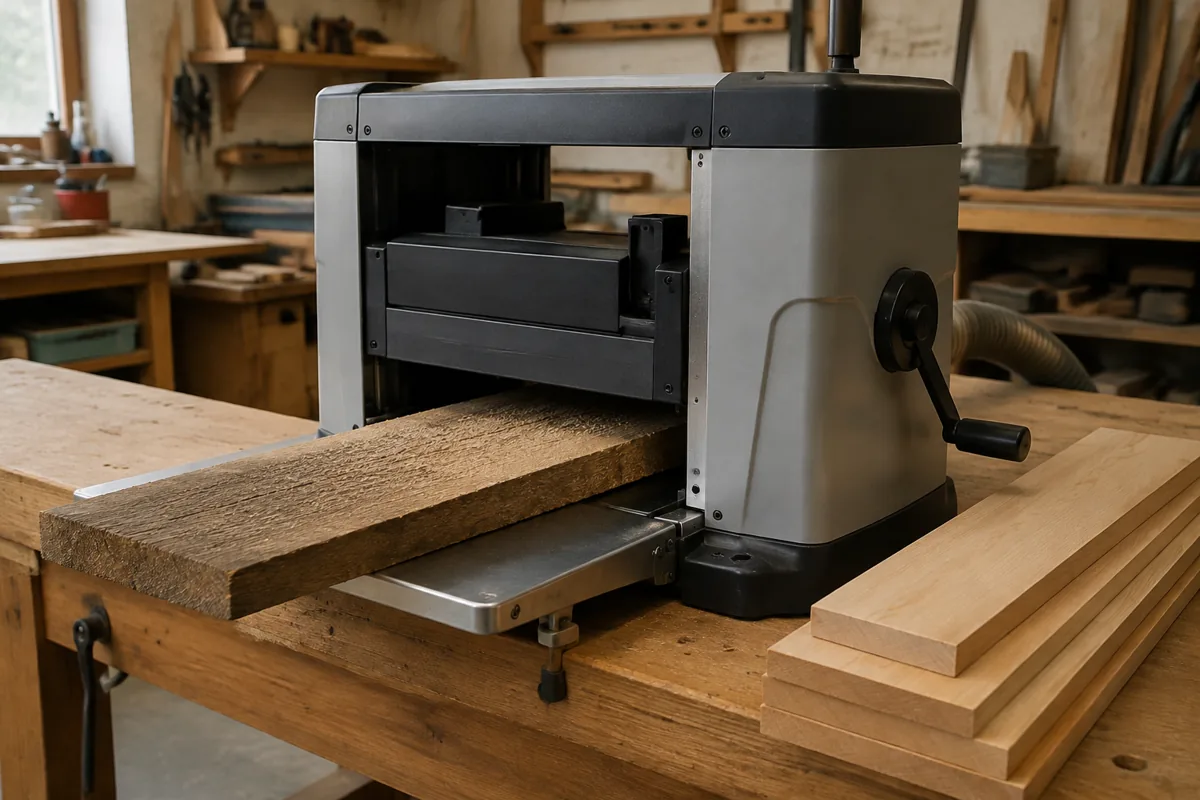
For most home shops, a well-built 15-inch stationary planer is the practical starting point. Look for a cutterhead with replaceable inserts or readily available knives, a solid feed mechanism, and enough capacity to handle the widths you actually mill. Dense stock is usually best planed in shallow passes: start around 1/32 inch, then adjust based on the species, grain, and machine. On a modest machine, even 1/64-inch passes can be the sensible choice.
Planer types and their trade-offs
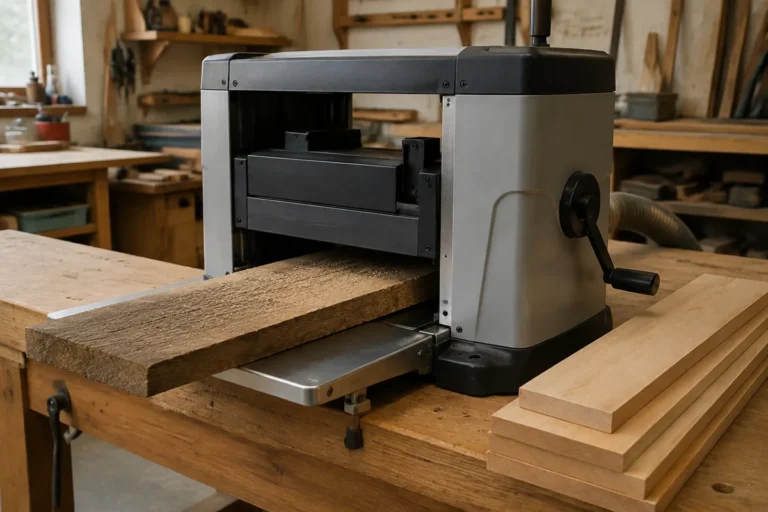
Benchtop planers are affordable and compact, and can do good work on narrow stock. Their lighter frames and shorter beds make them less forgiving with wide, heavy boards. A 15-inch floor planer has more mass and bed support, and is a better fit for repeated milling or boards near its full capacity. Larger industrial machines offer more capacity and power, but cost, space, electrical requirements, and dust collection become significant constraints.
| Planer type | Best fit | Limitations with dense stock |
|---|---|---|
| Benchtop, straight knives | Occasional work and narrower boards | More vibration and knife maintenance; shallow cuts are important |
| 15-inch stationary, straight knives | Regular shop use with moderate-width stock | Knives need sharpening or replacement, and grain can still tear out |
| 15-inch stationary, helical or spiral head | Frequent hardwood milling and reduced tear-out | Higher purchase cost; inserts still need rotation or replacement |
| Wide industrial planer | Production work and broad panels | High cost, floor-space needs, and often demanding power requirements |
Choose the cutterhead for your work
Straight knives are a reasonable budget choice if you plane dense wood occasionally, keep the knives sharp, and can accept more noise and maintenance. They can leave a clean finish, but dull edges quickly show as raised grain, burnishing, or rough streaks. Check knife availability and adjustment design before buying; a cheap machine is less of a bargain if replacement knives are hard to source.
Helical or spiral cutterheads use small carbide inserts. When one edge gets nicked, you can rotate or replace that insert rather than sharpen and align a full knife. The staggered cutting action often reduces tear-out and sounds less harsh, though it does not eliminate tear-out on reversing grain. Inserts cost more than a basic knife set, and a damaged insert can leave a repeating mark until you find and address it. Compare 15-inch helical-head planers if dense hardwood is a regular part of your workload.
What to check before buying
Confirm the machine’s maximum width and thickness, but also look at the feed rate, bed length, and support at both ends. A board that technically fits may be difficult to control if it is long, heavy, or prone to sagging. Infeed and outfeed tables or roller stands help prevent snipe and keep the board moving level.
Do not treat motor horsepower as a guarantee of performance. Manufacturers may state ratings in different ways, and the cutterhead, feed rollers, and frame affect results just as much. Check the machine’s electrical requirements and make sure your shop circuit can support them. Dense hardwood creates a heavy chip load; a dust collector and ductwork sized for the planer’s port are important for safe, consistent feeding. A clogged hood can pack chips around the cutterhead and spoil the cut.
If you are choosing between price and cutterhead convenience, a 15-inch straight-knife planer can be fine for occasional, narrow stock. Spend more for a helical head if you regularly mill figured or reversing-grain wood, or if knife changes and sharpening are a recurring bottleneck.
How to mill dense exotic stock
Start with dry, clean, metal-free stock. Check moisture content with a meter and bring boards close to the shop’s working conditions before final sizing; a planer cannot prevent movement caused by later moisture changes. Inspect for grit and embedded metal, which can ruin knives or chip carbide. Remove loose bark and unstable knots, and do not feed stock that is too short for the machine’s minimum-length guidance.
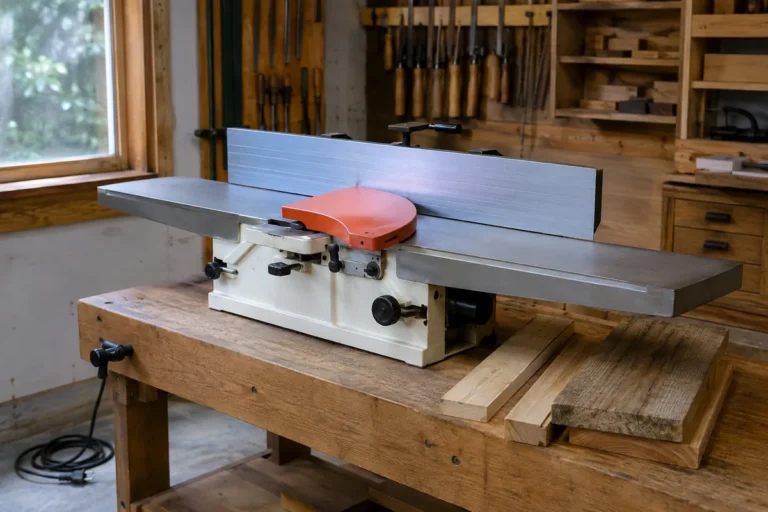
Joint one face flat first, then plane the opposite face parallel. A thickness planer is not a reliable way to flatten a bowed or twisted board: rollers press the board down during the cut, and it can spring back out of shape afterward. Take light passes, especially across figured grain, and listen for slowing feed or a change in motor sound. If the machine labors, reduce the cut depth rather than forcing the stock.
Sharp edges matter more than aggressive depth. If a pass leaves burnishing or fuzzy fibers, inspect the cutterhead, lower the depth, and check that the board is supported. For severe tear-out, change the planing direction if the grain allows, use a fresh or rotated edge, or leave a small finishing allowance for a drum sander or hand plane. Do not keep feeding a board that stalls or slips: that can leave deep gouges and put unnecessary strain on the rollers and drive system.
Match the machine to your workload
For occasional small projects, a sound benchtop planer with sharp knives and careful, shallow cuts can be enough. For regular hardwood milling, a stationary 15-inch machine gives better support and is usually the more useful long-term purchase. A helical head makes sense when reduced tear-out and simpler edge maintenance justify the added cost, not simply because the wood is exotic. Buy for the widest and most frequent stock you expect to process, and budget for sharp cutters, dust collection, and safe board support.