
Key takeaways
- The best coping saws for crown molding, scribe joints and tight curves, compared by frame depth, blade type, tensioning and handle comfort for buyers.
What's inside
As an Amazon Associate I earn from qualifying purchases. This post may contain affiliate links at no extra cost to you.
- Top Pick: KATA 6.5-Inch Coping Saw
- Runner-up: IRWIN Tools ProTouch Coping Saw (2014400)
- Also consider: Mutt Tools Coping Saw for Woodworking
A coping saw earns its place in the shop with one job no other hand saw does as well: cutting the profile of one molding into the end of another so inside corners close tightly, even when walls are not perfectly square. The same thin, tensioned blade also steers through tight curves, clears dovetail waste and makes interior cutouts in thin stock. The frame matters just as much: throat depth decides how far from an edge a cut can start, frame stiffness decides whether the blade stays taut or wanders, and the handle decides how your hand feels after a long run of baseboard corners.
As an Amazon Associate, we earn from qualifying purchases.
This guide compares five coping saws covering the main frame and blade combinations on the market: standard-depth frames, fine and coarse pin-end blades, rotating blade holders for angled coping cuts, and one abrasive-wire specialist for hard, brittle material. Each pick lists the specifications that actually differ between models.
This guide includes affiliate links, and purchases made through them may earn a commission at no additional cost to you.
Contents
Quick Answer
For most trim work, the KATA 6.5-inch coping saw is the easiest recommendation: six blades in three tooth counts, a rigid steel frame and a grippy TPR handle. The IRWIN ProTouch suits long coping sessions, the Mutt Tools saw adds full blade rotation, the Homoyoyo set covers light multi-material cutting, and the SUBRILLI diamond-wire frame handles stone, ceramic and glass.
KATA 6.5-Inch Coping Saw
The KATA is built around blade variety. The set includes six replaceable 65Mn steel blades in 14, 18 and 24 TPI, spanning the range trim work needs: the 14 TPI blade removes waste quickly when roughing out a cope, the 18 TPI blade is the everyday choice for baseboard and casing profiles, and the 24 TPI blade leaves a cleaner edge on fine molding where tear-out shows. Swapping between them is a pin-end change, so one frame covers rough and finish cuts.
The rigid steel frame holds tension well enough that the blade tracks instead of bowing on longer strokes, and the TPR grip gives a secure hold when hands get dusty. The listing rates the saw for wood, plastic and soft metals, with hard metal use excluded. For a saw that copes crown molding one day and cuts a curved bracket the next, this is the most complete package of the five.
Specs
- Blade length: 6-1/2 in
- Blades included: 6 replaceable blades (14, 18 and 24 TPI)
- Blade material: 65Mn steel
- Blade end type: Pin end
- Frame: Rigid steel
- Frame depth: not stated
- Handle: TPR grip
- Materials: Wood, plastic and soft metals
View the KATA 6.5-Inch Coping Saw on Amazon
IRWIN Tools ProTouch Coping Saw (2014400)

The IRWIN ProTouch is the traditional job-site coping saw, designed for stiffness and comfort. The flat-bar frame resists the twisting that makes round-wire frames feel vague in a cut, and DuraSteel pins hold the blade ends positively so tension stays where it was set. The fitted blade is high-speed steel with a 17-point tooth count, a fine pitch that suits trim profiles and leaves a smooth coped edge on painted molding.
Frame depth is 5-1/2 inches, squarely in standard territory: enough for coping work near an edge and most curve work in furniture parts, without the flex a deeper frame can introduce. The triangular ProTouch handle spreads pressure across the palm instead of concentrating it in the fingers, which matters on long trim sessions. A lifetime warranty backs the frame.
Specs
- Blade length: 6-1/2 in
- Blade: High-speed steel, 17-pt tooth count
- Frame: Flat-bar steel
- Frame depth: 5-1/2 in
- Blade retention: DuraSteel pins
- Handle: ProTouch ergonomic triangular grip
- Warranty: Lifetime
View the IRWIN Tools ProTouch Coping Saw on Amazon
Mutt Tools Coping Saw for Woodworking
The Mutt Tools saw adds the feature coping work benefits from most: the blade rotates a full 360 degrees in the frame. When a coped cut runs at an angle to the molding, or an interior cutout forces the frame into an awkward position, rotating the blade keeps the frame clear while the teeth stay on the line. Three high-carbon steel blades in 14, 18 and 24 TPI cover the same rough-to-fine progression, and quick blade changes encourage actually switching blades instead of forcing one pitch to do everything.
The 6.5-inch frame is built to maintain blade tension through the cut, and the overmolded rubber handle gives a cushioned, non-slip grip. The listing positions it for wood and plastic rather than metal, and the warranty is a shorter 90-day term. For scribe joints and profile work, the rotation is worth more than extra blades.
Specs
- Frame size: 6-1/2 in
- Blades included: 3 high-carbon steel blades (14, 18 and 24 TPI)
- Blade rotation: 360 degrees
- Blade change: Quick-change design
- Frame depth: not stated
- Handle: Overmolded rubber grip
- Warranty: 90-day
- Materials: Wood and plastic
View the Mutt Tools Coping Saw on Amazon
Homoyoyo Coping Saw Set

The Homoyoyo set is the compact, hobby-leaning option. Its U-shaped frame uses thumb screws to lock the blade, so changes and tension adjustments happen by hand, and the blade direction can be set for push or pull cutting. Four replaceable blades come in the set, and the listing covers wood, plastic, PVC tubing and thin aluminum, making it a reasonable pick for mixed craft and repair work rather than dedicated trim carpentry.
The smooth wooden grip is shaped for control in tight corners, and the overall size, about 12 inches long, keeps the saw easy to store and carry. The listing does not publish a tooth count or a frame depth, so the included blades are best treated as general-purpose. As a first coping saw for occasional curves, model work and light household cutting, it covers the basics at the simple end of the range.
Specs
- Frame: U-shaped frame, iron and wood construction
- Blades included: 4 replaceable blades
- Blade change: Thumb screws, tool-free
- Handle: Wooden grip
- Overall size: 12.01 x 5.12 in
- Tooth count: not stated
- Frame depth: not stated
- Materials: Wood, plastic, PVC and thin aluminum
View the Homoyoyo Coping Saw Set on Amazon
SUBRILLI Coping Saw Steel Frame with 1mm Diamond Wire
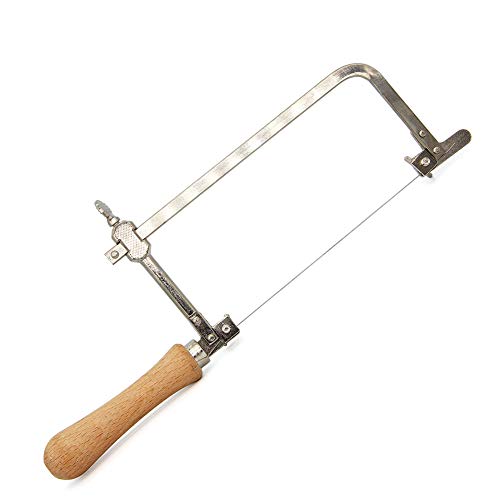
The SUBRILLI is the specialist of this group. Instead of a toothed blade, it tensions a diamond-coated wire that cuts by abrasion, which makes it the pick for hard, brittle materials a toothed blade would chip or skate on: jade, stone, ceramic, glass, marble and pottery, along with wood and metal. The wire also cuts in any direction, so tight interior shapes in tile or stone do not require rotating the work.
The steel frame is adjustable for wire lengths from 3 to 15 cm. This variant carries the 1 mm wire; finer diameters exist in the same line for more delicate stock. The trade-off is speed in ordinary wood: an abrasive wire is slower than a toothed blade, so it complements a standard coping saw rather than replacing one. For lapidary, tile and craft cutting, though, nothing else here does its job.
Specs
- Blade type: Diamond wire, 1 mm diameter
- Wire length: Adjustable, 3 to 15 cm
- Frame: Steel, adjustable
- Part number: Z01-CC
- Included: Coping saw steel frame and diamond wire saw
- Overall length: not stated
- Materials: Ceramic, glass, marble, metal, stone and wood
View the SUBRILLI Coping Saw on Amazon
How to Choose
Start with throat depth, because it sets the saw’s reach. Standard frames run roughly 4-3/4 to 5-1/2 inches deep, plenty for coping trim and cutting curves near an edge. Deeper frames let a cut start further into a board, useful for wide stock and larger cutouts, but the longer span can flex more, so depth is worth buying only when the work needs it.
Next, match the blade to the cut. Standard toothed blades around 14 to 17 TPI balance speed and finish for general woodwork. Fine-tooth blades at 18 to 24 TPI track tighter curves and leave cleaner edges on molding profiles and thin stock. Spiral blades cut in every direction and help inside awkward cutouts, while an abrasive diamond wire is the choice for stone, ceramic and glass. Almost every coping frame takes pin-end blades, which hook over pins and swap in seconds; pinless blades belong to fret and scroll saws and need clamp-style holders.
Frame stiffness and tensioning decide how the saw feels mid-cut. A flat-bar or heavy steel frame holds tension without springing, and the blade should ring with a clear ping when plucked. Twist-handle tensioning is simple and common; quick-change and rotating holders help when blades swap often. Finally, weigh the handle: a shaped, cushioned grip matters more than any other detail during a long trim session, because coping is a slow stroke repeated hundreds of times.
Who Should Skip
Skip the coping saw if most of your curve cutting is long, repetitive or in thick stock. A jigsaw covers ground far faster, handles thicker material, and suits sink openings, long arcs in sheet goods and rough shaping.
Also skip it for very fine piercing in thin material far from an edge. A fret saw’s deeper frame and finer pinless blades reach the middle of a panel and follow intricate patterns that would snap coping blades or exceed their throat. And if the work is straight cuts and miters only, a backsaw and miter box do the job without the coping saw’s slow, freehand steering.
FAQ
What tooth count is best for coping crown molding?
A fine blade in the 18 to 24 TPI range is the usual choice. The finer pitch follows the small steps of a crown profile without tearing the visible edge, and large profiles can be roughed out first with a coarser blade.
Can a coping saw cut metal?
Yes, within limits. Fine-tooth blades handle thin, soft metals such as aluminum, and some sets include a blade intended for light metal work. Hard or thick steel belongs to a hacksaw, and brittle material such as ceramic or stone calls for an abrasive diamond wire instead of teeth.
What is the difference between pin-end and pinless blades?
Pin-end blades have a small cross pin at each end that hooks into the frame’s holders, which is why they change so quickly; they are the standard for coping saws. Pinless blades are plain-ended and must be clamped, suiting fret and scroll saws that need very fine blades. The two types are not interchangeable without adapters.
How far into a board can a coping saw cut?
Only as far as the frame depth allows, measured from the blade to the back of the frame. Rotating the blade lets the frame swing sideways and extends the practical reach along an edge, but a cut starting deep in a wide panel is fret saw or jigsaw territory.
Final Verdict
For one saw covering coping, curves and general fine woodwork, the KATA set is the strongest all-round choice, with the IRWIN ProTouch close behind for anyone who values frame stiffness and handle comfort over blade variety. The Mutt Tools saw is the pick when blade rotation matters, the Homoyoyo suits light, occasional use, and the SUBRILLI stands apart as the abrasive-wire option for stone, ceramic and glass.
Related guides
More from Amazon
Programs that pair well with the guide above. Offers and eligibility are set by Amazon and may change.
A free business account with business pricing and bulk-buying tools for work, shop or home office.
Create a business accountFree shipping on eligible items, Prime Video and more. Eligible new members can start with a free trial.
Start a Prime free trialAudiobooks and podcasts to listen to on the go. Eligible new members can start with a free trial.
Try Audible freeAd-free music streaming. Eligible new subscribers can start with a free trial.
Try Music Unlimited freeAs an Amazon Associate we earn from qualifying purchases.





Write Your Review
No reviews yet. Be the first to share your experience!