
Key takeaways
- Compare the best Surform tools for shaping wood, from the 21-296 metal body plane to the 21-115 shaver, with blade types, lengths and handle styles.
What's inside
As an Amazon Associate I earn from qualifying purchases. This post may contain affiliate links at no extra cost to you.
- Top Pick: Stanley Surform Plane 21-296
- Runner-up: Stanley Surform Flat File 21-295
- Also consider: Stanley Surform Pocket Plane 21-399
If you want one Surform tool that covers most shaping jobs in a woodworking shop, buy the Stanley 21-296 metal body Surform plane. Its die-cast alloy body, closed handle and 10-inch flat blade remove stock quickly on edges and end grain, and the blade swaps out in seconds when it dulls. For file-style work, the Stanley 21-295 flat file puts the same 10-inch blade format on a long two-hand body, while the compact 21-399 pocket plane and the curved-blade 21-115 shaver handle small trimming work. Every pick below comes from the Stanley Surform range, described from published specifications only: blade type, blade length, body material, handle style and replacement blade format.
As an Amazon Associate, we earn from qualifying purchases.
Contents
Contents
- How a Surform Tool Cuts
- Stanley Surform Plane 21-296
- Stanley Surform Flat File 21-295
- Stanley Surform Pocket Plane 21-399
- Stanley Moulded Body Surform Flat File 5-21-102
- Stanley Surform Shaver 21-115
- How to Choose a Surform Tool
- Frequently Asked Questions
- Conclusion
- Product and ASIN Reference
How a Surform Tool Cuts
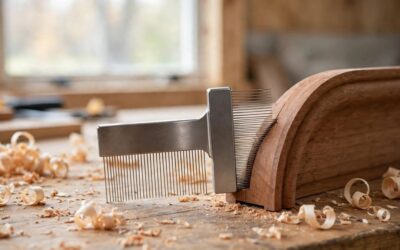
A Surform blade is a thin strip of steel punched with hundreds of small holes, and the rim of each hole is raised and sharpened into a tiny cutting tooth. The result works like a grater for wood: each tooth shaves off a small chip, and the waste passes through the holes instead of packing into the cut the way it does on a conventional rasp. Because the teeth keep clearing, the tool keeps cutting on softwood, end grain and laminates without constant cleaning.
The trade-off is surface quality. A Surform is a shaping tool, not a finishing tool: it leaves a scratched surface that still needs sanding before any finish goes on. The blades are consumables as well. The thin punched teeth cannot be resharpened, so when a blade dulls, you unclip it and fit a fresh one. That is why blade format matters here: the 10-inch flat format, the 5-1/2-inch pocket format and the small curved shaver format are not interchangeable.
Stanley publishes three cuts in the flat blade family. The standard cut, also called regular cut, is the general purpose option for fast stock removal on wood. The fine cut uses smaller teeth for slower, smoother work on filler, plastic and laminate edges. The half round blade has a convex face for shaping concave curves.
Stanley Surform Plane 21-296

Tier: Premium
The 21-296 is the flagship of the range and the tool most people picture when they hear the Surform name. It follows the layout of a bench plane: a metallic-gray die-cast alloy body with a closed, high-impact polymer handle at the rear, so you push it with two hands and lean body weight into the cut. Stanley fits it with a flat regular cut blade, and the published description covers wood, aluminium, copper, plastic and laminates.
The 10-inch blade gives a long bearing surface that keeps edges straight while you shape, and the 1-5/8-inch width covers a board edge in a single pass. Because the body accepts the full flat blade family, you can move from the standard cut blade to the fine cut for cleaner work near a finished edge, or fit the half round blade when a cove or inside curve needs shaping.
For a woodworking shop, this is the Surform to buy first. It handles door edge easing, rough shaping of blanks before finer tools come out, and quick trimming of sheet goods. The die-cast body is the heaviest here, and that weight works in your favour on long strokes because the tool stays planted instead of skipping across the surface.
Specs
- Model: Stanley 21-296 (5-21-296)
- Body: die-cast alloy, metallic gray finish
- Handle style: closed rear handle, high-impact polymer
- Blade fitted: flat, regular cut
- Blade length: 10 in (250 mm)
- Blade width: 1-5/8 in
- Replacement blade format: 10 in flat; 21-293 standard cut, 21-393 fine cut, 21-299 half round
- Published materials: wood, aluminium, copper, plastic, laminates
Stanley Surform Flat File 21-295

Tier: Mid-range
The 21-295 takes the same 10-inch flat blade as the plane and mounts it on a long file-style body. At 17-3/8 inches overall, it is the longest tool in this roundup. Instead of pushing it like a plane, you hold the high-impact polymer handle at the rear and rest your other hand on the ribbed front section of the die-cast alloy body, drawing the blade across the work with the control of a large rasp.
Stanley describes it as a tool for use as a rasp on wood, plastic, soft metals and many other materials, and that file layout suits shaping work where a plane body will not fit: fairing long curves, shaping filler, and reaching across wide panels. The body accepts the same published replacement family as the 21-296, so a shop that owns both tools stocks one blade format for the pair.
If your shaping leans toward carving blanks and freehand curves rather than straight edges, the flat file is the better buy of the two 10-inch tools. For edges and flat surfaces, the plane above keeps the blade flatter with less effort.
Specs
- Model: Stanley 21-295 (5-21-295)
- Body: die-cast alloy, metallic gray finish
- Handle style: rear high-impact polymer handle with ribbed front grip section for two-hand use
- Overall length: 17-3/8 in (440 mm)
- Blade fitted: flat, regular cut
- Blade length: 10 in (250 mm)
- Blade width: 1-5/8 in
- Replacement blade format: 10 in flat; 21-293 standard cut, 21-393 fine cut, 21-299 half round
- Published materials: wood, plastic, soft metals and other materials
Stanley Surform Pocket Plane 21-399

Tier: Mid-range
The 21-399 shrinks the Surform idea into a 6-inch palm-sized body built for one-handed use. Stanley publishes it for end-grain work, sheetrocking and smoothing the edges of laminates, and that list tells you its role: quick trimming jobs where the full-size plane is clumsy, such as easing a door edge or flushing a laminate trim.
The die-cast alloy body keeps the tool rigid despite its size, and blade tension is set by a thumbscrew, so blade replacement is quick and needs no separate tools. The fitted blade is a fine cut, which suits the trimming role: it removes less per stroke than the standard cut blades on the larger tools, leaving a surface that needs less follow-up sanding. At 1-5/8 inches wide, the blade still matches the cutting width of the big tools, so a pass with the pocket plane blends into work shaped by the 21-296.
This is the Surform that lives in an apron pocket or a site bag. It will not hog stock off a large blank, and it is not meant to. Buy it as the second tool in a Surform kit, for the small cuts and end grain that the long tools overshoot.
Specs
- Model: Stanley 21-399
- Body: die-cast alloy, metallic gray finish
- Handle style: one-handed palm grip body
- Overall length: 6 in
- Blade fitted: fine cut
- Blade length: 5-1/2 in (140 mm)
- Blade width: 1-5/8 in
- Blade retention: thumbscrew blade tension for quick replacement
- Replacement blade format: 21-398 fine cut, 5-1/2 in
Stanley Moulded Body Surform Flat File 5-21-102

Tier: Budget
The 5-21-102 is the lightweight entry in the flat file family. Instead of die-cast alloy, the body is a plastic moulding, which Stanley describes as a lightweight plastic moulded body. The file layout mirrors the 21-295: a flat blade carried ahead of an integral handle, worked with a filing action across edges and faces.
The Amazon listing for this model gives a listed length of 300 mm, noticeably shorter and handier than the 440 mm metal flat file, and the moulded body keeps weight down for one-handed work on sheet material. The blade is a replaceable flat Surform blade: when the teeth dull, you fit a fresh blade rather than reaching for a sharpening stone that cannot help a punched blade anyway.
Choose this one for occasional trimming, laminate edges and light shaping rather than daily bench work. It gives up the heft and two-hand ribbed grip of the metal 21-295, and in return it is the easiest tool here to keep in a toolbox drawer.
Specs
- Model: Stanley 5-21-102
- Body: lightweight plastic moulded body
- Handle style: integral moulded handle, file layout
- Listed length: 300 mm
- Blade fitted: flat Surform blade
- Replacement blade format: replaceable flat Surform blade
Stanley Surform Shaver 21-115
Tier: Budget
The 21-115 shaver is the odd one out in the range, and for curved work it is the most useful tool here. Its one-piece moulded body is just 7-1/4 inches long and carries a curved blade, so the sole follows concave and convex shapes that a flat blade bridges over. Stanley publishes side-cut teeth on the blade, which let it shave into corners.
The shaver works on the pull stroke, drawing the blade toward you, which gives fine control on chair legs, table legs and other narrow curved parts. Blade replacement is a simple click-on action with no screws or tensioning, the fastest swap in this roundup. The matching replacement blade is the short 21-515, a format unique to this tool, so shaver owners stock a separate blade from the flat and pocket formats. The Amazon listing for the 21-115 is sold as a pack of two shavers.
Published application notes for the shaver describe filing, trimming and shaping small areas with positive control, and that is the niche it fills. It removes little material per stroke, so it complements the flat tools: rough the shape in with a 10-inch blade, then refine the curves with the shaver.
Specs
- Model: Stanley 21-115
- Body: one-piece moulded body
- Handle style: integral moulded grip, pull-stroke layout
- Overall length: 7-1/4 in
- Blade fitted: curved, regular cut, with side-cut teeth
- Blade width: 1-5/8 in
- Blade replacement: click-on
- Replacement blade format: 21-515 shaver blade
- Listing format: pack of 2
How to Choose a Surform Tool
Begin with the body shape. Plane bodies, meaning the 21-296 and the 21-399, hold the blade flat against the work and suit edges, end grain and flat surfaces. File bodies, the 21-295 and the 5-21-102, give a longer reach and a drawing action that suits curves and filler. The shaver stands alone with its curved blade for rounded and hollow shapes.
Match the blade length to the work. The 10-inch flat blades on the 21-296 and 21-295 cover ground quickly and keep long edges straight. The 5-1/2-inch blade on the pocket plane trades coverage for control in tight spots and on detail work.
Pick the cut for the material. Standard cut blades are the default for wood and fast removal. Fine cut blades, fitted to the pocket plane and sold as the 21-393 for the 10-inch tools, cut slower and leave a cleaner surface on laminate, plastic and filler. The half round 21-299 blade reshapes the same 10-inch bodies for concave curves.
Check the replacement format before you buy. The 10-inch tools share blades across the plane and the flat file. The pocket plane takes only the 5-1/2-inch 21-398, and the shaver takes only the 21-515. A shop that standardises on the two 10-inch tools keeps one blade packet in the drawer; adding the compact tools means stocking their smaller formats too.
Weigh body material against the work. Die-cast alloy bodies add the weight that keeps a blade planted on long strokes. The moulded bodies on the 5-21-102 and 21-115 are lighter and simpler, and they suit intermittent trimming rather than all-day shaping.
Frequently Asked Questions
What is the difference between a Surform plane and a Surform file?
The blade is the same idea in both: a punched steel strip with raised cutting teeth. The difference is the body and the action. A Surform plane carries the blade under a plane-style body with a closed handle, and you push it along edges and flat surfaces so the sole keeps the cut level. A Surform file carries the blade on a long handle in line with the blade, worked with a filing action that gives more reach and a freer hand for curves and filler. The 21-296 plane and the 21-295 file here even share the same 10-inch replacement blades.
Which Surform blade cut should you choose, standard or fine?
Choose the standard cut, also sold as regular cut, for general wood shaping and fast stock removal. Choose the fine cut when the surface matters more than speed: laminate edges, plastic, filler and final trimming passes where a coarse tooth would tear the edge. The pocket plane comes fitted with a fine cut blade, and the 10-inch tools accept the 21-393 fine cut blade in place of the 21-293 standard cut.
Can Surform blades be sharpened when they dull?
No. A Surform blade is a thin sheet of steel with punched, raised teeth, and there is no practical way to restore those teeth with a stone or file. Stanley treats the blade as a replaceable part on every tool in the range: thumbscrew release on the pocket plane, quick release arrangements on the larger bodies, and a click-on fitting on the shaver. When a blade stops cutting cleanly, replace it with the published format for your tool.
Do all Surform tools use the same replacement blades?
No, and this is the detail most buyers miss. The 10-inch flat tools, the 21-296 plane and the 21-295 flat file, share one blade family with standard cut, fine cut and half round options. The 21-399 pocket plane uses the shorter 5-1/2-inch 21-398 blade, and the 21-115 shaver uses the small curved 21-515 blade. Match the blade number to the tool number printed on the body, because the three formats do not interchange.
Conclusion
For most woodworking shops, the Stanley 21-296 metal body plane is the Surform to own: a rigid die-cast body, a two-hand push action and the full 10-inch blade family in standard, fine and half round cuts. Pair it with the 21-295 flat file if your shaping runs to curves and filler, since both draw from the same blade packet. Add the 21-399 pocket plane for end grain, the moulded 5-21-102 when a light file is enough, and the 21-115 shaver for curved parts.
Related guides
More from Amazon
Programs that pair well with the guide above. Offers and eligibility are set by Amazon and may change.
A free business account with business pricing and bulk-buying tools for work, shop or home office.
Create a business accountFree shipping on eligible items, Prime Video and more. Eligible new members can start with a free trial.
Start a Prime free trialAudiobooks and podcasts to listen to on the go. Eligible new members can start with a free trial.
Try Audible freeAd-free music streaming. Eligible new subscribers can start with a free trial.
Try Music Unlimited freeAs an Amazon Associate we earn from qualifying purchases.



Write Your Review
No reviews yet. Be the first to share your experience!