Best Band Saws with High Resaw Capacity for Small Workshops
What's inside
As an Amazon Associate I earn from qualifying purchases. This post may contain affiliate links at no extra cost to you.
Contents
What high resaw capacity means
Resawing is cutting a board lengthwise through its thickness to make thinner boards or veneers. The saw’s resaw capacity is the maximum height of stock that fits between the table and the upper blade guides. A 12-inch capacity, for example, can accommodate stock up to about 12 inches tall, though the usable limit may be lower once you account for the blade guides, fence, and the shape of the workpiece.
Capacity alone doesn’t tell you how well a saw will resaw. The frame needs to stay rigid under blade tension, the motor needs enough power to keep the blade moving through hardwood, and the guides must support the blade without crowding the cut. For a small shop, also check the machine’s footprint, electrical requirements, and how awkward it will be to handle tall stock around it.
As an Amazon Associate we earn from qualifying purchases at no extra cost to you.
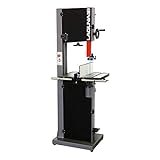

How to choose for a small workshop
Start with the thickness you expect to cut, not the largest capacity you can find. A 10- to 12-inch capacity covers many home-shop jobs, such as turning 8-inch-wide boards into book-matched panels. Larger capacity is useful for slabs and wide stock, but taller work takes more effort to guide safely and can expose limitations in blade stability.
Check the motor and power supply together. Many smaller saws run on standard 120-volt household circuits; larger machines may need 240 volts and a dedicated circuit. A high-capacity saw on an undersized circuit can trip breakers or bog down. Horsepower figures are not directly comparable across manufacturers, so look for real reviews of the machine’s ability to resaw hardwood and verify the electrical requirements before buying.
For resawing, a wide blade—often around 3/4 inch for saws designed to accept it—usually tracks straighter than a narrow blade, provided the saw can tension it properly. Use a blade with a low tooth count and a tooth form suited to ripping; the exact choice depends on the saw’s minimum and maximum blade widths. A dull or overly fine-toothed blade can wander, burn the wood, or force you to feed too slowly.
Capacity and machine trade-offs
| Saw category | Typical use | Main trade-off |
|---|---|---|
| Compact benchtop | Small stock and occasional light resawing | Limited capacity and blade tension; not ideal for demanding hardwood cuts |
| 14-inch floor-standing | Regular home-shop resawing within moderate capacity | May need upgrades or careful setup for consistent wide-blade work |
| 17-inch floor-standing | Taller stock and more frequent resawing | Higher cost, larger footprint, and often a 240-volt power requirement |
These are broad categories, not guarantees: frame design, guide quality, and setup vary considerably. A well-adjusted 14-inch saw can outperform a poorly made larger saw. Before choosing, check the manufacturer’s stated resaw capacity and the blade-width range, then look for a fence that can be adjusted for drift. If you routinely cut near the machine’s maximum height, favor a rigid floor-standing model over a compact saw.
Which type is worth buying?
For occasional resawing of boards under roughly 6 inches tall, a solid 14-inch floor-standing saw is often enough. It takes less room and money than a large-capacity machine, and it remains useful for curves and general bandsaw work. Don’t assume every 14-inch saw is ready for wide blades: confirm its blade capacity, tensioning system, and included guides before purchase. Browse 14-inch bandsaws with resaw capacity to compare current configurations.
If your work regularly involves 8- to 12-inch stock, a larger floor-standing saw is a more sensible starting point. These machines generally provide more capacity and can support wider blades, but require more floor space and may need 240-volt power. A 17-inch woodworking bandsaw may suit a shop that resaws often; it is excessive if most of your stock is narrow and the extra capacity will rarely be used.
A compact saw can still be the right buy if resawing is occasional, stock is modest, and storage space is tight. It is not a bargain if you need to force a blade through thick hardwood or repeatedly correct wandering cuts. In that case, paying for a larger, stiffer saw—or having thick stock resawn by a local mill—may cost less than fighting poor results.
Setup matters as much as capacity
Use a sharp, appropriate blade and set its tension according to the saw’s instructions; guessing at tension can leave the blade wandering or damage the machine. Align the blade and guides, then test the cut on scrap of similar species and thickness. Set the fence parallel to the blade’s actual drift rather than assuming the blade tracks exactly along its body. A tall resaw fence or auxiliary fence helps keep the work upright, but it must not pinch the blade or interfere with the guides.
Feed steadily without pushing hard. If the saw slows, the cut curves, or the wood starts to burn, stop and check for a dull blade, insufficient tension, misaligned guides, or an overly aggressive feed. Forcing the stock can deflect the blade and produce a tapered board. Let the machine stop fully before clearing waste, and use a push aid or other safe method to keep hands away from the blade.
Check before you buy
Measure the tallest stock you actually plan to resaw and leave practical room for handling it. Confirm the capacity, supported blade widths, motor voltage, and whether a suitable fence and guides are included. Also measure the footprint with the door open and account for room to support long boards entering and leaving the saw. For a small workshop, a manageable machine that handles your usual cuts cleanly is a better purchase than maximum capacity you cannot use comfortably.