Best Table Saws for Narrow Rip Cuts in Hardwood Stock
What's inside
As an Amazon Associate I earn from qualifying purchases. This post may contain affiliate links at no extra cost to you.
Contents
What makes narrow rips demanding
Ripping a narrow strip from hardwood is not just a matter of setting the fence close to the blade. The offcut can become trapped between the blade and fence, twist, or pinch as internal stress is released. That raises the risk of kickback, especially when the stock is bowed, the fence is out of parallel, or the operator tries to control a very small piece by hand.
For this work, prioritize a fence that locks consistently, a table and blade that stay aligned, and room for safe workholding. Motor power matters when cutting thick, dense stock, but it does not make an unsafe narrow rip safe. A riving knife, blade guard, and push devices are essential parts of the setup, not optional accessories.
As an Amazon Associate we earn from qualifying purchases at no extra cost to you.

Which table saw type fits the work?
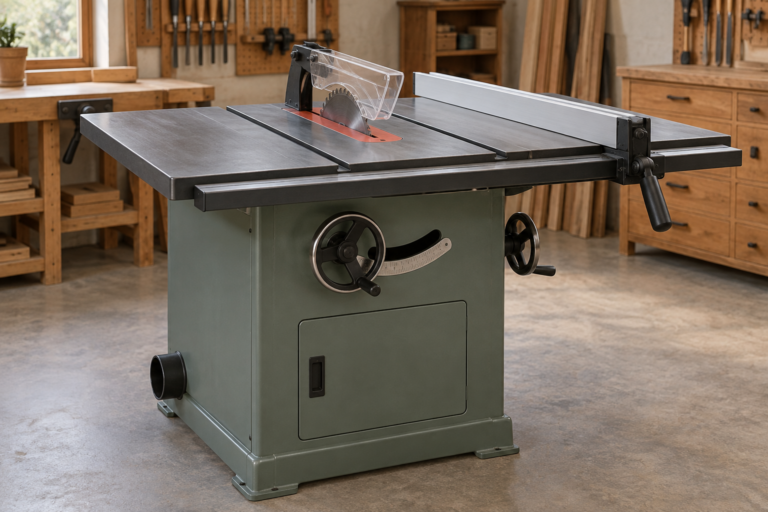
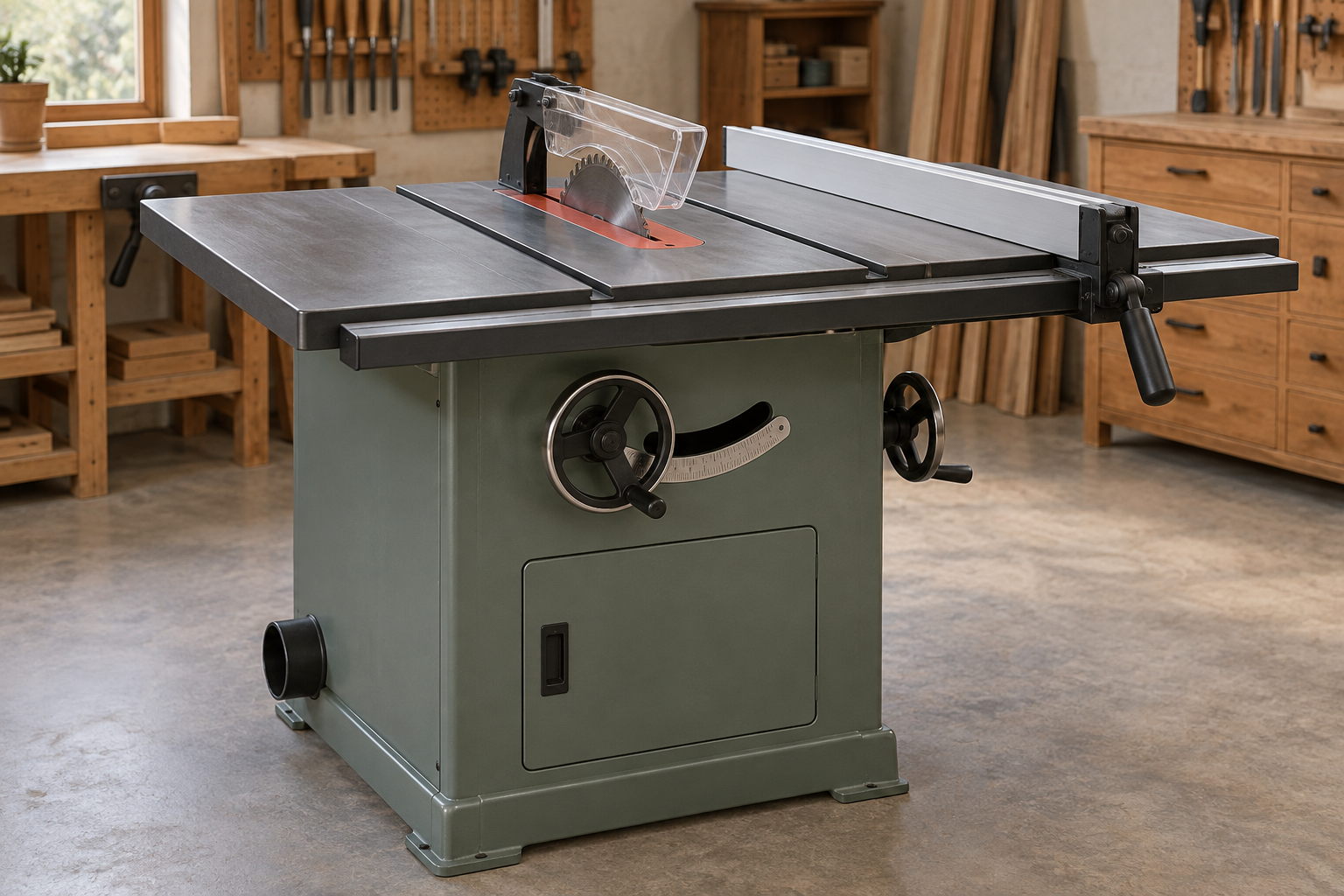
A cabinet saw is the strongest choice for a dedicated shop that regularly rips thick hardwood. Its mass helps it stay put, and its larger table and fence system make repeated setups easier. It is expensive, heavy, and usually needs a suitable electrical circuit and space.
A contractor-style or hybrid saw can be a sensible middle ground for a serious hobbyist. It generally offers better support and stability than a compact jobsite saw without the cost and footprint of a full cabinet machine. A portable saw is fine for occasional narrow rips in straight, well-prepared stock, but its smaller table and lighter stand leave less margin for error.
For a fixed shop, compare hybrid table saws with cabinet saws before paying for capacity you may not use. If the saw must travel, a jobsite table saw with a riving knife is a more practical category to consider.
Table saw choices at a glance
| Saw type | Best fit | Advantages | Trade-offs |
|---|---|---|---|
| Cabinet | Frequent shop use and thick hardwood | Mass, capacity, typically strong fence and dust collection | High cost, weight, space and electrical demands |
| Hybrid or contractor-style | Regular hobby-shop work | Good balance of stability, features and price | Less mass or capacity than many cabinet saws |
| Jobsite | Mobile work or occasional narrow rips | Portable, comparatively affordable | Smaller support area; stand and fence quality vary |
Do not judge a saw by rip capacity alone. Narrow rips use only a small fraction of a typical saw’s maximum width. Check whether the fence locks without shifting, whether the table is flat enough for your work, and whether the riving knife can stay installed with the blade guard. A reliable fence and safe accessories are worth more here than an oversized motor or a large advertised cutting width.
What to check before buying
Test the fence across several settings, if possible. Lock it, then measure from the fence to the same tooth at the front and rear of the blade; the fence should not angle inward toward the blade. Follow the manufacturer’s alignment procedure rather than assuming the saw is calibrated out of the box. A small alignment error can make a narrow cut bind.
Look for a riving knife that follows the blade height and tilt, plus a guard that can be used for ordinary through-cuts. Confirm that the saw accepts a suitable push stick or push block and that the fence can support a narrow workpiece without interfering with the guard. Dust collection matters too: hardwood dust builds up around the cabinet and affects cleanup, visibility, and maintenance.
If you plan to rip stock thicker than about 1-1/2 inches regularly, pay close attention to the saw’s stated cutting depth and how comfortably it feeds that material. Dense hardwood can bog down a smaller motor, particularly with a dull or unsuitable blade. A sharp, appropriate rip blade and a steady feed rate help, but do not force a cut when the motor slows or the stock begins to bind.
Making a narrow rip more safely
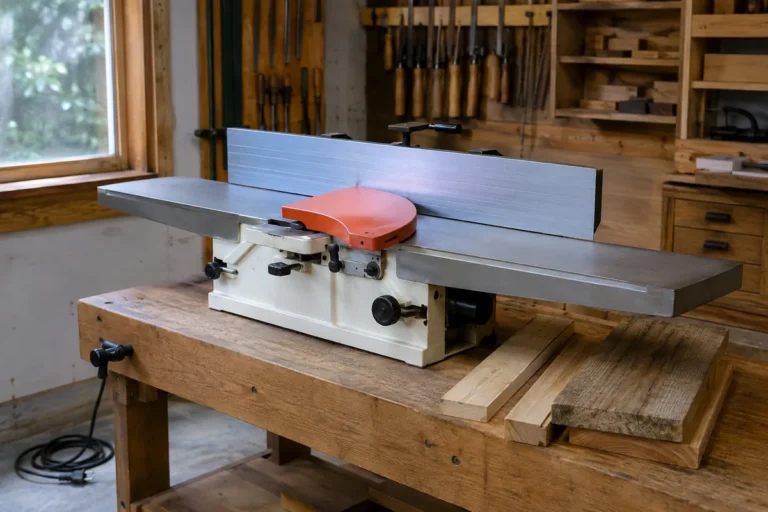
Start with straight, flat stock. A twisted board can rock on the table, while a bowed edge can leave the fence contact inconsistent. Joint one face and one edge first, then place the jointed face down and the straight edge against the fence. If the board is too narrow to hold securely against the fence, or too short to feed and support safely, use another method such as a bandsaw followed by planing or jointing.
Set the blade only high enough for the teeth to clear the workpiece, and keep the riving knife in place. Use a push stick or push block to keep your hands away from the blade, and support long stock so it cannot sag or steer the cut. Stand out of the blade’s direct line. Never reach over the blade to retrieve an offcut, and do not use your fingers to guide a strip that is narrower than your safe grip.
For repeat cuts, use a purpose-built narrow-rip setup only if it is designed for your saw and does not defeat the guard or riving knife. Do not trap a small offcut between the blade and fence and keep feeding it through. If the piece starts to pinch, chatter, or drift, stop the saw and reassess the stock and setup instead of pushing harder.
When a cheaper saw is enough
A portable saw can be adequate if you make narrow rips only occasionally, use straight stock, and can add stable infeed and outfeed support. Save money rather than buying a cabinet saw solely for a few thin strips a year. Put the difference toward a sharp blade, a sturdy stand, accurate measuring tools, and safe push devices.
Choose a heavier stationary saw when narrow hardwood ripping is frequent, the stock is thick, or consistent repeatability matters for production work. The added stability and table support can make setup less frustrating, but no price tier prevents kickback caused by poor stock, bad alignment, or an unsafe feed. Buy the saw that fits your workload, then verify its alignment and use a setup that keeps your hands and the offcut clear of the blade.