Best Table Saws for Quiet Operation in a Shared Workshop
What's inside
As an Amazon Associate I earn from qualifying purchases. This post may contain affiliate links at no extra cost to you.
Contents
What “quiet” means in a shared workshop
No table saw is quiet in the way a hand tool is quiet. The motor is only part of the noise: a spinning blade, air moving through the cabinet, and wood meeting the teeth all contribute. A saw that idles pleasantly can still be loud under load, and a dull or dirty blade can make any machine harsher.
For context, normal conversation is roughly 60 dBA. A table saw cutting hardwood can exceed 90 dBA near the operator, depending on the saw, blade, material, and measurement distance. Treat that as a hearing-protection situation, not as a promise that a particular saw is safe to use without protection. In a shared shop, also consider where the machine points, whether it sits on a resonant floor, and when you can make cuts.
Choose the drive before the decibel claims
Most portable jobsite saws use a universal motor. They are relatively light and affordable, but tend to sound high-pitched and strained under heavy cuts. Cabinet saws commonly use an induction motor. They are heavier and often smoother-sounding, but the blade still makes substantial noise and the larger machine costs more, takes more space, and may require a suitable electrical circuit.
Don’t buy on a “quiet” label alone. Manufacturers do not always provide comparable sound measurements, and results change with the test setup. If possible, listen to the saw running and cutting. Check the manual for voltage and amperage requirements: a 120-volt saw is easier to place in an existing shop, while some higher-powered machines need 240 volts. A 240-volt connection is not itself a noise-control feature.
Comparison by saw type
| Type | Noise and use | Trade-off | Best fit |
|---|---|---|---|
| Jobsite saw | Often sharp-sounding, especially during thick or fast cuts | Portable and comparatively inexpensive; less mass can transmit vibration | Small shops, occasional use, and users who need to store the saw |
| Contractor-style saw | Induction-motor versions may sound smoother than many jobsite saws | More floor space and weight; performance and construction vary | A fixed shop that needs a middle ground |
| Cabinet saw | Induction drive and a substantial cabinet can reduce motor harshness and vibration | High cost, heavy installation, and potentially greater power needs; not silent | Frequent cutting where space, budget, and electrical service allow |
Which category to buy
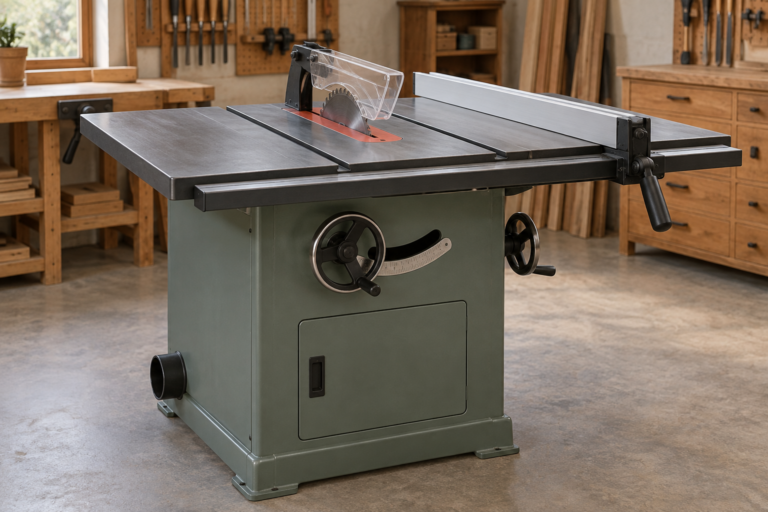
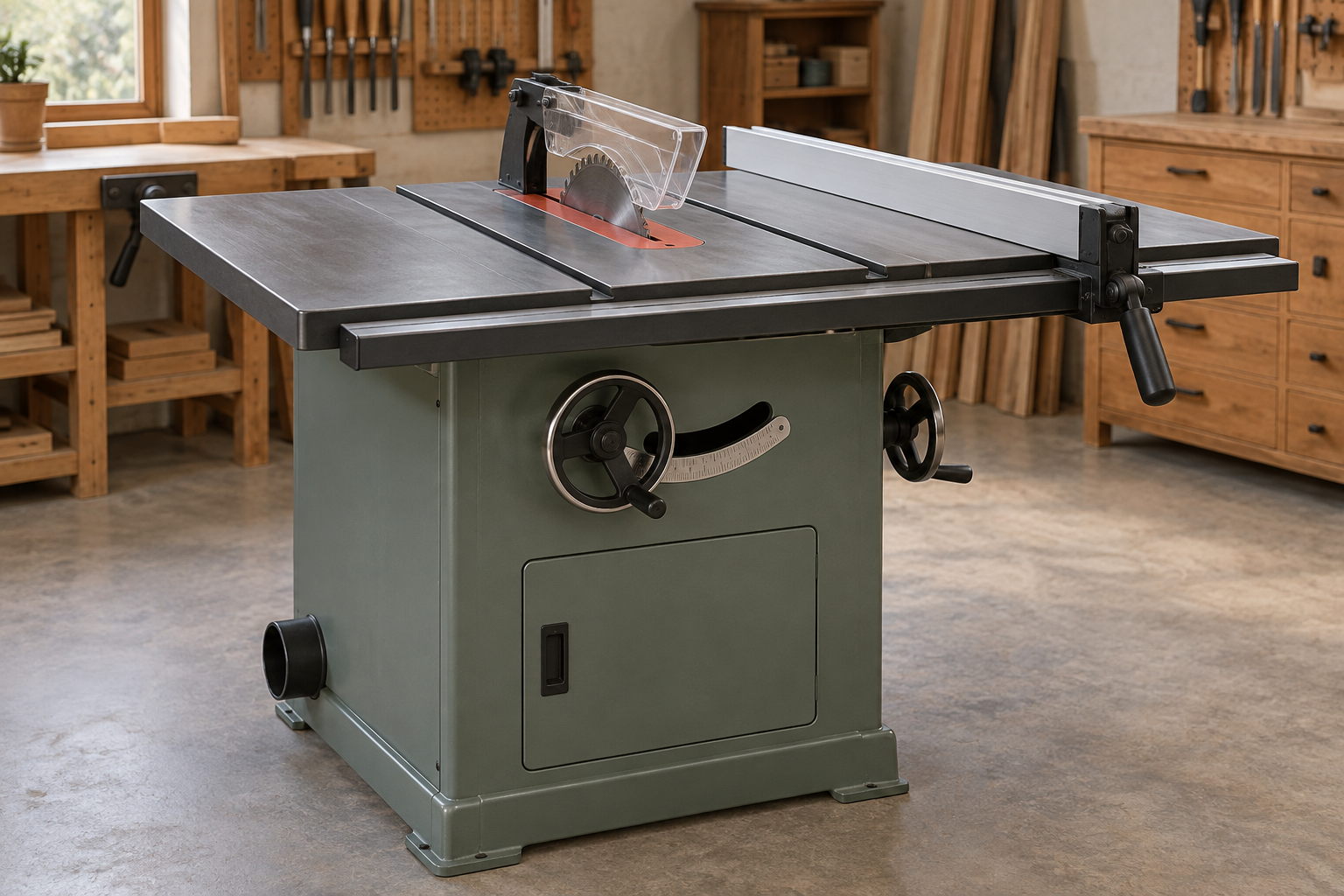
For a shared workshop with a permanent saw location and frequent hardwood work, start by comparing cabinet table saws with induction motors. Their mass and drive type can make operation feel less abrupt than a light portable saw. Verify the footprint, dust-port arrangement, fence quality, and circuit requirements before buying. Cabinet construction does not guarantee a low measured noise level, and an enclosed cabinet can still amplify sound if it vibrates or sits on a resonant floor.
If the saw must be moved, or the budget is tight, a jobsite table saw with a folding stand is a reasonable choice. It is usually the cheaper option and can be entirely adequate for sheet goods, trim, and intermittent cuts. Expect more motor whine and more vibration than from a heavy stationary saw in many cases. For a fixed shop but a more moderate budget, compare contractor-style table saws with induction motors. Check whether a particular saw is belt-driven or direct-drive; construction differs, so category alone does not settle the noise question.
Reduce noise before replacing the saw
Fit a sharp, clean blade suited to the cut. A high-tooth-count blade can make crosscuts cleaner, but forcing it through thick stock or using a damaged blade can increase heat and strain. Choose a blade appropriate to the material and cut, and replace or professionally sharpen it when cutting becomes rough or the saw labors. Pitch buildup, resin, and a loose or poorly seated blade can add noise and vibration.
Check that the blade is installed correctly and that the arbor, insert, guard, fence, and stand are secure according to the manual. A loose insert or rattling extension can turn into a persistent buzz. Put the machine on a firm, level surface; a wobbly stand can amplify vibration through the floor. Avoid improvised sound enclosures around the motor or blade. They can restrict cooling, interfere with guards or dust collection, and create a fire or kickback hazard.
Plan the work around other people
Use a dust collector or shop vacuum compatible with the saw’s port, but don’t assume it will reduce cutting noise; the collector adds its own sound. Keep the blade guard and dust controls in place, wear hearing protection, and use eye protection. Cutting slowly is not automatically quieter: feed steadily without pushing so hard that the motor bogs down, and avoid long sessions of repeated cuts when nearby work can be scheduled elsewhere.
For a shared space, a heavy stationary saw is worth paying for only if the location, workload, and electrical supply justify it. If the saw is used occasionally, a well-maintained jobsite model may be the sensible buy. In either case, blade condition, setup, and considerate scheduling often make a more noticeable difference to the people nearby than a marketing claim about quiet operation.