Best Table Saws for Cutting Repeated Cabinet Stiles and Rails
What's inside
As an Amazon Associate I earn from qualifying purchases. This post may contain affiliate links at no extra cost to you.
Contents
What repeated cabinet stiles and rails demand from a table saw
Cabinet door parts are narrow, repeated, and conspicuous when they come out uneven. A stile may be ripped to 2¼ inches, for example, while rails need to match in width across several doors. The saw must hold a dependable fence setting and leave edges that need little cleanup. A high-end cabinet saw can make that work easier, but it is not required for a small shop or occasional batch.
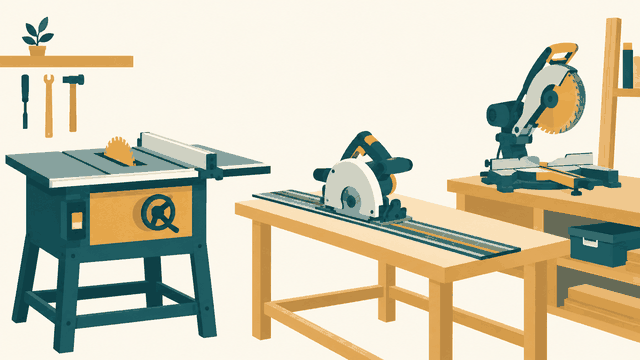
First separate the operations. Ripping stock to width is a table-saw job. Cutting rail lengths is usually safer and more repeatable on a crosscut sled or a miter saw with a stop. Raised panels and cope-and-stick joinery involve additional tooling; a table saw alone does not make those operations safe or straightforward. For any narrow cut, use a push stick or push block and keep hands out of the blade path.
Features worth paying for
Fence accuracy and repeatability matter most. A fence that locks firmly without shifting at the far end makes it easier to rip a batch to one width. Check that it stays parallel to the blade through its travel and that the scale can be calibrated to your blade and fence setup. Do not trust the scale blindly: verify the first cut with a rule or caliper, then test a second piece.
Blade and throat-plate setup affect the finish. A sharp, suitable 10-inch blade is more important than a large motor for typical cabinet parts. A 40-tooth combination blade is a practical general-purpose choice; a sharp 60-tooth crosscut-style blade can leave a cleaner edge on plywood or crosscuts, but may cut more slowly when ripping thick hardwood. A zero-clearance insert supports the wood near the blade and helps reduce tearout, though it does not replace a riving knife or guard.
Capacity and dust control are shop-specific. A 30-inch rip capacity is enough for most stile and rail stock; wide sheet goods are a separate consideration. A cabinet saw usually captures dust better than a portable jobsite saw, but even an enclosed cabinet needs a suitable dust collector. A portable saw can be a sensible buy when it must be stored or moved, provided its fence and stand suit the workload.
Compare saw types for this work
| Saw type | Best fit | Trade-off | Typical buying priority |
|---|---|---|---|
| Jobsite table saw | Small shops, occasional batches, or a saw that must move | Less mass can mean more vibration and a less refined fence; dust collection is often limited | Rigid fence, stable stand, reliable riving knife |
| Contractor-style saw | Regular shop use without the footprint or price of a cabinet saw | Designs vary; some have open stands and modest dust capture | Fence alignment, motor suitability, accessible adjustment |
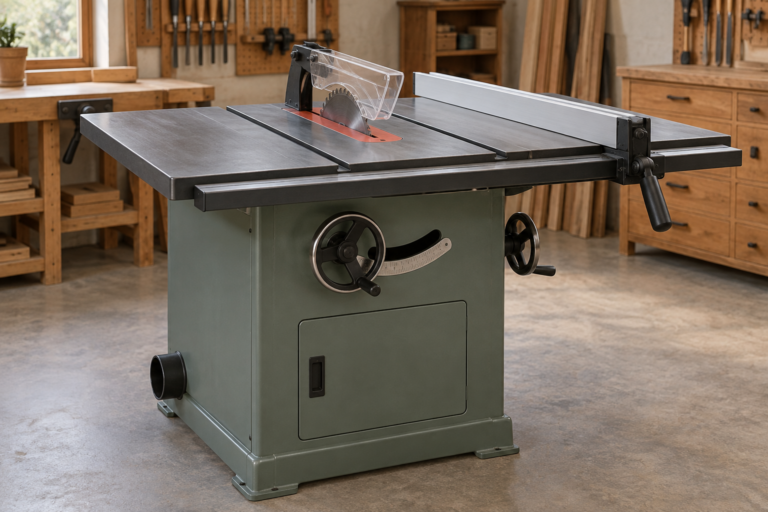
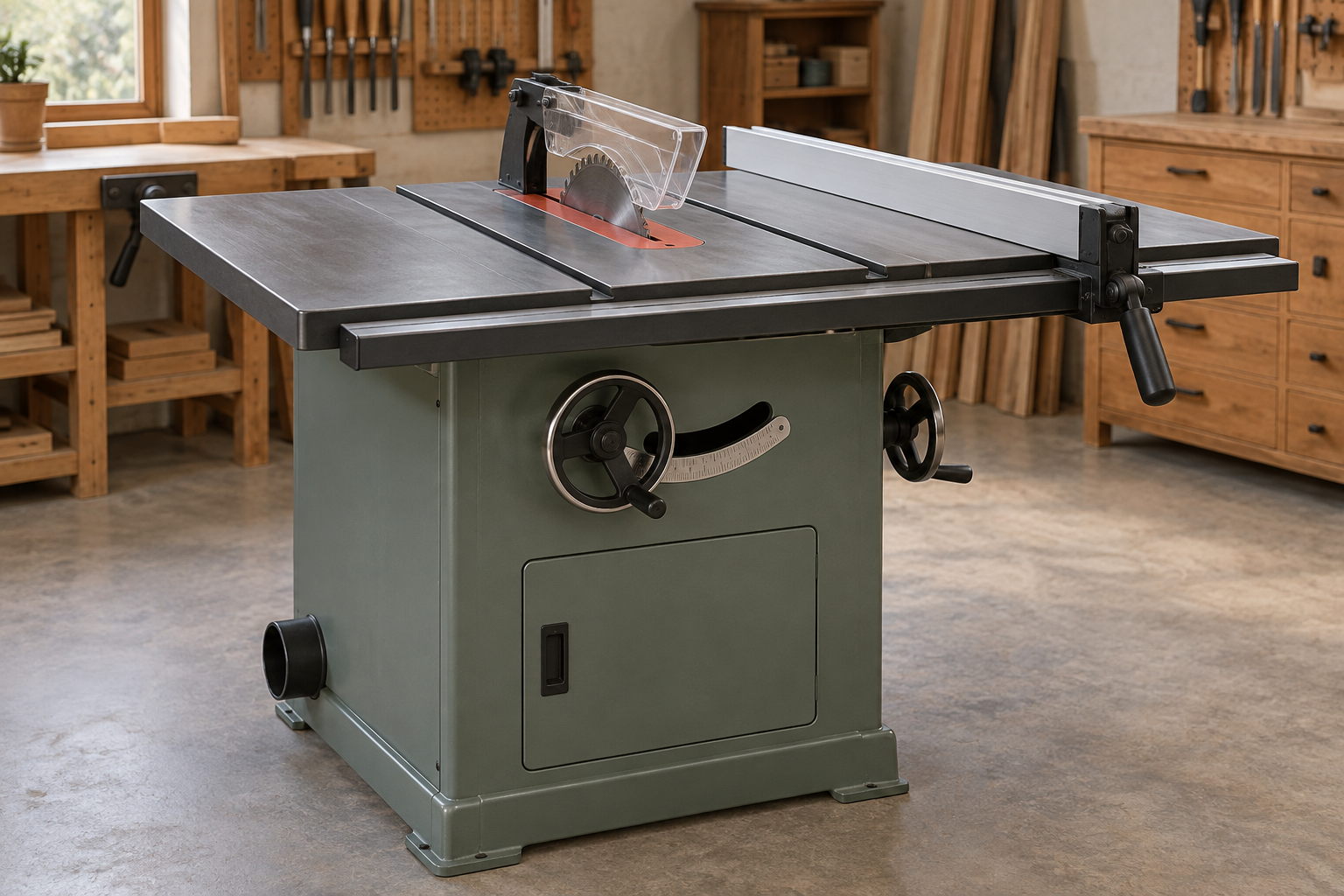
| Cabinet saw | Frequent production in a dedicated shop | Higher cost, weight, and space needs; requires dust collection | Fence system, safety features, service support, electrical fit |
For a first stationary saw, compare 10-inch jobsite table saws with a rack-and-pinion fence against larger shop saws rather than assuming portability means poor accuracy. A well-adjusted portable saw can produce consistent widths. The compromise shows up more in vibration, dust collection, and convenience during long runs than in any unavoidable limit on cabinet work.
Choose by workload and electrical setup
If you build a few doors a year, a sound jobsite saw or contractor-style saw is usually enough. Spend time tuning it, buy a quality blade, and make a test batch before cutting the project stock. Do not pay for a heavy cabinet saw just to rip narrow parts a handful of times. A more substantial contractor-style table saw with a cast-iron table is worth considering when the saw stays in one place and gets used often.
For frequent cabinet production, a cabinet saw’s weight and enclosed base help with stability and dust management. Before buying, check voltage and amperage against the circuit you have; some larger saws require 240 volts, and the available motor options differ by model. Also measure the full footprint, including infeed and outfeed space. A saw that technically fits in the corner but cannot support long stock is not a useful upgrade.
When comparing prices, account for the blade, mobile base if needed, dust collection, and any fence or insert upgrades. An inexpensive saw that needs several fixes may not be a bargain, but a premium saw is not automatically better for a low-volume shop. If you mainly need a stable, repeatable fence, prioritize that over marketing claims about horsepower. For a dedicated shop making doors in batches, a cabinet table saw with a 30-inch rip fence is a reasonable category to compare.
Set up for repeatable ripping
Use straight, dry stock and let it acclimate in the shop before milling. Bowed or twisted boards can bind against the fence, even if the saw is well tuned. Inspect each board, joint one face and one edge as needed, then rip from a consistent reference edge. If the stock is too short or narrow to control securely, do not force it through as a routine table-saw cut; use a safer workholding method or a different tool.
Set the fence, make one test rip, and measure the result at both ends. If the cut is wrong, adjust the fence or scale before batching. Keep the riving knife installed and the blade guard in place for through-cuts; a riving knife helps limit the chance that a closing kerf pinches the blade and throws stock back. Use a featherboard only when it can be positioned safely and does not interfere with the guard or push device.
Do not cut all the parts from one setup and assume the first setting remained correct. Sawdust between the fence and stock, a shifted fence, or a board that moves during the cut can create a run of mismatched widths. Check a piece periodically and stop if you hear the motor bog, see burning, or feel the stock binding. Those are signs to inspect the blade, feed rate, alignment, and material—not to push harder.
A practical buying decision
Buy the least expensive saw that can hold alignment, accept a suitable blade and safety equipment, and support your longest workpieces. For occasional door parts, a properly tuned portable saw is fine. For repeated weekly batches, a heavier contractor or cabinet saw can save setup time and make dust collection more manageable. In either case, a sharp blade, verified fence setting, and controlled feed are what keep stiles and rails consistent.