Best Table Saws for Cutting Accurate Hardwood Joinery
What's inside
As an Amazon Associate I earn from qualifying purchases. This post may contain affiliate links at no extra cost to you.
Contents
What accurate hardwood joinery requires
A table saw can cut repeatable shoulders, tenons, grooves and rabbets, but accuracy depends on more than the saw’s price. The blade must be sharp and suitable for the cut, the fence must stay parallel to the blade, and the stock must be flat and supported. A premium saw cannot make a twisted board safe or produce a clean tenon with a dull combination blade.
For furniture work, useful targets are a fence that locks consistently within about 0.1 mm (0.004 in.) of its setting, a blade aligned to the miter slot within a few thousandths of an inch, and a crosscut setup that repeats square. Those are shop targets, not guarantees from a manufacturer. Check alignment with a dial indicator or a careful measuring method, then verify it with test cuts in scrap of the same thickness as your workpiece.
As an Amazon Associate we earn from qualifying purchases at no extra cost to you.
Choose the saw type for your shop
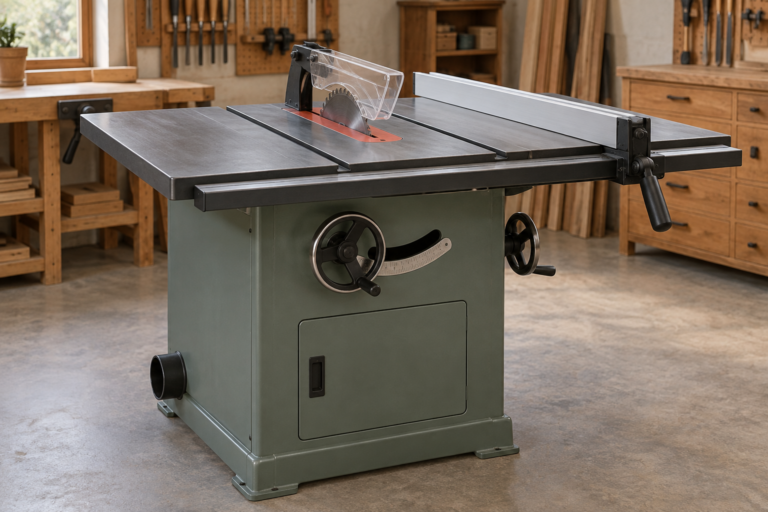
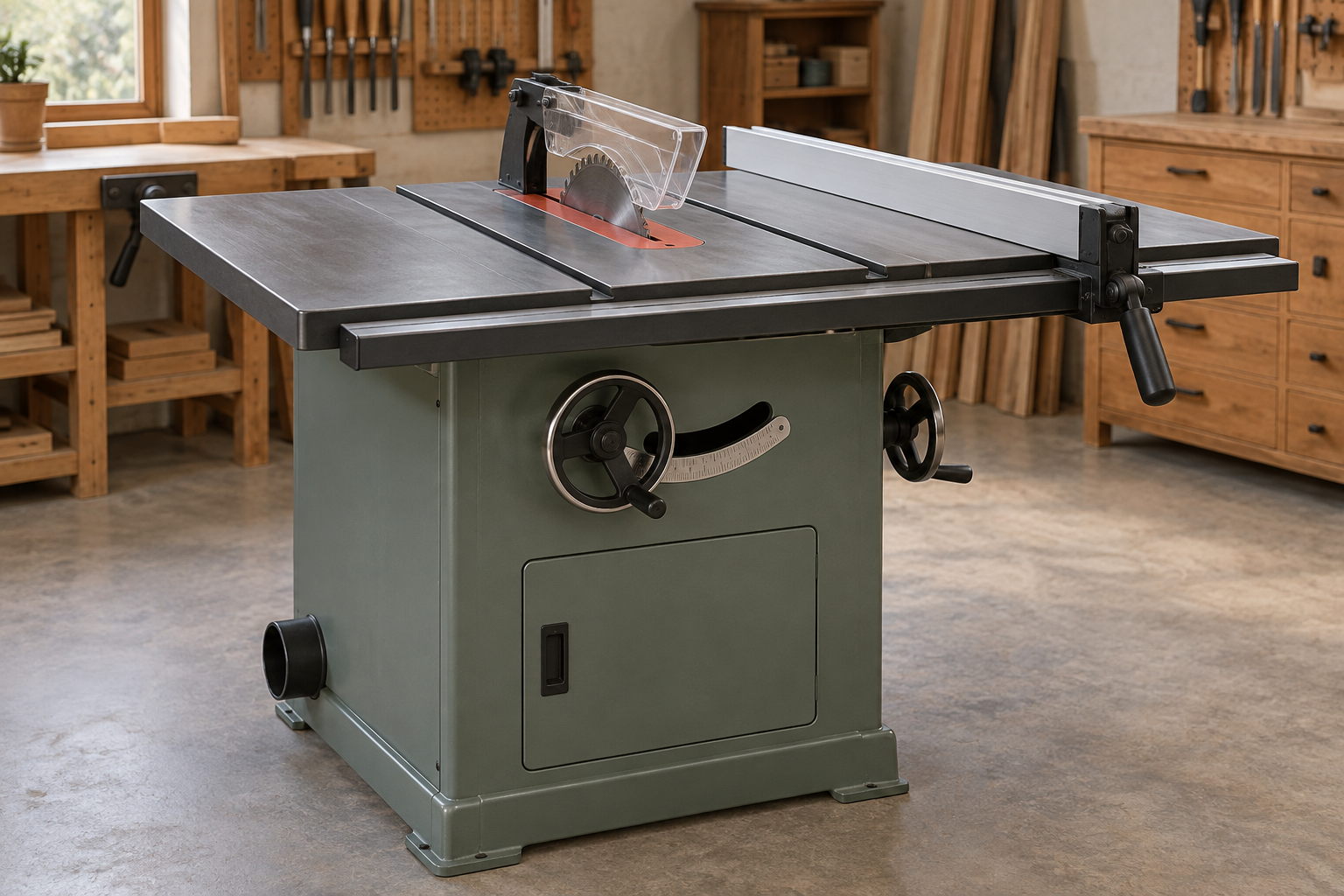
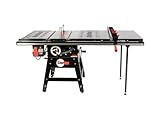
A cabinet saw is the most capable choice for a permanent shop. Its heavy cast-iron table and enclosed base help damp vibration, and its larger motor handles thick hardwood and long ripping sessions without bogging as readily. It also takes up considerable floor space, weighs hundreds of pounds and generally needs a suitable 240-volt circuit. Factor in delivery and moving the saw into position.
A contractor-style or hybrid saw can be a sensible middle ground. Many provide cast-iron work surfaces and a more substantial fence than a portable saw, while costing less and drawing less power than a large cabinet machine. Their limitations vary: some need more careful setup, and a smaller motor may be less comfortable ripping thick, dense stock all afternoon.
Portable jobsite saws are easier to move and often run on a standard 120-volt outlet. They can make accurate joinery when properly adjusted, particularly on short, narrow stock. Their lighter tops and compact fences are less forgiving with wide panels and heavy boards. If a cabinet saw is not practical, compare jobsite table saws with rack-and-pinion fences; the fence design matters more than a long list of accessories.
Compare the main trade-offs
| Type | Best fit | Main trade-off |
|---|---|---|
| Cabinet saw | Permanent furniture shop, frequent hardwood work | High cost, weight and power requirements |
| Contractor or hybrid saw | Small shop seeking more stability than a portable saw | Performance and fence quality vary by design |
| Jobsite saw | Shared spaces, occasional work, limited budget | Less mass and work surface; more support may be needed |
Features worth paying for
Put the fence near the top of the list. It should lock without shifting the measured setting, remain parallel to the blade, and have enough travel for the rip width you actually need. A fence that is easy to adjust is useful, but frequent adjustments are not a substitute for checking alignment. On a budget saw, test the lock at several positions across the table before buying if possible.
Look for a stable, flat table and a miter slot that accepts common gauges without excessive side play. A small amount of play can turn into a visibly inconsistent crosscut. A riving knife that follows the blade height and tilt is valuable for reducing the chance of a kerf closing and pinching the blade. Keep the guard installed when the cut allows it; removing safety equipment for convenience adds risk, not accuracy.
Dust collection is a practical issue, especially in an enclosed cabinet saw. A 4-inch port connected to a capable collector generally captures more than a small shop vacuum connected to a compact port, though the exact result depends on the saw and ductwork. If you are choosing a permanent-shop machine, compare hybrid table saws with cast-iron tables against cabinet saws on fence, service access and electrical needs—not just horsepower.
Set up the blade and stock
For clean joinery, a sharp blade with a suitable tooth count and grind is more useful than an oversized motor. A 40-tooth general-purpose blade is a workable starting point for mixed ripping and crosscutting; a dedicated ripping blade can feed more efficiently through thick hardwood, while a fine crosscut blade can leave a cleaner shoulder. Match the blade’s arbor size and maximum speed to the saw.
Before cutting joinery, check that the blade is clean and not missing or damaged teeth. Align it to the miter slot, then set the fence parallel to the blade. Do not assume the scale is exact: confirm rip widths with a rule or caliper and make a test cut. If the two sides of a test piece differ, check the fence, blade alignment and workpiece before compensating by moving the fence.
Use flat, straight stock. A board that rocks on the table or presses unpredictably against the fence can drift into the blade, even if the saw is aligned. Joint one face and edge first where the project permits. For long boards, use an outfeed support that is level with the table; a support that is too high can lift the work and spoil the cut.
Cut shoulders and tenons with repeatable setups
A dado set can cut a tenon cheek or groove in fewer passes, but it requires a compatible saw, arbor capacity and correct guard arrangement. Check the manual before fitting one. A standard blade can also cut tenons with repeated passes and a stop block, at the cost of more setup time. For occasional joinery, that cheaper method is often enough.
When cutting a tenon, establish the shoulders first with a crosscut sled or a miter gauge that supports the work squarely. Use a stop block only where the offcut cannot become trapped between the blade and stop. For cheeks, make a test tenon and sneak up on the final thickness; aiming for a press fit in one pass can leave a loose joint or split the mortise. Never freehand a small workpiece, reach past the blade, or stand directly in line with likely kickback.
A practical buying decision
Choose a cabinet saw if hardwood joinery is regular work, you have the floor space and electrical service, and the budget covers dust collection and a good blade as well as the machine. Choose a hybrid or contractor-style saw if you want a stationary setup without the full cabinet-saw commitment. A well-adjusted portable saw is adequate for occasional small projects, especially with careful stock preparation and outfeed support; spend the savings on a sharp blade, measuring tools and a solid crosscut sled.
Before paying extra, ask what problem the upgrade solves in your shop. More mass and a better fence can make repeated cuts easier, but they do not replace setup checks or safe technique. If the saw holds alignment, supports your work and has enough capacity for your stock, it can produce accurate joinery without being the largest machine in the room.