Best Stationary Band Saws for Cutting Tenons and Joinery
What's inside
As an Amazon Associate I earn from qualifying purchases. This post may contain affiliate links at no extra cost to you.
Contents
Choosing a saw for joinery
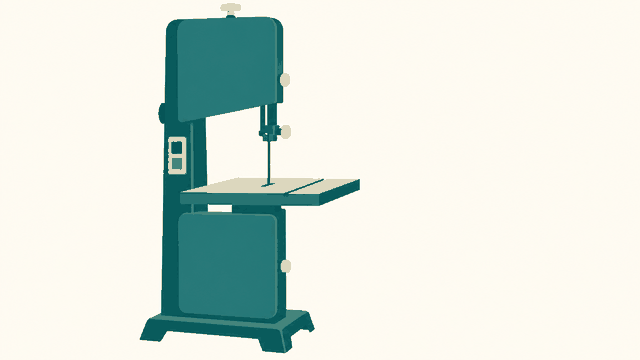
A stationary band saw can cut tenon cheeks, shape shoulders, and remove waste from mortises or large joints. It is especially useful when the workpiece is too thick or awkward for a table saw. But a band saw does not make a finished, square tenon automatically: blade drift, a flexible blade, and a poorly set fence can leave cheeks tapered or shoulders out of square. Plan to tune the saw and clean up the cut with a shoulder plane, chisel, or sanding block.
For joinery, prioritize a rigid frame, reliable blade tracking, a fence that stays square to the table, and enough throat capacity for your stock. A larger motor helps with thick hardwood, but blade quality and tension matter more for accuracy. If you mostly cut tenons in stock under 2 inches thick, a well-set smaller saw can be more useful than a big machine with a poor blade.
What to look for
Blade width and guides: A 1/2-inch blade is a good general choice for straight cuts and tenon cheeks; a narrower blade turns tighter curves but is easier to deflect. Look for guides that can be adjusted close to the blade and support it above and below the table. Guides cannot compensate for a dull or incorrectly tensioned blade.
Throat and resaw capacity: Throat capacity is the distance from blade to frame. It determines how wide a board you can pass through, not how thick it can be. Maximum cutting height governs thickness. For ordinary furniture joinery, 6 inches of height is often enough; more is useful for resawing but may mean a larger, costlier saw.
Table and fence: A flat, tilting cast-iron table is a practical advantage, though you can shim or adjust many tables. A fence is helpful for repeatable cuts, but small fences can flex or sit out of parallel. Check that the fence locks firmly and can be adjusted for blade drift. A miter gauge is useful for crosscuts, but do not assume the included one is accurate without checking it.
Saw types compared
| Type | Best fit for joinery | Trade-off |
|---|---|---|
| Benchtop band saw | Small parts, occasional tenons, stock generally below about 4–6 inches thick | Compact and less expensive, but limited capacity and often less rigid under heavy cuts |
| 14-inch floor-standing saw | Regular furniture work and a mix of joinery, curves, and moderate resawing | More capacity and stability; footprint, setup, and cost increase |
| Large floor-standing saw | Thick stock, wide resawing, and production use | Higher purchase and blade costs; often unnecessary for small tenons |
For occasional work in a small shop, a benchtop woodworking band saw can be sufficient if its capacity matches your stock and you are willing to tune it. For frequent furniture making, a 14-inch floor-standing band saw is a more versatile starting point. Do not buy extra resaw capacity unless you will use it; it does not by itself improve tenon accuracy.
Setting up for tenons
Start with a sharp blade suited to the cut. A 3–4 teeth-per-inch blade clears chips well in thicker stock; a finer blade gives a smoother edge but can clog in deep cuts. For tenon cheeks in hardwood, a sharp 1/2-inch blade with a modest tooth count is usually a sensible balance. Follow the saw maker’s tension guidance, set guides just behind the gullets, and check that the blade tracks centrally on the wheels.
Test for drift on scrap of the same thickness as the workpiece. Draw a straight line, make a freehand cut while following it, then note the angle at which the board was held. Adjust the fence to that angle rather than assuming it must be parallel to the miter slot. Recheck after changing blades: different blades can drift differently.
Mark the shoulder and cheek lines clearly, then cut just to the waste side. A stop block or a depth mark on the blade can help control shoulder cuts, but keep hands out of the blade path and use a push stick for short pieces. Never trap a workpiece between the blade and a fence during a cut where the offcut can bind. For a tenon, cut the shoulders first and remove cheek waste with controlled passes; leave a small amount for fitting rather than trying to hit final size in one cut.
Common problems and fixes
A tenon that is thicker at one end usually points to blade deflection, excessive feed pressure, or guides set too far from the work. Reduce the feed rate, move the guides close to the stock, and verify blade tension. If the cut wanders despite those changes, replace a dull or damaged blade. A wide blade improves straight-line stability but will not fix poor tracking.
Burn marks and rough, chipped edges can come from a dull blade, too many teeth in thick stock, or feeding too slowly. Conversely, forcing the cut makes the blade bow and produces a tapered cheek. Keep the blade clean and let it cut at a steady rate. Dust collection matters too: packed sawdust around the lower guides can affect tracking and obscure a developing problem.
Buying decision
Choose a smaller saw if your stock is modest, cuts are occasional, and floor space or budget is tight. It can cut accurate tenons after careful setup, though it may require more patient feeding and more cleanup. Step up to a floor-standing machine when you routinely cut thick hardwood, need repeatable work across a larger range of sizes, or want the same saw to handle resawing. A sharp 1/2-inch, low-tooth-count band-saw blade is often a better first upgrade than a more powerful saw. Check blade length and width compatibility before ordering.