How to Tune a Table Saw Fence for Consistent Panel Cuts
What's inside
As an Amazon Associate I earn from qualifying purchases. This post may contain affiliate links at no extra cost to you.
Contents
Why fence alignment matters
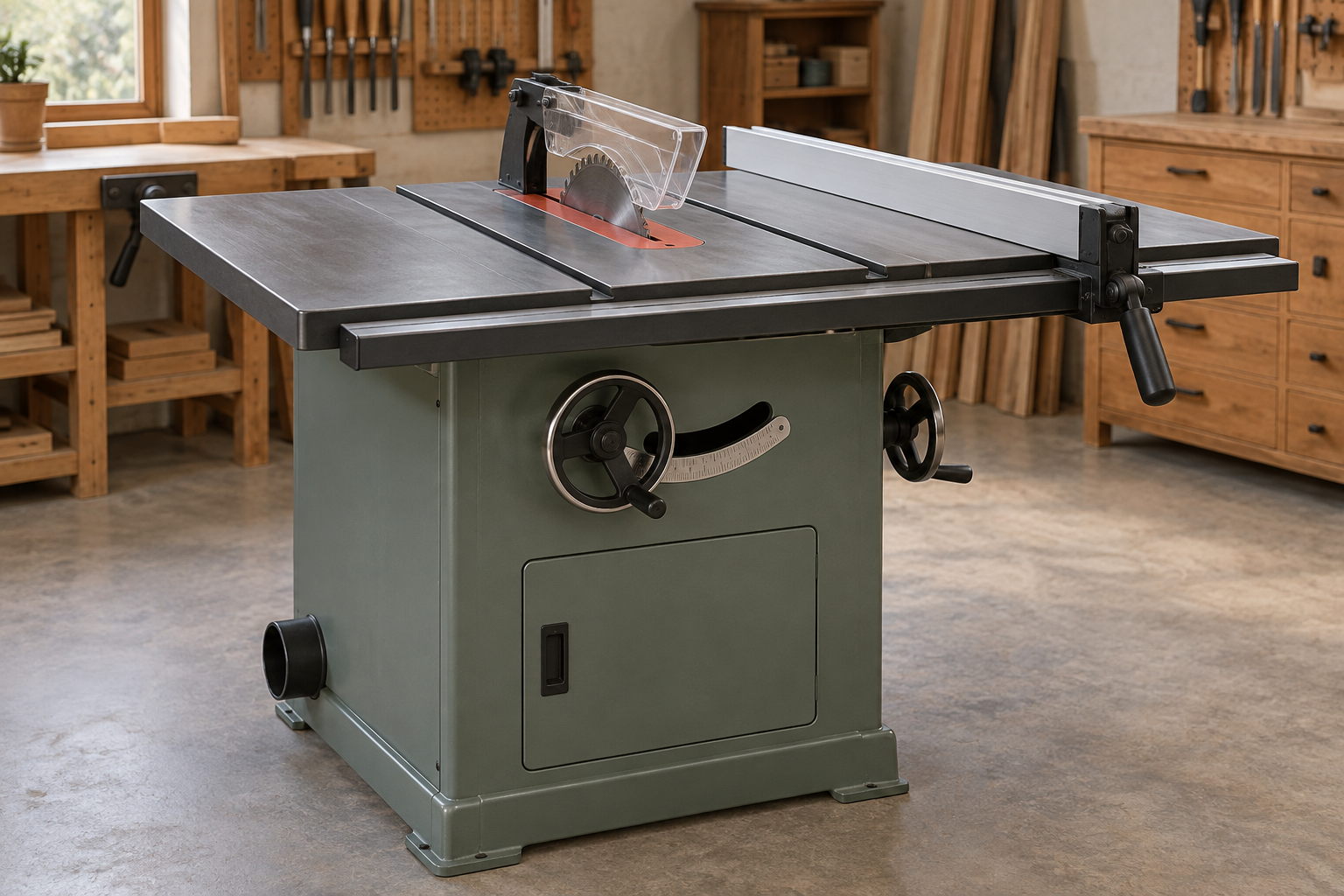
A table saw fence that shifts, pinches the work, or sits at a slight angle can spoil a panel cut—and may increase the risk of kickback. For repeatable cuts, the fence should lock firmly, stay parallel to the blade, and hold its position from the front to the back of the table. Check the saw’s manual first: some fences have specific adjustment points, and the manufacturer’s instructions take priority.
For many cabinet and furniture cuts, a small rearward toe-out—about 0.003 to 0.005 inch—is used to reduce binding. That is only a few thousandths, less than the thickness of a typical sheet of paper. A fence that toes inward toward the blade is a problem; don’t use a rearward gap as a substitute for correcting a loose or unreliable fence.
Tools and preparation
Unplug the saw before adjusting or measuring near the blade. Remove the blade guard only if needed for access, and reinstall it before cutting. Use a clean, sharp blade suitable for the material. A combination square can help with rough checks, but a long straightedge or a dial indicator gives more useful readings for fine alignment. A feeler gauge helps measure small gaps.
Raise the blade enough to expose the teeth, then rotate it by hand to find the same tooth at the front and rear measurement points. Measure from that tooth to the fence, not from the blade body: the plate may not be perfectly flat, and the tooth set can affect the reading. Keep the saw unplugged throughout this process.
Check the fence and table
Clean dust and pitch from the table, fence face, and rails. Debris under the fence can make it sit at an angle; buildup on the rails can stop it from locking consistently. Check that the fence face is flat and tight against its body. If it bows, loosen its fasteners only enough to correct the face according to the fence instructions.
Lock the fence at several positions across the table, including near the blade and near the far end. Try to move it sideways and lift it gently. Some movement at the unlocked fence is normal; movement after locking is not. If the fence rocks, the clamp may need adjustment or worn parts may need replacement. A fence that locks reliably matters more than one with elaborate measuring features.
Measure parallelism
With the blade unplugged and the same tooth rotated to each measurement point, measure the distance from the tooth to the fence at the front and rear. Repeat the check once to rule out a measurement error. For a panel saw setup, aim for the rear measurement to be equal to or slightly greater than the front, within about 0.003 to 0.005 inch if you can measure that accurately. Avoid rear-inward alignment.
If you don’t have a dial indicator, a straightedge and feeler gauges can reveal a meaningful error, though they’re less precise. Don’t chase a number your tools can’t reliably show. A fence that is visibly out of parallel, changes position when locked, or produces burn marks and binding needs attention before making long cuts.
Adjust and recheck
Fence adjustment differs by design. Many models have screws or bolts at the clamp head; others use a rear guide or rail adjustment. Loosen the specified fasteners slightly, shift the fence, then tighten them evenly. Make small changes and measure again after each one. Tightening can pull the fence out of position, so always take the final reading with the fence locked.
Check the fence at both a narrow setting and a wider setting. A fence that aligns near the blade but drifts farther out may have a bent rail, loose mounting, or a twisted fence body. Don’t compensate for that by repeatedly adjusting the clamp head. Fix the cause or have the saw serviced.
Which alignment tool to use
| Tool | Best use | Trade-off |
|---|---|---|
| Combination square | Quick checks and general shop setup | Convenient, but usually not precise enough to resolve a few thousandths |
| Feeler gauges and straightedge | Finding and estimating small gaps | Inexpensive; setup and reading require care |
| Dial indicator with a suitable mounting base | Repeatable blade-to-fence measurements | More precise, but costs more and needs careful setup |
If you need to buy a tool, a table saw alignment gauge with a dial indicator is useful for repeatable adjustments, but it isn’t necessary for every home shop. A sound straightedge and feeler gauges are often enough to find a fence that is meaningfully out of line.
Test with a panel
After adjustment, make a test cut in scrap of similar thickness and length to the panels you plan to cut. Use a push stick or push block, keep the work against the fence, and stand out of the blade’s line. Support large sheets so they don’t sag or twist; an outfeed table or a helper managing the offcut can prevent the panel from steering into the blade. Never reach over or behind a moving blade to catch an offcut.
Measure the test piece at both ends. If the width differs, confirm that the fence stayed locked and the panel stayed flat against it before changing the alignment again. Burning on the cut edge can indicate a dull blade, feed problems, or pinching from alignment—not just a fence error. A clean cut and consistent width over several test pieces are better checks than one measurement alone.
When to replace the fence
A basic fence can be perfectly adequate if it locks securely, stays aligned, and has a straight face. Upgrade only when a real limitation gets in the way: a short fence may not support your work, a weak clamp may shift under pressure, or a poor scale may slow repeat cuts. Before replacing the whole assembly, check whether the manufacturer offers a repair part or adjustment procedure.
If the fence repeatedly moves after locking, won’t remain parallel across its travel, or has a bent rail, stop relying on it for panel work. A replacement table saw fence system may be the sensible fix, but confirm compatibility with the saw’s rail spacing and table dimensions before buying. For occasional cuts, repairing a usable fence—or using a properly secured auxiliary fence—can be cheaper and just as effective.