Table Saw vs Panel Saw for Sheet-Goods Breakdown in a Small Shop
What's inside
As an Amazon Associate I earn from qualifying purchases. This post may contain affiliate links at no extra cost to you.
Breaking down a 4-by-8-foot sheet in a small shop is less about blade speed than about supporting a large, floppy panel safely and keeping it under control. A table saw can do the work, but it needs room, support and a reliable way to handle the sheet. A panel saw is built around that job; it costs more and takes wall or floor space, but makes repeated sheet cuts easier to manage.
As an Amazon Associate we earn from qualifying purchases at no extra cost to you.
Contents
Start with the work
Count how many full sheets you expect to cut, how often you need repeatable dimensions, and whether you can dedicate space to a machine. One or two sheets of plywood for a weekend project do not justify a panel saw for most shops. Regular cabinet work, store-fixture runs or batches of identical parts can change the calculation quickly.
Also separate rough breakdown from final sizing. A saw that cuts a sheet into manageable blanks does not automatically produce cabinet-ready edges. Veneer quality, blade choice, fence accuracy and a later jointing or trimming step all matter.
How the machines differ
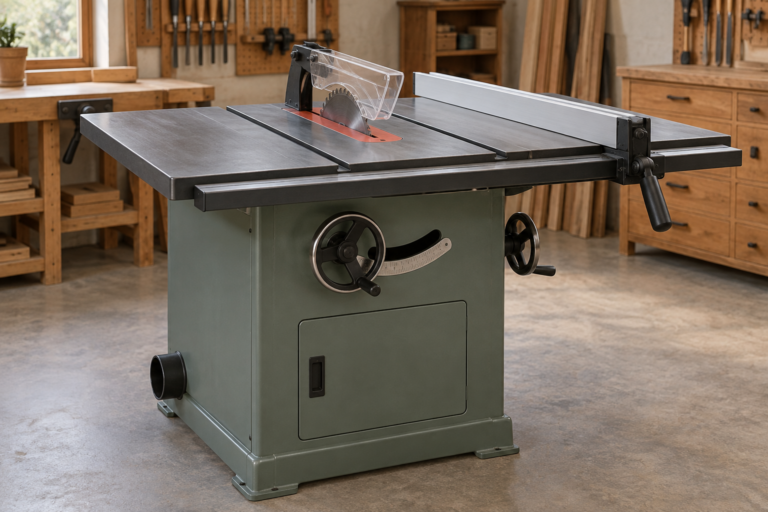
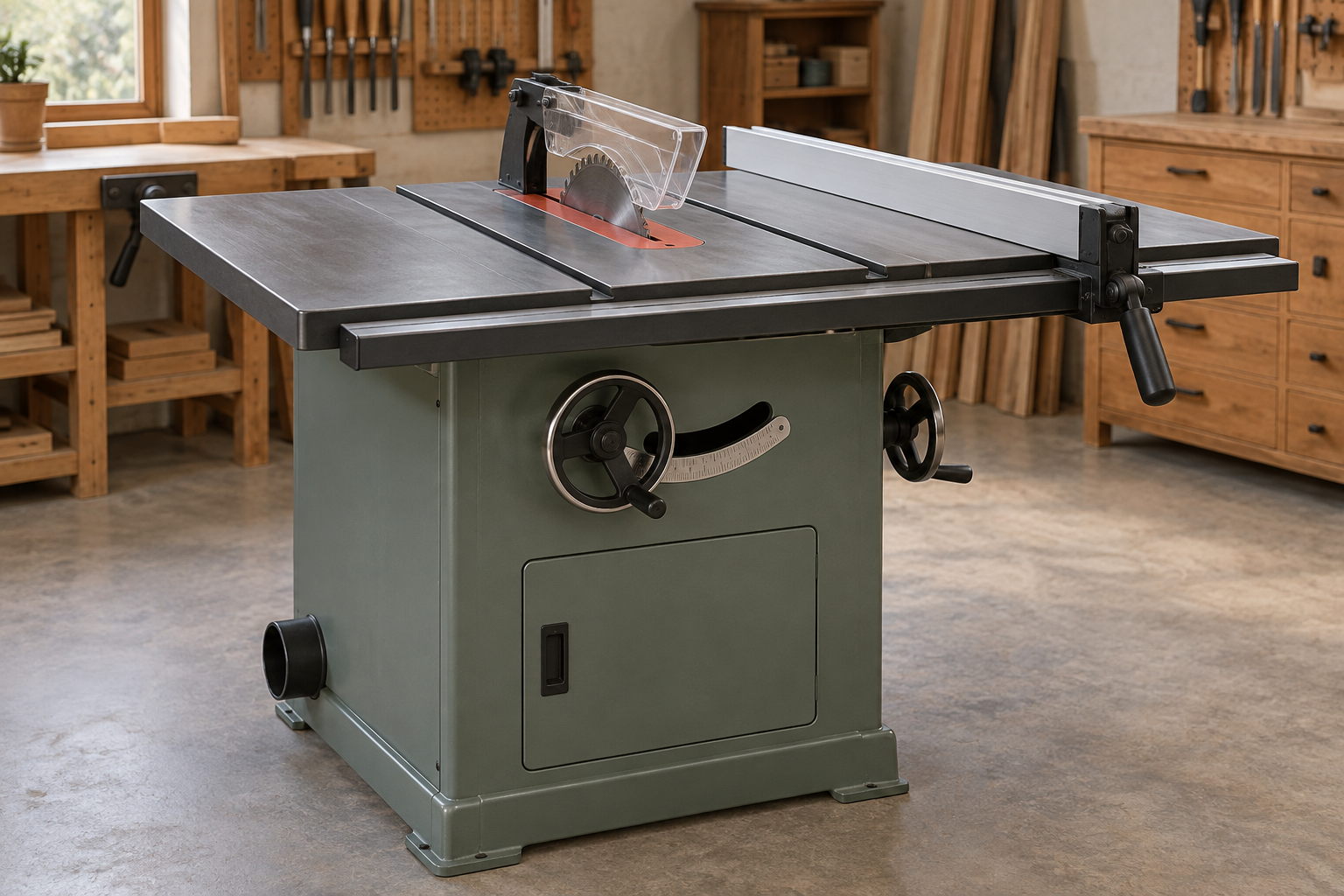
A table saw holds the blade in a fixed position while the operator moves the workpiece past it. For a full sheet, that means supporting the panel before, during and after the cut, and keeping it flat against the table and fence. A standard 30-inch-deep table is nowhere near enough support by itself.
A vertical panel saw holds the sheet upright and moves a saw carriage through it. Many machines make vertical cuts with the panel supported against a back frame; some also allow horizontal crosscuts. A sliding-table panel saw instead supports the sheet on a moving carriage. Both types are designed to reduce the awkward lifting and steering involved in feeding large panels across a table saw, though their footprints and price differ.
Quick comparison
| Factor | Table saw | Panel saw |
|---|---|---|
| Best fit | Mixed solid wood and sheet goods; occasional sheet breakdown | Frequent, repeatable sheet breakdown |
| Sheet handling | Requires outfeed and side support, plus a controlled feed | Sheet stays supported on a frame or carriage |
| Space | Machine footprint plus clear infeed, outfeed and side clearance | Vertical type uses wall space; sliding type needs carriage travel |
| Versatility | High for ripping, crosscutting and many shop operations | Focused on panel cutting; capabilities vary by design |
| Typical trade-off | Lower cost if you already own one, but more setup and handling | Higher purchase cost and dedicated space for easier sheet work |
Making a table saw work
For occasional breakdown, the economical choice is often a well-set-up table saw with an appropriate fence and proper support. A full sheet measures 48 by 96 inches and can weigh roughly 45 to 75 pounds depending on material and thickness. That is cumbersome enough that an unsupported corner can dip, bind the blade or pull the sheet away from the fence.
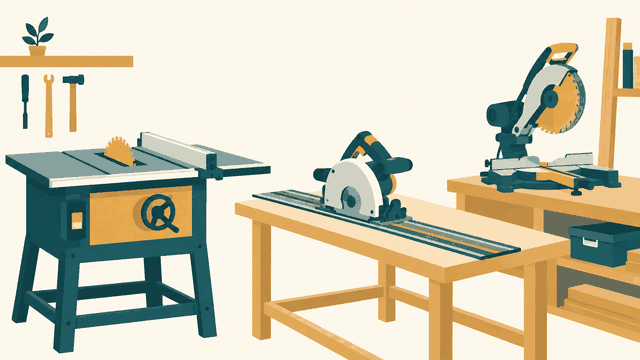
Plan for support on the infeed, outfeed and the side of the saw where the sheet overhangs. Roller stands can help, but they must be level with the table and positioned so they do not steer the panel. A large outfeed table and a helper are useful; neither makes a poor feed path safe. If you cannot control a full sheet without reaching across the blade or wrestling it, break it down with a track saw or circular saw and a straightedge first, then finish the edges on the table saw.
A sharp, suitable plywood blade helps limit tear-out. Keep the workpiece against the fence without forcing it sideways, and use a riving knife and guard where the cut allows. Binding, a sheet lifting off the table, or a cut that closes behind the blade are warning signs to stop and reassess the support and cut plan. Do not try to catch a falling offcut near a running blade.
If you are buying a saw mainly for this approach, compare table saw outfeed support options with a dedicated breakdown setup. Support is not a substitute for a suitable saw, a stable fence or safe technique.
When a panel saw earns its space
A vertical panel saw can make the first cut in a sheet much less awkward because the frame carries the panel instead of asking you to balance it on a table. It is especially useful when you repeatedly cut standard sheet sizes into narrower strips or parts, and when floor space is limited but a suitable wall is available. Check the actual cutting capacity: “4-by-8” describes the sheet, not necessarily the machine’s usable cut length or crosscut range.
A sliding-table panel saw supports the work on a carriage and is better suited to controlled crosscuts and repeated sizing, but it generally needs more clear floor area. Either style needs calibration. A fence or scale that is out of square can turn a stack of identical-looking parts into a stack of parts that do not fit. Check cuts against a reliable square and verify dimensions on the material you actually use.
Panel saws also have limits. Many vertical models are intended for rough breakdown rather than fine joinery, and cut quality depends on the blade, scoring arrangement if fitted, panel support and machine adjustment. Before buying, check the cut orientation, maximum sheet thickness, available dust collection, replacement-blade options and whether the machine can be anchored or installed securely.
If your workload points toward a dedicated machine, compare vertical woodworking panel saws and sliding-table panel saws by capacity and required clearance, not just price.
A practical buying decision
Choose the table saw if you already own one, sheet breakdown is occasional, and you can support the material safely—or if you are willing to rough-cut sheets with a portable saw first. That second method is often cheaper than buying a machine for a handful of cuts, and it avoids feeding an unwieldy full sheet over a small saw table.
Choose a panel saw if sheet goods are a regular part of your work, handling them is the bottleneck, and you can verify that the machine’s capacity and installation fit your shop. For a small shop doing cabinet work week after week, less lifting and more repeatable first cuts may be worth the dedicated footprint. For occasional DIY projects, the table saw is usually the better buy; spend the difference on support, a good blade and a safe breakdown method.