Best Cast Iron Router Tables for Stable, Low-Vibration Routing
What's inside
- Quick Answer: Who Should Buy a Cast Iron Router Table
- Why Cast Iron Still Wins for a Router Table Top
- The Criteria That Actually Matter
- Comparison: Cast Iron Router Table Options (2026)
- Decision Matrix: Match Your Situation to a Top
- Ownership Realities Listings Won’t Tell You
- Setup Steps That Protect the Flatness You Paid For
- FAQ
- Related Guides
- Quick Answer: Who Should Buy a Cast Iron Router Table
- Why Cast Iron Still Wins for a Router Table Top
- The Criteria That Actually Matter
- Comparison: Cast Iron Router Table Options (2026)
- Decision Matrix: Match Your Situation to a Top
- Ownership Realities Listings Won’t Tell You
- Setup Steps That Protect the Flatness You Paid For
- FAQ
- Related Guides
As an Amazon Associate I earn from qualifying purchases. This post may contain affiliate links at no extra cost to you.
Contents
- Quick Answer: Who Should Buy a Cast Iron Router Table
- Why Cast Iron Still Wins for a Router Table Top
- The Criteria That Actually Matter
- Comparison: Cast Iron Router Table Options (2026)
- Decision Matrix: Match Your Situation to a Top
- Ownership Realities Listings Won’t Tell You
- Setup Steps That Protect the Flatness You Paid For
- FAQ
- Related Guides
Quick Answer: Who Should Buy a Cast Iron Router Table
A cast iron router table is the right choice if you want a dead-flat, vibration-damped surface that will stay accurate for decades — and you have a fixed spot for it. If your shop doubles as a garage or you need to roll tools aside, cast iron’s 50–100+ lb mass works against you, and a phenolic or aluminum-top table on a mobile base is the better call.
For most woodworkers in 2026, three options cover the field:
As an Amazon Associate we earn from qualifying purchases at no extra cost to you.


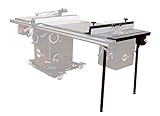
- Permanent shop, heaviest work: a freestanding cast iron table like the Grizzly T10222.
- Already own a cabinet saw: a cast iron router table extension wing (SawStop RT-C27 or Bench Dog ProMax 40-102) that bolts into your saw’s wing slot.
- Mobility required: skip cast iron entirely — buy a phenolic or aluminum top and put the savings toward a better lift and fence.
Why Cast Iron Still Wins for a Router Table Top
Cast iron does two things no other tabletop material does as well: it stays flat under load, and it absorbs vibration. A router spinning at 20,000+ RPM transmits high-frequency vibration into the top. Phenolic and MDF dampen some of it; a 60–80 lb slab of cast iron essentially swallows it. The result is cleaner edge profiles, less chatter on raised panels, and less fatigue if you’re routing for hours.
The tradeoffs are real though: cast iron router table tops rust in humid or unheated shops, they’re miserable to move, and a dropped iron top can crack rather than dent. The comparison below keeps those realities in view.
The Criteria That Actually Matter
Top flatness
Reputable cast iron tops are ground to roughly ±0.002″–0.005″ across the surface — comparable to table saw wings. Phenolic tops are flat when new but can sag near the insert opening over years of heavy routers hanging underneath. If you rout panel-raising bits (3″+ diameter, high cutting forces), flatness is non-negotiable.
Mass
A cast iron router table top alone typically weighs 45–90 lb. Mounted in a full cabinet, total weight reaches 150–300 lb. That’s stability you can’t buy any other way — but it also means “mobile” setups need a cast iron-compatible mobile base rated well above the static weight, because momentum on a slope or threshold adds load.
Rust resistance
Cast iron needs maintenance: paste wax or a dry-film protectant, re-applied every few months in climate-controlled shops and monthly in damp ones. Some tops ship with a light coat of machining oil — clean it off with mineral spirits before waxing, or the wax won’t bond. A phenolic top never rusts; if your shop is an unheated barn or coastal garage, factor the upkeep honestly.
Fence design
The fence matters more than the top material for day-to-day accuracy. Look for: a rigid extruded-aluminum body, a cam or T-track lock that holds square without drift, split/offset faces for jointing-style work, and a bit guard. A cheap fence on a premium cast iron top is wasted money — budget accordingly.
Insert plate compatibility
Most cast iron tops use a standard opening sized for common plates and lifts (the ~9-1/4″ x 11-3/4″ format fits JessEm and many Kreg-style plates). Check the opening before buying, especially if you already own a router lift — a mismatched insert means re-machining or returning the top.
Permanent vs. mobile shop
Cast iron suits a permanent bench or an extension wing. If you rearrange your shop seasonally, cast iron is a poor fit even on a mobile base — you’re moving ~200 lb every time. That scenario favors a lighter table you can actually tilt and wheel.
Comparison: Cast Iron Router Table Options (2026)
| Model / Type | Top size | Top weight | Format | Insert opening | Fence | Best for | Typical price range |
|---|---|---|---|---|---|---|---|
| Grizzly T10222 | 27″ x 20″ (approx.) | ~80 lb top; ~200 lb assembled | Freestanding cabinet table | Standard 9-1/4″ x 11-3/4″ | Included aluminum fence, split faces | Dedicated permanent station | $600–$900 |
| Bench Dog ProMax 40-102 | ~28″ x 16-1/2″ | ~50 lb | Table saw extension wing | Standard plate; takes most lifts | Bench Dog ProFence included | Adding routing to a cabinet saw footprint | $350–$500 |
| SawStop RT-C27 | 27″ x 16″ | ~50 lb | Extension wing (SawStop saws) | Accepts SawStop/other standard plates | Fence sold separately or in package | SawStop owners; dust collection integration | $400–$600 (wing only) |
| Phenolic-top alternative (for contrast) | 24″ x 32″ typical | ~25–35 lb | Freestanding or benchtop | Standard | Varies | Mobile shops, damp environments | $300–$600 complete |
Dimensions and weights are approximate; verify against current spec sheets, as manufacturers occasionally revise castings.
Decision Matrix: Match Your Situation to a Top
| Your situation | Recommended choice | Why |
|---|---|---|
| Heated permanent shop, cabinet saw already in place | Cast iron extension wing | Adds a router station using space you already have; shares the saw’s rip fence potential |
| Permanent shop, no table saw, frequent router work | Freestanding cast iron table (e.g., Grizzly T10222) | Full mass and flatness; dedicated station avoids setup time |
| Garage shop, tools must move for cars | Phenolic top on a mobile base | ~150 lb less to move; no rust worry with temperature swings |
| Unheated/humid space | Phenolic or cast iron only with a strict wax routine | Rust on an iron top ruins flatness near the insert — the worst possible spot |
| Budget under $400 total | Quality phenolic table + save for a lift | A cheap fence or flimsy base hurts accuracy more than top material helps it |
Ownership Realities Listings Won’t Tell You
- What wears first: not the iron — the insert plate levelers and the fence’s T-track hardware. Nylon leveling screws strip over time; keep spares. Fence faces (MDF or laminate) wear where bits contact them and are consumable.
- The rust cycle: bare cast iron in a shop that swings from cold to warm will flash-rust in a single humid week. A paste-wax coat (Johnson’s or similar) every 1–3 months prevents it entirely. Skip silicone-based sprays — silicone contaminates finishes.
- Machining marks: new tops often arrive with faint grinding swirls. They’re cosmetic; don’t sand them out, you’ll only un-flat the surface.
- Mobile base math: a 200 lb table needs a base rated ~400+ lb for safety margin when rolling over cords and floor lips. Two locking casters minimum; four is better for a top this heavy.
- Common mistake: mounting a router with an under-powered motor. The mass of a cast iron table shines with 2-1/4 HP+ fixed-base routers or 3+ HP motors in a lift; a 1 HP trim router wastes the platform.
Setup Steps That Protect the Flatness You Paid For
- Clean before first wax. Remove shipping oil with mineral spirits, let dry, then apply paste wax. Re-wax after any wet-cleaning.
- Level the insert plate with a straightedge. Set the plate’s leveling screws so a steel ruler bridges plate-to-top with no rock and no lip — a raised insert edge catches workpieces and a recessed one burns profiles.
- Check fence square to the table, not just parallel to a miter slot, since many cast iron router table tops have a single T-track rather than dual miter slots.
- Mount the router or lift fully before final fence setup — the 15–25 lb hanging weight changes how the top sits on its stand, and you want to square the fence under loaded conditions.
- Quarterly: inspect the top for rust spots, re-wax, and re-check insert levelness. Ten minutes of maintenance keeps the surface accurate indefinitely.
FAQ
Is a cast iron router table top worth it over phenolic?
If the table stays in one place and you run large bits or long sessions, yes — the vibration damping and permanent flatness are measurably better. If you move tools or your shop is damp, phenolic’s lower maintenance and weight win.
Can I use a cast iron router table top on a mobile base?
Yes, but choose a base rated at least double the total weight and accept that “mobile” means “moves occasionally,” not “rolls away weekly.”
Do cast iron tops fit any router lift?
Most use the standard ~9-1/4″ x 11-3/4″ opening that fits JessEm, Kreg-style, and similar plates. Always measure the opening and compare to your lift’s dimensions before purchase.
How do I fix rust on a cast iron router table?
Light surface rust: scrub with a Scotch-Brite pad and WD-40 or mineral spirits, wipe clean, wax immediately. Deep pitting near the insert affects accuracy and is usually not repairable at home — prevention beats repair.