Craftsman Router Table Review: Features, Setup, and Value
What's inside
- Assembly and Initial Setup: What to Expect
- Usable Work Surface and Build Quality
- Fence Stability: The Deciding Factor
- Router Fit and Compatibility
- How It Compares on Specs
- Durability and Ownership Realities
- Is It Right for a Small Workshop? A Decision Matrix
- Bottom Line for Buyers
- Frequently Asked Questions
- Related Guides
- Assembly and Initial Setup: What to Expect
- Usable Work Surface and Build Quality
- Fence Stability: The Deciding Factor
- Router Fit and Compatibility
- How It Compares on Specs
- Durability and Ownership Realities
- Is It Right for a Small Workshop? A Decision Matrix
- Bottom Line for Buyers
- Frequently Asked Questions
- Related Guides
As an Amazon Associate I earn from qualifying purchases. This post may contain affiliate links at no extra cost to you.
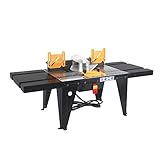
The Craftsman router table is a budget-friendly benchtop option best suited for beginners and small-shop woodworkers who need a compact, occasional-use station, while those needing daily precision or heavy production work will find its aluminum fence and MDF top limiting.
As an Amazon Associate we earn from qualifying purchases at no extra cost to you.


Contents
- Assembly and Initial Setup: What to Expect
- Usable Work Surface and Build Quality
- Fence Stability: The Deciding Factor
- Router Fit and Compatibility
- How It Compares on Specs
- Durability and Ownership Realities
- Is It Right for a Small Workshop? A Decision Matrix
- Bottom Line for Buyers
- Frequently Asked Questions
- Related Guides
Assembly and Initial Setup: What to Expect
Most Craftsman router tables ship as a flat-pack benchtop unit requiring full assembly of the legs, top, fence, and switch housing. Expect 60 to 90 minutes with two people, a Phillips screwdriver, and a 10mm wrench. The included instructions are diagram-heavy, so dry-fitting parts before tightening is essential for squaring the top to the base.
Step-by-Step Assembly With Reasons
- Level the top first: Attach the MDF top to the steel leg frame loosely, then place it on a known flat surface like a table saw top and tighten. This prevents a twist that would throw off fence alignment later.
- Install the router plate, then check flush: The plate sits in a routed recess. Lay a straightedge across the top diagonally; if the plate is proud or low by more than 1/64 inch, add or remove the included leveling screws and shims. A non-flush plate catches workpieces on entry.
- Mount the fence before wiring the switch: The two-piece aluminum fence bolts to the top with slotted brackets. Sliding it full travel before final tightening reveals if the slots are binding, which is easier to fix without the power cord in the way.
- Square the fence to the miter slot: Use a combination square against the miter slot, not the table edge. The table edge is not a precision reference on this class of table.
- Set bit height with the router installed: Hang the router on the plate first, then adjust the safety switch housing so the cord reaches without pulling. This avoids strain on the paddle switch that can pop its plastic housing loose over time.
Usable Work Surface and Build Quality
The usable surface is smaller than the overall footprint suggests. The fence, when centered over the bit, leaves about 8 to 9 inches of infeed support and 6 to 7 inches outfeed on a typical 26-inch wide top. That is enough for trim, small rails and stiles, and box parts, but long stock over 36 inches will need outfeed support or a roller stand to prevent tipping.
Construction is a laminate-coated MDF top over a stamped steel base, with an aluminum router plate and an aluminum two-piece fence. The laminate resists glue and light moisture but will swell if unfinished MDF edges are left exposed to humidity. Sealing the underside and plate opening edges with polyurethane or shellac significantly extends life in an unheated garage.
Weight is the trade-off for portability. At under 35 pounds assembled without a router, the table can walk during heavy cuts. Bolting it to a plywood base, clamping it to a workbench, or adding sandbags to the lower cross-braces reduces vibration and movement without permanently occupying floor space.
Fence Stability: The Deciding Factor
The fence is a split, two-piece aluminum extrusion with independent left and right faces that slide for bit clearance, plus a clear plastic bit guard and dust port. For edge profiling and light dado work it stays adequately square if locked carefully.
Two weaknesses determine its limits:
- Deflection under pressure: The fence is supported only at its feet where it clamps to the table. Pushing hard with a featherboard or a large panel can flex the center by 1/32 to 1/16 inch, enough to create a slight bow in a profile. Using light, consistent feed pressure and keeping the fence faces close to the bit opening minimizes this.
- Jointed fence alignment: The left and right faces adjust independently, which allows offset for jointing, but they can go out of parallel if the locking knobs are overtightened unevenly. After setting bit exposure, lock one side, check with a straightedge across both faces, then lock the second. Recheck after the first few cuts, as vibration can settle the knobs.
Dust collection through the 2-1/2 inch port behind the fence is functional for chips but not for fine dust without a shop vacuum with adequate CFM. Expect to clear the fence cavity after heavy MDF or plywood routing to prevent buildup that pushes the fence out of square.
Router Fit and Compatibility
The Craftsman table uses a universal aluminum plate pre-drilled for most fixed-base and plunge routers with common bolt patterns, including Craftsman, DeWalt, Bosch, Makita, and Ryobi compact and mid-size routers. Large 3-1/4 HP plunge routers typically exceed the plate’s weight limit and the under-table clearance.
Key fit details to verify before buying:
- Plate opening: Accepts standard 9-1/4 x 11-3/4 inch plates, so aftermarket plates can be substituted. The included plate has a 2-inch center hole with concentric reducing rings for 1-1/2 inch and 1 inch openings.
- Under-table clearance: Approximately 10 to 11 inches from plate bottom to the steel cross brace. Routers taller than 10 inches with handles attached may require removing handles or mounting without the plunge base.
- Switch integration: The built-in paddle switch is rated for 15A / 120V and acts as a secondary disconnect. You still use the router’s own switch set to ON. This is a safety convenience, not a variable speed control. Routers without soft start will still jerk on startup.
- Lift compatibility: The table is not designed for a full router lift. A lift plate can be fitted if it matches the recess dimensions, but you will lose the included leveling system and need to drill for the lift’s crank access.
How It Compares on Specs
Compared to other benchtop tables in the same general market range, the Craftsman trades mass and surface area for low cost and storage convenience.
| Feature | Craftsman Benchtop Router Table | Bosch RA1181 Benchtop | Kreg PRS1045 Benchtop |
|---|---|---|---|
| Overall Top Size (W x D) | 26 x 16.5 in | 27 x 18 in | 24 x 16 in |
| Usable Surface (fence centered) | ~16 x 13 in effective | ~18 x 15 in effective | ~16 x 14 in effective |
| Top Material | Laminated MDF, aluminum plate | Laminated MDF, aluminum plate | MDF with laminate, phenolic plate |
| Fence Type | 2-piece aluminum, jointing capable | 2-piece aluminum, tall fence | Single-piece with T-track |
| Weight (without router) | 32-34 lbs | 37-40 lbs | 33-35 lbs |
| Dust Port | 2-1/2 in rear | 2-1/2 in rear | 2-1/2 in rear |
| Miter Slot | 3/4 x 3/8 in standard | 3/4 x 3/8 in standard | 3/4 x 3/8 in with T-slot |
| Height (on legs) | 14.5 in benchtop | 15 in benchtop | 14 in benchtop |
The table’s numbers explain its behavior: lighter weight and a smaller top make it easier to store on a shelf, but also mean less damping of vibration compared to heavier cast-top or stand-mounted tables like the Kreg PRS2100 or Bosch RA1200 series, which weigh 80+ pounds and offer 30+ inch widths.
Durability and Ownership Realities
In long-term ownership, three areas show wear first on this class of table:
- MDF edge swelling: The plate recess and the bit opening are raw MDF. Even a single water spill or prolonged damp air can cause the plate to bind. Seal these edges before first use and wax the top with paste wax (not silicone) every 2 to 3 months to keep stock sliding.
- Fence locking hardware: The plastic knobs and carriage bolts wear and strip if overtightened. Hand-tight plus a quarter turn is sufficient. Replacing the knobs with star knobs and washers from a hardware store is a common low-cost upgrade.
- Router plate sag: Heavy routers (over 8-9 lbs) can cause a thin aluminum plate to sag 0.010 to 0.020 inch over a year, creating a dip around the bit. Rotating the plate 180 degrees periodically or upgrading to a thicker phenolic or aluminum plate prevents a permanent set.
Consumables to plan for are featherboards, replacement reducing rings, and a new bit guard if the plastic cracks. Cleaning matters more than on a cast iron tool: vacuum the fence track and the switch box after each session, as fine dust packs around the paddle switch spring and makes it sticky.
Common mistakes that shorten life are using the fence as a jointer with more than 1/32 inch offset per pass, which overloads the fence feet; climbing cutting to fix tearout, which pulls the workpiece under the fence; and leaving the router hanging in the plate between sessions in a humid shop, which invites plate corrosion and MDF distortion.
Is It Right for a Small Workshop? A Decision Matrix
The best pick depends on space, frequency, and the type of work you do most.
| Your Situation | Best Fit | Why |
|---|---|---|
| Tight space, must store after each use, routing 1-2 times per month for roundovers and chamfers | Craftsman benchtop table | Light, compact, general market range cost; adequate accuracy for trim work |
| Small shop but weekly use for rails, stiles, and raised panels | Heavier benchtop like Bosch RA1181 or stand-mounted table | More mass reduces flex; taller fence supports vertical panel bits better |
| Apartment balcony or shared garage, noise/vibration sensitive | Craftsman clamped to a heavy workbench + compact router | Low weight plus external bench mass gives stability without dedicated stand |
| Plan to use a 3+ HP router or lift for production | Full-size steel stand table with cast or phenolic top | Benchtop MDF and aluminum plate cannot support weight and heat long-term |
| Beginner learning on a limited budget | Craftsman benchtop table | Low entry cost; teaches fence and bit setup before investing in a premium table |
A practical way to think about value is cost per use. At a general market range of roughly $130 to $180 for this class of benchtop table, using it twice a month for two years equals 48 uses, or about $2.70 to $3.75 per use before bits and routers. If you expect to use a router table weekly for the next three years, a heavier $300 to $450 stand-mounted table drops to a similar per-use cost but with better durability, making it the better long-term value for frequent users.
Bottom Line for Buyers
Judge the Craftsman router table on three criteria for your shop: fence rigidity for the profiles you cut most, flatness of the plate-to-top transition, and whether you can secure the light base against movement. If you need a stowable station for light to moderate routing and you are willing to seal the MDF, wax the top, and check fence square regularly, it is a serviceable entry point. If your work demands dead-flat repeatability for long hardwood runs or you run a heavy router daily, invest in a heavier, larger table with a cast or thick phenolic top and a fully T-tracked fence.
Frequently Asked Questions
Will a DeWalt, Bosch, or Makita router fit the Craftsman plate?
Most compact and 2 to 2-1/4 HP routers from those brands fit the pre-drilled pattern or can be fitted by drilling the aluminum plate. Check your router’s base diameter and handle width against the 10 to 11 inches of under-table clearance before buying.
Can you mount this table to a workbench permanently?
Yes. The steel legs have mounting holes. Bolting through a plywood top into a bench eliminates walking and improves cut quality. Use flat-head bolts below the table surface and keep the bench top flat to avoid twisting the MDF.
Does it work as a jointer for straightening edges?
The split fence allows a jointing offset with shims behind the outfeed face, but it is intended for light edge cleanup of 1/32 inch or less, not for replacing a jointer on bowed or twisted stock. Heavy jointing flexes the fence and overloads small routers.
How accurate is the miter slot?
The slot is a standard 3/4 inch but is formed in MDF, not machined metal. It works with a miter gauge or featherboard, but a steel miter bar may fit loosely. Adding UHMW tape to the bar or using an aluminum bar with adjustable nylon set screws improves the fit.