Best Table Saws for Processing Reclaimed Hardwood Flooring
What's inside
As an Amazon Associate I earn from qualifying purchases. This post may contain affiliate links at no extra cost to you.
Reclaimed hardwood flooring is harder on a table saw than new, clean lumber. Boards may contain hidden nails, staples, grit, dried adhesive, paint, cupped edges, and warping from years of seasonal movement. The best saw is not necessarily the one with the largest motor. It is the saw with enough stability, adjustment range, dust control, and safety margin to handle dirty stock repeatedly.
Before choosing a machine, decide how much flooring you will process. A homeowner cutting a few dozen boards can work successfully with a good contractor-style saw. A flooring installer or shop processing hundreds of square feet will benefit from a heavier hybrid or cabinet saw, particularly if the work involves ripping thick boards down to usable widths.
As an Amazon Associate we earn from qualifying purchases at no extra cost to you.


Contents
What reclaimed flooring demands from a table saw
First, reclaimed boards must be inspected and cleaned before they reach the blade. A metal detector is useful, but it does not replace visual inspection. Remove loose nails and staples, scrape off blobs of adhesive, and use a hand plane or belt sander to expose suspicious areas. One embedded nail can damage carbide teeth, throw a board backward, or leave fragments in the operator’s hands.
Uneven boards are another problem. A cupped board may rock on the table, pinching the blade at the back of the cut. A bowed board can drift away from the fence and produce a tapered rip. These defects are not solved by buying a more powerful saw. Flatten one face with a planer or jointer first, or use a sled and other appropriate support methods for stock that cannot safely sit flat.
For this work, look for a rigid cast-iron or heavy steel table, a fence that locks squarely without flexing, a riving knife that stays aligned with the blade, and a dust port that can connect to a real extractor. A 10-inch saw with a 15-amp motor is sufficient for most flooring thicknesses, but power is only useful when the blade remains sharp and the board feeds evenly.
Which type of table saw makes sense?
| Saw type | Best use | Advantages | Limitations |
|---|---|---|---|
| Contractor saw | Occasional reclamation and job-site work | Portable, affordable, usually 15 amps | Less rigid; stands and fences vary widely |
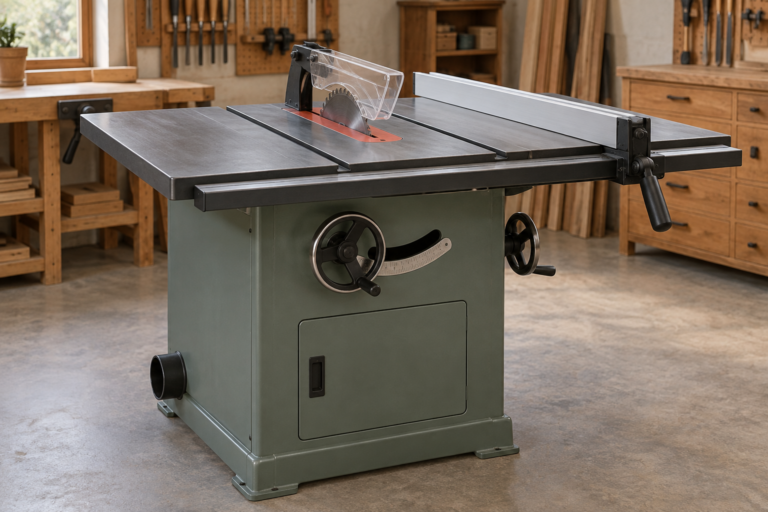
| Hybrid saw | Regular home-shop processing | Heavier table, enclosed base, better dust collection | More expensive and difficult to move |
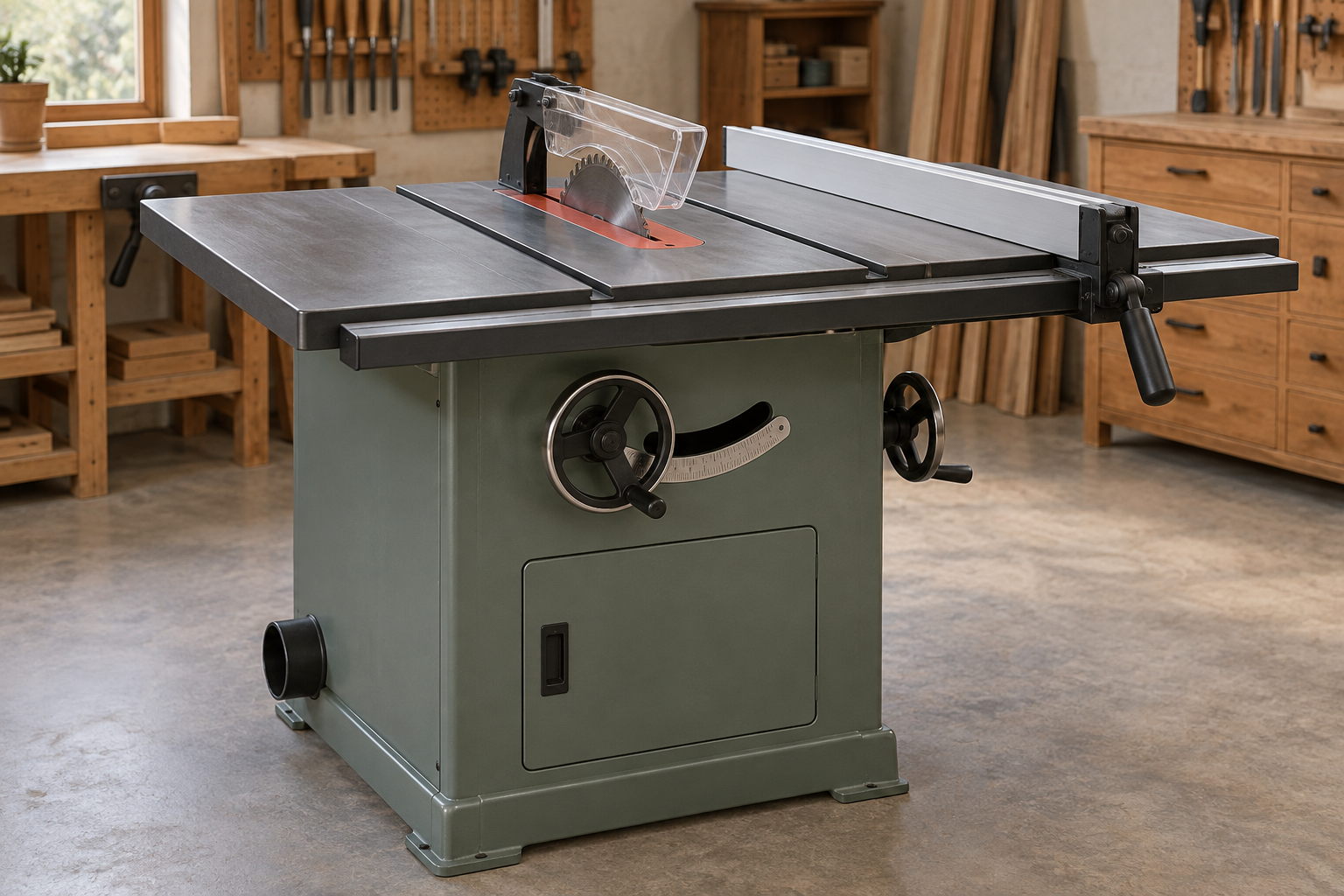
| Cabinet saw | High-volume shop use | Excellent stability, power transmission, and fence support | Expensive, heavy, and requires dedicated space |
A quality contractor table saw is the sensible low-cost choice when the work is occasional. It can rip reclaimed flooring accurately if the fence is rigid and the stand does not wobble. Spend part of the budget on a better blade, outfeed support, and a metal detector rather than paying for a larger motor you do not need.
A hybrid saw is the better middle ground for a serious home workshop. Its heavier table resists movement when a crooked board contacts the fence, and the enclosed cabinet generally captures more dust than an open contractor-saw stand. It is still usually limited to a 120-volt, 15-amp circuit, so it will not feed thick hardwood dramatically faster than a contractor saw.
A cabinet saw is justified when reclaimed material is a regular part of your business or when you need consistent ripping for long production runs. Its weight—often several hundred pounds—helps keep cuts stable. The downside is that moving it into a garage or basement may require machinery-moving equipment, and a cabinet saw still cannot safely cut a board that is badly twisted or hiding metal.
Blade, safety, and setup
Use a sharp 40-tooth combination blade or a quality 24-tooth ripping blade for solid flooring. A ripping blade removes waste faster, while a combination blade leaves a cleaner edge when you also crosscut. Reclaimed wood shortens blade life, so avoid using your best finish blade until the boards have been inspected and cleaned. Keep a second blade available rather than forcing a dull one through oak or maple.
A riving knife should be installed for normal ripping. It helps prevent the kerf from closing behind the blade and reduces the chance of kickback. Keep the guard installed when possible; if the flooring’s shape makes that impossible, use push sticks, push blocks, and featherboards instead of placing your hands near the blade. Stand to the side of the cut line, not directly behind the board.
For long flooring boards, use level infeed and outfeed support. A support that is even slightly high can lift the board into the blade; one that is low can cause the trailing end to drop and bind. A roller stand is useful only when adjusted carefully. A full outfeed table is more predictable.
Dust collection and fence quality
Reclaimed flooring produces fine hardwood dust mixed with abrasive grit. A saw with a 2-1/2-inch dust port can work with a strong shop vacuum for light use, but a 4-inch port and a dedicated dust collector are preferable for repeated ripping. Dust collection will not capture every chip from an open contractor saw, so wear eye protection and a suitable respirator when scraping or cutting dirty boards.
The fence deserves as much attention as the motor. Check that it locks at both ends, stays parallel to the miter slot, and does not bow when moderate hand pressure is applied. A narrow, unstable fence can steer a warped board into the blade. If the saw’s supplied fence is poor, the machine may be a false bargain; a replacement table saw replacement fence can cost a meaningful portion of the saw’s price.
What to buy for your workload
For occasional projects, choose a solid 15-amp contractor saw with a dependable fence, riving knife, and stable stand. For weekly processing, choose a hybrid saw with an enclosed base and cast-iron top. For production quantities, choose a cabinet saw with a long, rigid fence and dust collection designed around a 4-inch connection.
Regardless of category, budget for a 10-inch hardwood table saw blade, metal detection, support stands, and replacement push sticks. Those accessories reduce failures more effectively than moving from one similarly powered saw to another. The cheapest option is fine when the stock is clean, the volume is low, and you are willing to feed each board slowly. It becomes a poor choice when the saw must run for hours, the fence needs constant correction, or the machine shifts every time a warped board reaches it.