Best Planers for Resizing Reclaimed Hardwood Boards
What's inside
As an Amazon Associate I earn from qualifying purchases. This post may contain affiliate links at no extra cost to you.
Contents
Choosing a Planer for Reclaimed Hardwood
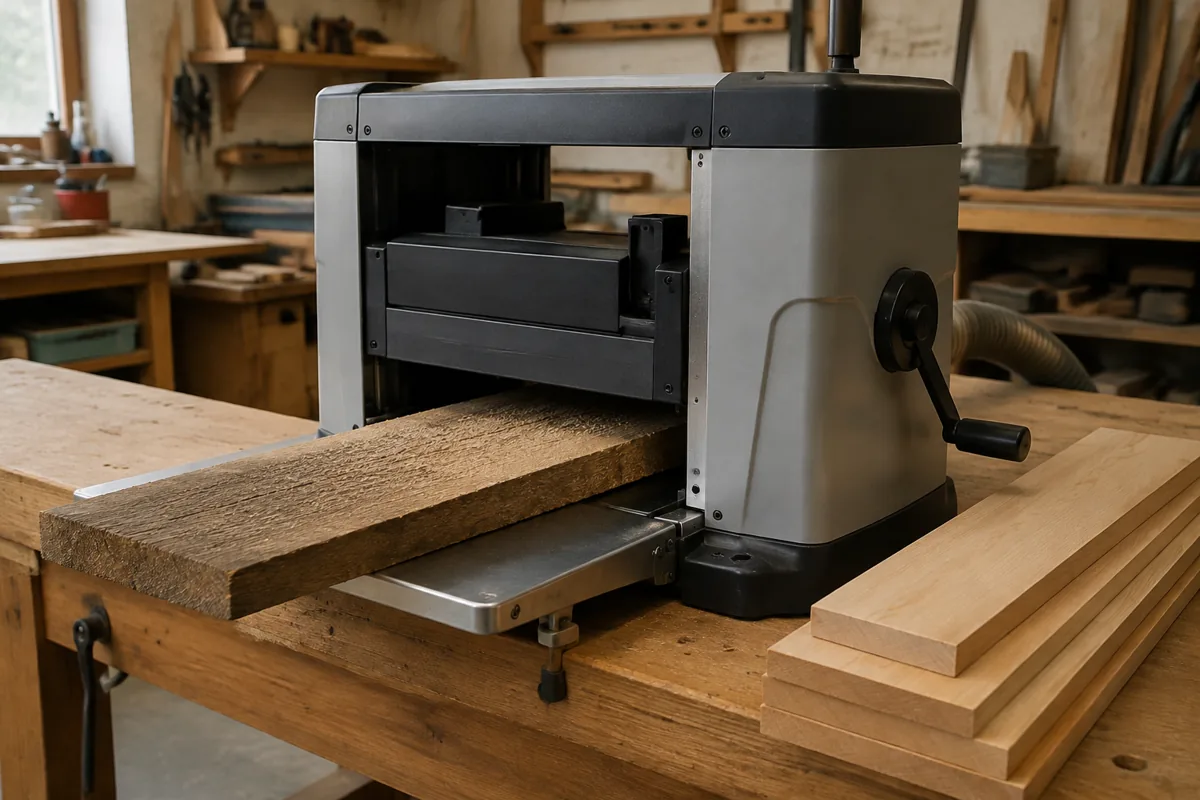
Reclaimed hardwood is harder on a planer than clean, new lumber. Boards may contain hidden nails, screws, grit, paint, dried glue, and uneven sections that make the rollers lose grip. The best planer for this work is not necessarily the one with the deepest advertised cut. You want a machine with solid feed rollers, a rigid cutterhead, accessible knives, reliable depth adjustment, and enough power to remove material without stalling.
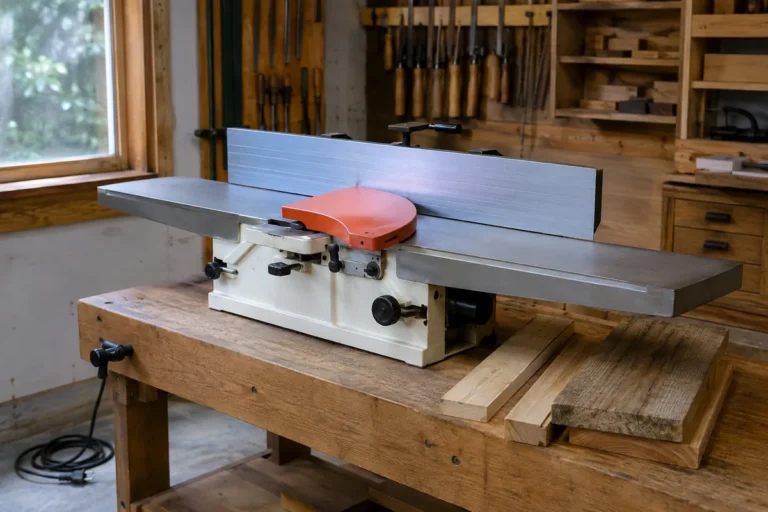
For most home workshops, a benchtop thickness planer is the practical choice. It can reduce thick boards to a consistent dimension after the lumber has been cleaned and flattened. A heavier stationary planer is better for frequent work or wide, dense boards, but costs more and needs more room. A planer cannot flatten a badly cupped board by itself; one face must first be made reasonably flat with a jointer, sled, or router-flattening setup.
As an Amazon Associate we earn from qualifying purchases at no extra cost to you.


Features That Matter Most
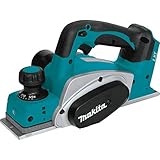
Start with cutting capacity. A typical benchtop planer accepts boards up to 12 or 13 inches wide and about 6 inches thick. That covers many flooring boards, barn siding, stair parts, and reclaimed furniture stock. If you regularly work with 14-inch or wider slabs, a wider stationary machine or a different flattening method may be more suitable.
Motor power matters, but horsepower figures are not directly comparable between brands. A machine with a 15-amp motor is common in the benchtop class. More important is how well it maintains cutterhead speed under load. A planer that slows dramatically in hard maple or oak will leave a rough surface and may trip its breaker when taking heavy cuts.
Look for reversible or disposable knives that are easy to replace. Reclaimed boards often dull knives quickly, and a small nick can leave a visible ridge along every pass. Keep a spare set on hand. Helical and segmented cutterheads cost more, but their multiple small inserts usually run quieter and handle occasional dirty wood better. They also make damaged cutters easier to replace individually. Disposable straight knives are cheaper and perfectly adequate for clean-up work and modest project volume.
In-feed and out-feed tables should lock firmly and sit in line with the cutterhead. Weak tables contribute to snipe: a deeper cut at the first or last few inches of a board. Long boards benefit from roller stands or extension supports, even with a good planer.
For a basic benchtop machine, compare 13-inch thickness planers by table design, cutterhead access, and parts availability rather than price alone. A dust hood that fits a shop vacuum or dust collector is also valuable. Planing produces a large volume of chips, and a clogged hood can cause poor feeding and a rough finish.
Planer Types Compared
| Planer type | Best use | Main advantages | Main drawbacks |
|---|---|---|---|
| Benchtop straight-knife | Occasional boards and small furniture projects | Lowest cost, portable, inexpensive knives | Noisy, more snipe, knives show damage clearly |
| Benchtop helical or insert | Regular reclaimed lumber work | Quieter, smoother cutting, easier damage repair | Higher purchase price and replacement insert cost |
| Stationary floor planer | Frequent production and wide stock | Rigid tables, stronger feed system, better consistency | Expensive, heavy, needs dedicated space and dust collection |
Prepare the Boards Before Planing
Do not put reclaimed lumber straight into the machine. Remove visible nails and screws, then scan both faces and all edges with a quality metal detector. A handheld detector is useful for suspicious areas, while a dedicated woodworking scanner is faster for batches. Cut away sections containing embedded fasteners rather than assuming the detector found everything.
Brush off dirt and scrape away loose paint, roofing material, and hardened glue. Grit acts like sandpaper on knives and can damage the cutterhead. If the wood is damp, let it acclimate indoors until its moisture content is stable. Planing wet lumber can produce poor surfaces, clog the dust system, and lead to later shrinkage.
Inspect for severe cupping, twisting, and loose knots. A thickness planer references the bottom face and copies its defects to the top. Flatten one face first with a woodworking jointer, a planer sled, or a router sled. The cheaper planer is fine when your boards are already flat and you only need to make them uniform.
Safe Settings and Technique
Take light cuts on reclaimed hardwood. Start around 1/32 inch per pass. On a wide board or very hard species, reduce that to 1/64 inch. A heavy 1/8-inch cut may work on clean pine, but it is likely to stall a benchtop planer, tear out grain, or loosen a weak knot in oak, maple, or ash.
Feed boards with the better face down after flattening. Keep the board moving at a steady rate and support it so its weight does not pull the trailing end downward. If the planer allows multiple feed speeds, use the slower setting for a cleaner finish and the faster setting for rough sizing.
Measure with calipers or a reliable thickness gauge. Remove only enough material to reach the target dimension; reclaimed stock may not have enough thickness to eliminate every stain, nail hole, or saw mark. If the board begins to chatter, slips, or leaves repeating ridges, stop and inspect the knives, rollers, dust hood, and table alignment.
Which Planer Makes Sense?
Buy a straight-knife benchtop planer if you process a few boards per month, already own dust collection, and are comfortable changing knives. It is the sensible low-cost option, especially when your lumber is clean and your projects tolerate some hand sanding.
Choose a helical or insert-cutter benchtop planer if reclaimed lumber is a regular part of your work. The higher initial cost is easier to justify when you value lower noise, better results across changing grain, and the ability to replace one damaged insert instead of an entire knife set. Search for helical-head 13-inch planers and verify the actual cutterhead design; some listings use “spiral” loosely.
A floor-standing planer earns its space when you dimension lumber weekly, need more than 13 inches of width, or want consistent feeding on long, heavy boards. It is not automatically safer with contaminated wood, however. Metal detection, shallow passes, eye and hearing protection, and proper dust collection remain necessary regardless of machine size.