Best Table Saws for Milling Dense Maple and Hickory
What's inside
As an Amazon Associate I earn from qualifying purchases. This post may contain affiliate links at no extra cost to you.
Contents
Choosing a Table Saw for Hard Maple and Hickory
Dense maple and hickory are not difficult because they are exotic. They are difficult because they combine high cutting resistance with a tendency to pinch, burn, and expose weaknesses in a saw’s drive system. A saw that performs well on pine can bog down noticeably in 1-1/2-inch hard maple or leave burn marks in hickory after only a few feet of rip cutting.
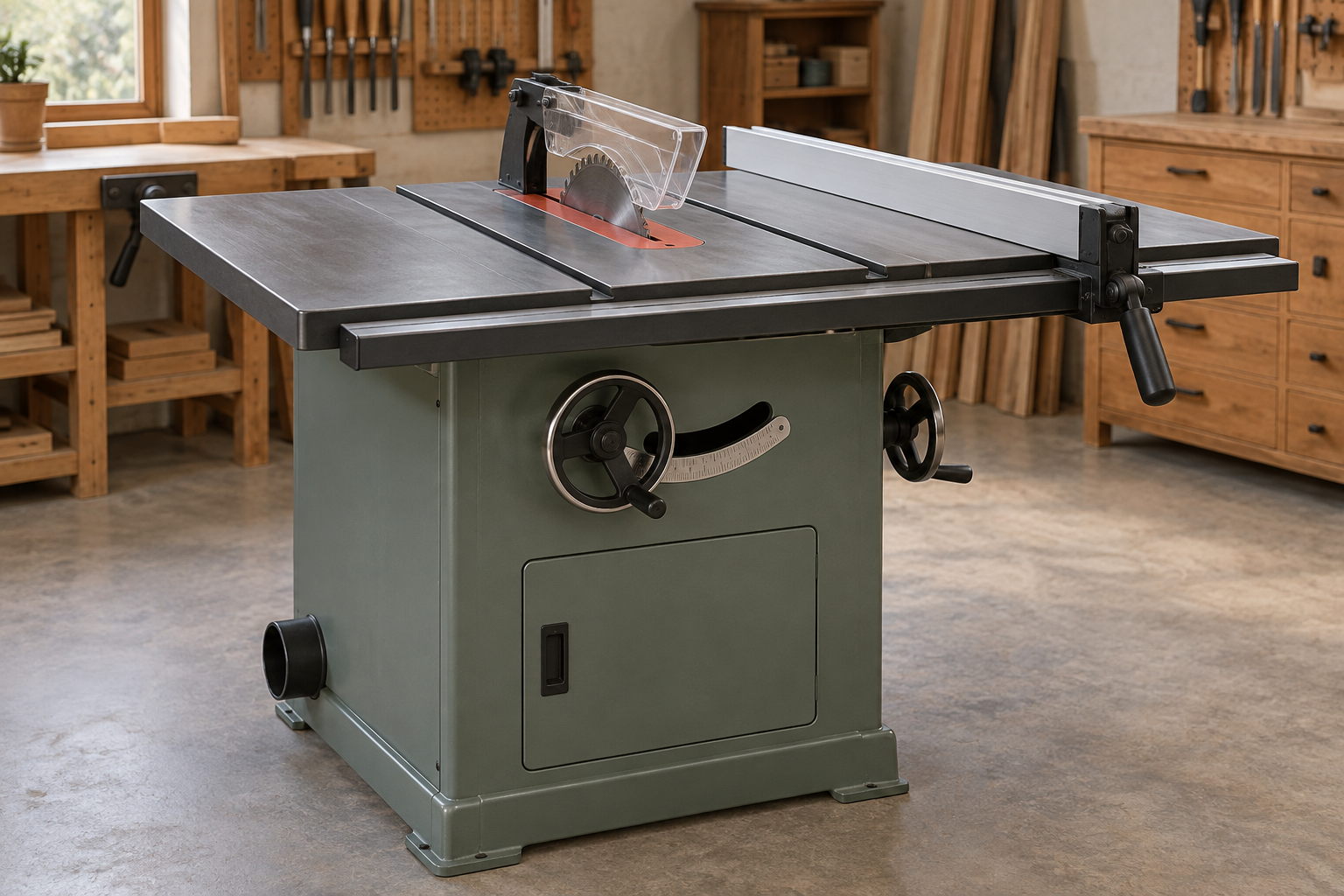
For regular milling, the best choice is usually a 10-inch cabinet saw with a 3-horsepower motor, a rigid cast-iron table, a reliable rip fence, and a properly aligned riving knife. A strong 1-3/4- to 2-horsepower hybrid saw can also work, especially for a smaller shop or occasional hardwood projects. Portable jobsite saws are useful for installation work, but they are a compromise for processing thick, dense stock.
What Matters Most
Motor power is only part of the answer. A true 3-horsepower cabinet saw has the reserve needed to maintain blade speed when ripping wide maple boards. That reserve reduces heat and makes the cut less likely to stall. Horsepower ratings can be presented differently between manufacturers, so also look at the saw’s electrical requirements. A 240-volt circuit is common for full-size 3-horsepower machines and generally makes the installation more practical than trying to run a large motor on a marginal 120-volt circuit.
A rigid arbor and belt drive matter. Cabinet saws isolate the motor from the blade with belts and pulleys, rather than connecting the blade directly to a small universal motor. They run more smoothly, transmit less vibration, and hold speed better under load. Vibration is not just annoying: it can leave washboard marks on an edge and make a narrow rip harder to control.
Fence quality is critical. Hickory can twist or spring as internal stress is released. A fence that deflects 1/32 inch under hand pressure can produce a poor joint or cause the stock to bind. Look for a fence that locks securely at both ends, remains parallel to the miter slot, and has enough face height for tall work. The table should be flat, and the miter slots should be parallel to the blade.
Which Saw Type Fits the Work?
| Saw type | Best use | Strengths | Limitations |
|---|---|---|---|
| 3-hp cabinet saw | Frequent milling and thick hardwood | Power, stability, dust collection, smooth operation | High price, heavy, usually needs 240 volts |
| Hybrid saw | Small shops and occasional hardwood work | Lower cost, good accuracy, smaller footprint | Less reserve under heavy feed pressure |
| Jobsite saw | Portable work and short cuts | Easy to move and store | More vibration, smaller tables, limited power |
A cabinet saw is the right investment if you regularly break down rough lumber, rip 8/4 stock, or process several boards in one session. Browse 3-horsepower cabinet table saws when comparing machines in this class.
A hybrid saw is fine for a hobbyist who mostly cuts 4/4 boards and makes furniture in moderate batches. It may require a slower feed rate, but that is not automatically a problem. If you cut one or two maple boards a month, the added cost and electrical work of a cabinet saw may not improve your results enough to justify the purchase. A hybrid saw paired with a sharp blade, good dust collection, and an outfeed table can produce excellent work.
Portable saws are the least attractive option for milling dense stock. They can rip maple and hickory, but narrow tables make long boards harder to control, and their universal motors commonly slow down in thick material. They are acceptable for trimming parts, cutting sheet goods, or occasional short rips. They are not a good primary machine for turning rough hardwood into dimensioned lumber.
Blade Choice and Setup
Use a sharp, high-quality carbide blade designed for ripping hardwood. A 24-tooth ripping blade removes material faster than a 40- or 50-tooth combination blade and usually produces less heat in thick stock. For one blade that handles both ripping and crosscutting, a 40-tooth combination or general-purpose blade is more convenient, but expect to feed more slowly in 8/4 maple.
Check blade alignment before blaming the motor. The blade should be parallel to the miter slot, and the fence should be adjusted parallel to the blade or slightly open at the rear. A rear fence that closes toward the blade can trap the work and cause kickback. Set the blade height roughly 1/8 to 1/4 inch above the top of the stock. Excessive height increases exposed carbide and does not make the cut safer.
Use a 10-inch hardwood ripping blade with a riving knife that matches the blade’s kerf. A thin-kerf blade on a saw with a thick riving knife can bind, while a riving knife that is too thin may not keep the kerf open reliably.
Feeding Dense Hardwood Without Burning It
Feed at a steady rate. Hesitating halfway through a cut lets the teeth rub in one spot, producing burn marks and sometimes softening the blade’s carbide bond or damaging the wood. For 8/4 hard maple, a deliberate feed of roughly 2 to 4 feet per minute may be appropriate, depending on blade geometry, moisture content, and motor reserve. Do not force the stock when the motor audibly labors; reduce the feed rate or make two passes.
Do not attempt to rip a badly bowed or twisted board against the fence without first jointing one face and one edge. A board that moves away from the fence can produce a tapered cut; one that springs inward can pinch the blade. Use featherboards only when they improve control without pushing material into a misaligned fence. Use push sticks or push blocks once your hands approach the blade, and support long stock with an outfeed table or roller support.
Dust Collection and Maintenance
Dense hardwood dust is heavy, but it still escapes easily if the saw cabinet leaks. A 2- to 2-1/2-inch hose can work on some enclosed saws, but a 4-inch dust-collection connection is preferable for sustained ripping. Keep the cabinet, throat plate, and dust hose clear of chips. Packed dust can interfere with blade elevation and tilt mechanisms.
Inspect belts for glazing, check arbor bearings for roughness, and wax the cast-iron table periodically. Replace a blade when it requires noticeably more force, leaves repeated burns despite a clear fence, or produces chipped edges on otherwise sound stock. A powerful saw cannot compensate for a dull blade or a board that was never flattened.