Best Planers for Milling Figured Walnut and Maple
What's inside
As an Amazon Associate I earn from qualifying purchases. This post may contain affiliate links at no extra cost to you.
Figured walnut and maple are beautiful, but they are among the easiest boards to damage in a planer. Curly grain, quilted figure, birdseye, and reversing grain can lift ahead of the cutterhead instead of slicing cleanly. The result is tear-out, chipped patches, and a surface that may require aggressive sanding.
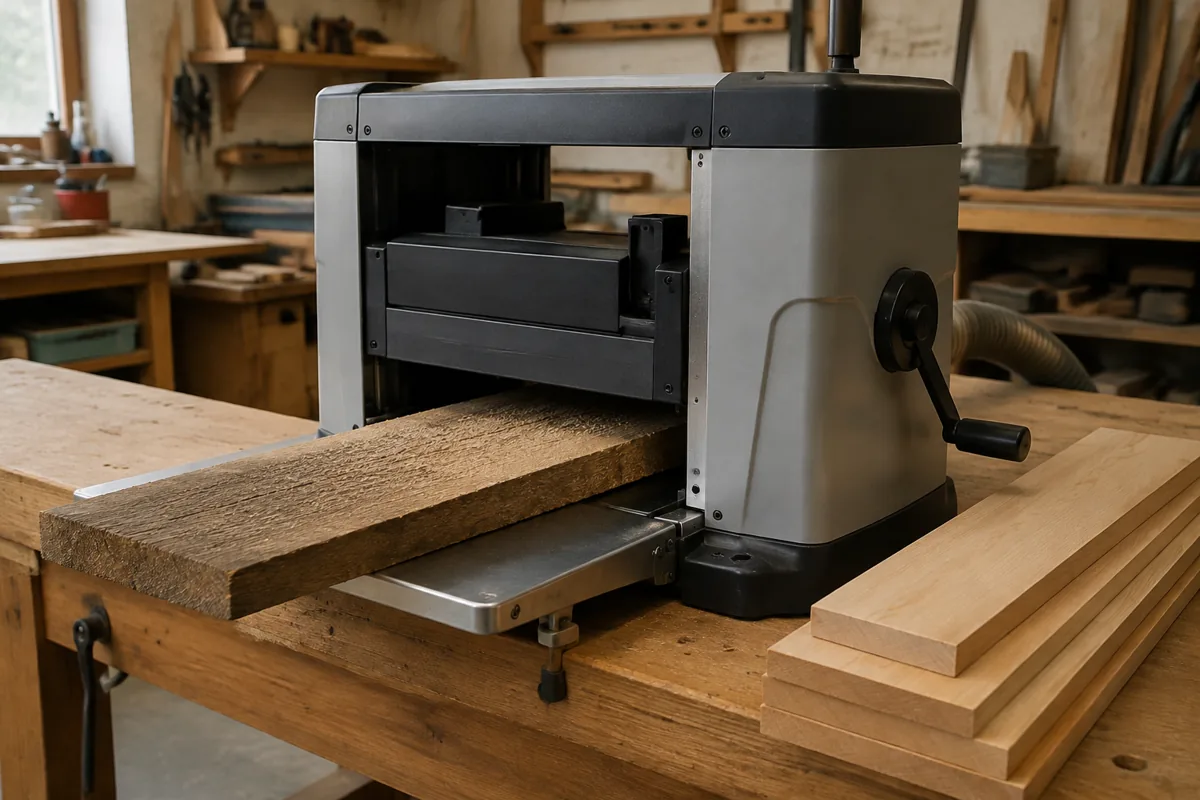
The best planer for this work is not necessarily the widest or most powerful machine. Cutterhead design, feed consistency, depth of cut, and your willingness to take light finishing passes matter more. For most shops, a 13-inch planer with a segmented helical cutterhead is the best balance. A conventional straight-knife planer can still mill figured lumber, but it demands sharper knives, shallower cuts, and more careful feeding.
Contents
What to Look For in a Planer
Start with the cutterhead. A straight-knife head uses long blades that contact the wood across the full width at once. It cuts quickly and is inexpensive to maintain, but reversing grain can tear badly. A helical or segmented cutterhead uses many small carbide inserts set at an angle. Each insert takes a smaller bite, usually leaving a cleaner surface on difficult grain and making damaged spots easier to repair.
Do not assume every head marketed as “helical” is identical. Some use true spiral rows; others use staggered inserts with a shearing angle. Either can work well, but the number and quality of inserts affect noise, finish, and replacement cost. Before buying, check whether replacement inserts are readily available and whether they have four usable edges.
For most furniture work, a 12- to 13-inch capacity is sufficient. A 15-inch machine gives more room for wide panels, but it costs considerably more and may require a dedicated 240-volt circuit. A benchtop planer is easier to move and often adequate for boards under 12 inches wide. A floor-standing machine typically has a stronger feed system, a heavier bed, and less vibration.
Planer Types Compared
| Planer type | Best use | Figured-wood performance | Main drawback |
|---|---|---|---|
| Benchtop, straight knives | Occasional milling and rough lumber | Acceptable with light cuts and a sharp blade | More tear-out, vibration, and limited support |
| Benchtop, helical or segmented head | Small shops and portable setups | Very good for most walnut and maple | Shorter beds and slower stock removal |
| Floor-standing, helical head | Frequent furniture production | Best overall combination of finish and feed control | Higher price, weight, and space requirements |
| Wide planer, 15 inches or more | Wide panels and production work | Excellent when properly set up | Expensive, large, and often needs 240 volts |
The Best Choice for Most Woodworkers
A 13-inch helical thickness planer is the practical default for figured walnut and maple. Look for a model with a two-speed feed system, a stable infeed and outfeed table, and a minimum cutting depth around 1/16 inch. The slower feed setting improves surface quality and reduces the amount of material removed per knife contact.
Power matters when roughing thick stock, but horsepower alone does not prevent tear-out. A machine in the roughly 2 to 3 horsepower range is adequate for normal furniture boards. More important is whether the feed rollers maintain pressure as a board passes over a hollow or irregular section. Weak rollers can let the board dip, causing snipe or uneven thickness.
If you run several hundred board feet per year, consider a 15-inch helical woodworking planer. The added width is useful for table components, wide cabinet parts, and panels that you do not want to rip down first. It is not automatically better for narrow boards, however. The larger machine may have higher operating costs and can be harder to tune.
When a Straight-Knife Planer Is Fine
A cheaper 13-inch portable thickness planer is a reasonable choice if figured lumber is an occasional project rather than your normal stock. Straight knives perform well on straight-grained walnut, plain-sawn maple, and the first roughing passes on heavily figured boards.
Use a straight-knife machine successfully by removing no more than 1/32 inch per pass on difficult grain. For the final two passes, reduce that to about 1/64 inch. Keep the knives sharp, support long boards, and feed the board so the grain rises toward the cutterhead rather than running directly into it. If both faces have reversing grain, expect some tear-out regardless of the machine.
Replacing disposable knives is also part of the cost. A straight-knife planer may be cheaper initially, but frequent knife changes and extra sanding can erase the price advantage for a woodworker who mills figured maple regularly.
How to Plane Figured Walnut and Maple
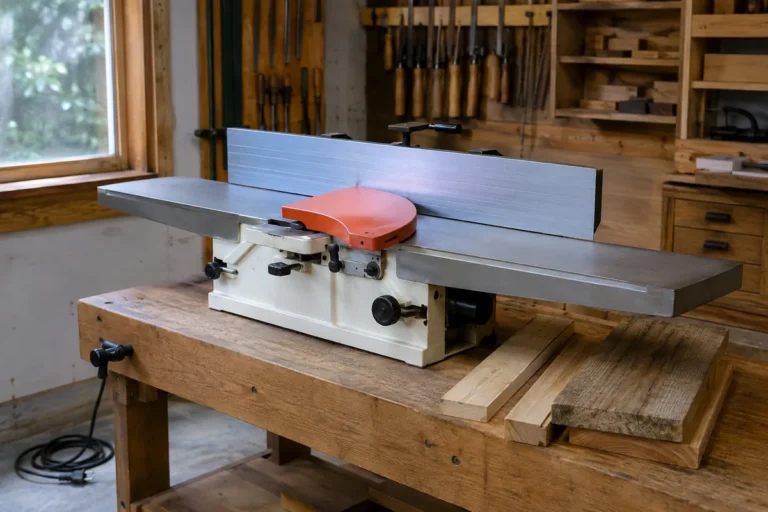
Flatten one face first with a jointer or router sled. A thickness planer makes the opposite face parallel; it does not reliably flatten a cupped or twisted board. Joint one face and one edge, then plane the opposite face until it is about 1/16 inch thicker than the final target.
Inspect the grain direction at both ends. Feed with the grain when possible, but reversing figure means there may be no perfect direction. Take shallow passes, especially on maple, where tear-out can be sharp and deep. A 3/4-inch board may need six or more light passes instead of two heavy ones.
Use sacrificial leaders and followers for short boards. A 12- to 18-inch-long scrap of similar thickness can reduce snipe at the leading and trailing ends. Keep the bed waxed, align the extension tables with the main bed, and use dust collection strong enough to prevent chips from being pulled back under the board.
Features Worth Paying For
Prioritize a segmented carbide head, reliable depth adjustment, accessible insert replacement, and solid table extensions. A built-in thickness scale is useful, but verify it with calipers; many factory scales are off by 1/32 inch or more. Automatic head locking is another worthwhile feature because it reduces thickness drift during a long run.
Skip expensive digital displays unless you genuinely need repeatable settings. Spend that money on replacement inserts, a dust collector, and accurate measuring tools. For occasional figured lumber, the cheaper benchtop planer is fine when you accept slower work and more sanding. For regular furniture production, the better cutterhead and heavier feed system pay for themselves in cleaner surfaces and fewer ruined boards.