Best Thickness Planer For Home Shop
Key takeaways
- A criteria-led look at benchtop and floor-standing thickness planers, judged on bed flatness, cutterhead lock, knife design, feed rate, and dust handling rather than horsepower claims.
What's inside
As an Amazon Associate I earn from qualifying purchases. This post may contain affiliate links at no extra cost to you.
Buy rough lumber once and a thickness planer stops being optional. The trouble is that shopping for the best thickness planer for home shop work means wading through spec sheets that say nothing about how a machine behaves on a Saturday morning: whether the extension tables stay coplanar, whether the cutterhead locks under load, whether the chip ejection keeps up with the knives.
We judge a planer the way we judge a jointer or a table saw, as a set of mechanical systems that either hold a reference surface or do not. This guide is built around those systems instead of horsepower claims. Where we name machines we are describing well-established categories of design, not bench data we produced ourselves.
As an Amazon Associate we earn from qualifying purchases at no extra cost to you. Product prices and availability are accurate as of the date shown and are subject to change.


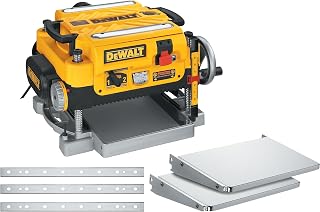


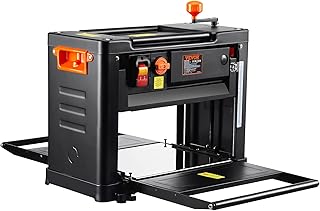
| Planer Class | Typical Width | Best For | Main Compromise |
|---|---|---|---|
| Two-knife benchtop | 12 to 12.5 in | Softwood and painted work on a tight budget | Lower cuts per inch, more tearout |
| Three-knife benchtop | 12.5 to 13 in | The default home shop choice | Loud and hungry for dust collection |
| Helical head benchtop | 12.5 to 13 in | Figured hardwood and quiet shops | Higher cost of entry |
| Floor-standing | 15 in and up | Hardwood milling in volume | Weight, floor space, often a 240V circuit |
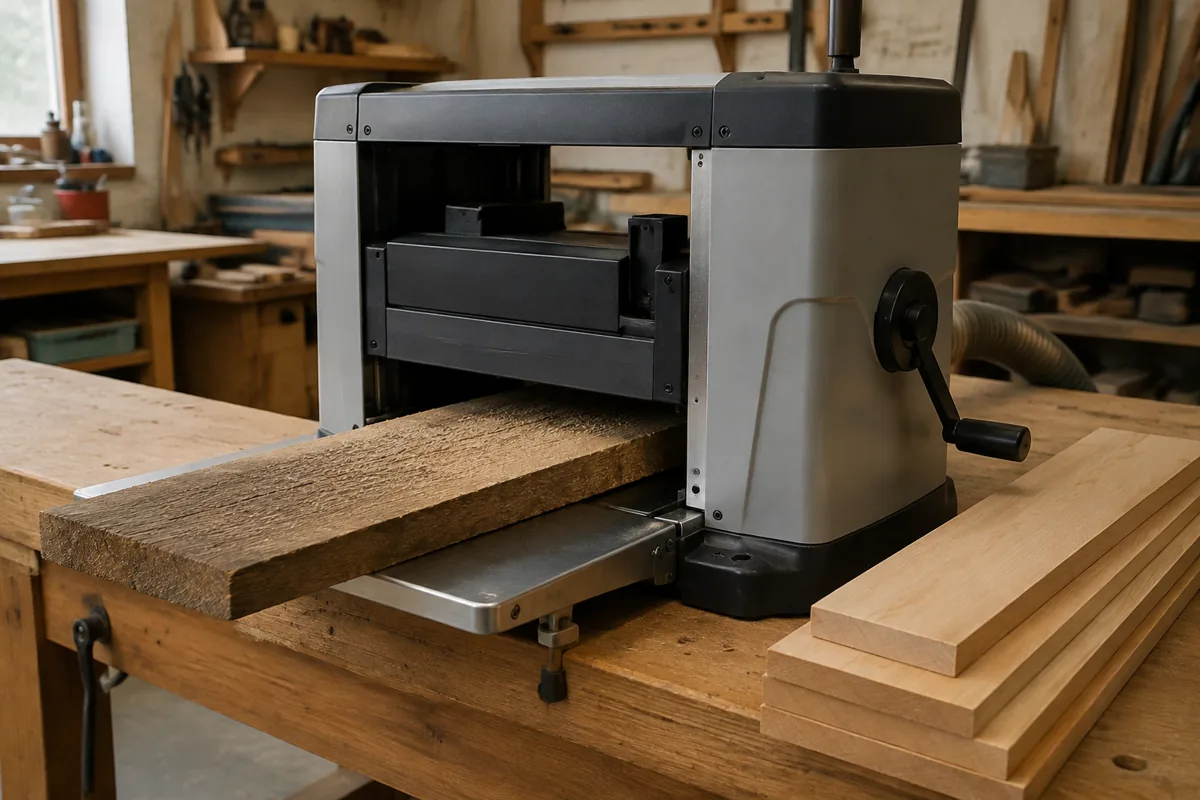
What Makes The Best Thickness Planer For Home Shop Work
A planer is simpler than it looks. A cutterhead spins above a bed, two feed rollers push stock underneath it, and the cutting assembly rides up and down on posts or a dovetailed column. Nearly every complaint traces back to one of those three parts being loose, out of parallel, or overwhelmed. Horsepower is rarely the limit in a home shop, because you can always take a lighter pass. Rigidity and repeatability cannot be dialed back.
So our shortlist starts with machines that positively lock the head to its posts, either with a manual lever or an automatic mechanism that engages when the head stops moving. A head free to rock a few thousandths under load produces the tapered ends everyone calls snipe and then blames on the wood.
13-Inch Three-Knife Benchtop Planer
The class most home shops should buy. Prioritize a locking cutterhead, two feed speeds, indexed disposable knives, and fan-assisted chip ejection over an extra half inch of width.
The Mechanical Criteria We Judge
Bed and extension table flatness
Put a straightedge across the bed and along the tables before the first board goes through. The bed is a machined casting or a ground plate and is rarely the problem. The folding extension tables are. They are the cheapest part of the machine to build and the most influential on snipe, because a table sitting a hair low lets the board tip as it hands off to the outfeed roller. Most are adjustable by set screw. On a good machine that adjustment holds.
Cutterhead and knives
Two straight knives is the old, cheap arrangement and it cuts, but cuts per inch are low and figure tears out. Three double-edged indexed knives is the current mainstream and makes a knife change a ten-minute job. Spiral and helical heads with small carbide inserts cost more and pay you back in quieter cutting, cleaner results in curly and quartersawn stock, and the ability to rotate one damaged insert instead of replacing a full-width knife.
Feed rollers and depth control
Look for real spring pressure on the infeed roller and, if the budget allows, two feed speeds. A slower rate raises cuts per inch and visibly improves the final pass. On the adjustment side, a legible handwheel scale, a repeatable depth stop, and a material removal gauge are the difference between milling to a number and milling by feel.
Dust port and chip ejection
Planers generate more waste per minute than anything else in a small shop. A 4 in port is the practical minimum, and machines with an internal fan that positively ejects chips cope far better with a shop vac than machines relying on your collector to pull everything. Volume moves shavings, not suction.
Vibration and mounting
A benchtop planer perched on a flimsy cart will walk, hum, and pass chatter into the cut. Bolt it to a mobile base with a doubled plywood top. That fix is free and does more for surface quality than most accessories.
Spiral Cutterhead Benchtop Planer
Worth the premium if you mill figured maple, cherry, or quartersawn oak, or if the shop shares a wall with a bedroom. Budget for spare inserts up front.
Matching Capacity To The Work You Actually Do
Width is the number buyers shop on and the one that matters least in a small shop. Twelve to thirteen inches covers nearly every furniture part, since anything wider is usually a glue-up you can mill in pieces before assembly. Roughly six inches of thickness capacity is standard and plenty. The real constraints are minimum length, often around a foot, and minimum thickness, which is why a sled matters for thin stock.
Floor-standing 15 in machines change the math only if you mill hardwood in volume or want a cast-iron bed and the lower-pitched sound of an induction motor. They are heavy, and some want a 240V circuit. Check the electrical requirement first.
- ✔ Slashes stock cost once you buy rough lumber
- ✔ Stores under a bench or on a mobile base
- ✔ Indexed knives keep maintenance simple
- ✔ Runs on a standard 120V shop circuit
- ✘ Universal motors are genuinely loud
- ✘ Chip output overwhelms a small vac
- ✘ Will not flatten a twisted board without a sled
- ✘ Extension tables need periodic checking
Setup Errors That Get Blamed On The Machine
Before you decide the planer is at fault, check the process. Feed with the grain running downhill to avoid tearout. Take light passes, alternate faces to keep the board balanced, and let lumber acclimate to the shop before final thicknessing. Wax the bed with paste wax so stock feeds without stalling, and scrape pitch off the rollers. Support long boards at bed height on both sides. Most surface complaints in a home shop come from one of those six things rather than from the cutterhead.
15-Inch Floor-Standing Planer
Step up here only if you process rough hardwood by the hundreds of board feet. Confirm your circuit and your ability to move several hundred pounds before ordering.
Frequently Asked Questions
Do I still need a jointer? A planer makes the second face parallel to the first, not flat, so a twisted board comes out thinner and still twisted. A planer sled with shims or a router flattening jig covers most of the gap, and a table saw with a good blade handles edge jointing for furniture work.
How do I get rid of snipe? Set the extension tables slightly high rather than low, lock the head, support long stock at bed height, and feed boards in a continuous train so each one backs up the next. Milling a few inches long and trimming the ends stays the reliable fix.
Can I use a shop vac instead of a dust collector? With a machine that ejects chips under fan pressure, yes, though you will empty the drum constantly. Planers move volume rather than fine dust, so a 4 in port feeding a collector is the better pairing if you own one.
The Verdict
For most readers the best thickness planer for home shop use is a 13 in three-knife benchtop with a locking head, two feed speeds, and fan-assisted chip ejection, bolted to something heavy. Move up to a helical head if figured hardwood or noise drives the decision, and to a 15 in floor-standing machine only if you mill in volume and have the circuit and the floor for it. Two-knife machines earn a place only when the budget is fixed and the work is softwood.
Check prices on Amazon →