Best Cabinet Table Saws for Cutting Hardwood Miters Precisely
What's inside
As an Amazon Associate I earn from qualifying purchases. This post may contain affiliate links at no extra cost to you.
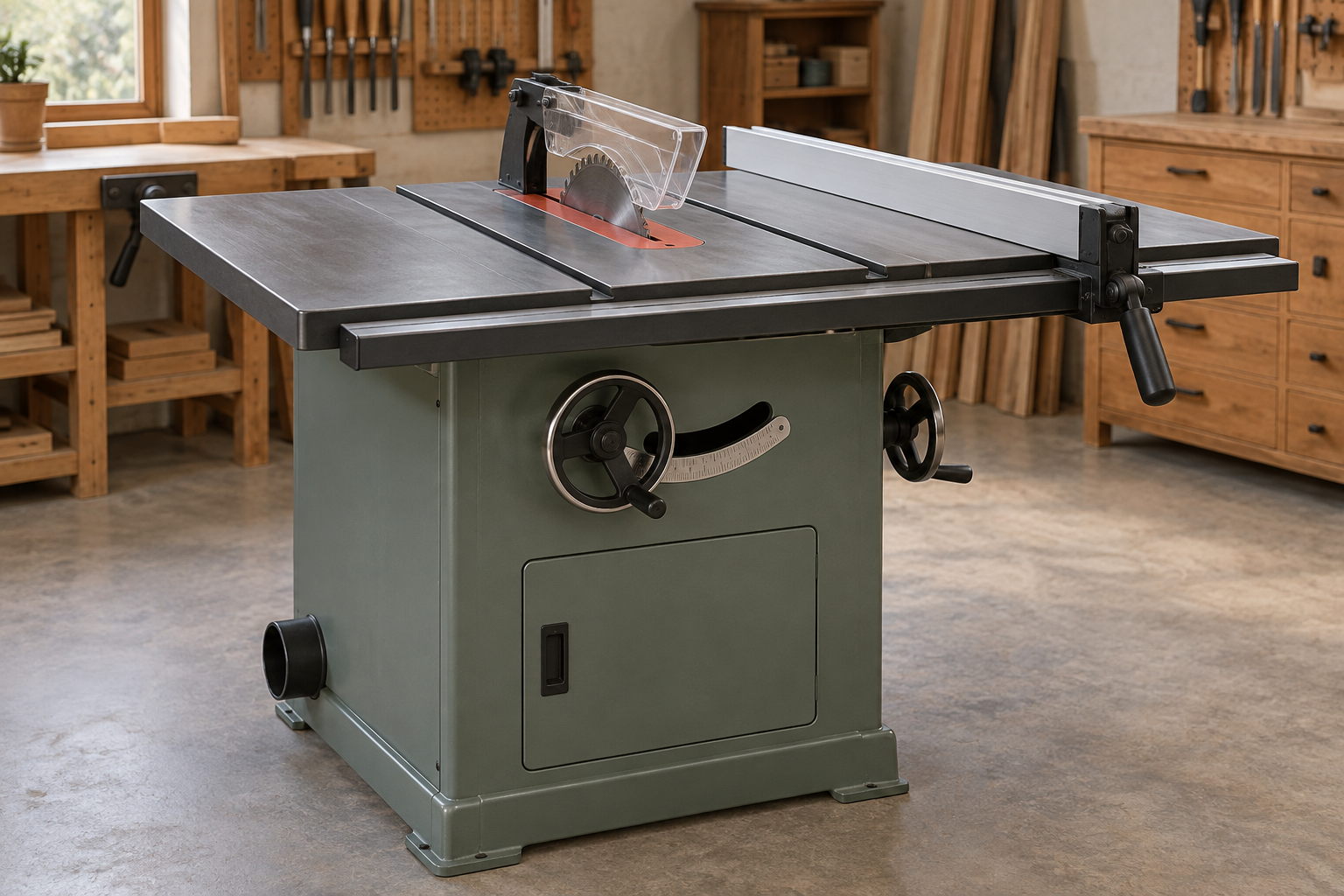
Hardwood miters expose every weakness in a table saw. A fence that moves, a miter gauge with play, or a blade that wanders under load can turn a clean 45-degree joint into a visible gap. For this work, a cabinet saw is usually the best stationary choice because its heavier trunnions, enclosed base, rigid table, and stronger motor hold alignment better than a portable saw.
The saw is only part of the system. Precise miters also require a sharp blade, a reliable crosscut sled or miter gauge, and a way to support long stock. The best purchase is not necessarily the most powerful saw; it is the one that stays square and flat when you are making repeated cuts in dense material.
As an Amazon Associate we earn from qualifying purchases at no extra cost to you.


Contents
What Makes a Cabinet Saw Good for Miters
Look first for a cast-iron top that is flat within a few thousandths of an inch across the working area. A heavy top reduces vibration and gives a crosscut sled a stable reference. The front and rear edges should be machined well enough that a sled does not rock as it travels.
Trunnion construction matters more than motor horsepower for accuracy. A solid, cabinet-mounted trunnion generally holds the blade at 90 or 45 degrees better than a lightweight mechanism attached to the underside of the table. Check that the blade returns to the same setting after changing bevel angles. If it does not, accurate miters will require constant recalibration.
For hardwood, a 3-horsepower, 240-volt motor is the comfortable choice. It handles thick maple, oak, and hickory with less speed loss than a 1-1/2 or 2-horsepower saw. A 3 HP cabinet table saw is worth considering if you routinely cut stock 1-1/2 inches thick or make long rip cuts. A 1-1/2 or 2 HP cabinet saw is fine for furniture parts, trim, and occasional hardwood work, especially when your shop has limited electrical service.
Features Worth Comparing
| Feature | What to look for | Why it matters for miters |
|---|---|---|
| Motor | 1-1/2 to 3 HP; 240V preferred for heavy work | Maintains blade speed and reduces burning in dense hardwood |
| Fence | Rigid T-square style fence with at least 30 inches of rip capacity | Prevents the workpiece from shifting before a crosscut or compound setup |
| Miter slot | Standard 3/4-by-3/8-inch slot, parallel to the blade | Allows a sled or gauge to travel without binding or side play |
| Dust collection | Enclosed cabinet with a 4-inch port and effective blade shroud | Reduces debris under the sled and keeps the cut line visible |
| Safety system | Riving knife, transparent guard, and accessible stop switch | Controls kickback risk while preserving useful visibility |
A 50-inch fence is useful if you also break down full sheets, but it does not make a miter more accurate than a well-adjusted 30-inch fence. For a dedicated furniture shop, the shorter fence can save money and floor space. Spend the difference on a good crosscut sled, an outfeed table, or a quality blade.
Which Cabinet Saw Type Makes Sense?
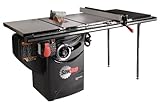
A full-size 3 HP cabinet saw is the strongest choice for regular production work. It has the mass to stay planted and enough power to rip wide, thick hardwood without pushing the motor into a slow, overheated cut. The trade-off is a 240-volt circuit, greater weight, and a higher purchase price. Consider a 3-horsepower 240V cabinet saw with a 50-inch fence when the saw will be a central production machine.
A 1-1/2 or 2 HP cabinet saw is the sensible value choice for many home shops. It can cut hardwood miters cleanly because miters are crosscuts, not long rips, and the blade is usually removing less material. The cheaper option is fine if you work mostly with boards under 1-1/4 inches thick and do not routinely rip eight-quarter stock. A 2 HP cabinet table saw with a 30-inch fence often gives better overall value than paying for unused capacity.
Be cautious with hybrid saws marketed as cabinet saws. Some are excellent, but lighter stands and smaller trunnions can make alignment less stable. They may be adequate for a hobby shop, though a true cabinet base and substantial cast-iron table are preferable when repeatable miters are the priority.
Setting Up the Saw for Precise Miters
Before cutting, verify that the blade is parallel to the miter slot. A practical target is within about 0.003 inch from the front to the rear of the blade. Use a dial indicator or mark a tooth, measure at the front and rear, and adjust the trunnion if necessary. A blade that points slightly into the fence can pinch the work and create burn marks or kickback.
Use a crosscut sled for repeated 45-degree cuts. Tune its runners so it slides freely without detectable side movement, then cut a reference edge and check it with a reliable square. For a 90-degree sled, the five-cut method can produce excellent results. For miters, attach a replaceable 45-degree fence or use an adjustable miter sled with positive stops.
A standard miter gauge is acceptable for short, narrow pieces, but it becomes risky and inaccurate with long stock. A precision table saw miter gauge is useful when you need angle stops and controlled adjustment, but it should not replace adequate work support. Keep the board tight against the gauge or sled, and use a stop block for repeated lengths.
Common Failures and Their Causes
Gaps at the outside of a miter usually come from an inaccurate angle, stock that is not flat, or inconsistent pressure against the sled fence. A 45-degree setting that is off by only 0.2 degrees can create a noticeable gap across a wide frame. Test on scrap from the same board before cutting expensive parts.
Burning usually indicates a dull blade, excessive feed pressure, a misaligned blade, or resin buildup. For hardwood miters, a sharp 60- to 80-tooth crosscut blade generally leaves a cleaner edge than a general-purpose ripping blade. If the cut edge shows scallops, check blade runout and the arbor flange before blaming the fence.
Finally, never remove the riving knife simply to make a crosscut sled fit unless the sled is designed for that configuration and the operation is controlled. Keep hands behind the blade, support long work, and let the blade stop before retrieving a cutoff. Cabinet saw mass improves precision, but it does not eliminate kickback or pinch hazards.