14-Inch vs 18-Inch Band Saw for Resawing Hardwood
What's inside
As an Amazon Associate I earn from qualifying purchases. This post may contain affiliate links at no extra cost to you.
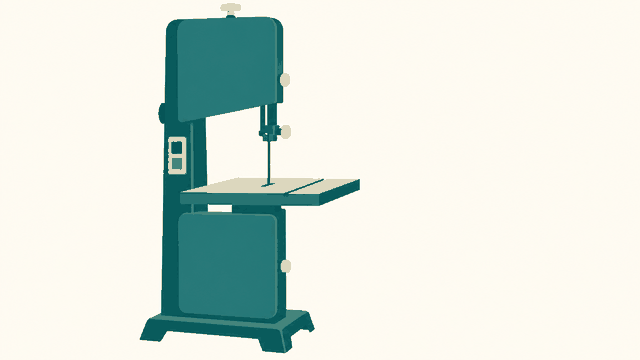
A 14-inch band saw can resaw hardwood well, but only when its actual capacity, blade, and setup match the stock. An 18-inch saw usually offers more resaw height and a stiffer frame, which helps with wide, dense boards and repeated work. The size on the cabinet is not a guarantee of performance: throat capacity is the distance from blade to frame, while resaw capacity is the maximum height of stock the saw can accept.
As an Amazon Associate we earn from qualifying purchases at no extra cost to you.

Contents
Start with the stock you plan to resaw
Measure the widest board you expect to cut, then check the machine’s published resaw capacity. Many 14-inch saws are rated around 6 inches, though riser blocks can increase capacity on some machines. A typical 18-inch saw may offer roughly 12 inches or more. Confirm the number for the specific saw; sizes and configurations vary.
Capacity is only part of the question. A 6-inch cut through dry maple asks more of a saw than a 6-inch cut through softwood. Dense hardwood, a dull or narrow blade, and a feed rate that is too aggressive can stall the blade, pull it off line, or leave a wavy surface. If your boards are usually 4 inches thick, an 18-inch saw’s extra height may sit unused. If you regularly need to split 10-inch slabs, a standard 14-inch saw may not accept the work at all.
14-inch and 18-inch saws compared
| Factor | 14-inch band saw | 18-inch band saw |
|---|---|---|
| Typical resaw capacity | About 6 inches; more on some models with a riser block | Often around 12 inches or more, depending on model |
| Best fit | Occasional resawing, thinner stock, smaller shops | Tall stock, frequent resawing, larger work |
| Hardwood performance | More sensitive to blade choice, tension, and feed rate | Often more stable, but still depends on motor, blade, and setup |
| Shop demands | Smaller footprint and usually lower purchase cost | More space, weight, and budget; may need a suitable circuit |
| Main limitation | Height and reduced margin when pushing dense stock | Higher cost and capacity you may not use |
When a 14-inch saw is enough
Choose a 14-inch saw if most of your resawing is below its rated capacity and you do it occasionally rather than all day. It can be a sensible option for making bookmatched panels from 4- to 6-inch boards, cutting veneers from smaller blanks, or resawing turning stock. A capable saw with a sharp, wide resaw blade can outperform a larger saw that is poorly tuned.
Check the saw’s motor rating and the manufacturer’s blade recommendations, but treat horsepower figures as one part of the picture. Frame rigidity, wheel alignment, blade tension, and a properly set guide system matter too. A riser block adds height on compatible saws, but it does not automatically give the machine the power or stability of a larger-frame design. Before buying one, verify that the saw’s manual supports the configuration and that the blade length and tensioning system suit it.
For a basic setup, consider a 14-inch band saw with a resaw fence. If you already own a suitable 14-inch saw, a sharp blade and a reliable fence may be a better first purchase than replacing the machine.
When an 18-inch saw earns its place
An 18-inch saw makes sense when your stock regularly exceeds a 14-inch machine’s capacity, or when resawing is a routine part of your work. The added capacity lets you split taller boards in one pass rather than cutting them down first or sending them out. A larger frame and wheels can also help a well-designed saw keep a long blade tracking steadily through demanding cuts.
That does not mean every 18-inch saw will cut thick hardwood effortlessly. Check its resaw height, motor, required voltage, minimum and maximum blade widths, and whether the fence is suitable for tall stock. Some machines need a dedicated circuit; others may be too heavy or awkward for a small shop. Budget for a blade, a stable fence, and a way to handle long boards safely—not just the saw itself. Browse 18-inch woodworking band saws only after confirming your space and electrical supply.
Blade and setup determine the cut
For resawing, a wide blade—often ¾ inch on a compatible saw—helps resist twisting. A low tooth count, commonly 2 to 3 teeth per inch, gives the gullets room to clear sawdust from a tall cut. Use the widest blade the saw is designed to tension correctly, not a blade wider than its manual allows. A sharp blade is essential: a dull one tends to wander, burn the wood, and demand more feed pressure.
Before cutting, check that the blade tracks correctly, the guides support it close to the work without pinching it, and the fence is parallel to the blade’s drift. Saw drift is the blade’s tendency to cut at a slight angle despite the fence; ignoring it can produce a tapered board. Make a short test cut in similar stock and adjust the fence to match the blade’s natural line. Feed steadily, without forcing the board. If the motor slows, the blade bows, or the cut begins to curve, stop and find the cause rather than pushing harder.
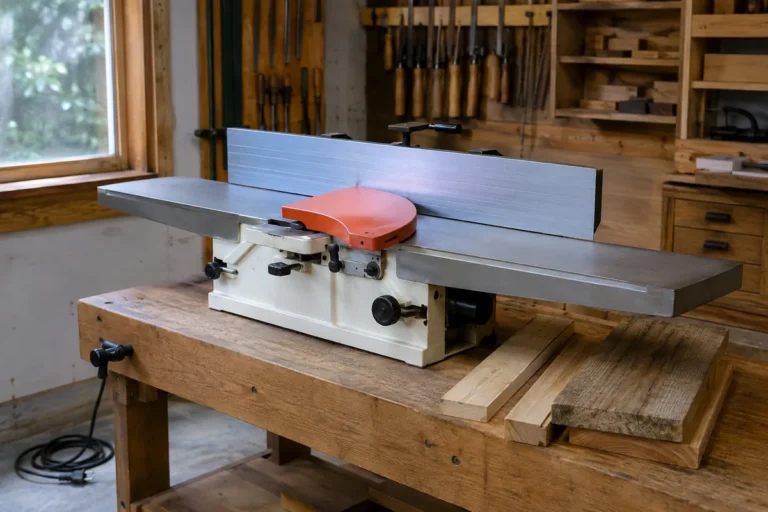
Joint or plane one face and one edge before resawing when accuracy matters. A rough or twisted board can rock against the table or fence, making the cut wander and increasing the chance of binding. Keep hands out of the blade path, use a push device where appropriate, and support long stock so its weight does not steer the cut.
Make the purchase around your real workload
For occasional cuts in stock under about 6 inches, a well-set-up 14-inch saw is often the better value. Spend on a proper resaw blade and a fence before paying for unused capacity. Choose an 18-inch saw if your typical boards are taller than a 14-inch machine can handle, or if repeated hardwood resawing makes capacity and stability worth the extra cost. If you are unsure, measure the thickest board you will actually process, check the exact saw specifications, and leave some margin for future work rather than buying on wheel diameter alone.