What Motor Size Is Suitable for a Stationary Table Saw?
What's inside
As an Amazon Associate I earn from qualifying purchases. This post may contain affiliate links at no extra cost to you.
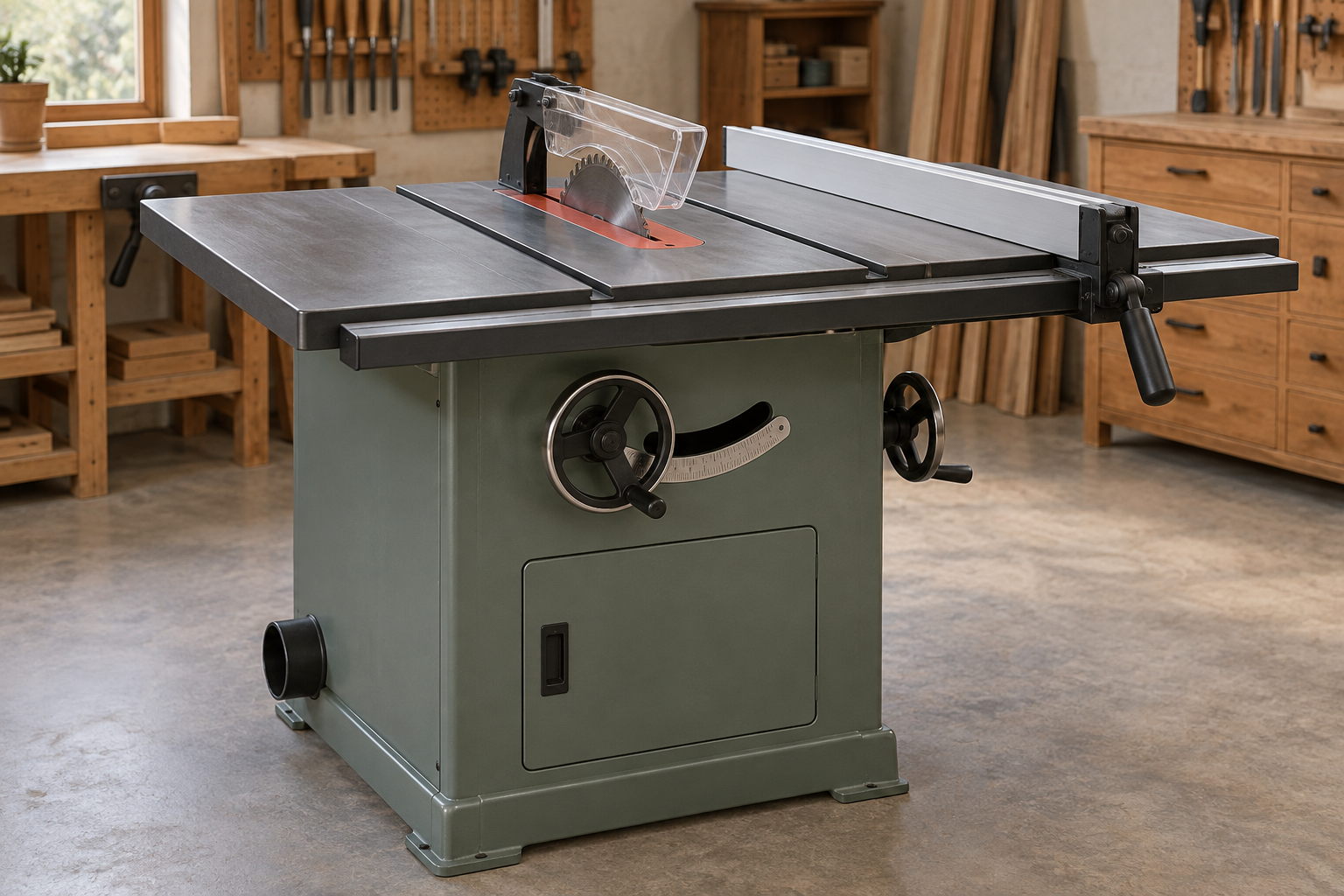
For most stationary table saws, a 1.5 to 2 horsepower motor is a sensible fit for a home shop. A 1.5 hp saw handles ordinary ripping and crosscutting in typical lumber; 2 hp gives more reserve for thick hardwood and longer cuts. A 3 hp motor is useful for frequent heavy work, but it may require 230-volt wiring. The right choice depends on what you cut, how often you cut it, and the electrical service available—not just the number on the motor label.
Contents
Start with the work you do
For plywood, construction lumber, and hardwood boards roughly 3/4 to 1 inch thick, a good 1.5 hp saw is usually adequate with a sharp, appropriate blade and a steady feed. A 2 hp saw is a practical step up if you regularly rip hardwood stock around 1-1/2 inches thick or want to maintain a comfortable pace through longer cuts.
Thick stock, dense species, and repeated ripping put more load on the motor. A 3 hp saw is worth considering for frequent work in material 2 inches or thicker, especially when production speed matters. It is not a substitute for a sharp blade, correct blade height, or a fence that keeps the work aligned. A dull blade or forcing the cut can bog down even a larger motor.
What the horsepower rating does—and does not—tell you
Horsepower is a useful comparison, but it does not describe the whole saw. Motor design, blade speed, belt condition, arbor alignment, and the saw’s ability to hold speed under load all affect cutting performance. Two saws with the same advertised horsepower may behave differently in real wood.
Also check whether the rating is stated as continuous horsepower or a peak figure. Peak ratings can make a small motor look stronger than it is during sustained cutting. If the specification is unclear, look for the voltage, amperage, and motor details in the manual rather than comparing headline horsepower alone.
Motor size comparison
| Motor size | Typical fit | Main trade-off |
|---|---|---|
| 1 to 1.5 hp | General home-shop cuts, plywood, and moderate hardwood work | Can slow or bog on thick, dense stock or an aggressive feed |
| 2 hp | Regular hardwood ripping and a broader range of stock thicknesses | May need a 230-volt circuit, depending on the saw |
| 3 hp | Frequent heavy ripping and sustained shop use | Higher cost and commonly a 230-volt electrical requirement |
These are practical ranges, not guarantees. A well-built 1.5 hp saw can outperform a poorly designed machine with a larger claimed rating. Check the manufacturer’s specifications and electrical requirements for the particular saw.
Check your electrical supply before buying
Many 1 to 1.5 hp saws are sold for 120-volt household circuits. Some 2 hp saws can run on 120 volts, while others require 230 volts; larger 3 hp machines commonly use 230 volts. Do not assume based on horsepower—verify the saw’s nameplate and manual.
A motor drawing too much current from an overloaded or undersized circuit may trip a breaker, run hot, or struggle during a cut. Extension cords can add voltage drop, particularly if they are long or too light for the current. Follow the manufacturer’s circuit and cord guidance, and have a qualified electrician assess a new 230-volt circuit. Do not replace a breaker with a larger one to stop nuisance trips; that can leave the wiring inadequately protected.
When a smaller motor is the better buy
If you cut sheet goods, trim boards, and make occasional furniture parts from modest-thickness hardwood, paying more for 3 hp may bring little practical benefit. A smaller saw can be easier to power in a typical garage shop and may leave more of the budget for a quality blade, dust collection, or a stable mobile base. A 1.5 hp stationary table saw is a reasonable starting point for that kind of workload.
The compromise shows up when you ask it to do sustained heavy ripping. You may need to feed more slowly, take multiple passes on unusually thick material, or pause between demanding cuts. If the motor repeatedly stalls, trips a breaker, smells hot, or loses speed sharply, stop and investigate. Forcing the work can burn wood, damage the blade, or cause a dangerous kickback situation.
When more motor power earns its cost
Choose more power when thick hardwood ripping is routine rather than occasional, or when you need to keep a consistent pace through many cuts. A 2 hp stationary table saw often offers a useful middle ground. For demanding, repeated work, compare the full specification and wiring needs of a 3 hp stationary table saw rather than choosing on horsepower alone.
More power does not make an unsafe cut safe. Keep the blade sharp, use a blade suited to the material and cut, and feed stock without twisting or pushing it sideways. For narrow rips, use appropriate push sticks or blocks; for sheet goods, support the panel so it cannot tip or bind. A motor that maintains speed can make work smoother, but it cannot correct poor support, a misaligned fence, or an unsuitable blade.
A practical buying checklist
Before choosing, list the thickest material you expect to rip, the hardwood species you use most, and how often you make long cuts. Then check the saw’s continuous motor rating, voltage, amperage, and recommended circuit. Confirm that the machine fits your available space and that its fence, table, and dust port suit your work. If you are comparing two saws, prioritize reliable specifications, solid fence alignment, and a suitable blade over a larger but vague horsepower claim.
For occasional general-purpose work, 1.5 hp is often enough. For regular hardwood ripping, 2 hp is a comfortable target if the electrical setup supports it. Reserve 3 hp for sustained heavy cutting or a shop where the added capacity will be used often. That keeps the purchase matched to the work instead of paying for power you cannot use—or buying too little motor for the cuts you make every week.