Cabinet Table Saw vs Contractor Table Saw for a One-Car Garage Shop
What's inside
As an Amazon Associate I earn from qualifying purchases. This post may contain affiliate links at no extra cost to you.
Contents
The real difference is how the saw fits your shop
In a one-car garage, the cabinet-versus-contractor decision is not just about cutting capacity. It is about how much floor space the saw occupies, whether your electrical service can run it, how you will move sheet goods around it, and whether the machine can be stored or shifted when the car needs to come back in.
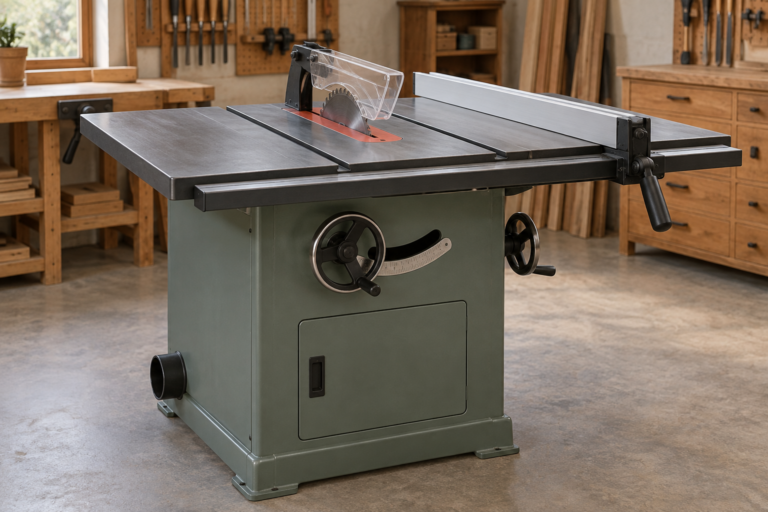
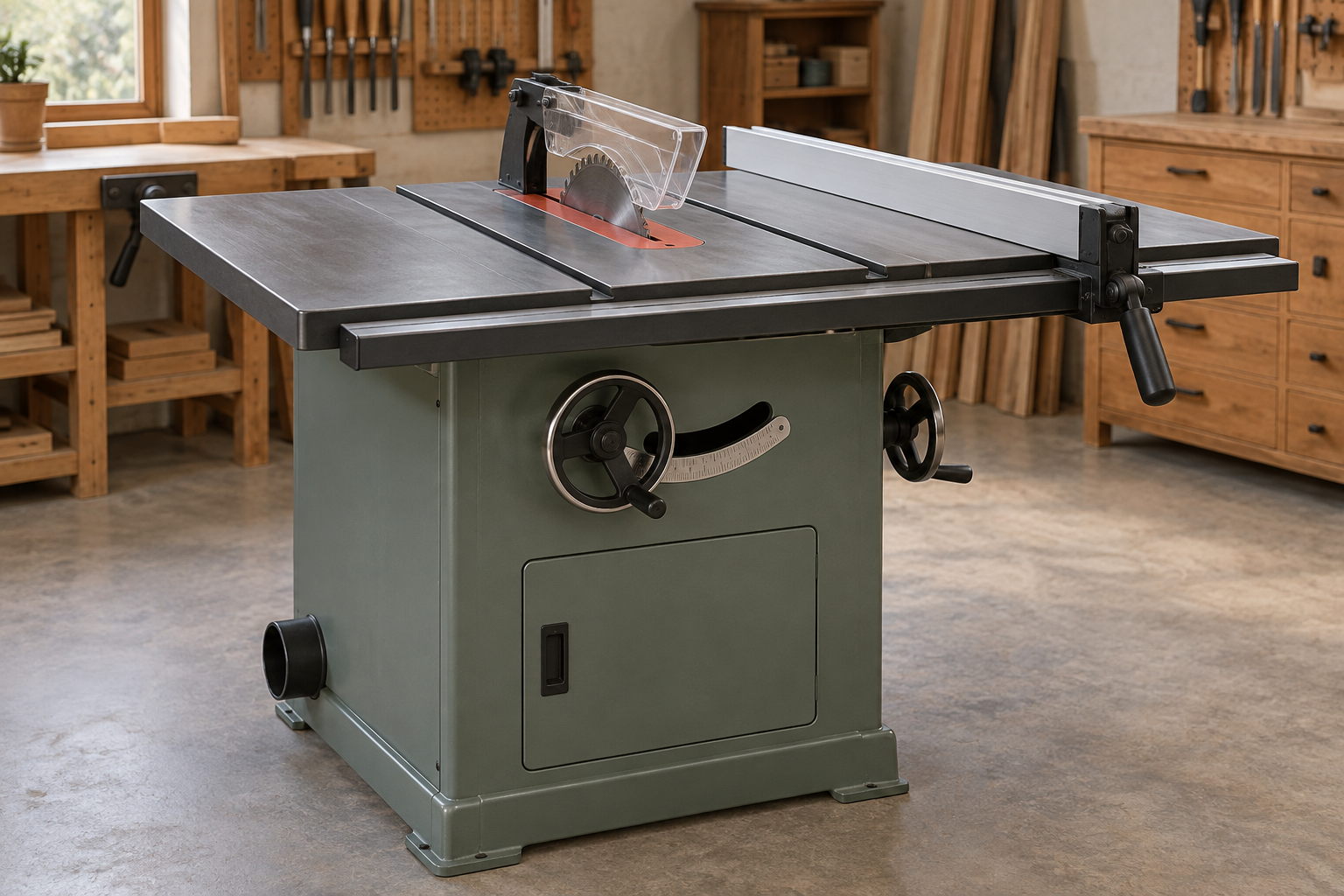
A cabinet saw has a heavy, enclosed base and a trunnion assembly mounted to the cabinet. A contractor saw has an open stand, usually with the motor hanging behind the blade. Cabinet saws tend to be heavier, more rigid, and better at collecting dust. Contractor saws generally cost less and are easier to reposition, though they need clearance behind them for the motor and may collect more dust on the floor.
As an Amazon Associate we earn from qualifying purchases at no extra cost to you.
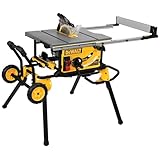

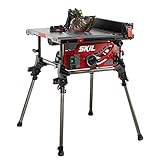

Quick comparison
| Factor | Cabinet saw | Contractor saw |
|---|---|---|
| Typical weight | About 400–700 lb | About 200–350 lb |
| Common motor options | Often 3 hp or more; many need 240V | Commonly 1½–2 hp; 120V or 240V options |
| Space and movement | Large footprint; difficult to move without a mobile base | Usually easier to move; rear motor needs extra clearance |
| Dust collection | Enclosed base usually captures more dust | More dust tends to escape around the blade and motor |
| Best fit | Regular heavy ripping and a dedicated shop | Limited budget, lighter use, or a shop that must be rearranged |
These are broad ranges, not guarantees. Check the exact saw’s weight, motor rating, table dimensions, and electrical requirements before buying. Some contractor-style saws are heavier and more capable than older designs; the category name alone does not tell you how well a particular saw is built.
Measure the working space, not just the footprint
The saw’s table may take up roughly 2 by 3 feet, but that is not its working footprint. You need room to feed stock in front of the blade and catch it behind the saw. A 4-by-8-foot plywood sheet needs a clear path several feet in front of and behind the blade. In a single-car garage, that can make the saw unusable while a vehicle is parked inside, regardless of its motor size.
Measure the garage with the car in its usual position, then mark the saw and feed paths on the floor with tape. Include the fence rails, outfeed support, and the contractor saw’s rear motor. If you must move the saw after every use, a rated mobile base matters more than a few extra horsepower. Lock the wheels before cutting; a saw that shifts under a long rip can pinch the workpiece or pull your hand off line.
For a garage that must serve as both parking and shop space, a contractor saw is often the easier compromise. A mobile base can help, but it does not solve the problem of handling full sheets. Break sheet goods down with a track saw or have the supplier make rough cuts if your layout cannot support safe full-sheet cuts.
Match power to the work and the circuit
A cabinet saw’s larger motor is useful when you regularly rip thick hardwood, especially with a dulling blade or a high feed rate. It is not a shortcut to safe cutting, and it will not correct a misaligned fence or poor blade choice. For common home-shop work—crosscutting, trimming panels, and ripping moderate-width stock—a sound contractor saw is often sufficient.
Many 3-hp cabinet saws require a 240V circuit. A 120V model may be easier to plug in, but its motor and circuit still have limits; do not assume every garage outlet can handle continuous saw use. Check the manufacturer’s voltage, amperage, and circuit guidance, and have a qualified electrician assess any new circuit. Avoid running a saw and a shop vacuum on an already loaded circuit: a breaker trip during a cut is inconvenient, and a long extension cord can worsen voltage drop.
Before paying for more power, consider the blade. A sharp, appropriate 10-inch blade and a clean, aligned saw often improve cut quality more than a motor upgrade. If you routinely rip dense stock over about 2 inches thick, compare a robust contractor saw with a cabinet saw and be realistic about your available electrical supply.
Dust collection and upkeep
The enclosed cabinet gives a cabinet saw a practical dust-collection advantage. With a suitable collector connected to the cabinet port, less sawdust tends to collect around the motor and on the floor. It is not dust-free: the blade opening still throws fine particles upward, so use appropriate respiratory protection and manage overhead dust as well.
A contractor saw’s open stand and exposed motor can make collection less effective. Some models accept an under-table shroud, but check whether it is included and whether it leaves enough access to the motor and blade-tilt mechanism. Sawdust packed around an exposed motor can cause trouble, while a poorly fitted shroud can block adjustments. Clean the machine regularly rather than waiting for dust to affect the mechanism.
What to buy for a one-car garage
Choose a cabinet saw if the saw will stay in place, you have room for safe infeed and outfeed, your electrical service supports the motor, and you frequently rip thick hardwood. The extra rigidity, mass, and cabinet-based dust collection can be worth the cost when the machine is used often. Start your search with 3 hp cabinet table saws, then verify the voltage and required circuit for each listing.
Choose a contractor saw if price, portability, and fitting the machine into a shared garage matter more than maximum ripping power. For furniture repair, cabinetry parts, and typical hobby projects, it can be the sensible choice—provided the fence is dependable and the saw is aligned. Browse contractor table saws and compare the actual weight and motor layout, not just the label.
Either way, budget for a stable base, a blade suited to your cuts, and a way to support long stock. A cheaper contractor saw is fine when its limits match your work. A cabinet saw is a poor buy if it leaves no safe path to feed material or cannot be powered correctly in the garage.