Best Stationary Planers for Processing Wide Reclaimed Boards
What's inside
As an Amazon Associate I earn from qualifying purchases. This post may contain affiliate links at no extra cost to you.
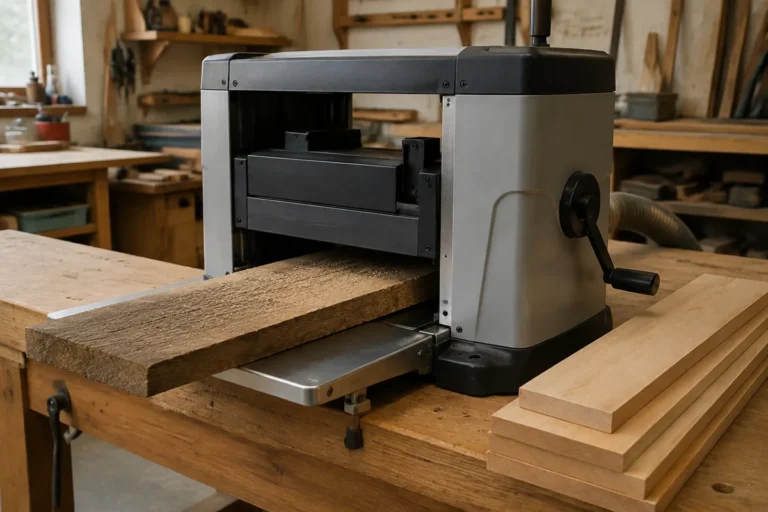
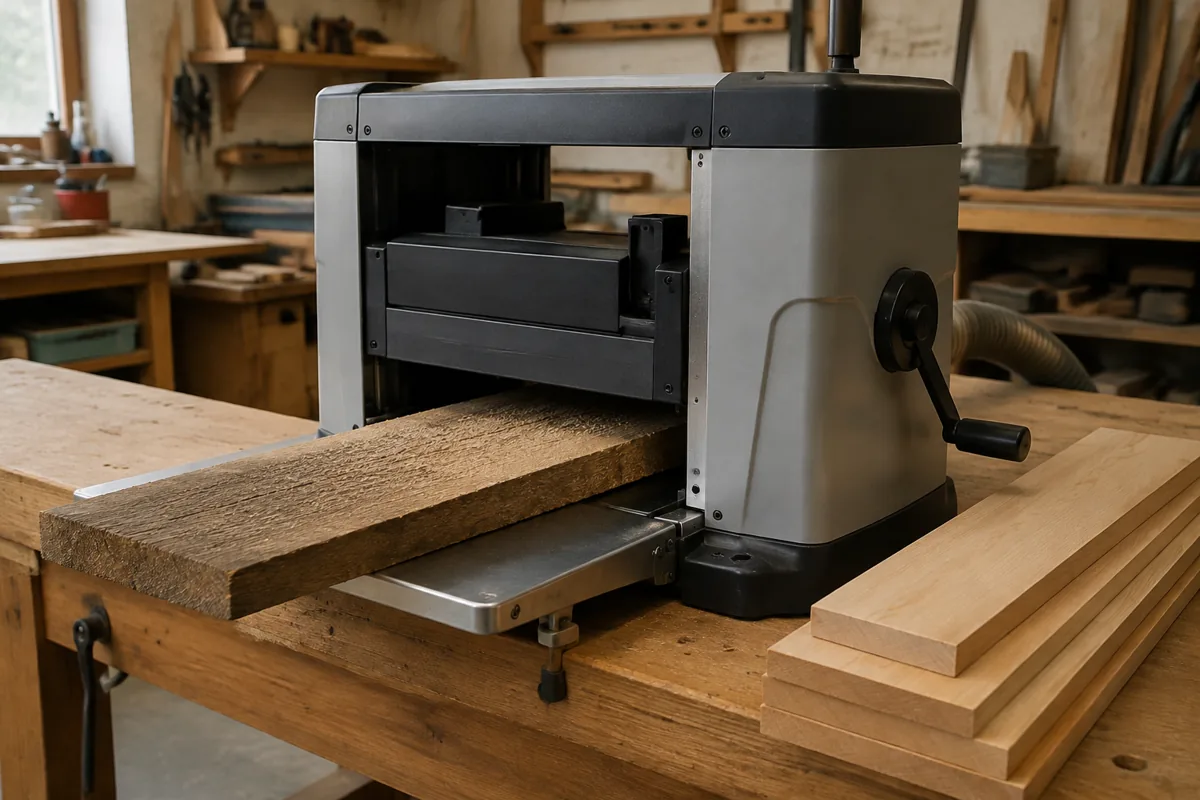
Processing wide reclaimed boards is harder on a planer than preparing clean, kiln-dried lumber. Old boards may be cupped, twisted, embedded with grit, or hiding nails and screws. Width adds another problem: a machine with a 12-inch capacity cannot safely process a 13-inch board, and a board that barely fits may still have too much twist for the cutterhead to control. The best stationary planer depends on the board dimensions, the amount of flattening required, and how much abuse you expect the machine to take.
Contents
What to Look For in a Planer
For reclaimed boards, prioritize capacity and feed consistency over maximum cutting depth. A planer with a 13-inch or 15-inch width capacity gives you useful clearance for common 12-inch boards. If your material regularly measures 14 inches or more, look at a 15-inch floor-standing machine rather than trying to make a benchtop model do oversized work.
Most portable planers have a maximum cut around 1/8 inch, but that does not mean you should remove that much from reclaimed wood. A 1/16-inch cut is a more realistic starting point, reducing motor strain and tear-out. On heavily cupped boards, several light passes are safer than one deep pass. Feed rate, cutter sharpness, and the board’s grain direction matter as much as motor power.
Two- or three-knife cutterheads are common on lower-cost machines. They can work well, but replacement knives are inexpensive only if the blades are easy to source and adjust. A helical or segmented carbide cutterhead costs more initially, yet it is usually better for rough reclaimed stock. Individual inserts can be rotated when an edge dulls, and a damaged insert is cheaper to replace than an entire knife set. Carbide also handles occasional small bits of contamination better, although no planer should be used on wood containing metal.
Prepare Reclaimed Wood Before Planing
Inspect every face and edge under bright light. Pull nails, staples, brads, and screws; do not rely on a handheld metal detector alone. A magnet or electronic detector helps locate hidden fasteners, but it cannot replace visual inspection. Also remove paint flakes, gravel, and packed dirt. Grit quickly dulls knives and can score the bed or cutterhead.
Use a metal detector designed for woodworking if you process salvaged flooring, barn boards, or pallet lumber regularly. Mark detected areas with a pencil and remove a generous section around them. A planer knife striking a nail can throw fragments, damage the cutterhead, and leave a deep gouge in the board.
A thickness planer does not flatten a twisted board. Its rollers press the board flat while it is under the cutterhead, then the twist returns after the cut. Flatten one face first with a jointer, router sled, or planer sled. A sled is particularly useful for boards wider than your jointer. Once one face is flat, plane the opposite face parallel.
Planer Types Compared
| Planer type | Typical width | Best use | Main drawback |
|---|---|---|---|
| Portable benchtop planer | 12 to 13 inches | Occasional projects and boards already close to flat | More snipe, shorter beds, and less rigid feed support |
| Heavy-duty benchtop planer | 13 inches | Frequent reclaimed-lumber work on a moderate budget | Still limited to boards under its width capacity |
| 15-inch floor-standing planer | 15 inches | Wide boards, long production runs, and large furniture parts | Higher price, larger footprint, and usually a 240-volt circuit |
| Planer with segmented helical head | 13 to 15 inches | Rough or figured wood where quiet cutting and easy insert changes matter | Higher purchase cost and replacement insert expense |
When a Benchtop Planer Is Enough
A quality 13-inch benchtop thickness planer is the sensible choice when most boards are 10 to 12 inches wide, you work in a small shop, and reclaimed material is occasional rather than daily. The cheaper option is fine when boards are already reasonably straight and you can tolerate slower progress.
Expect to support the board well before and after the machine. Infeed and outfeed tables should be level with the planer bed; even a small downward angle can increase snipe. Run sacrificial scrap before and after valuable boards, and keep the final 12 to 18 inches of the board supported as it leaves the cutter. Many benchtop planers produce snipe at both ends, so leave extra length and cut the finished part afterward.
Dust collection is not optional. Reclaimed wood produces heavy chips, and a clogged hood can reduce airflow enough to leave chips packed around the cutterhead. A shop vacuum may work for light use, but a 2 HP woodworking dust collector is a better match for repeated planing.
Why Choose a 15-Inch Floor Model
A 15-inch planer gives you more practical room than the specification suggests. A board advertised as 12 inches wide may have irregular edges or swell from moisture. Extra capacity lets you clean up those edges without trimming the board first. Floor models also tend to have longer beds, stronger feed rollers, heavier frames, and greater rigidity, which helps maintain a consistent thickness during long passes.
For frequent processing, consider a 15-inch floor-standing planer with a helical cutterhead. It is the better long-term choice for wide reclaimed boards, especially if you work with oak, ash, or other dense hardwoods. Check electrical requirements before buying: many larger machines need 240 volts and a dedicated circuit. Their weight also makes delivery, assembly, and shop placement a real consideration.
A Practical Buying Decision
Choose a 12- or 13-inch benchtop planer if your boards fit comfortably, your budget is limited, and you process only a few boards at a time. Choose a 15-inch machine if you routinely handle boards wider than 12 inches, need better feed control, or expect to process reclaimed stock every week. Choose a helical head when reduced noise, easier maintenance, and better performance on difficult grain justify the added cost.
Before the first pass, measure board moisture, remove all hardware, flatten one face, and set the machine for a light cut. Take off about 1/32 inch initially, inspect the surface, and increase only if the machine feeds smoothly without burning, chatter, or bogging down. If the board rocks, stalls, or shows a sudden change in thickness, stop rather than forcing it through. A planer can make a rough board uniform; it cannot make unsafe or badly twisted material behave like straight new lumber.