Best Planers for Producing Smooth Sapele Furniture Parts
What's inside
As an Amazon Associate I earn from qualifying purchases. This post may contain affiliate links at no extra cost to you.
Contents
Why Sapele Needs Careful Planing
Sapele is a dense, interlocked-grain hardwood, and that grain is the reason a planer can produce either a clean furniture part or a torn-up surface. Grain direction can change along a board, so a cutterhead that handles straight-grained stock well may still leave short, ragged patches where the grain reverses. Sapele’s hardness also makes sharp knives and a controlled cut more important than maximum feed speed.
For furniture parts, aim for a finished surface that needs only light sanding, not deep sanding to erase planer damage. Feed straight-grained boards with the grain running downhill toward the cutter where you can identify the direction. When the grain is uncertain, take shallow passes, inspect the surface often, and avoid forcing a wide board through just to save a few minutes. No planer setting can prevent tear-out in every piece of interlocked wood.
As an Amazon Associate we earn from qualifying purchases at no extra cost to you.


Choose the Planer Around Your Stock
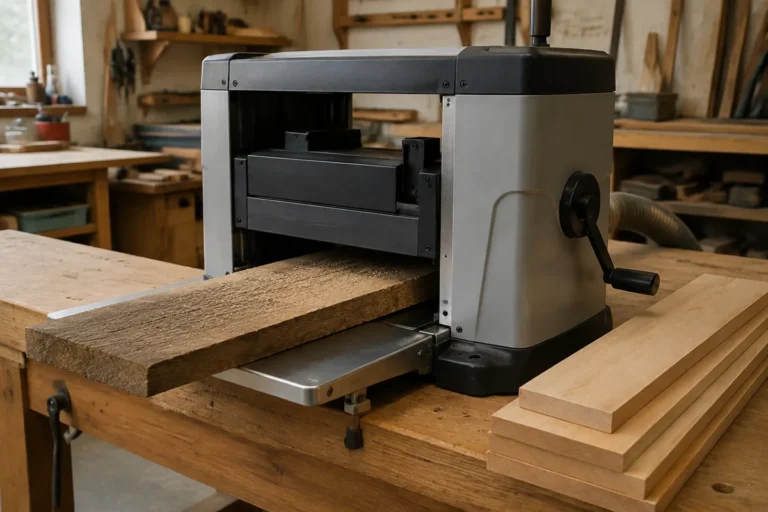
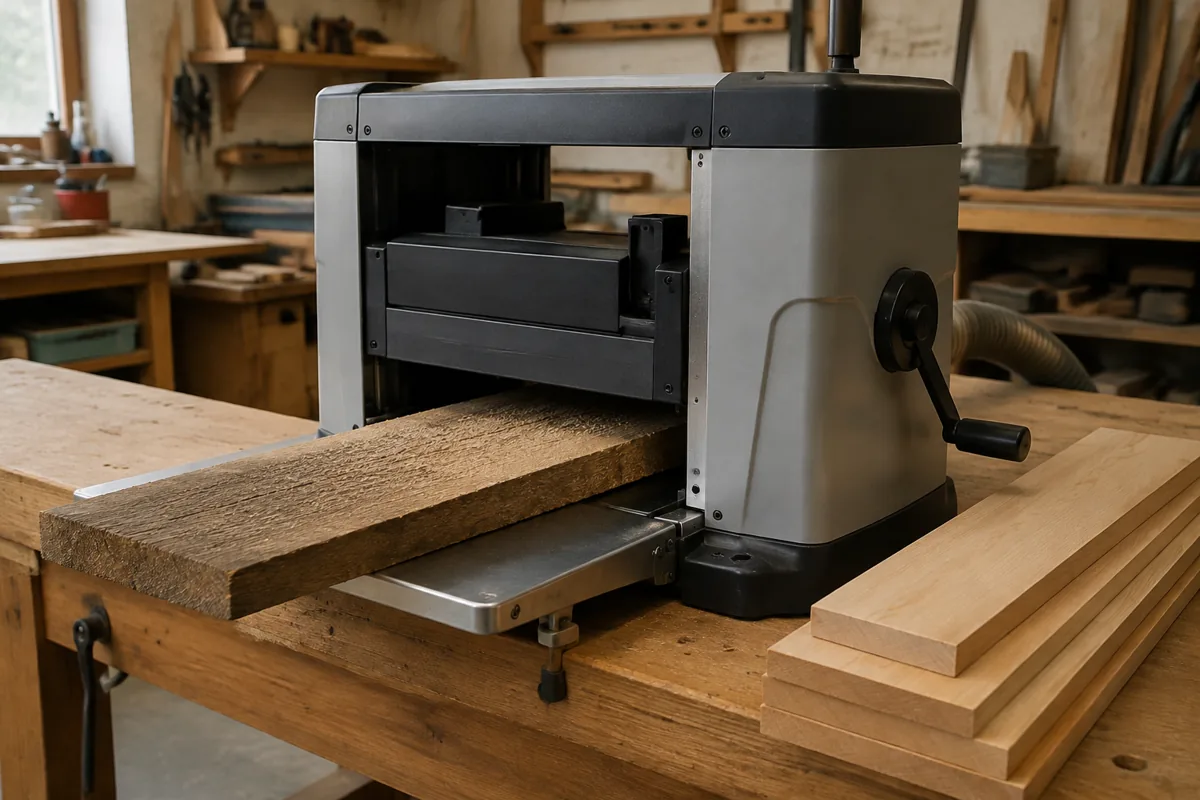
A benchtop thickness planer is a sensible choice for most small shops. It can bring cabinet rails, table parts, and other furniture stock to consistent thickness without taking the floor space or budget of a large machine. Check the actual cutting width and maximum thickness against your usual stock; a 12- or 13-inch capacity covers many furniture parts, but not every panel or broad tabletop component.
Look for a rigid table, reliable thickness adjustment, accessible knives, and enough support at the infeed and outfeed ends. A cutterhead with more cutting edges per revolution can leave a finer pattern and often runs more quietly than a basic two-knife head. A helical or segmented carbide head costs more, but its small replaceable inserts can be rotated when an edge dulls. That is useful if you plane a lot of hard, figured stock; it is not essential for occasional work.
For a shop that regularly machines wide boards or runs long production sessions, a floor-standing planer is worth considering. Its greater mass and capacity can make long stock easier to handle, but it needs more space, power, and dust collection. A cheaper benchtop machine is fine if your parts fit its capacity and you are willing to take careful, light passes.
Planer Types at a Glance
| Type | Best fit | Trade-off for Sapele |
|---|---|---|
| Benchtop, straight knives | Small shops and occasional furniture work | Lower cost; knives may need more frequent sharpening and figured grain can tear out |
| Benchtop, segmented or helical head | Frequent use on dense or variable-grain stock | Cleaner results are possible, but the machine and replacement inserts cost more |
| Floor-standing planer | Wide stock, long boards, and regular production | More capacity and mass; requires more room, power, and dust handling |
Compare machines by cut quality, knife service, capacity, and support—not motor horsepower alone. A high horsepower rating does not make a dull cutter safe or eliminate tear-out. For a compact shop, compare benchtop thickness planers by capacity and cutterhead style. If you routinely machine broad or long furniture parts, look at floor-standing thickness planers instead.
Setup and Cut Strategy
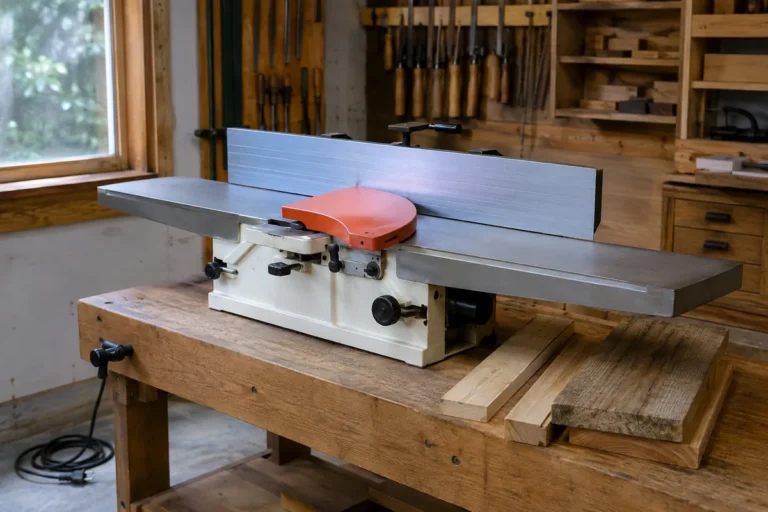
Begin with stock that is already jointed on one face and has one square edge. A thickness planer makes the opposite face parallel to the reference face; it does not flatten a bowed or twisted board. Feeding warped stock can produce a board that is uniformly thick but still bowed, or that springs back after it leaves the machine. Use a jointer or a suitable flattening method first, and check the result with a straightedge.
Take off roughly 1/32 inch per pass as a conservative starting point for Sapele, then adjust only if the machine cuts cleanly and the board is stable. On a small benchtop planer, a lighter cut is usually preferable to a deep pass that strains the feed system or leaves ridges and tear-out. Check the manufacturer’s maximum cut guidance, and never push a board beyond it. Keep the final pass light and measure thickness at several points; snipe at the ends can cost usable length.
Support long boards level with the planer tables so their weight does not lift or dip the stock as it enters and exits. Feed one board at a time unless the manual specifically permits otherwise. Listen for slowing, watch for stalled feed rollers, and stop if the board chatters or the surface worsens. Keep hands clear of the infeed and outfeed openings; use push blocks only as the manufacturer directs.
Reduce Tear-Out and Prepare for Finish
Sharp knives matter. Dull edges crush fibers and can leave a fuzzy surface, burning, or widespread tear-out. If the defect appears across many boards, inspect the knives or inserts and check cutterhead alignment before changing your whole technique. If damage follows patches of reversing grain, reduce the depth of cut, try feeding from the opposite end, or use a suitable scraper or sanding step for the worst areas.
Do not rely on an aggressive final sanding to correct deep planer gouges. Sanding can flatten the surface, but it also removes thickness and may leave uneven areas around torn fibers. For visible furniture faces, test the settings on offcuts from the same board, since grain changes from one section to another.
Connect dust collection before planing. Sapele chips are plentiful, and blocked extraction can clog the hood or leave chips trapped under a board, affecting the cut. Wear eye and hearing protection, and use a properly fitted respirator when dust control is inadequate. Dense hardwood dust should not be treated as harmless simply because the machine is doing the cutting.
A Practical Buying Check
Before buying, confirm that the planer’s width and height limits match your stock, replacement knives or inserts are available, and your electrical supply and dust collector can support the machine. A straight-knife benchtop planer is a good value for occasional Sapele work when you can sharpen or replace knives and accept careful setup. Pay extra for a segmented cutterhead or larger floor machine when you will use the added finish quality, capacity, and durability often—not just because the wood is hard.