Table Saw vs Track Saw for Repetitive Cabinet-Part Crosscuts
What's inside
As an Amazon Associate I earn from qualifying purchases. This post may contain affiliate links at no extra cost to you.
For repetitive cabinet-part crosscuts, a table saw is usually the faster and more accurate production tool. A track saw is often the better tool for breaking down full sheets and making occasional crosscuts without building a permanent setup. The right choice depends less on which saw cuts straighter in isolation and more on how many identical parts you need, how much shop space you have, and whether your material starts as sheet goods or already-sized panels.
As an Amazon Associate we earn from qualifying purchases at no extra cost to you.
Contents
The basic difference
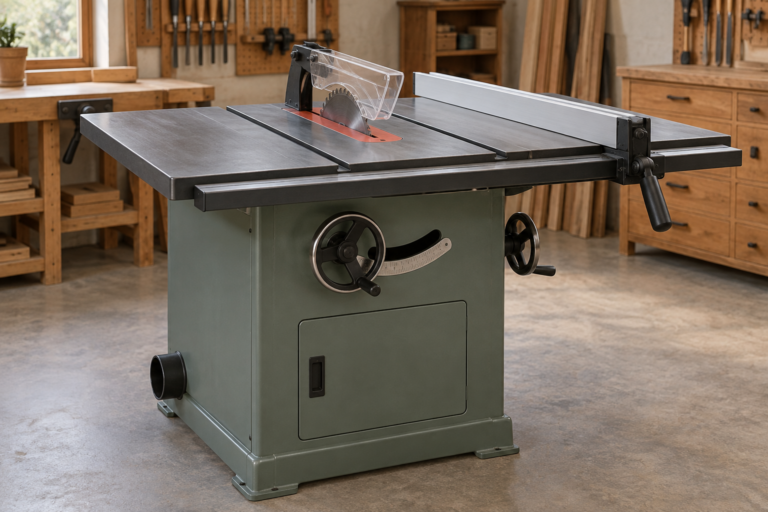
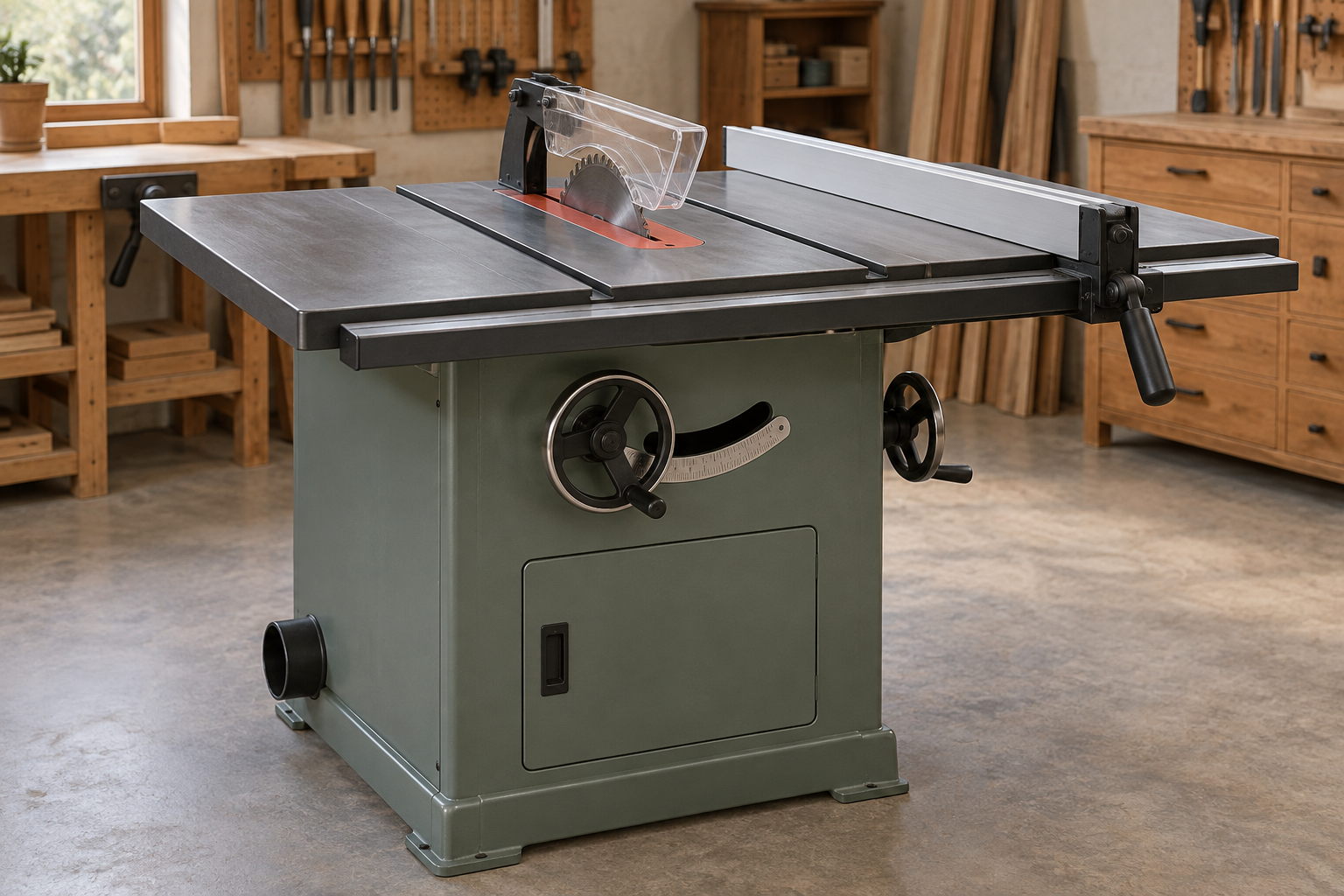
A table saw cuts against a fixed reference: the miter gauge, crosscut sled, or a stop block attached to a sled. Once that reference is set, you can cut a batch of cabinet sides, shelves, stretchers, or drawer parts to the same length quickly.
A track saw guides the saw along a rail placed on the workpiece. It excels at breaking down 4-by-8-foot plywood on a workbench or sheet of foam insulation. For crosscutting repeated parts, however, you must position the rail for each cut or build a separate indexing system. That can work, but it gives the track saw less of an advantage.
Table saw vs. track saw for repeated crosscuts
| Factor | Table saw | Track saw |
|---|---|---|
| Repeated length accuracy | Excellent with a sled and stop block | Good, but depends on rail placement and stops |
| Typical cabinet workflow | Best for cutting parts from strips or panels | Best for breaking down full sheets |
| Setup time | Low once the fence or sled is set | Moderate for every new group of cuts |
| Space required | Needs infeed and outfeed room | Needs a flat support surface, not a permanent machine footprint |
| Small-part control | Good with a properly designed sled | Awkward on narrow or short pieces |
| Dust and noise | Usually louder; dust collection is important | Often easier to connect to a shop vacuum |
Why the table saw wins batch work
Cabinet parts are often repetitive but not identical in width. You might cut eight cabinet sides at 29-1/4 inches, twelve shelves at 23-1/2 inches, and several toe-kick pieces at another dimension. A crosscut sled with a reliable stop makes each group straightforward. Set the stop, slide the material against it, make the cut, and repeat.
A good sled can hold parts square to within a few thousandths of an inch over its width, assuming the sled is built accurately and the stock has a straight reference edge. In practical cabinet work, keeping a batch within 1/32 inch is usually more important than chasing laboratory accuracy. The bigger danger is cumulative error from measuring every part separately.
Do not use a loose stop block trapped between the table-saw fence and the blade. A short cutoff can bind between the fence and blade, creating a kickback hazard. Put the stop on a crosscut sled, or position a stop so the workpiece clears the rip fence before it reaches the blade. For narrow parts, use a sled with a hold-down and a sacrificial face rather than trying to balance the piece against the miter gauge.
If you need a machine for this workflow, a jobsite table saw with a stand can handle cabinet parts, but a heavier contractor or cabinet-style saw is steadier and has a more useful table surface. A jobsite saw is the cheaper option and is fine for occasional cabinet projects, provided you add adequate outfeed support and verify the fence before cutting a batch.
Where a track saw fits better
The track saw is the efficient first step when the material is a full sheet. Cutting a 3/4-inch plywood sheet into manageable strips on a table saw is possible, but handling a 4-by-8 sheet alone is awkward and can pull the work into the fence. A track saw lets you place the sheet on foam, mark the cut, and produce a clean, supported cut without lifting the entire panel onto a saw table.
For cabinet construction, a common workflow is to use the track saw for rough breakdown, then use the table saw for final sizing and repeat crosscuts. Leave about 1/8 inch on a rough cut if the panel will be brought to final size later. If the track saw is your only saw, use a dedicated crosscut guide or a rail stop system. Marking every cut and aligning a long rail by hand is slow, especially when making ten or twenty parts.
Track saws also have a lower learning curve for large panels and usually produce less exposed-blade work. That does not make them risk-free: the rail must be supported, the blade must be sharp, and the workpiece must be clamped or placed so it cannot shift. A rail that moves 1/16 inch during a cut is enough to spoil a cabinet side.
For a small shop or apartment workspace, a track saw kit with a guide rail is often the sensible first purchase. It stores on a wall, handles sheet goods well, and does not require permanent infeed and outfeed clearance.
Accuracy and repeatability issues
Neither saw automatically produces square cabinet parts. On a table saw, check that the crosscut sled fence is square to the blade path. Cut one test piece, flip it end for end, and compare the two cut edges. If the joint opens, adjust the sled fence before starting the batch.
On a track saw, the rail’s splinter strip shows the cut line, but it is not a substitute for a reference system. Measure from the same edge every time, use a stop when possible, and check the first two pieces against each other. Rails can also flex over unsupported gaps, leaving a cut that is straight at the ends but slightly off in the middle.
Blade selection matters. A 40-tooth combination blade is a practical general choice for plywood and solid wood. For fragile melamine or veneered plywood, use a fine-tooth blade and support the finish face according to the saw manufacturer’s instructions. A dull blade increases burning, wandering, and chipped veneer, regardless of saw type.
Which one should you buy?
Buy a table saw first if your work consists mainly of repeated parts, narrow strips, face-frame stock, or solid-wood components. Add a crosscut sled and a dependable stop; those accessories matter more than a small increase in motor power.
Buy a track saw first if you primarily work with full plywood sheets, have limited space, or build only a few cabinets each year. The cheaper option is genuinely fine when the job is occasional and your cuts can be checked during assembly. It becomes frustrating when every project requires dozens of identical crosscuts.
For a cabinet-focused shop, owning both is not redundant. The track saw makes large panels manageable, while the table saw turns those panels into repeatable parts. If the budget allows only one, choose based on the part of the workflow that currently wastes the most time: sheet handling points to a track saw; repeated dimensioning points to a table saw.