How to Prevent Planer Boards from Sticking to the Bed
What's inside
As an Amazon Associate I earn from qualifying purchases. This post may contain affiliate links at no extra cost to you.
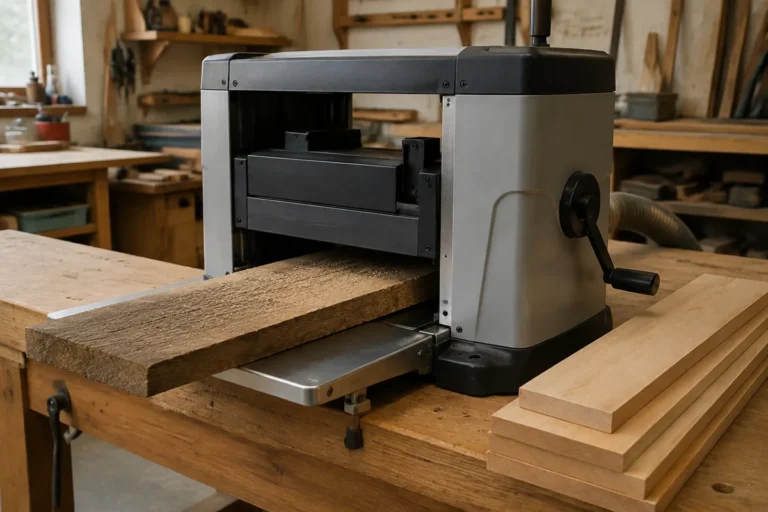
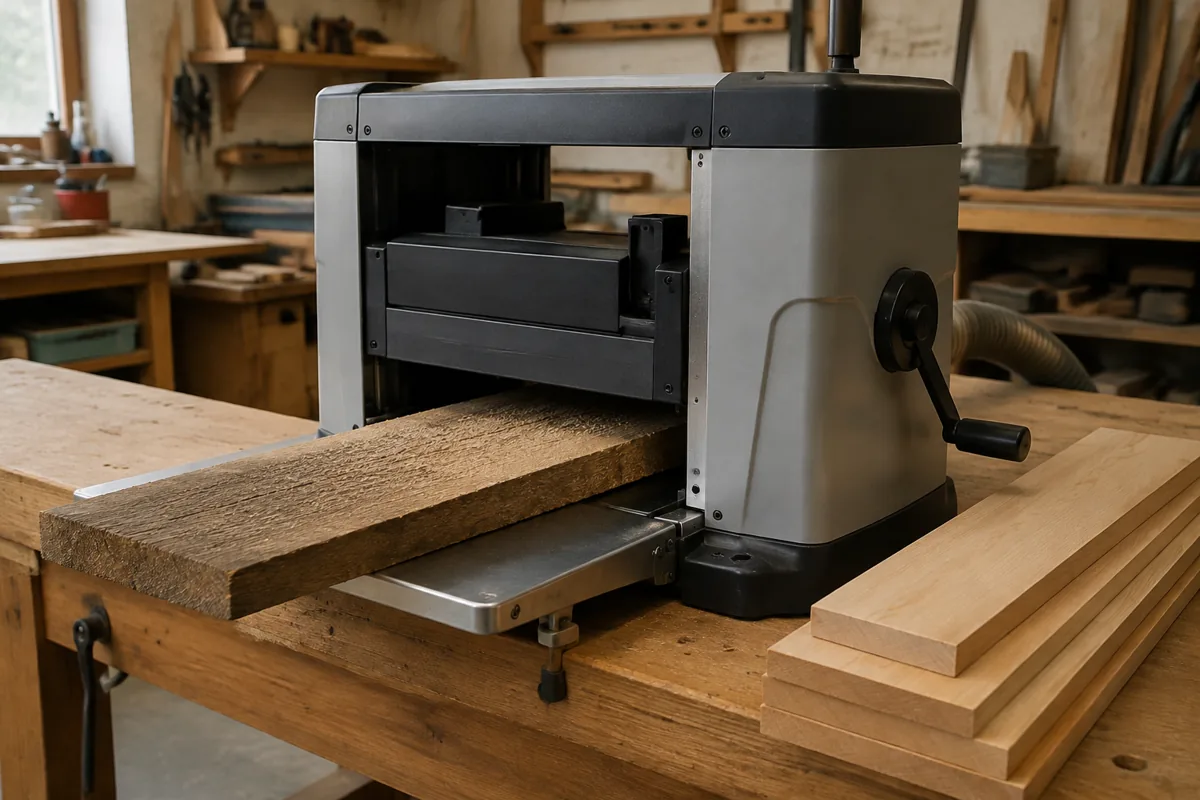
Planer boards stick to the bed when friction rises between the wood and the machine’s table. Usually the cause is a dry or dirty bed, resin buildup, surface rust, or boards that are being pushed through at an angle. A board that stops abruptly can damage the cutterhead, overload the feed rollers, and leave a deep mark on the stock.
The fix is normally simple: clean the bed, remove rust or pitch, apply a suitable low-friction coating, and keep the board flat as it enters the machine. Do not solve the problem by forcing the workpiece. That can make a minor surface issue into a feed or safety problem.
Contents
Find the Cause Before Applying Anything
Unplug the planer and inspect the bed under good light. Look for dull gray areas, sticky brown pitch, raised rust spots, and scratches running in the feed direction. Check especially near the cutterhead opening and along the edges of the bed, where dust and resin collect.
Also inspect the board. Freshly milled lumber can have sap, glue squeeze-out, or a rough underside. A board with a slight bow may contact the bed heavily at its ends. Narrow boards can also twist as they enter, increasing drag on one corner.
Clean a small area first and test it. If the board slides normally after cleaning, a coating may not be necessary. If the bed feels clean but still drags, use a dry lubricant made for woodworking machinery.
Clean the Planer Bed
Start by vacuuming chips and dust. Wipe the bed with a rag dampened with mineral spirits to remove pitch and oily residue. Do not pour solvent into the machine or allow it to run toward the feed rollers, bearings, switches, or motor.
For stubborn deposits, use a plastic scraper or a fine synthetic abrasive pad. A sharp metal scraper can gouge the bed, and even a shallow groove can catch the edge of a board. Remove residue in several light passes rather than trying to strip it aggressively.
If you see surface rust, use a fine rust-removal pad or abrasive paper around 320 to 400 grit, backed by a flat sanding block. Sand only enough to remove the raised rust. Wipe away the residue and inspect the surface with your fingertips. A rust pit does not have to disappear completely, but no raised edge should remain.
After cleaning, dry the bed completely. Mineral spirits can leave a film that attracts dust if it is not wiped off. Avoid water-based cleaners unless the manufacturer specifically permits them; bare cast iron can flash-rust quickly after contact with water.
Choose a Low-Friction Coating
A paste wax or a dedicated dry-film machine lubricant is usually the best choice. Apply a thin film, allow it to haze if the product requires that step, and buff it thoroughly with a clean cloth. Heavy wax does not improve sliding and can transfer to the board or collect sawdust.
For routine maintenance, a woodworking machine paste wax is inexpensive and easy to use. A dry PTFE coating is useful when you want less residue, especially in a dusty shop. Avoid silicone sprays and general-purpose penetrating oils. Silicone can interfere with finishes, while oily films attract dirt and may stain porous wood.
| Bed treatment | Best use | Advantages | Limitations |
|---|---|---|---|
| Paste wax | General maintenance | Low cost, easy to find, good sliding | Needs buffing and periodic reapplication |
| Dry PTFE film | Low-residue operation | Does not leave an oily surface | Usually costs more and requires even coverage |
| Raw cast iron | Clean, lightly used machines | No product cost or transfer risk | More friction and greater rust risk |
| Thick oil or silicone spray | Generally avoid | May seem slippery at first | Collects dust, can contaminate finishes, and may stain wood |
Feed the Board Correctly
Set the board flat on the bed and keep your hands away from the cutterhead and feed rollers. Do not lift the trailing end while pushing the board into the machine. That can cause the leading edge to dig into the bed or cutterhead opening.
Feed boards with the grain direction and machine instructions in mind. A board should enter square to the rollers, not at a diagonal. On a long board, use an outfeed stand or roller support set slightly below the planer bed. If the support is too high, it can lift the board and increase pressure against the bed at the entrance.
Do not force a board that stops. Turn off the machine and wait for the cutterhead to stop before investigating. Check whether the board is too thick for the current setting, whether the feed rollers are dirty, and whether the board is wedged against a side rail or dust hood.
Check Rollers and Machine Setup
If a clean, waxed bed still allows boards to stall, the problem may be above the bed. Dirty feed rollers cannot grip consistently, so the board may appear to stick even when bed friction is normal. Clean rubber rollers with the method specified in the manual; some solvents can harden or swell rubber.
Inspect the planer’s table locks and height mechanism as well. A bed or cutterhead assembly that shifts under load can pinch the board. Confirm that the machine is level and that extension tables are aligned with the main bed. A step of even 1/16 inch can catch a board edge.
For boards that are badly cupped or twisted, flatten one face first with a jointer or sled. A thickness planer is not designed to remove major warp from the underside. The cheaper option—cleaning and waxing the bed—is fine for ordinary drag. Replacing rollers or adding accessories only makes sense after the basic alignment and cleaning checks pass.
Prevent the Problem from Returning
Clean the bed whenever you see pitch or feel drag, and apply a thin coating every few weeks in a regularly used shop. Infrequent users should inspect the bed before each session, particularly after humid weather. Keep the machine covered, but use a breathable cover rather than trapping condensation against the cast iron.
Keep a dedicated rag and scraper near the planer. A small amount of routine cleaning is safer and cheaper than forcing stock through a sticky machine. If the bed has deep corrosion, severe scoring, or a raised casting defect, stop using it until the defect is repaired or the bed is professionally evaluated.