Best Tile Wet Saw for Bathroom Renovations
What's inside
- Top 3 Picks
- Quick Comparison
- How We Chose
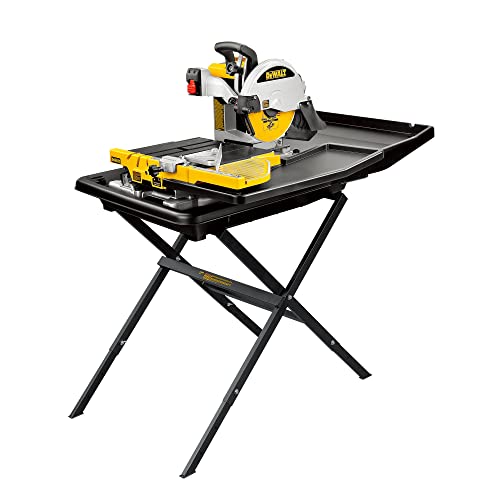
- 1. DEWALT D24000S Wet Tile Saw – Best for Full Bathroom Gut Renovations
- 2. VEVOR Wet Tile Saw 7 Inch – Best for Tight Budgets and Small Ceramic Jobs
- 3. LALFPET Heavy Duty 7-Inch Wet Tile Saw – Best Budget Saw for Repeated DIY Use
- 4. Montolit F2 Tile Wet Saw, 115V – Best for Precise Work in Tight Bathrooms
- 5. SUPVOX 71-Inch Rail Track Slab Saw – Best for Large-Format Slabs
- Bathroom Tile Materials and What They Demand From a Saw
- Water Management, Blades and the Ownership Realities Nobody Mentions
As an Amazon Associate I earn from qualifying purchases. This post may contain affiliate links at no extra cost to you.
For most bathroom renovations, the best tile wet saw is the DEWALT D24000S 10-inch corded wet tile saw with stand. It is the only saw in this roundup that combines a 10-inch blade, a 1.5 HP motor, roughly 24 inches of rip capacity, roughly 18 inches of diagonal capacity, and a genuinely contained water system with a stand — exactly the combination a full bathroom gut demands, from 12×24 porcelain wall tile to 3/8-inch porcelain floor tile to a marble threshold. It suits a homeowner doing one renovation properly and a pro running two or three bathrooms a month. If your project is a powder room or a single tub surround in 4-inch ceramic, a 7-inch budget saw such as the LALFPET or the VEVOR will do the work for a fraction of the outlay. If you are installing large-format slabs, the SUPVOX 71-inch rail saw is the only format here that makes those cuts in a single pass. Everything below explains which of those three situations you are actually in.
Contents
- Top 3 Picks
- Quick Comparison
- How We Chose
- 1. DEWALT D24000S Wet Tile Saw – Best for Full Bathroom Gut Renovations
- 2. VEVOR Wet Tile Saw 7 Inch – Best for Tight Budgets and Small Ceramic Jobs
- 3. LALFPET Heavy Duty 7-Inch Wet Tile Saw – Best Budget Saw for Repeated DIY Use
- 4. Montolit F2 Tile Wet Saw, 115V – Best for Precise Work in Tight Bathrooms
- 5. SUPVOX 71-Inch Rail Track Slab Saw – Best for Large-Format Slabs
- Bathroom Tile Materials and What They Demand From a Saw
- Water Management, Blades and the Ownership Realities Nobody Mentions
Our Top Picks


Top 3 Picks
Best overall: DEWALT D24000S
A 10-inch blade, 1.5 HP corded motor, roughly 24-inch rip capacity and roughly 18-inch diagonal capacity cover every standard bathroom layout, including 12×24 porcelain laid straight and 12×12 laid diagonally. The pump-fed tray, stainless steel deck and included rolling stand turn a messy job into a manageable one, and the saw holds enough resale value that it is not a sunk cost.
Best budget: LALFPET 7-Inch Wet Tile Saw
At the budget tier, the LALFPET’s 3,450 RPM induction motor is the standout detail: no carbon brushes to wear out, far less noise inside a small bathroom, and a service life that suits a homeowner with two or three projects ahead. It handles ceramic and thin porcelain wall tile; it will not handle 3/8-inch porcelain floor tile with any comfort.
Best for large-format slabs: SUPVOX 71-Inch Rail Track Saw
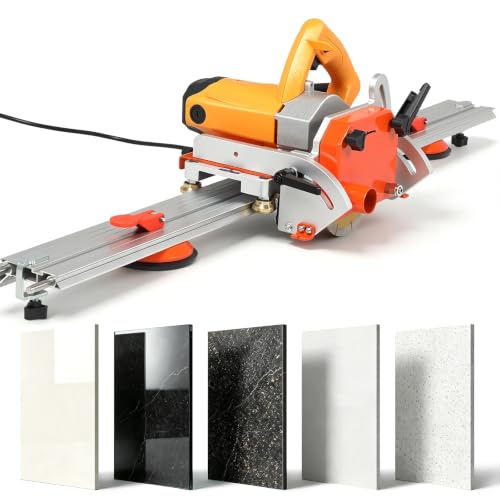
Once you move to 24×48 or larger slabs, the diagonal of a single tile exceeds the capacity of any benchtop saw, so the answer is a long rail. The SUPVOX pairs a 71-inch track with a 2,300 W motor, which produces clean, straight, single-pass cuts that a 10-inch saw physically cannot make.
Quick Comparison
| Product | Best for | Key specs | Cut capacity | Water management | Portability | Price tier |
|---|---|---|---|---|---|---|
| DEWALT D24000S 10-Inch Wet Tile Saw with Stand | Full bathroom gut renovations; 12×24 and 24×24 porcelain, stone thresholds | 10-in blade; 1.5 HP / 15 A corded; 3,600 RPM; stainless deck | ~24-in rip, ~18-in diagonal, deep-cut class for 3/8-in porcelain | Pump-fed tray, rear splash containment, slide-out tray for cleaning | Heavy; folding rolling stand included; two-person lift for stairs | Premium |
| VEVOR 7-Inch Wet Tile Saw | One-off small ceramic jobs on a tight budget | 7-in 65Mn steel blade; 3,600 RPM; compact corded motor | Straight cuts in 12×12 and smaller; shallow depth class | Reservoir and tray with pump; basic splash guard | Light; benchtop; one-person carry | Budget |
| LALFPET Heavy Duty 7-Inch Wet Tile Saw | Repeated DIY use where noise and brush wear matter | 7-in blade; 3,450 RPM induction motor; water reservoir | Straight cuts in 12×12 and smaller; shallow depth class | Reservoir feed with low-splash tray | Light; benchtop; one-person carry | Budget |
| Montolit F2 Tile Wet Saw, 115V | Pros and precise small-space work in tight bathrooms | 115 V heavy-duty compact wet saw; blade diameter not stated in the listing | Compact class — confirm exact rip and diagonal figures on the listing | Professional tray and guard design | Compact bench-top; easy to store between jobs | Mid-range |
| SUPVOX 71-Inch Rail Track Slab Saw | Large-format slabs and long single-pass straight cuts | 2,300 W motor (≈20 A at 115 V); 71-in rail | Single-pass cuts along a 71-in track; slab-width capacity | Rail-mounted water feed and guard; containment needs planning | Breaks down into rail sections; long storage footprint | Mid-range |
How We Chose
This roundup was built from published product specifications and the practical demands of bathroom work, not from bench testing. Three filters did most of the sorting. First, cut capacity against real bathroom tile sizes: a saw only qualifies as a bathroom saw if it can handle the diagonal of the tile you are likely to install, because diagonal layouts and door thresholds are where undersized saws fail. Second, category fit — a benchtop 7-inch saw, a 10-inch stand saw and a long-rail slab saw solve three genuinely different problems, so each was assessed against the projects it is built for rather than against each other. Third, water management and ownership cost, since a wet saw that sprays slurry across a finished bathroom, or that needs a new blade every weekend, is more expensive than its price tag suggests. We also weighed the upgrade path: whether a saw’s blade class, motor type and accessory ecosystem let it grow from a powder room to a full gut, or whether it becomes a dead end after one project.
1. DEWALT D24000S Wet Tile Saw – Best for Full Bathroom Gut Renovations
As an Amazon Associate we earn from qualifying purchases at no extra cost to you.

The D24000S is the saw you buy when the bathroom is coming down to the studs and you intend to tile the floor, the tub surround, the shower walls and the niche in the same material. Its 10-inch blade and 1.5 HP corded motor put it in a different class from the 7-inch benchtop saws in this roundup, and the roughly 24-inch rip capacity means a 24×24 porcelain floor tile can be cut in a single straight pass without flipping the tile. That single-pass capability matters more than beginners expect: every flip introduces a chance of a wandering cut line, and on rectified porcelain a wandering line shows.
Key specs
- Blade: 10-inch continuous-rim diamond class — the standard size for porcelain and natural stone, with the widest blade availability of any wet saw size
- Motor: 1.5 HP, 15 A corded, 3,600 RPM — a corded motor that will not bog down in 3/8-inch porcelain
- Cut capacity: roughly 24 inches of rip, roughly 18 inches of diagonal, and enough depth for thick floor tile and stone thresholds
- Deck: stainless steel with a sliding table, which resists the slurry corrosion that eats painted steel decks
- Water system: pump-fed rear tray with splash containment and a slide-out tray for cleaning out the sludge
- Stand: included and folding, with wheels — this is the “S” in the model name and the reason the saw is usable at floor height
- Weight and footprint: heavy, and it needs a clear run of three to four feet; plan a two-person lift for stairs
The two features that earn their keep on a bathroom job are the containment and the stand. A wet saw throws water and abrasive slurry, and in a bathroom the surrounding surfaces are often already finished — a vanity, a painted wall, a new floor in the hallway. A saw with a rear tray and a splash guard plus a stand keeps the cut at working height, which reduces both mess and the fatigue of bending over a benchtop unit for three hours. The stainless deck is the third quiet advantage: slurry rusts mild steel decks, and a rusted deck will eventually stain light-colored tile edges.
Where the D24000S falls short is at the extremes. Its roughly 18-inch diagonal capacity will not take a 12×24 tile laid diagonally in one pass — that diagonal measures about 26.8 inches — so a diagonal 12×24 floor requires two-pass or plunge-cut technique, or a rail saw. It also will not touch a 24×48 slab. And at the premium tier, the cost only makes sense if you have volume: one powder room does not justify it, but a full gut with a shower, a floor and a niche absolutely does.
Pros
- 10-inch blade and 1.5 HP motor handle thick porcelain, marble and granite thresholds without stalling
- Roughly 24-inch rip capacity covers 24×24 floor tile in a single straight pass
- Pump-fed water tray with real splash containment keeps slurry off finished surfaces
- Included folding stand with wheels puts the cut at a comfortable height and makes the saw mobile on a job site
- Stainless steel deck resists the corrosion that shortens the life of budget saws
- Widest blade and accessory availability of any wet saw class, which matters for years of ownership
Cons
- Premium tier pricing — hard to justify for a single small bathroom
- Heavy and awkward; it is not a saw you carry up a narrow staircase alone
- Requires a clear run of floor space and a nearby outlet, which some small bathrooms simply do not have
- Roughly 18-inch diagonal capacity is still short of a diagonal 12×24 tile
- Needs the same maintenance discipline as any wet saw: draining, rinsing and drying after every session
Against the nearest alternative in this list — the SUPVOX rail saw — the decision is about tile size, not quality. The DEWALT wins for anything up to 24×24 laid straight, because it is self-contained, stable and portable on its stand. The SUPVOX only becomes the better tool once your tiles are large enough that a benchtop table cannot physically present them to the blade. Against the Montolit F2, the DEWALT is the choice when capacity and throughput matter more than a compact footprint; the F2 is the choice when the bathroom is so small that a stand saw will not fit alongside a vanity and a door swing.
2. VEVOR Wet Tile Saw 7 Inch – Best for Tight Budgets and Small Ceramic Jobs

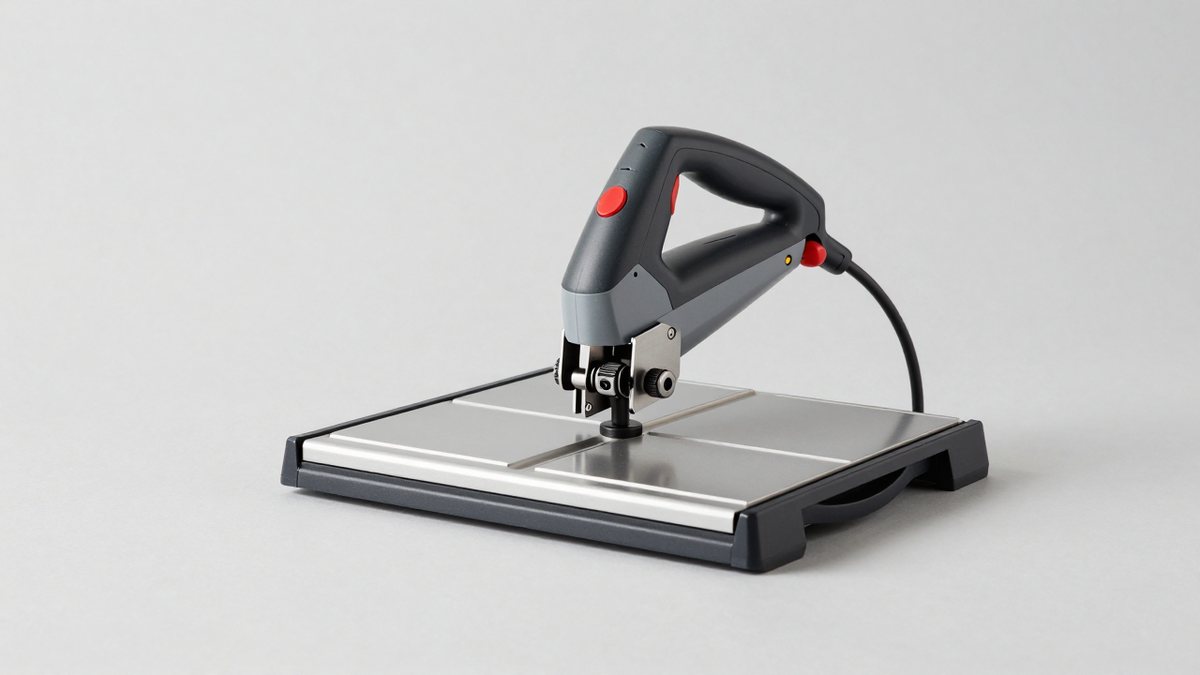
The VEVOR 7-inch wet saw is the entry point into wet cutting, and it is honest about what it is: a compact, corded, benchtop machine with a 7-inch blade, a 3,600 RPM spindle and a sliding table designed to make long straight rips despite the small blade. For a powder room, a backsplash or a single tub surround in ceramic wall tile, it does the job at the lowest tier in this roundup.
Key specs
- Blade: 7-inch, 65Mn steel — this is the single most important spec on the page, and it is covered in detail below
- Spindle speed: 3,600 RPM
- Motor: compact corded class, sized for intermittent cutting rather than production work
- Water system: reservoir and tray with a pump feed, plus a basic splash guard
- Format: benchtop, light enough for one person to carry and store on a shelf
- Cut capacity: shallow-depth class — fine for standard wall tile, marginal for thick floor tile
The blade is the detail that decides whether this saw is a bargain or a frustration. A 65Mn steel blade is a hardened steel blade, not a diamond blade. Steel blades cut ceramic and other soft tile reasonably well and are cheap to replace, but they dull quickly against porcelain and will not cut natural stone at all. If your bathroom uses porcelain floor tile — which most modern bathrooms do — you should budget for a 7-inch continuous-rim diamond blade alongside the saw. That is not a knock on the machine; it is simply the reality of the blade class, and it is worth knowing before you start cutting rather than after the third dull pass. With a diamond blade fitted, this saw becomes a genuinely capable small-format cutter.
The other reality of a 7-inch benchtop saw is depth and table size. The blade diameter limits how thick a tile you can cut, and the table limits how large a tile you can present. A 12×12 wall tile is comfortable. A 12×24 porcelain plank is not, both because of depth and because the tile overhangs the table and wants to tip. The water system is also basic: reservoir-fed pumps on budget saws tend to spray more than premium containment systems, so plan on plastic sheeting, a towel dam at the door and a wet/dry vacuum nearby. On the plus side, the small footprint is a real advantage in a bathroom renovation where the saw has to live in the hallway or on a landing.
Pros
- Lowest entry cost of any saw in this roundup — sensible for a one-time small job
- Light enough to carry, set up and store without help
- 3,600 RPM spindle speed gives clean edges in ceramic when the blade is sharp
- Sliding table makes long straight rips possible despite the small blade
- Small footprint fits a hallway, landing or half-finished bathroom
- Cheap replacement blades mean blade cost never becomes a reason to stop working
Cons
- 65Mn steel blade is not suitable for porcelain or stone — budget for a diamond blade
- Shallow depth of cut rules out thick floor tile and stone thresholds
- Table size makes 12×24 and larger tiles awkward and unsafe to present
- Basic splash containment means more cleanup and more risk to finished surfaces
- Compact motor class is not built for continuous production cutting
- No stand, so you will be cutting at floor or workbench height
Compared with the LALFPET, the VEVOR is the cheaper of the two budget saws and the one to pick if the tool will be used once. The LALFPET’s induction motor changes the ownership math for anyone who expects to tile a second or third room, because it removes the two failure points that kill budget saws: brushes and noise. Compared with the DEWALT, the gap is not subtle — the VEVOR is a small-format cutter, and the D24000S is a renovation workhorse.
3. LALFPET Heavy Duty 7-Inch Wet Tile Saw – Best Budget Saw for Repeated DIY Use
The LALFPET sits in the same budget tier as the VEVOR but makes a different engineering bet. Instead of a universal motor with carbon brushes, it uses a 3,450 RPM induction motor — the type of motor found in bench grinders and shop equipment, where the expectation is years of service rather than one season. For a homeowner who plans to tile a bathroom now, a laundry room next year and a rental kitchen after that, that single specification changes the economics of the purchase.
Key specs
- Motor: 3,450 RPM induction — no carbon brushes, meaning no brush replacement and no brush dust
- Blade: 7-inch class, with the same practical limits as any 7-inch saw
- Water system: water reservoir feed with a low-splash tray
- Format: benchtop, portable, one-person carry
- Cut capacity: straight cuts in 12×12 and smaller; shallow depth class
- Noise: noticeably quieter than a universal-motor saw of the same size — a real factor indoors
Two things follow from the induction motor. The first is longevity. A universal motor’s brushes wear, and when they wear the saw loses power, then stops. That is the most common death of a budget wet saw, and it happens at an awkward moment — usually mid-project, with half a floor laid. An induction motor avoids that failure mode entirely and generally runs cooler under continuous load. The second is noise. A bathroom is a hard-surfaced, enclosed space, and a 7-inch wet saw running inside one is loud enough that ear protection stops being optional and neighbours start noticing. An induction motor at a comparable speed is substantially quieter, which makes long cutting sessions more tolerable and less disruptive in an apartment or a shared house.
The trade-offs are the same as the VEVOR’s, because the blade size sets them. Depth of cut is limited by the 7-inch blade, so thick porcelain floor tile and stone are out of scope. The water reservoir needs topping up and rinsing, and reservoir-fed systems spray more than pump-fed professional trays. There is no stand, so the saw lives on a bench or on the floor, and cutting at floor level for a full shower surround is genuinely tiring. If you fit a continuous-rim diamond blade and stick to ceramic and thin porcelain wall tile, the LALFPET will produce clean, chip-free edges at a speed that keeps a small bathroom moving.
One practical note on the reservoir: change the water before it turns into opaque slurry. Abrasive sludge recirculated through the pump accelerates pump wear, and it also reduces cooling at the blade edge, which is what causes chips and burned tile edges. On a 40-square-foot bathroom floor with roughly 150 to 250 linear feet of cutting, expect to refresh the water at least once mid-job.
Pros
- Induction motor means no brushes to replace and a much longer service life than a typical budget saw
- Quieter operation, which matters when cutting inside a small, hard-surfaced bathroom
- Lowest realistic price tier for a saw you can use on more than one project
- Water reservoir keeps setup simple — no plumbing, no hose, no pump priming ritual
- Light and compact enough to store on a shelf between renovations
- Runs cooler under sustained load than an equivalent universal-motor saw
Cons
- 7-inch blade limits depth of cut — not suitable for thick porcelain floor tile or stone
- Table size makes 12×24 planks and larger awkward to cut safely
- No stand, so all cutting happens at bench or floor height
- Reservoir water needs frequent changing to protect the pump and the cut quality
- Splash containment is basic compared with a premium tray-and-guard system
- Not a production saw — sustained all-day cutting is outside its design brief
Against the VEVOR, the LALFPET is the better long-term purchase and the VEVOR is the better one-job purchase; the induction motor is the entire difference. Against the DEWALT, the comparison is capacity, not quality — the D24000S cuts things the LALFPET cannot physically reach, and if your bathroom includes 3/8-inch porcelain floor tile, that capacity is the whole argument. Against the Montolit F2, the LALFPET is the budget route to a compact saw; the F2 is the professional route to the same footprint with heavier-duty components.
4. Montolit F2 Tile Wet Saw, 115V – Best for Precise Work in Tight Bathrooms

Montolit is an Italian manufacturer best known among tilers for manual tile cutters — the lever machines that snap porcelain cleanly without water or power. The F2 extends that professional lineage into a 115 V heavy-duty compact wet saw. This is the saw for the tiler or serious DIYer who works in real bathrooms: small rooms with a toilet, a vanity and a door swing, where a full-size stand saw cannot be set up without dismantling the room.
Key specs
- Power: 115 V, matching standard North American circuits
- Class: heavy-duty compact wet saw, professional rather than consumer grade
- Blade: diameter is not stated in the product name — confirm the exact figure on the current listing before you buy blades
- Cut capacity: compact class; confirm rip and diagonal figures on the listing, because this is the specification that decides whether it fits your tile
- Format: bench-top, compact, designed for storage and transport between jobs
- Water system: professional tray and guard design typical of the category
The reason to consider a compact professional saw rather than a 10-inch stand saw is not price — the F2 sits at the mid-range tier, above both budget machines — it is access. A 10-inch saw with a rolling stand needs a clear run of three to four feet, an outlet within reach of a cord, and enough floor space that you are not cutting on top of the toilet. In a typical 5×8-foot bathroom with a vanity and a swinging door, that space does not exist until late in the renovation. A compact wet saw can be set up on the landing, in the hallway or on a piece of plywood over the tub, and moved out of the way when the plumber arrives.
Professional-grade compact saws also tend to get the details right in ways that matter on finished surfaces. Trays are deeper and better baffled, guards actually intercept the spray rather than redirecting it sideways, and fences are rigid enough to hold a cut line on rectified porcelain. That rigidity is worth more than raw motor power when you are cutting 12×24 tile for a niche: a fence that flexes by a millimetre produces a visible gap in a mitred edge.
The limitation is capacity, and it is the honest reason to think twice. A compact saw’s rip and diagonal capacities are smaller than a 10-inch stand saw’s, so a diagonal 12×24 layout, or a 24×24 floor, may be out of reach. Before buying, measure the largest tile in your design, work out its diagonal, and compare it to the listed capacity. If your layout is straight-set 12×24 wall tile over a 12×12 floor, a compact professional saw covers it comfortably. If it is 24×24 porcelain laid diagonally, it does not, and you need the DEWALT or the SUPVOX rail saw.
Pros
- Compact professional footprint fits bathrooms and hallways where a stand saw will not go
- 115 V operation works on standard household circuits without a transformer
- Heavy-duty build class intended for trade use, not one-off projects
- Brand pedigree in tile cutting, particularly for porcelain, is well established among tilers
- Tray and guard design is aimed at containment rather than just splash deflection
- Easy to store and transport between jobs, which suits working tilers
Cons
- Mid-range price without the capacity of a 10-inch stand saw
- Blade diameter is not stated in the listing name — verify before ordering blades
- Compact cut capacity will not handle large-format tile or long diagonal cuts
- No stand included, so cutting height depends on what you set it on
- Fewer accessory and blade options than the 10-inch standard
Against the LALFPET, the F2 is the professional-grade version of the same compact idea: more money, heavier components, better containment, and a brand that tilers already trust. Against the DEWALT D24000S, it is a straight capacity-versus-access trade. Buy the DEWALT if your bathroom will be empty and you can claim the floor space; buy the F2 if you are working around fixtures, or if you are a pro who needs a saw that lives in the van and comes out in a client’s hallway.
5. SUPVOX 71-Inch Rail Track Slab Saw – Best for Large-Format Slabs
Large-format tile broke the benchtop wet saw. Once a single tile measures 24×48 inches or more, the tile is longer than the saw’s table and its diagonal is longer than any benchtop machine’s capacity — a 24×48 tile has a diagonal of about 53.7 inches. The answer the industry settled on is the rail saw: a long track that clamps or sits over the tile, with a motorised cutting head that rides the rail. The SUPVOX pairs a 71-inch track with a 2,300 W motor, which puts it in a different mechanical category from everything else in this roundup.
Key specs
- Rail length: 71 inches — long enough for full-length cuts on large-format slabs
- Motor: 2,300 W, which at 115 V draws roughly 20 A at full load
- Format: electric rail track saw; the cutting head travels the rail rather than the tile travelling across a table
- Cut type: long, straight, single-pass cuts — the geometry that large-format installation requires
- Water: rail-mounted feed and guard; containment has to be planned around the track
- Storage: breaks down into rail sections, but a 71-inch rail still needs somewhere to live
The electrical specification deserves a moment, because it is the most common surprise with a saw this size. A 2,300 W motor at 115 V draws approximately 20 amps at full load. A dedicated 20 A circuit will carry it; a shared 15 A bathroom circuit will not, and neither will an extension cord that is too light for the load. Before the saw arrives, identify a circuit you can dedicate to it and use a heavy-gauge cord. Running a 2,300 W tool on an undersized cord causes voltage drop, and voltage drop in a wet saw shows up as bogging and burned tile edges. Also use ground-fault protection anywhere near water — this is standard practice for any corded tool in a bathroom, and if you are unsure about the circuit, have a qualified electrician confirm it.
The rail format changes your workflow in ways that are mostly good. Because the head travels and the tile stays still, you are not fighting a heavy slab onto a small table, which is the single most dangerous moment in large-format work. Long straight cuts come out clean and repeatable, and repeatability is what makes large-format installations look right — a joint that wanders by two millimetres across a 48-inch tile is glaring in a way the same error in a 4-inch tile is not. The trade-offs are setup time, water containment over a large area, and the fact that a rail saw is not the tool for small cuts. For notches, L-cuts around a shower valve and small trim pieces, you will still want a compact saw or a manual cutter alongside it.
Portability is relative. The rail breaks down, so transport is manageable, but a 71-inch rail is a 71-inch object: it does not fit in a small car boot easily, and it needs a wall rack or a long shelf in storage. If your bathroom is upstairs in a narrow house, factor in the number of trips.
Pros
- 71-inch rail handles large-format slabs that no benchtop saw can cut in a single pass
- 2,300 W motor has the power to push a diamond blade through dense porcelain slab without stalling
- Tile stays stationary while the head travels, which is safer for heavy slabs
- Long straight cuts are repeatable, which is what large-format layouts demand
- Mid-range tier pricing relative to the size of the work it enables
- Breaks down for transport between sites
Cons
- Draws roughly 20 A at 115 V — needs a dedicated circuit and a heavy-gauge cord
- Long rail requires substantial storage space and careful handling
- Setup and teardown take longer than dropping a benchtop saw on a stand
- Water containment over a large cutting area takes planning
- Not suited to small cuts, notches or trim — you will need a second tool
- Learning curve: rail alignment and blade depth discipline take practice
Against the DEWALT D24000S, the SUPVOX is not an upgrade — it is a different tool for a different tile. If your bathroom uses 12×24 or 24×24 tile, the DEWALT is faster, more contained and far easier to set up. The SUPVOX earns its place only when the design calls for slabs large enough that a table saw cannot present them to the blade. Against the Montolit F2, the contrast is total: one is a compact precision tool for tight rooms, the other is a long-rail machine for big panels, and a serious large-format installer would own both.
Bathroom Tile Materials and What They Demand From a Saw
Bathroom tile is not one material, and the differences change which saw you should buy. Ceramic wall tile is the softest common option — a fired clay body with a glazed face, typically around 1/4 inch thick. It cuts easily, and it is the one material a hardened steel blade such as the VEVOR’s 65Mn blade handles acceptably. Porcelain is denser, harder and often 3/8 inch thick or more; it is fired at higher temperatures and its body is much tougher. Porcelain dulls steel blades quickly and demands a continuous-rim diamond blade and a motor with real torque. Natural stone — marble thresholds, travertine, granite — varies wildly, but all of it needs diamond tooling and slower feed rates.
Thickness matters as much as hardness, because a wet saw’s depth of cut is set by blade diameter and arbor geometry. A 7-inch saw typically offers a shallow depth class suited to wall tile. A 10-inch saw reaches into thick floor tile and stone. If your design mixes a 3/8-inch porcelain floor with a marble threshold, you have already decided against a 7-inch saw regardless of how few cuts the job involves.
Tile size is the third variable, and it is the one people underestimate. The relevant number is not the tile’s side length but its diagonal, because diagonal layouts and corner cuts require the tile to pass the blade at an angle:
| Tile size | Diagonal | What it means for saw choice |
|---|---|---|
| 4×4 in | ~5.7 in | Any saw, including a budget 7-inch machine |
| 12×12 in | ~17.0 in | Needs a saw with roughly 17 in of diagonal capacity — most 7-inch saws are marginal, 10-inch saws are comfortable |
| 12×24 in | ~26.8 in | Exceeds the diagonal capacity of a typical 10-inch saw; requires two-pass technique or a rail saw for single-pass cuts |
| 18×18 in | ~25.5 in | Same problem as 12×24 — beyond typical 10-inch diagonal capacity |
| 24×24 in | ~33.9 in | Straight cuts are possible on a 10-inch saw with ~24 in rip capacity; diagonal cuts are not |
| 24×48 in | ~53.7 in | Rail saw territory — no benchtop machine can present this tile |
Read that table against your own design before you shop. A bathroom with 12×24 wall tile laid straight and a 12×12 floor is fully served by a 10-inch saw. The same bathroom with 12×24 tile laid diagonally on the floor pushes past what a 10-inch saw can do in one pass. And a 24×48 slab shower wall eliminates everything except a rail saw. This is why capacity, not brand, should drive the first decision.
Water Management, Blades and the Ownership Realities Nobody Mentions
A wet saw is a water tool, and water is what makes it a renovation hazard as well as a cutting tool. Three things fail first on any wet saw, in this order: the blade, the water pump or feed, and the tray and deck.
The blade. Diamond blades do not cut so much as grind, and the diamond grit is bonded to a metal matrix that wears away to expose fresh grit. Cut porcelain with too little water and the matrix glazes over — the blade spins, gets hot, and stops cutting. The symptom is a blade that skips and burns the tile edge instead of slicing it. The fix is more water and a slower feed, not more force. Steel blades such as the 65Mn blade on the VEVOR wear differently: they dull and lose their set, and on porcelain they will simply stop being effective. Budget for a continuous-rim diamond blade in the correct diameter before you start, especially if you are cutting porcelain.
The water feed. Reservoir-fed budget saws recirculate the same water, which quickly becomes abrasive slurry. Slurry accelerates pump wear and reduces cooling at the cut. Change the water at least once during a full bathroom floor, and more often if the tile is dense. Pump-fed professional trays are better but still need the intake kept clear of sludge. Never run any wet saw dry, even briefly — the blade overheats, and the tile edge chips.
The tray and deck. Slurry is abrasive and slightly alkaline. On a painted or stainless deck it is manageable; on mild steel it rusts. Clean the tray out at the end of every session, rinse the deck, and dry it. This is a