Best Table Tennis Blades for Spin
What's inside
- Top 3 Picks
- Quick Comparison
- How We Chose
- 1. PRO-SPIN Rubber Cleaning Kit – Best for Keeping a Spin Setup Grippy
- 2. PRO-SPIN Ping Pong Paddles – Best for an ITTF-Legal Carbon Racket Out of the Box
- 3. Butterfly Tenergy 05 FX – Best for Maximum Spin on a Custom Setup
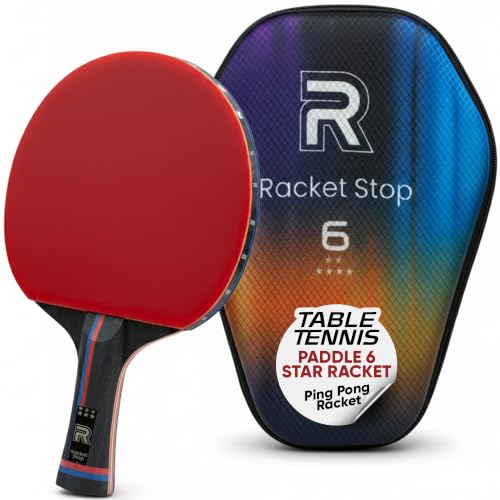
- 4. Racket Stop Inferno – Best for Indoor and Outdoor Carbon-Blade All-Round Play
- 5. STIGA Pro Carbon + Raptor – Best for Club-Level Attack Straight From the Box
- 6. Lifestyle Basics Table Tennis Paddle Cleaner 8 oz – Best for Bulk-Value Grip Maintenance
- 7. Butterfly Primorac Carbon Pro-Line – Best for High-Speed Looping at an Advanced Level
- 8. KIKILIVE Ping Pong Paddle Set – Best for Two-Player Social Spin Practice
- 9. The Complete Table Tennis Equipment Guide – Best for Learning How Blades, Rubbers and Balls Interact
- 10. Table Tennis Rubber Cutter Kit – Best for Trimming New Rubber Flush to the Blade Edge
- 11. EastPoint 5.0 Professional Ping Pong Paddle – Best for a First Spin-Oriented Paddle on a Tight Budget
- 12. YINHE U2 Table Tennis Paddle – Best for Pure-Wood Feel With a Real Topspin Ceiling
- Related Guides
As an Amazon Associate I earn from qualifying purchases. This post may contain affiliate links at no extra cost to you.
The best table tennis blade for spin for most topspin-focused players is the YINHE U2, a 7-ply pure-wood blade that keeps the ball on the face long enough to load it with rotation while staying stiff enough that a hard loop still lands on the table. It suits intermediate club players who already have a repeatable topspin stroke and want wood feel rather than a trampoline. If you would rather not assemble anything, the STIGA Pro Carbon + Raptor puts a carbon-layer blade and a performance rubber in one box, and if your budget is the binding constraint, the EastPoint 5.0 is the least expensive way to start a spin habit. The honest answer is that spin is not one spec: it is the product of blade flex, blade weight, ply layering and the rubber glued to it. A flexible blade with a soft, grippy topsheet generates more rotation than a stiff blade with hard rubber, and a blade that is too fast for your control level will cost you more points than it wins. This guide compares construction, flex, speed and handle options so you can match a blade to your level instead of to a marketing claim.
Contents
- Top 3 Picks
- Quick Comparison
- How We Chose
- 1. PRO-SPIN Rubber Cleaning Kit – Best for Keeping a Spin Setup Grippy
- 2. PRO-SPIN Ping Pong Paddles – Best for an ITTF-Legal Carbon Racket Out of the Box
- 3. Butterfly Tenergy 05 FX – Best for Maximum Spin on a Custom Setup
- 4. Racket Stop Inferno – Best for Indoor and Outdoor Carbon-Blade All-Round Play
- 5. STIGA Pro Carbon + Raptor – Best for Club-Level Attack Straight From the Box
- 6. Lifestyle Basics Table Tennis Paddle Cleaner 8 oz – Best for Bulk-Value Grip Maintenance
- 7. Butterfly Primorac Carbon Pro-Line – Best for High-Speed Looping at an Advanced Level
- 8. KIKILIVE Ping Pong Paddle Set – Best for Two-Player Social Spin Practice
- 9. The Complete Table Tennis Equipment Guide – Best for Learning How Blades, Rubbers and Balls Interact
- 10. Table Tennis Rubber Cutter Kit – Best for Trimming New Rubber Flush to the Blade Edge
- 11. EastPoint 5.0 Professional Ping Pong Paddle – Best for a First Spin-Oriented Paddle on a Tight Budget
- 12. YINHE U2 Table Tennis Paddle – Best for Pure-Wood Feel With a Real Topspin Ceiling
- Related Guides
Our Top Picks
 STIGA Pro Carbon + Raptor Performance-Level Table TennisOne Size11 x 6.5 x 0.1 inches0 poundsCheck on Amazon
 Lifestyle Basics Table Tennis Paddle Cleaner 8 oz8 Ounce (Pack of 1)2 x 2 x 7.5 Inches0.6 poundsCheck on Amazon


Top 3 Picks
Best overall: YINHE U2 7-Ply Pure Wood Blade
The U2 is the rare blade that gives a developing topspin player both dwell time and stability: seven thin wood plies keep the face from twisting on off-centre contact, while the all-wood build still flexes enough to sling the ball. It suits someone playing two to four times a week who wants to grow into a blade rather than replace it in six months. Its hand-glued assembly means the rubber arrives mounted and ready, which removes the most common beginner error.
Best budget: EastPoint 5.0 Professional Ping Pong Paddle
Two-sided red and black inverted rubber on a wood blade, at the lowest price tier in this roundup. It is not a spin machine, but it is a legitimate starting point: the inverted faces grip the ball, the blade is slow enough to keep shots on the table, and the cost of entry is low enough that upgrading later does not feel wasteful.
Best premium: Butterfly Primorac Carbon Pro-Line
Butterfly’s Primorac Carbon sits in the fastest class of blades the brand makes, with carbon layers that add rebound without adding much weight. Paired with a spin-oriented rubber such as Tenergy 05 FX, it gives an advanced looper the speed ceiling to finish points from mid-distance. It is a poor first blade and an excellent third one.
Quick Comparison
| Product | Best for | Key specs | Price tier |
|---|---|---|---|
| PRO-SPIN Rubber Cleaning Kit | Restoring grip on inverted rubber | 200 ml cleaner + cleaning sponge; smooth rubber only | Budget |
| PRO-SPIN ITTF-Approved Carbon Fiber Paddles | An ITTF-legal carbon racket out of the box | Carbon-fibre blade; ITTF-approved; pre-assembled | Mid-range |
| Butterfly Tenergy 05 FX | Maximum spin on a custom blade | Inverted sheet; 1.7 / 1.9 / 2.1 mm sponge; red or black | Premium |
| Racket Stop Inferno | Indoor and outdoor carbon-blade all-round play | Carbon-ply blade; two-sided rubber; outdoor-tolerant build | Mid-range |
| STIGA Pro Carbon + Raptor | Club-level attack straight from the box | Carbon-layer blade + Raptor rubber; performance class | Premium |
| Lifestyle Basics Paddle Cleaner 8 oz | Bulk-value grip maintenance | 8 oz (≈237 ml) liquid cleaner | Budget |
| Butterfly Primorac Carbon Pro-Line | High-speed looping at an advanced level | Carbon blade in Butterfly’s fastest class; pre-assembled | Premium |
| KIKILIVE Ping Pong Paddle Set | Two-player social spin practice | 2 paddles; different rubber on each face | Mid-range |
| The Complete Table Tennis Equipment Guide | Learning how blades, rubbers and balls interact | Book-length guide; blade, rubber and ball chapters | Budget |
| Table Tennis Rubber Cutter Kit | Trimming new rubber flush to the blade edge | Adjustable arc cutting tool; one sheet at a time | Mid-range |
| EastPoint 5.0 Professional Ping Pong Paddle | A first spin-oriented paddle on a tight budget | Wood blade; red/black inverted faces; two-sided | Budget |
| YINHE U2 Table Tennis Paddle | Pure-wood feel with a real topspin ceiling | 7-ply all-wood blade; hand-glued; Uranus line | Premium |
How We Chose
These picks were selected by reading specifications, not by hitting balls with them. The first filter was category fit: a blade-for-spin buyer needs one of four things — a complete racket, a bare blade, a rubber sheet to pair with it, or the maintenance and assembly gear that keeps a spin setup working — so the list is organised around those jobs rather than around a single product type. The second filter was construction. Ply count, wood species grouping, presence and position of carbon layers, and published blade weight all change how much the face flexes at contact, and flex is the physical property that lets a topsheet stretch and grip the ball. The third filter was control level: a blade that is too fast for a player’s stroke production reduces spin in practice even when its specifications suggest otherwise. The fourth was upgrade path — whether an item can move with a player from beginner to club level, or is a consumable that gets replaced every few months. Finally, we weighted handle and assembly options, because a flared handle, a straight handle and a penhold handle suit different grips, and a pre-assembled racket removes gluing errors that ruin more first setups than any equipment choice. Price tier is noted only as a band, because listed prices move constantly.
1. PRO-SPIN Rubber Cleaning Kit – Best for Keeping a Spin Setup Grippy
As an Amazon Associate we earn from qualifying purchases at no extra cost to you.

This one is not a blade, and that is exactly why it belongs in a spin-focused buying guide. Rotation is generated by friction between the ball and the rubber topsheet, and a topsheet only grips while its surface is clean. Dust, skin oil, ball residue and airborne grit fill the microscopic pores in the rubber, and a glazed topsheet behaves like a hard, slick surface no matter how expensive the blade underneath it is. A 200 ml bottle with a cleaning sponge is a low-cost way to keep an existing setup performing at the level you paid for. It suits any player using smooth (inverted) rubber, from a first paddle to a premium carbon blade, and it matters most for players who practise several times a week and never clean between sessions.
Key specs
- Format: liquid rubber cleaner, 200 ml bottle
- Includes: cleaning sponge for applying and wiping
- Target surfaces: smooth inverted rubber only (not pimpled-out or anti-spin)
- Routine: wipe after play, allow to dry fully before storing
- Compatible with: any blade and any brand of inverted rubber
- Price tier: budget
The strength here is routine, not chemistry. A bottle this size lasts a long time if you apply a small amount to the sponge rather than pouring it onto the rubber, and the sponge gives you a controlled applicator that will not scratch the topsheet. Because the bottle is sealed and the sponge is reusable, the kit survives being left in a kit bag between sessions. What it cannot do is restore a rubber that has physically hardened or lost its pimples — once the topsheet has aged out, cleaning only buys a little more time.
Pros
- 200 ml goes a long way when applied to the sponge, not the rubber
- Sponge included means no improvised cloth that could scratch the topsheet
- Works on every brand of inverted rubber, so it survives your next blade upgrade
- Small enough to live permanently in a racket case
Cons
- Not for pimpled-out or anti-spin surfaces
- Won’t revive rubber that has already hardened or gone slick
- Smaller volume than the 8 oz alternative in this list
Compared with the Lifestyle Basics cleaner, the choice is volume versus packaging. The Lifestyle Basics bottle holds roughly 237 ml against 200 ml here, but it does not include a sponge. If you already own a suitable applicator and play enough to go through cleaner quickly, the larger bottle is the better value; if you want a complete, ready-to-use kit with nothing to improvise, this one is the tidier purchase.
2. PRO-SPIN Ping Pong Paddles – Best for an ITTF-Legal Carbon Racket Out of the Box
This is a pre-assembled racket built around a carbon-fibre blade and marketed as ITTF-approved, which matters more than it sounds. Tournament and league play generally requires covering material that carries ITTF approval, and a racket that arrives already compliant saves you from discovering at registration that your bargain rubber is not on the list. Carbon in the blade adds rebound and reduces flex, which shifts the character of the racket toward speed and away from the long dwell time that all-wood blades provide. That makes it a good fit for a player whose stroke is already consistent and who wants the ball to leave faster without working harder.
Key specs
- Blade: carbon-fibre construction
- Approval: listed as ITTF-approved
- State: pre-assembled, ready to play
- Best for: players who want speed assistance from the blade
- Price tier: mid-range
The practical advantage of a carbon racket at this price tier is consistency. A carbon layer stiffens the face, so the blade twists less on off-centre hits, and blocked balls travel with less effort. For a topspin player the trade-off is direct: less flex means less mechanical dwell, so more of your spin has to come from the rubber and from a faster, thinner contact. If your technique already produces heavy rotation, the added speed converts that rotation into pressure. If it does not, the same racket will send balls long.
Pros
- Arrives assembled and ITTF-approved — no gluing, no eligibility questions
- Carbon blade adds speed on blocks and drives with less effort
- Stiffer face is more stable on off-centre contact than a thin all-wood blade
- Mid-range tier makes it a reasonable second racket
Cons
- Less flex than an all-wood blade, so less free dwell time for spin generation
- Punishes late contact more than a slow all-round blade does
- Not a beginner racket despite the accessible price band
The nearest alternative in this list is the Racket Stop Inferno, which also uses a carbon-ply blade but is pitched for indoor and outdoor use. The Inferno is the more forgiving choice if you play outside or on tables that are not in perfect condition; this PRO-SPIN racket is the more conventional indoor club option, and it carries the explicit ITTF approval that the Inferno listing does not claim. Choose on where you play, not on which sounds faster.
3. Butterfly Tenergy 05 FX – Best for Maximum Spin on a Custom Setup

Tenergy 05 FX is the softer-sponge version of one of the most widely used offensive rubbers in the sport, and the “FX” matters for spin. A softer sponge deforms more on contact, which lets the topsheet wrap further around the ball before release — the effect is most pronounced on medium-speed loops and brush contacts rather than flat smashes. It is sold as a single inverted sheet in 1.7 mm, 1.9 mm or 2.1 mm sponge and in red or black, so it is a component for a custom build rather than something you can play with straight out of the packet. It suits a player who already has a blade they like and wants to raise the spin ceiling without changing the wood.
Key specs
- Type: inverted (smooth) offensive rubber, single sheet
- Sponge thicknesses: 1.7 mm, 1.9 mm, 2.1 mm
- Colours: red or black
- Character: soft-sponge variant of the Tenergy 05 topsheet
- Best paired with: all-wood or moderately stiff carbon blades
- Price tier: premium
Sponge thickness is the decision most buyers get wrong. The 2.1 mm version produces the highest spin and speed when you strike cleanly and with commitment, but it is also the least forgiving on passive shots and pushes. The 1.9 mm sheet is the usual compromise for an intermediate player moving up from a stock racket, and 1.7 mm is the sensible choice if you play close to the table or want the ball to stay shorter on serve returns. Because the sponge is soft, this rubber also works well on slower all-wood blades where a harder sponge would feel dead.
Pros
- Soft sponge generates heavy rotation on brush and loop contacts
- Three sponge thicknesses let you match the rubber to your blade speed
- Available in red and black, so you can keep a legal two-colour setup
- Well suited to slower all-wood blades that need help creating spin
Cons
- Premium tier, and you need two sheets plus glue for a full racket
- Requires assembly and trimming — no blade included
- Soft sponge wears faster than a harder one under heavy use
The nearest alternative in this list is not a rubber at all but the complete STIGA Pro Carbon + Raptor racket. If you want the highest spin potential and you are willing to learn to glue and cut, Tenergy 05 FX on a blade you already trust is the more precise route. If you would rather not handle assembly, the STIGA arrives ready to play and gives you a known blade-and-rubber pairing — you give up the ability to tune sponge thickness to your stroke.
4. Racket Stop Inferno – Best for Indoor and Outdoor Carbon-Blade All-Round Play

The Inferno is a carbon-ply paddle pitched for both indoor and outdoor games, which is a genuinely different brief from a club racket. Outdoor tables, wind, grit and temperature swings destroy rubber faster than anything indoors, so buying a racket you can use on a patio without wincing makes sense. The carbon-ply blade gives it more speed and stability than a basic wood paddle, and the listing positions it around high-spin play. It suits recreational and family players, and improvers who split their time between a club table and an outdoor one.
Key specs
- Blade: carbon-ply construction
- Use: indoor and outdoor tables
- Faces: two-sided rubber
- Character: speed-assisted all-round rather than pure control
- Price tier: mid-range
What the carbon ply buys you outdoors is tolerance. A stiff face loses less energy to vibration on a gritty, inconsistent bounce, and the ball comes off with a more predictable trajectory when the table is not perfectly clean. Indoors, the same racket plays as a solid all-round paddle with enough pace to finish points, though it will not deliver the dwell time of a thin all-wood blade. If your priority is learning to loop with maximum rotation, an all-wood blade remains the better teacher.
Pros
- Built to survive indoor and outdoor play in one racket
- Carbon ply adds stability and pace over a plain wood paddle
- Mid-range tier makes it a low-risk second racket
- Good all-round option for players who do not want a specialist blade
Cons
- No ITTF approval claimed, so check league rules before using it competitively
- Carbon stiffness reduces the dwell time that helps develop heavy spin
- Outdoor exposure will still degrade the rubber faster than indoor play
The closest alternative here is the PRO-SPIN carbon racket. Both use carbon in the blade; the difference is purpose. The PRO-SPIN is aimed at ITTF-compliant club play, while the Inferno is aimed at versatility across indoor and outdoor tables. If you need eligibility, take the PRO-SPIN. If your table lives in the garden and only occasionally sees a club, the Inferno is the more sensible purchase.
5. STIGA Pro Carbon + Raptor – Best for Club-Level Attack Straight From the Box

This is a performance-level racket that pairs STIGA’s Pro Carbon blade with Raptor rubber, and it is one of the few pre-assembled options here that is genuinely aimed at a player with a developed attacking game. The carbon layers in the blade raise the speed ceiling, and the Raptor rubber is a performance-class topsheet rather than the generic covering found on entry paddles. It suits a club player who wants a known, matched setup without buying a blade, two sheets of rubber and glue separately. It is a poor fit for anyone still learning to control the ball.
Key specs
- Blade: Pro Carbon, carbon-layer construction
- Rubber: Raptor, performance class, both faces
- State: pre-assembled and ready to play
- Character: offensive — speed and spin over forgiveness
- Price tier: premium
The value of a matched racket is that you skip the two most common assembly mistakes: gluing rubber unevenly and trimming it badly. STIGA has already made the pairing decision, so the racket behaves the way the manufacturer intended from the first session. The trade-off is tuning. If the blade turns out to be a touch fast for your backhand, or the rubber a touch hard for your loop, you cannot adjust one component without replacing it — you can only clean the rubber and adapt your stroke.
Pros
- Blade and rubber matched by the manufacturer — no assembly errors
- Carbon blade gives real attacking speed for club-level play
- Performance-class rubber produces strong spin on committed strokes
- Ready to play immediately, which suits players who dislike equipment work
Cons
- Premium tier for a racket you cannot re-tune component by component
- Fast enough to punish a player whose technique is still settling
- Rubber replacement later costs a significant share of the original price
The nearest alternative is the Butterfly Primorac Carbon Pro-Line. Both are premium, pre-assembled carbon rackets, and the difference is the speed ceiling: the Primorac Carbon sits at the top of Butterfly’s fast-blade range, while the STIGA Pro Carbon + Raptor is a more approachable club-level attack setup. If you are stepping up from a first racket, the STIGA is the safer jump. If you already play at a high club standard and want the fastest option here, the Primorac is the one.
6. Lifestyle Basics Table Tennis Paddle Cleaner 8 oz – Best for Bulk-Value Grip Maintenance

An 8 oz bottle of paddle cleaner is roughly 237 ml, which is about 18 percent more liquid than the 200 ml kit above, and it is sold without a sponge. That makes it the practical choice for a player who already has a cleaning routine and simply wants to refill it. The function is identical: lift the oil, dust and ball residue that glaze a topsheet and reduce friction. If you play four or more sessions a week, cleaner becomes a consumable rather than a one-off purchase, and a larger bottle is the cheaper way to run that routine over a season.
Key specs
- Volume: 8 oz (approximately 237 ml)
- Format: liquid cleaner for table tennis paddle surfaces
- Application: apply with a soft sponge or microfibre cloth, wipe, air dry
- Target: smooth inverted rubber
- Price tier: budget
The reason to treat cleaning as part of a spin setup rather than as housekeeping is that grip is the entire mechanism of spin. A topsheet grips through a combination of tackiness and surface texture; once a film of oil and dust sits on top of that texture, the ball slides instead of rolling, and the result is a loop that looks technically correct but arrives with far less rotation. Cleaning after every session is also the cheapest way to extend rubber life, because residue left in the pores hardens over time.
Pros
- Larger volume than the 200 ml kit for a comparable budget tier
- Straightforward refill for players who already clean after every session
- Works on any brand of inverted rubber
- Cheap enough to keep one bottle at home and one in the kit bag
Cons
- No sponge or applicator included
- Not formulated for pimpled-out or anti-spin surfaces
- Larger bottle is more to carry if you travel light
Against the PRO-SPIN 200 ml kit, this is a volume-versus-convenience decision. Buy the PRO-SPIN kit if you want everything in one package and have nothing suitable to wipe with; buy the Lifestyle Basics bottle if you already keep clean sponges or microfibre cloths in your bag and would rather have more liquid for the money. Either way, spend the money on cleaner before you spend it on a faster blade — a clean rubber on a modest blade outspins a glazed rubber on a premium one.
7. Butterfly Primorac Carbon Pro-Line – Best for High-Speed Looping at an Advanced Level
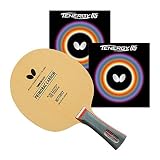
The Primorac Carbon is one of Butterfly’s fastest blades, built with carbon layers that provide what the brand describes as raw power, and this Pro-Line version arrives as a complete racket. It is a specialist tool for a specialist player: someone with a fully developed loop who plays from mid-distance and needs the ball to carry pace through the opponent’s block. A carbon blade this fast does not create spin for you; it converts the spin you already generate into a heavier, faster ball. Beginners and improvers should look elsewhere in this list, because the same speed that finishes points for an advanced player will send a developing player’s loops long.
Key specs
- Blade: Primorac Carbon, carbon-layer construction
- Class: among Butterfly’s fastest offensive blades
- Format: Pro-Line pre-assembled racket
- Best for: advanced loopers playing mid-distance
- Price tier: premium
What distinguishes a blade like this from a 7-ply wood blade is where the energy goes. Carbon layers return energy quickly and with little deformation, so the ball leaves the face fast and low. Wood plies deform and return energy more slowly, which is what gives the ball time to sink in and be gripped. Neither is better in the abstract — the question is whether your technique already produces enough rotation to benefit from the faster release. If your loop is consistent, the Primorac Carbon rewards it. If it is not, this blade magnifies every error.
Pros
- Top-tier speed for finishing points from mid-distance
- Carbon construction keeps the blade stiff and stable at high impact speeds
- Comes pre-assembled as a Pro-Line racket, so no gluing required
- A genuine long-term blade for a player who has outgrown all-wood
Cons
- Premium tier and the highest speed class here — unforgiving of late contact
- Reduces the dwell time that developing players rely on to learn spin
- Fast blades make serve and short-game control noticeably harder
Its nearest rival in this list is the STIGA Pro Carbon + Raptor. Both are premium pre-assembled carbon rackets, but they sit at different points on the forgiveness curve: the STIGA is a club-level attacking racket you can grow into, while the Primorac Carbon assumes you have already grown. If you are unsure which side of that line you are on, buy the STIGA and revisit the Primorac after a season.
8. KIKILIVE Ping Pong Paddle Set – Best for Two-Player Social Spin Practice

This set supplies two paddles with two different rubber faces on each, which makes it useful in a way that a single racket is not: you can hand one paddle to a partner, and the differing rubbers let you feel how much of your spin comes from the covering rather than from your stroke. It suits households, offices and casual clubs where two people want to hit together without buying two separate rackets. It is mid-range in price tier and aimed at recreational play rather than league competition.
Key specs
- Contents: two table tennis paddles
- Faces: two different rubber types per paddle
- Use: recreational and social play, two players
- Character: all-round rather than specialist
- Price tier: mid-range
The two-different-rubbers feature is more useful than it first appears. Playing a few rallies with a tackier face and then a slicker one on the same paddle teaches you what a grippy topsheet actually contributes, and it forces you to adjust your contact angle instead of relying on one familiar response. That kind of experimentation usually costs a lot more when you buy separate sheets of rubber to compare.
Pros
- Two paddles in one purchase — ready for a partner immediately
- Contrasting rubber faces make spin differences easy to feel
- Mid-range tier spreads the cost across two rackets
- Simple all-round setup that does not demand advanced technique
Cons
- Not a specialist spin blade — recreational build quality and rubbers
- Matched pairs offer no individual tuning
- Neither paddle will satisfy a club player for long
Compared with the EastPoint 5.0, the difference is quantity versus simplicity. The EastPoint is a single budget paddle with a straightforward red-and-black setup; the KIKILIVE set gives you two paddles and a built-in rubber comparison for a mid-range outlay. If you play alone against a robot or a wall, one paddle is enough. If you need a second player to practise spin against, the set is the better buy.
9. The Complete Table Tennis Equipment Guide – Best for Learning How Blades, Rubbers and Balls Interact

This is a book rather than a piece of equipment, and for a buyer trying to choose a spin blade it may be the highest-value item in the list. The premise — blades, rubbers and balls explained, and how to choose the right setup — maps directly onto the problem this article addresses: most players buy a fast blade, cannot control it, and conclude that they need a different rubber. A structured explanation of how ply count, sponge thickness and ball construction interact prevents that cycle. It suits a player who wants to understand specifications before spending at the premium tier.
Key specs
- Format: equipment guide covering blades, rubbers and balls
- Scope: how components are matched and how to select a setup
- Best for: pre-purchase research and self-coaching
- Pairs with: any racket in this list
- Price tier: budget
The specific benefit for a spin-focused player is vocabulary. Once you understand that flex governs dwell time, that dwell time governs how much the topsheet can stretch around the ball, and that sponge thickness changes the stroke you need to use, you can read a specification sheet and predict how a blade will behave. That is a durable skill — it survives every equipment trend and applies when you buy your next blade, your next rubber, and the one after that.
Pros
- Budget tier compared with the cost of one wrong blade purchase
- Explains the blade-rubber-ball relationship rather than listing products
- Useful reference you can return to before each upgrade
- Applies to any brand and any future equipment release
Cons
- Not equipment — it will not improve your racket by itself
- Print or digital format only; no substitute for hitting balls
- General guidance cannot account for your individual stroke
Its nearest companion in this list is the rubber cutter kit, and the two do different jobs. The guide tells you what to buy and why; the cutter lets you install it cleanly. If your budget only stretches to one, buy the guide first — understanding why a 2.1 mm sponge behaves differently from a 1.7 mm one will save you more money than a neat trim ever will.
10. Table Tennis Rubber Cutter Kit – Best for Trimming New Rubber Flush to the Blade Edge

An adjustable arc cutting tool exists because trimming rubber with scissors is the step that ruins more custom setups than any other. A clean edge matters for more than appearance: rubber that overhangs the blade catches on the table and on clothing, lifts at the corners, and starts peeling from the edge inward. An arc cutter follows the curve of the blade face so the sheet sits flush. It suits anyone assembling their own racket — which is exactly the situation you are in if you buy a bare blade or a sheet like Tenergy 05 FX. It is mid-range in price tier and reusable indefinitely.
Key specs
- Type: adjustable arc cutting tool for paddle rubber
- Function: trims sheet rubber to the blade outline
- Adjustability: arc setting accommodates different blade head shapes
- Reusable: a one-off purchase for repeated assemblies
- Price tier: mid-range
The technique is simple but worth stating: glue the rubber, let the adhesive cure as the manufacturer directs, press the sheet down from the handle outward to push air to the edges, then cut with the blade held flat and the cutter following the rim in one continuous pass. Cutting in short choppy strokes produces a ragged edge that will lift. Once cut, a clean edge sits flush against the wood and the rubber stays put far longer.
Pros
- Produces a flush edge that resists peeling far better than scissors work
- Adjustable arc fits different blade head shapes
- Reusable across every future rubber change
- Removes the main reason custom setups fail early
Cons
- Only useful if you assemble rackets yourself
- Requires a steady hand and a fully cured glue job to work well
- Adds a tool to your bag that a pre-assembled racket buyer never needs
The alternative to buying this is buying a pre-assembled racket such as the STIGA Pro Carbon + Raptor, where the trimming has already been done properly. That is a fair trade if you never intend to change rubber. But rubber wears out long before a blade does, so a player who plans to keep one blade for years will re-trim rubber many times — and at that point the cutter pays for itself against a single badly trimmed sheet.
11. EastPoint 5.0 Professional Ping Pong Paddle – Best for a First Spin-Oriented Paddle on a Tight Budget

Two-sided red and black inverted rubber on a wood blade, at the lowest price tier in this roundup. It is not a spin specialist, but it is a legitimate starting point: inverted rubber grips the ball, and the modest speed of a basic wood blade keeps your first loops on the table long enough to learn what a loop feels like. It suits beginners, casual players and anyone buying a paddle they can hand to a guest without worrying about it. It also suits a player who wants to experiment with cleaning and grip maintenance before committing to premium equipment.
Key specs
- Blade: wood construction
- Faces: two-sided inverted rubber, red and black
- Format: pre-assembled, ready to play
- Best for: beginners and casual play
- Price tier: budget
The case for starting here is that control is the prerequisite for spin, not the opposite of it. A player who cannot yet keep a rally going cannot feel whether a rubber is gripping the ball, because the ball is not staying on the racket long enough to tell. A slow, simple paddle teaches contact, and once contact is reliable, the same player can move to a 7-ply wood blade or a moderate carbon blade and actually feel the difference.
Pros
- Lowest-cost way to start playing with inverted rubber
- Slow blade speed encourages proper stroke development
- Two-colour faces keep it legal for casual and many club settings
- Cheap enough to keep as a spare after you upgrade
Cons
- Not a spin-oriented blade — the wood and rubber are basic
- Limited speed ceiling once your technique improves
- No tuning options; the whole racket is replaced when you upgrade
Its nearest alternative is the KIKILIVE set. Both sit in the accessible range, but the EastPoint is one paddle at the budget tier while the KIKILIVE set is two paddles at the mid-range tier with contrasting rubbers. If you play alone or with one regular partner and want to keep costs minimal, the EastPoint is enough. If you want a second paddle and a chance to feel how different rubbers behave, the set is worth the extra.
12. YINHE U2 Table Tennis Paddle – Best for Pure-Wood Feel With a Real Topspin Ceiling

The U2 is a 7-ply all-wood blade in the Uranus line, supplied hand-glued and ready to play, and it is the pick in this roundup for a player who wants genuine wood feel without giving up attacking speed. Seven plies do two things at once: they stiffen the face enough to keep off-centre contact stable, and they keep the material all wood, so the blade still deforms slightly at impact and holds the ball a fraction longer than a carbon equivalent. It suits intermediate players, roughly the level where a loop has become a reliable weapon rather than an occasional shot.
Key specs
- Blade: 7-ply pure wood
- Line: Uranus series, professional-grade construction
- Assembly: hand-glued, ready to play
- Character: offensive all-wood — speed with dwell time
- Price tier: premium
To understand why a