Best Plate Joiners for Accurate, Strong Biscuit Joints
What's inside
As an Amazon Associate I earn from qualifying purchases. This post may contain affiliate links at no extra cost to you.
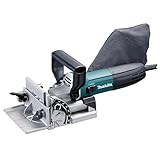
The best plate joiner for accurate, strong biscuit joints for most woodworkers in 2026 is the DeWalt DW682K or Makita PJ7000 for reliable fence adjustment and consistent depth control, while the Lamello Classic X remains the benchmark for professionals who need flawless alignment on large panels and fine furniture.
As an Amazon Associate we earn from qualifying purchases at no extra cost to you.



Contents
How to Choose a Plate Joiner: The 4 Criteria That Determine Joint Quality
A plate joiner only does one thing – plunge a 4-inch blade into the edge of a board to cut a precise crescent-shaped slot for a compressed beech biscuit. Joint strength and alignment depend entirely on how repeatably that slot is placed. Focus on these four features before you look at power or price.
1. Fence Adjustment and Accuracy
The fence is the single most important part of a plate joiner. It registers against the face or edge of your stock and sets the height of the slot. A weak fence creates misaligned panels that will not glue flush.
- Rack-and-pinion vs. single-knob tilt: Rack-and-pinion fences (Lamello, Makita PJ7000) move up and down without tilting. Single-knob fences (many entry-level models) can rack slightly when you lock them, changing the slot height by 0.5mm or more.
- Fence material and flatness: Die-cast aluminum fences stay flatter than stamped steel. Look for a fence face at least 3 inches tall to register securely on narrow stock.
- Angle stops: All decent joiners lock at 0 and 90 degrees. Better models have positive stops at 45 degrees and a micro-adjustable tilt to 135 degrees for mitered cases. For edge joints and standard panels, you will use 90 degrees 95% of the time, so a rock-solid 90-degree lock matters more than range.
- Anti-slip texture: A fence that grips the workpiece prevents the tool from creeping during the plunge, which elongates the slot and weakens the biscuit fit.
2. Cutting Depth and Biscuit Sizes
Plate joiners cut for three standard biscuit sizes. Your joiner must be able to set depth for all three accurately.
- #0 biscuits: 47 x 15 x 4mm slot, for stock 1/2 to 3/4 inch thick, small boxes and narrow trim.
- #10 biscuits: 53 x 19 x 4mm slot, the most versatile size for 3/4-inch sheet goods and face frames.
- #20 biscuits: 56 x 23 x 4mm slot, for panels, tabletops, and edge-to-edge glue-ups over 1 inch thick.
Most models use a depth turret or dial with presets for 0, 10, and 20. Higher-end joiners also offer a fine-adjustment for FF (very small) biscuits used by Lamello for delicate work. Max cutting depth is typically 20mm. Blade diameter is standardized at 100mm (4 inches) with a 22mm bore and 3.8-4mm carbide teeth. Do not judge power by amperage alone – a 6-amp motor with proper gearing cuts cleaner than an 8-amp motor with excessive vibration.
3. Dust Collection
Biscuit slots generate a large volume of fine dust in a single plunge, and that dust packs into the slot if not evacuated. A clogged slot prevents the biscuit from seating fully and starves the joint of glue.
- Bag vs. port: All plate joiners include a cloth dust bag, but it captures only 50-60% of dust. A 35mm dust port that connects to a shop vacuum improves collection to over 85% and keeps the slot clean.
- Port location: Right-angle ports that swivel prevent the hose from pulling the tool off line during a plunge.
4. Ergonomics and Visibility
For panel glue-ups you may cut 20 to 40 slots in a row. Handle shape, trigger lock, and sightlines affect speed and consistency more than motor specs. Look for a clear view of the blade centerline, a spring-return plunge that does not stick, and a spindle lock for quick blade changes.
Plate Joiner Comparison: Specs That Affect Real-World Use
This table compares established models widely available in 2026 by the specifications that directly affect accuracy and ownership costs.
| Model | Motor / Power | Weight | Blade Size | Biscuit Sizes | Fence Tilt | Max Cutting Depth | Dust Port |
|---|---|---|---|---|---|---|---|
| DeWalt DW682K | 6.5 Amp, 10,000 RPM | 6.6 lbs (3.0 kg) | 100mm x 22mm | 0, 10, 20 | 0-90 deg, adjustable to 135 deg | 20mm | Yes + bag |
| Makita PJ7000 | 5.6 Amp, 11,000 RPM | 5.6 lbs (2.5 kg) | 100mm x 22mm | 0, 10, 20 | 0-90 deg, rack-and-pinion height | 20mm | Yes + bag |
| Porter-Cable 557 | 7.0 Amp, 10,000 RPM | 6.0 lbs (2.7 kg) | 100mm x 22mm | 0, 10, 20 | 0-90 deg, detents at 0, 45, 90 | 20mm | Yes + bag |
| Lamello Classic X | 780W, 10,000 RPM | 6.8 lbs (3.1 kg) | 100mm x 22mm | 0, 10, 20 + FF with adapter | 0-90 deg, precision prism fence | 20mm | Yes, 36mm swivel |
| Craftsman CMEB202 (corded) | 6.0 Amp, 10,500 RPM | 5.8 lbs (2.6 kg) | 100mm x 22mm | 0, 10, 20 | 0-90 deg | 18mm | Bag only |
Weight differences of one pound matter when cutting vertical slots for carcass assembly. The Makita’s lighter body reduces fatigue on long panel runs, while the Lamello’s heavier base adds stability for horizontal table cuts. All models use the same 4-inch blade standard, so blade availability is not a differentiator.
Which Plate Joiner Is Best For Your Situation?
Use this decision matrix instead of chasing the highest amperage. Match your most common work to the tool’s strength.
| Your Situation | Best Match Type | Why |
|---|---|---|
| Building large panels and tabletops weekly; need invisible glue lines | Lamello Classic X or Makita PJ7000 | Rack-and-pinion fence holds 0.1mm repeatability across dozens of slots. Prevents stepped panels that require heavy sanding. |
| General furniture, cabinets, face frames; occasional panels | DeWalt DW682K or Porter-Cable 557 | Proven dual-rack fence, strong 90-degree lock, widely available blades and biscuits. General market range $180-$260. |
| Small shop, limited storage, light use a few times a month | Compact 5.5-6 lb model (Makita PJ7000, Craftsman) | Lighter weight and smaller footprint. No need for FF capability. General market range $150-$210 for entry corded models. |
| Mitered boxes, casings, and 45-degree joints | Any model with positive 45-degree detent and swivel dust port | Miter biscuits require tilting the fence and plunging on an angle. A sloppy 45-degree stop guarantees a visible gap. |
| On-site trim and built-ins without vacuum | Model with effective bag + enclosed motor | Porter-Cable 557 and DeWalt DW682K seal the motor well against fine dust when bag-only collection is used. |
Setup for Flush Joints: A Step-by-Step That Prevents Misalignment
Most failed biscuit joints are not a tool defect but a setup error. Follow this sequence for panels and edge joints:
- 1. Mark centers, not edges: Dry-fit your panels and draw a single pencil line across each joint every 6 to 8 inches. For a 24-inch panel, four biscuits is sufficient; more does not add strength and increases misalignment risk.
- 2. Set fence height once: With the joiner unplugged, place it on a flat surface, loosen the fence, and set the blade center to the middle of your stock thickness. For 3/4-inch (19mm) material, the center is 9.5mm from the face. Lock the fence and do not change it between matching boards.
- 3. Test on scrap: Cut a #10 slot in scrap of the same thickness, insert a biscuit dry. It should slide in with light friction and sit 1mm below the surface. If it bottoms out hard, increase depth one notch.
- 4. Plunge technique: Hold the fence firmly against the face, start the motor at full speed, plunge smoothly until the depth stop hits, hold for one second, then retract while the blade is still spinning. Do not wiggle side to side.
- 5. Glue correctly: Apply glue inside the slot walls, not just on the biscuit. Beech biscuits swell from moisture to lock the joint. A dry slot with a glued biscuit is significantly weaker.
Worked spacing example: For a 48-inch long edge joint using #20 biscuits, spacing at 8 inches on-center requires 5 biscuits (48 / 8 = 6 intervals, minus one at each end to avoid blowout, typically you inset the outer biscuits 3 inches from ends). Five #20 biscuits provide more than enough shear strength for a panel that will be held primarily by the long-grain glue bond; the biscuits are for alignment, not structure.
Durability and Ownership Realities
Plate joiners are mechanically simple, but three components wear first and affect accuracy over time.
- Fence lock and rack: Dust packs into the rack-and-pinion teeth and fence guide grooves. Clean with a dry brush and compressed air after each session. A single grain of dried glue on the fence face can tilt a panel by 0.3mm. Wax the fence face lightly once a month.
- Blade: A 100mm carbide biscuit blade lasts 3,000-5,000 plunges in clean wood, less in plywood or MDF which is highly abrasive. A dull blade burns the slot and makes it undersized, so biscuits fit too tight and split the stock when they swell. Replace when you see burn marks or need extra force to plunge.
- Plunge slides: The two chromed columns that guide the plunge collect resin. Wipe them with denatured alcohol and add one drop of dry lubricant. Never use WD-40 style oil which attracts dust and creates slop.
Consumables to budget: Beech biscuits cost very little in bulk (general range $20-$35 per 1,000 for #20), but they are moisture-sensitive. Store them in a sealed container with a desiccant packet. Swollen biscuits from humid storage will not fit and will jam mid-slot. Blades are in the $30-$50 range and are universal across these models.
Common mistakes that ruin accuracy: Changing fence height between the two halves of a joint, referencing sometimes off the face and sometimes off the edge, and cutting slots with a dust-choked depth turret that does not return fully. Pick one reference face for the entire panel and mark it with an X.
Final Picks by Use Case
For panel glue-ups and edge joints where flush alignment saves hours of sanding, prioritize fence repeatability over power. The Makita PJ7000 offers the best weight-to-accuracy ratio for small to medium shops. The DeWalt DW682K and Porter-Cable 557 are workhorse choices with excellent parts availability and proven 90-degree locks for general cabinetry. The Lamello Classic X is the definitive choice if you produce fine furniture or handle large sheet goods professionally and need the tightest tolerances and the option for smaller FF biscuits. Any of these, properly set up and kept clean, will produce strong, accurate biscuit joints for the life of the tool.