Best Planers for Flattening Glue-Up Components
What's inside
As an Amazon Associate I earn from qualifying purchases. This post may contain affiliate links at no extra cost to you.
Flattening glue-up components means removing enough material to make a panel or assembly genuinely flat—not just smooth. A thickness planer can make opposite faces parallel, but it does not reliably flatten a cupped or twisted panel by itself. The right machine depends on the size of the parts, how much stock you need to remove, and whether you can prepare a flat reference face first.
Contents
What a planer can—and cannot—do
A conventional thickness planer references the face riding on its bed. If that face is uneven, the cutters usually reproduce its shape on the opposite side. The board may come out a consistent thickness while keeping its cup or twist. A planer is useful after one face is flat, or when the glue-up is already stable and close to flat.
For a small component with a twisted underside, attach it to a flat sled with shims or wedges so it cannot rock. Run the sled through the planer, then remove the sled and plane the opposite face. Take light cuts—about 1/32 inch is a sensible starting point on many machines—and check the surface between passes. Deep cuts can cause snipe, tear-out, or shifting on the sled.
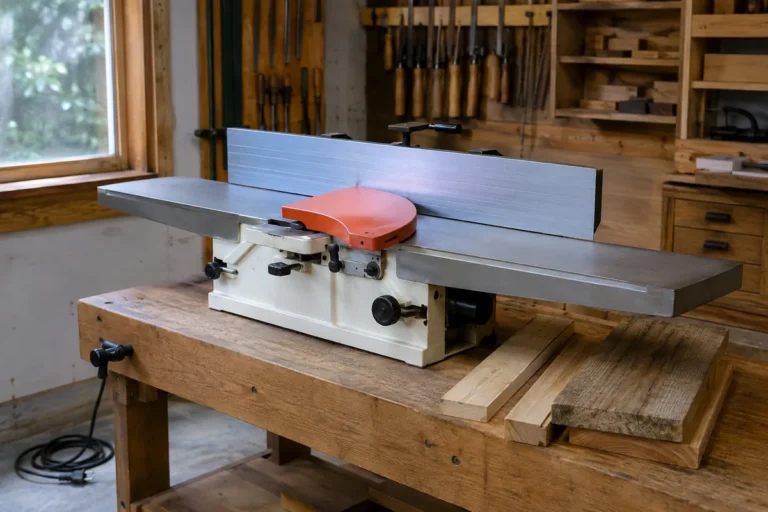
If you need to flatten one face directly, a jointer is the more natural machine. Its cutterhead and infeed and outfeed tables establish a plane, but a benchtop jointer’s width limits the work. For broad panels, use a sled in a planer or choose a wide-belt sander or router-sled method instead.
Choose by workpiece size and volume
| Machine or setup | Best fit | Main limitation |
|---|---|---|
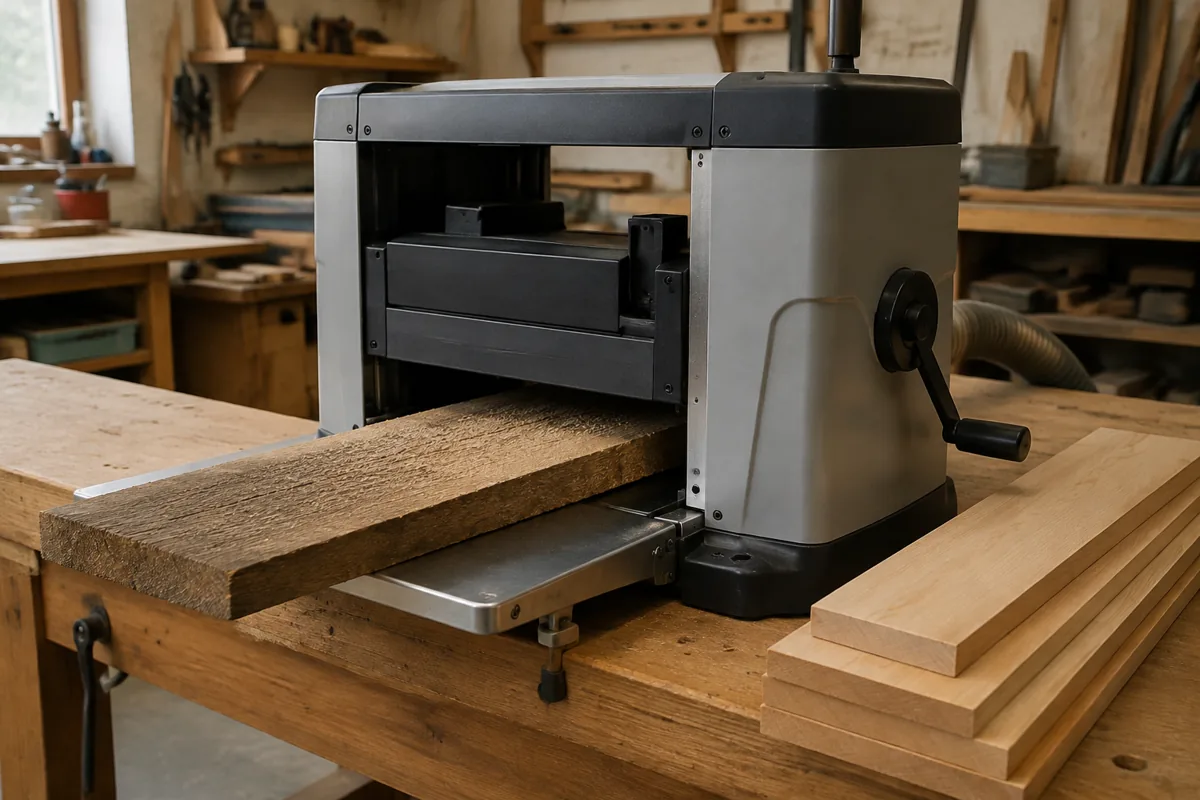
| Benchtop planer, typically 12–13 inches wide | Rails, stiles, narrow panels, and parts that fit a sled | Limited width; does not flatten a rough face without a reference |
| Floor-standing planer, often 15 inches or wider | Frequent work, thicker stock, and wider components within capacity | Higher cost, weight, and dust-collection demands |
| Jointer, commonly 6–8 inches wide in small shops | Flattening an edge or face on stock within its width | Too narrow for many glued-up panels |
| Planer with a rigid sled | Panels wider than the jointer and parts with an uneven underside | Setup takes time; loose shims or a flexible sled can spoil the cut |
For occasional furniture work, a 12- or 13-inch benchtop planer is often enough if every component fits and you are willing to use a sled. Compare 12-inch benchtop thickness planers by maximum thickness, cutterhead type, noise, and how easily you can replace knives. The least expensive machine can be fine for a few glue-ups a year; its limits show up in feed speed, cut quality, and the time spent sanding or changing knives.
When a floor-standing planer makes sense
A floor-standing planer is worth considering when you regularly process hardwood, need more width or capacity, or want a heavier machine that stays put. Many common floor models handle stock around 15 inches wide, but verify the actual capacity and maximum thickness before buying. Also check the required circuit: some machines need more than a standard 120-volt household outlet.
More power does not make a planer a flattening machine. You still need a flat reference face, and a wide glue-up may exceed the planer’s capacity. A helical or segmented cutterhead can leave a cleaner surface on figured grain and generally makes damaged inserts easier to replace than a full-width knife. It is not immune to tear-out, and replacement inserts add cost. A conventional straight-knife machine can be a better value if you mostly work with straight-grained stock and do not mind sharpening or replacing knives. See 15-inch woodworking thickness planers only if that extra capacity matches your work; for narrow parts, it may be money and floor space you do not need.
Sled setup that avoids common failures
Use a flat, stiff sled that is longer than the component and narrow enough to pass through the planer without binding. MDF or stable plywood works for many shop setups. Set the workpiece on the sled with its high points supported, then secure it so it cannot slide or lift. Hot-melt glue, wedges, or shims can work; check that nothing protrudes into the cutter path.
Before the first cut, press on the component at several points. If it rocks, add support. A rocking workpiece can shift under the feed rollers, producing a deeper cut at one end or, in a bad case, being kicked back. Keep the sled clean and flat; a warped sled transfers its error to every part.
Take shallow passes and leave enough material for a final cleanup cut. Once the first face is flat, remove the part, turn it over, and plane to thickness. Measure at both ends and the middle. If the panel is wider than the planer, do not force it through or attempt overlapping passes by hand: cutter marks and ridges are likely. Use a router sled or a suitable wide-belt sander, then use the planer only for parts within its capacity.
Buying checklist for glue-up work
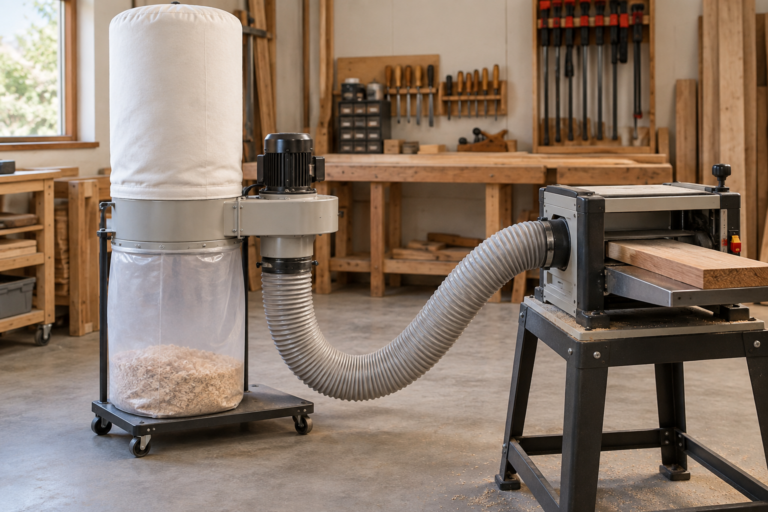
Measure your widest and thickest components, including any sled, and leave clearance for safe feeding. Check whether the planer’s width is a true usable width; the cutterhead may accept a nominal dimension, but support and handling still matter. Look for accessible dust ports and connect adequate extraction. Planers produce a large volume of chips, and a clogged chute can cause poor finish or force stock back toward the operator.
Pay attention to snipe, the shallow dip often left near the ends of a board. Support long stock level with the planer bed, avoid pushing down on the board during feeding, and follow the manual’s advice for roller pressure and bed extensions. Sacrificial lead-in and lead-out pieces can reduce snipe on valuable parts, but they do not correct a misadjusted machine.
For occasional narrow components, a benchtop planer plus a careful sled is a practical, lower-cost choice. For regular production or wider stock, a heavier planer may save time, but only if the capacity fits your parts and you already have a plan for flattening the first face. If your main job is flattening broad panels, buy or build around that need rather than expecting a standard thickness planer to do work its design does not support.