Best Modern House Numbers for Front Door Display
What's inside
As an Amazon Associate I earn from qualifying purchases. This post may contain affiliate links at no extra cost to you.
Contents
The best modern house numbers for front door display
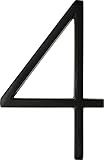
The best modern house numbers for a front door are individually mounted, solid stainless-steel or powder-coated aluminum numerals, usually 4–6 inches tall for a close street approach and 6–8 inches tall when the address must be read from farther away. Choose a finish that contrasts with the facade, a mounting method suited to the wall, and a layout that leaves enough space for every character.
There is no single best set for every entrance. A dark metal numeral can disappear against dark siding, while a large floating number may be hard to install on thin cladding. The right choice depends on viewing distance, exposure, facade material, and whether you prefer a minimal look or a more visible address.
As an Amazon Associate we earn from qualifying purchases at no extra cost to you.

Compare by situation
| Situation | Good starting choice | Why it fits | Check before buying |
|---|---|---|---|
| Covered entry, read from the walkway | 4–5-inch satin stainless steel or aluminum numerals | Compact, clean-lined, and less exposed to rain | Contrast against the door or trim; confirm the characters fit the available width |
| Front door near the sidewalk | 5–6-inch individual numerals with a high-contrast finish | Offers better legibility without overwhelming a typical entry | Measure the actual viewing distance and avoid thin strokes |
| Set back from the street or approached by car | 6–8-inch bold numerals, or larger if local rules require | Larger characters are easier to spot from farther away | Check sightlines, lighting, and local address-display requirements |
| Coastal, wet, or heavily exposed wall | 316-grade stainless steel, or well-finished exterior-grade aluminum | Better suited to moisture and weather than untreated steel | Ask for the metal grade and exterior finish; rinse salt deposits periodically |
| Brick, stone, or uneven masonry | Numerals supplied with standoffs and masonry-compatible anchors | Standoffs can create a crisp shadow line and help the number sit clear of the surface | Use anchors suited to the masonry and avoid drilling mortar unless the installation plan calls for it |
| Rental or no-drill installation | Adhesive-backed numbers only on smooth, compatible surfaces | Avoids holes where permitted by the surface and tenancy terms | Adhesion can fail on textured, dusty, damp, or hot surfaces; it is not a universal substitute for screws |
Size for the approach, not just the door
Character height is only one part of legibility. Stroke thickness, font, contrast, spacing, and viewing angle all matter. A narrow 6-inch numeral can be less readable than a bold 5-inch one. Before ordering, view the entry from the sidewalk or driveway and note whether shrubs, parked cars, a storm door, or the door swing will block the numbers.
As a practical starting point—not a replacement for local code—use 4–5-inch characters when visitors approach on foot from close range, 5–6 inches for a typical setback, and 6–8 inches or more when the address must be found from a vehicle. If you are choosing a multi-digit set, measure the complete layout rather than adding character heights: the width depends on each numeral, spacing, and any mounting template.
Materials and finishes: what holds up
- Stainless steel: A strong choice for an exposed entrance. Look for a stated exterior grade; 316 stainless steel is generally preferable to 304 in salt-heavy coastal conditions. Stainless can still show water spots or tea staining, particularly where deposits are left to sit.
- Powder-coated aluminum: Lightweight and available in matte black, white, bronze, and other finishes. The coating supplies the color and weather barrier, so chipped edges or damaged coating deserve attention. Aluminum is convenient on lighter cladding but needs suitable isolation from incompatible metals in some installations.
- Brass or bronze: Adds warmth and can develop a changing patina outdoors. Choose it when that aging is part of the intended look; a polished appearance may need more upkeep than a matte or naturally aged finish.
- Plastic or acrylic: Often a lower-cost, lightweight option, particularly for covered entries. UV exposure can cause fading or brittleness over time, so check that the product is specified for outdoor use.
Finish should be selected for both appearance and contrast. Matte black often reads well on pale brick or light siding but can disappear on a dark door. Brushed metal may suit stone and wood while reflecting less glare than a polished surface. When possible, compare a finish sample against the actual wall in daylight and at night under the entry light.
Mounting method and facade compatibility
Flush-mounted numbers sit close to the wall and suit smooth siding, doors, and trim. They are simple visually, but uneven masonry can leave gaps. Standoff-mounted numbers project from the surface, producing a floating effect and a small shadow. They can look especially effective on brick and stone, but require accurate drilling and secure anchors.
For brick or concrete, use the supplied template and a masonry bit with anchors rated for the substrate. On wood, use corrosion-resistant screws and make pilot holes to reduce splitting. For vinyl siding, avoid overtightening against the flexible panel; a mounting block or a fixing method that reaches the structural backing is usually more reliable than fastening only to thin siding. If the address is on a door, confirm the screws will not interfere with glazing, locks, or the door’s internal construction.
Adhesive mounting is best treated as surface-specific. It is more dependable on clean, smooth, dry surfaces than on textured masonry or weathered paint, and temperature and moisture during installation affect bonding. Follow the maker’s preparation and curing instructions; do not assume an adhesive number will stay put simply because it feels secure immediately.
How much room will a set need?
Use the manufacturer’s layout template whenever one is supplied. If you need a quick estimate before ordering, add the individual numeral widths and the planned gaps. For example, a four-digit address with characters averaging 3.2 inches wide and 0.6-inch gaps between them needs about 14.6 inches: (4 × 3.2) + (3 × 0.6) = 14.6. This is an estimate only; the numeral 1 is much narrower than 8, and mounting studs or decorative spacing can change the final width.
Mark the intended layout with painter’s tape first. Check that it is centered on the chosen surface, remains visible with the door open, and does not crowd a light, doorbell, or trim edge. For floating numbers, also account for the projection and shadow so they do not clash with nearby features.
Ownership details that are easy to miss
- Template accuracy matters: A small alignment error is conspicuous across a row of separate numerals. Mark level and centerlines, then verify spacing before drilling.
- Water can collect around fasteners: Use the supplied hardware and weather-appropriate installation details. Avoid trapping moisture against wood or siding.
- Finish care should be gentle: Wash with mild soap and water using a soft cloth. Avoid abrasive pads and harsh cleaners that can scratch coatings or alter patina.
- Check fasteners periodically: Wind, vibration, and seasonal movement can loosen hardware. Tighten carefully rather than forcing a screw, which can strip a hole or damage the wall.
- Think about night visibility: Reflective metal is not the same as illuminated or reflective address signage. If visitors or emergency responders must find the home after dark, add adequate entry lighting and check applicable local requirements.
Bottom line
For a typical modern entrance, start with 5–6-inch, bold, exterior-rated stainless-steel or powder-coated aluminum numerals in a finish that contrasts with the wall. Choose flush mounting for a smooth surface and standoffs with suitable anchors for masonry. Increase character size when the home sits farther from the street, and measure the full layout before buying. In harsh coastal conditions, prioritize a suitable metal grade and sound installation over decorative finish alone.