
What's inside
As an Amazon Associate I earn from qualifying purchases. This post may contain affiliate links at no extra cost to you.
The short answer: the best mobile workshop base is the one whose rated capacity comfortably exceeds the weight of your machine, whose footprint matches the tool’s feet, and whose locking system keeps everything planted while you cut. For most small shops, an adjustable frame with a lift or lever mechanism is the most flexible choice. A fixed-size base suits one dedicated machine, and a shop-built cart suits odd shapes. Always check the maker’s current specifications before buying.
Contents
Our Top Picks
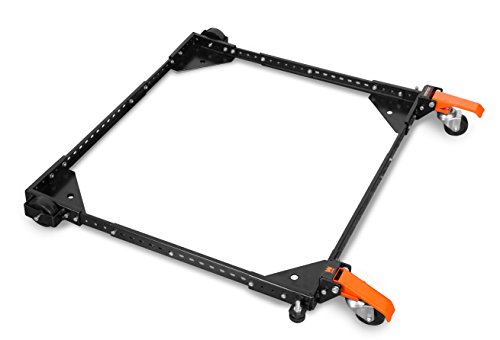


Table of Contents
- Why put your tools on wheels
- Types of mobile bases compared
- Capacity and weight planning
- Casters, wheels and floors
- Locking and stability
- Matching a base to the tool
- Safety when moving heavy machinery
- Buyer checklist
- Mistakes to avoid
- FAQ
- Bottom line
Why put your tools on wheels
A small shop is a puzzle. Floor space is limited, yet the machines that do the real work, such as a table saw, a planer, a jointer or a band saw, each want generous clearance on at least one side. When every machine is bolted to one spot, you end up arranging your projects around the tools. When the machines roll, the tools arrange themselves around the project. That single shift is the main reason woodworkers invest in mobility.
The practical benefits show up quickly. A saw that rolls to the middle of the room gives you room to feed a long board without it hitting a wall. Parked against the wall afterward, the same saw frees the center for assembly. A planer that lives on a base can slide out to the garage door for dust-heavy work and then tuck away. A bench that moves can sit under a window for fine work or sit near the outfeed of a machine as a support surface.
There are trade-offs, and an honest guide should name them. A base raises the working height of a machine, sometimes by enough to change how comfortable it is to feed stock. Wheels introduce the possibility of movement during a cut if the locks are weak. And a poorly matched base can wobble, which hurts accuracy. The rest of this guide is about getting the benefits while avoiding those drawbacks.
Types of mobile bases compared
Mobile bases come in a handful of designs. Each solves the same problem differently, and the right pick depends on how many machines you own, how often you move them, and how much you value adjustability.
| Type | How it works | Best for | Watch out for |
|---|---|---|---|
| Adjustable perimeter frame | Telescoping rails expand or contract to fit different machine footprints; a lever or pedal lowers wheels into contact | Shops with several machines of varying sizes | Check the adjustment range against your machine’s feet |
| Fixed-size frame | A rigid steel frame cut for a specific footprint, often with built-in casters | One dedicated, heavy machine you rarely swap | Little flexibility if you replace the machine |
| Retractable-wheel base | Wheels stay clear of the floor until a lever or foot pedal engages them | Machines that must sit rock-solid when working | Moving parts need occasional cleaning and checking |
| Fixed-caster cart | Casters always touch the floor; locks hold the cart still | Benches, light carts, and tool storage | Always on wheels, so stability depends on the locks |
| Pallet-style or lift dolly | A low platform that slides under a machine and lifts it by a mechanism | Occasional moves of very heavy equipment | Not meant for work while the machine sits on it |
| Shop-built plywood base | A custom frame with chosen casters, sized to any machine | Odd shapes, built-in storage, specific heights | Quality depends on your joinery and hardware choices |
Adjustable frames
An adjustable frame is the common answer for a shop that changes over time. Because the rails slide to different lengths, one style of base can follow you from a smaller machine to a larger one. Many designs use a lever to bring wheels down; releasing it lets the machine settle onto the frame. Check the stated range of adjustment in the current specifications, and measure the outside distance between your machine’s feet rather than the cabinet width.
Retractable-wheel designs
When accuracy matters, retractable wheels have an appeal: in working position the machine rests on solid feet or the frame itself, so there is no rolling and no wheel flex. The trade is a mechanism that has to be engaged every time you move the tool. If you will roll your machine daily, that routine is easy. If you roll it twice a year, remember to inspect the mechanism before trusting it. You can browse a range of mobile workshop bases to compare these designs side by side.
Capacity and weight planning
Capacity is where many buyers cut corners, and it is the easiest place to go wrong. A base carries more than the machine’s listed weight. You should count the machine itself, any extension wings or fence rails, a motor mounted outside the cabinet, stored accessories, and the stock sitting on top. A cabinet saw with a drawer of blades and jigs weighs more than its spec sheet suggests.
A sensible approach is to find the machine’s shipping or operating weight from its manual, add the weight of everything you store on or in it, and then leave a generous margin. A base working near its limit is a base that flexes, and flex shows up as wobble. When a rating is given per base, remember that it assumes weight is spread across the frame as the manufacturer intended. Concentrated loads, like a heavy motor hanging on one end, shift the balance.
Weight is not only about the frame. Each caster has its own rating, and the whole system is only as strong as its weakest part. If you replace casters, confirm that the new ones carry at least as much as the originals. Look for ratings given per caster, then multiply by the number of casters that will realistically share the load, keeping in mind that on an uneven floor, only three of four wheels may bear weight at any moment.
Casters, wheels and floors
Casters decide how a base behaves in the real world, and they interact with your floor in ways a catalog photo cannot show. The first thing to consider is surface. Concrete is the most common shop floor, and it varies from glass-smooth to rough and cracked. Rubber or soft polyurethane treads roll quietly and absorb small bumps, while hard plastic or steel wheels roll easily on smooth surfaces but can chatter and transmit vibration across rough ones.
Wheel material
- Soft rubber: quiet and forgiving over small debris, though it can flatten under long static loads if left unmoved for a long time.
- Polyurethane: a common middle ground that rolls readily and resists marking floors.
- Hard plastic or nylon: low rolling resistance on smooth floors, but less forgiving on cracks.
- Steel: strong, yet loud and unkind to finished floors.
Wheel size and swivel
Larger wheels climb thresholds and floor cracks more easily than small ones. If your shop has a garage door track or a slab seam, favor bigger wheels. Swivel casters make tight maneuvering simple, but a base that is entirely swivel will want to wander when you push it. Many designs combine two fixed and two swivel wheels so the base tracks straight yet still turns. Whatever the arrangement, test the roll on your own floor before you rely on it for heavy tools.
Locking and stability
Locks are the most important feature of any mobile base because they are what turn a rolling cart into a solid machine stand. There are two broad philosophies. The first is to lock each wheel individually, usually with a brake lever that clamps the wheel and often the swivel as well. The second is to lift the wheels off the floor entirely so the machine sits on rigid feet.
Wheel locks that stop both the roll and the swivel are far more reassuring than those that stop only the roll. A wheel that cannot roll but can swivel will still permit a nudge in some directions. Look for locks that you can operate with a foot and that engage with a clear, positive feel. After engaging them, push the machine firmly from different directions; it should not creep.
For machines that generate side forces, such as a table saw when ripping or a planer taking a heavy cut, retractable designs that set the machine on the floor offer extra confidence. Even then, a good habit is to check that the machine is level and that no leg is hanging in the air. A rocking machine is a vibrating machine, and vibration is the enemy of clean cuts.
Consider how the lock will survive shop life. Sawdust packs into pivots, glue drips on levers, and grit gets into brake mechanisms. Locks that are exposed and easy to clean tend to stay reliable. Plan a seasonal routine: blow out debris, check that levers move freely, and look for bent parts. If you find a lock that no longer grips as it should, replace it before the next cut.
Matching a base to the tool
Different machines place different demands on a base. The following notes are general, and your owner’s manual always takes precedence over any rule of thumb.
Table saws
A table saw is often the first machine people put on wheels, because it takes the most room for feeding and outfeed. Look for a base that supports the machine’s outer footprint and keeps the whole cabinet stable under the forces of a rip cut. If your saw has a side extension table, make sure the base does not interfere with it. Think about the height increase as well; a saw that is too tall is awkward to feed and can change how you control a workpiece.
Planers and jointers
Benchtop planers often live on a rolling stand with a shelf for stock. These tools shake during cuts, so choose a stand with a stable platform and locking wheels, and avoid a flimsy cart. Jointers are long, and their bed length matters more than their width. Look for a base that supports the full length without overhang.
Band saws and drill presses
These tall, narrow machines tip more readily. A wider base or outriggers improve stability. Plan your lock strategy carefully, and when moving, pull the machine rather than push it so you can see the path and adjust.
Sanders, miter saws and benches
Miter saw stations frequently use fixed-caster carts so that the saw can be wheeled out for long cuts and then put away. Sanding tables and assembly benches benefit from lockable casters that let you reposition the surface. For these lighter uses, convenience and storage often matter more than the highest possible capacity, though you should still match ratings to your loads. If you like the idea of a station that does several jobs, look at a rolling tool stand with a flip-up top.
Safety when moving heavy machinery
Heavy machines hurt people most often during moves, not during cuts. The following habits lower the odds of an accident. They are general guidance; follow the instructions that came with your machine and your base, and use common sense for your own situation.
- Unplug first. Disconnect power before you move any machine, and coil the cord so it cannot snag a wheel or your foot.
- Lower and secure moving parts. Retract blades, lock heads and tables, and remove loose accessories so nothing swings or slides.
- Clear the path. Sweep the floor and remove offcuts, cords, and hoses before you start.
- Move slowly. Push steadily, and avoid sharp turns. Heavy machines stop slowly and tip suddenly.
- Use a helper for tall or heavy tools. A second person can watch the path and steady the load.
- Lock every wheel before use. Test by pushing the machine in several directions before powering it on.
- Never exceed the rating. Overloading a base can cause frame or caster failure without much warning.
- Stop if something feels wrong. Wobble, noise, or a bent part is a reason to unload and inspect.
Buyer checklist
Run through these questions before you buy. Each one prevents a common disappointment.
- Have you found the machine’s weight in its manual and added stored items and workpieces?
- Does the base’s stated capacity comfortably exceed that total?
- Have you measured the outside distance between your machine’s feet, both ways?
- Does the adjustment range of the base cover those measurements?
- Do the locks stop both rolling and swiveling, and can you reach them with your foot?
- Will the wheels suit your floor, with bigger wheels if there are cracks or thresholds?
- Will the added height still leave the work surface at a comfortable working level?
- Does the base clear dust ports, side tables, and accessories?
- Can you assemble it with the tools you own, following the supplied instructions?
- Is replacement hardware available if a part wears out?
- Have you read recent buyer feedback about wobble, lock reliability, and fit?
- Do you have a marked home position and a clear path for each rolling machine?
Mistakes to avoid
Buying on footprint alone
A base that fits the cabinet may still be wrong if it ignores the machine’s weight distribution. Check both dimensions and capacity. A good fit on paper can still flex under a heavy motor mounted off-center.
Ignoring the added height
Even a few extra inches can change how a saw feels. Stock that used to slide naturally may now need a reach. Test the height with a similar object before committing, and consider whether outfeed support will line up.
Trusting weak locks
A base that rolls under cutting forces is hazardous. If a lock only stops the roll and leaves the swivel free, treat it as incomplete protection. Consider adding extra locking casters or a retractable design.
FAQ
1. Do I need a mobile base for every machine?
No. Put wheels under the machines you move often, and leave rarely moved heavy tools in a fixed location if stability matters most. Start with the tool that takes the most room.
2. Can a mobile base reduce a machine’s accuracy?
A well-matched, level base with solid locks should not hurt accuracy, but a flexing or poorly adjusted base can. Check for rocking, confirm that the machine is level, and re-check alignment after installing a base.
3. How do I know a base will fit my machine?
Measure the outside distance between the machine’s feet or mounting points in both directions, then compare those figures with the base’s current specifications. Allow for any parts that project below the cabinet.
4. Are retractable-wheel bases better than fixed casters?
They suit machines that must stay planted during work, because the machine rests on solid feet. Fixed casters with strong locks suit carts and benches. The better option depends on use.
5. Will wheels damage my floor?
Hard wheels can mark or gouge softer floors, and heavy loads can leave dents. Softer treads and a protective surface under the wheels reduce the risk. Test in an unobtrusive spot first.
6. Can I make my own base?
Yes, many woodworkers do. Use strong joinery, hardware rated for the load, and a design that resists racking. Add weight gradually and test before relying on it. Rated commercial frames are an alternative for heavy tools.
7. How often should I check my mobile base?
Look it over regularly, especially after moving it often, and before heavy projects. Check locks, fasteners and wheels, clear out debris, and fix anything loose or worn.
8. What if my floor is uneven?
Larger wheels roll over cracks more easily, and leveling feet or retractable designs help a machine sit stable. Move slowly, and consider a second person for tall tools. For serious slope, seek advice from the machine maker.
Bottom line
Choose a base by weight, footprint, locks and floor, in that order, and never trust it until you have tested it loaded. If you are ready to shop, start with these placeholders: adjustable bases and heavy-duty casters. Check current specifications and instructions before you buy or install anything.
Disclosure: As an Amazon Associate, we earn from qualifying purchases. Links marked as sponsored may earn us a commission at no extra cost to you.
Related guides
More from Amazon
Programs that pair well with the guide above. Offers and eligibility are set by Amazon and may change.
A free business account with business pricing and bulk-buying tools for work, shop or home office.
Create a business accountFree shipping on eligible items, Prime Video and more. Eligible new members can start with a free trial.
Start a Prime free trialAudiobooks and podcasts to listen to on the go. Eligible new members can start with a free trial.
Try Audible freeAd-free music streaming. Eligible new subscribers can start with a free trial.
Try Music Unlimited freeAs an Amazon Associate we earn from qualifying purchases.

Write Your Review
No reviews yet. Be the first to share your experience!