
What's inside
- Contents
- What a one-thousand-dollar budget really buys
- Machine classes in this budget
- Cutterheads: straight, disposable and spiral
- Features worth paying for
- Width, thickness and power in plain terms
- Spending the rest: accessories and used options
- Setup and tuning for clean results
- Safety
- Maintenance
- Common mistakes
- Who should choose what
- Checklist
- Frequently asked questions
- Conclusion
As an Amazon Associate I earn from qualifying purchases. This post may contain affiliate links at no extra cost to you.
Short answer: with a budget of about one thousand dollars you are shopping in the upper range of portable benchtop planers and the lower edge of compact, heavier machines. Within that range, the choice that matters most is the cutterhead: sharp straight knives are fine for most work, while a spiral head is worth stretching for if you plane figured hardwood or dislike noise. Next in importance are bed length and rigidity, dust collection and honest width capacity. Spend the remainder of the budget on accessories that protect your results.
This article does not recommend specific products, and it quotes no prices, because both change constantly. Instead it explains how machines in this budget class differ, where the compromises hide, and how to extract professional-looking results from a mid-priced planer.
Contents
- Contents
- What a one-thousand-dollar budget really buys
- Machine classes in this budget
- Cutterheads: straight, disposable and spiral
- Features worth paying for
- Width, thickness and power in plain terms
- Spending the rest: accessories and used options
- Setup and tuning for clean results
- Safety
- Maintenance
- Common mistakes
- Who should choose what
- Checklist
- Frequently asked questions
- Conclusion
Our Top Picks
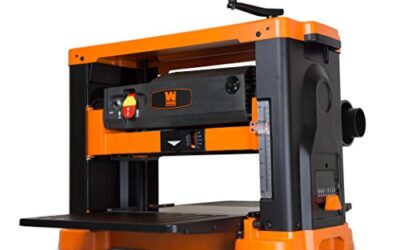
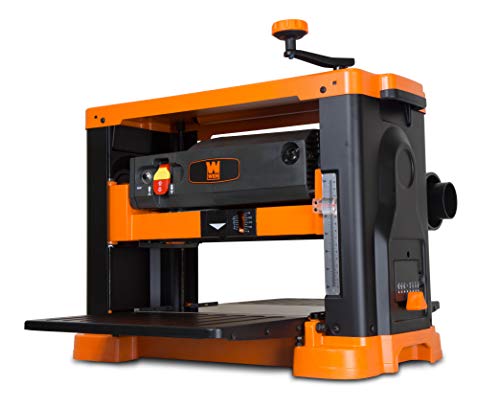 WEN PL1326 15-Amp 13-Inch Spiral Benchtop Thickness PlanerSpiral, 13-Inch, Single Speed81 poundsCheck on Amazon
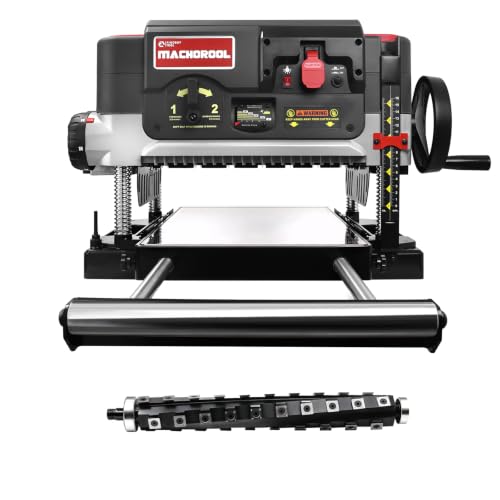 FindBuyTool 13" Benchtop Thickness Planer with Helical Cutterhead22 x 22 x 17.7 inches70 poundsCheck on Amazon

Contents
- What a one-thousand-dollar budget really buys
- Machine classes in this budget
- Cutterheads: straight, disposable and spiral
- Features worth paying for
- Width, thickness and power in plain terms
- Spending the rest: accessories and used options
- Setup and tuning for clean results
- Safety
- Maintenance
- Common mistakes
- Who should choose what
- Checklist
- FAQ
- Conclusion
What a one-thousand-dollar budget really buys
A thickness planer is a simple machine in principle: a motor spins a cutterhead, rollers pull a board through, and a handwheel sets the gap between head and bed. Because the design is simple, the difference between an inexpensive machine and a more expensive one is rarely the basic function. It shows up in smoothness, noise, rigidity, snipe, ease of blade changes and how long the machine stays accurate.
At this budget, you can expect to choose between roughly three levels of sophistication. The lower end gets a lightweight portable planer with straight knives that does everything a hobbyist needs if you keep the cuts light. The middle includes better-built portable machines, often with a wider bed, extra roller support and sometimes a disposable-knife head. The top of the budget reaches some portable models with spiral heads and the smaller stationary-style machines with bigger frames. Prices vary by region and season, so verify current numbers yourself rather than trusting any list.
Machine classes in this budget
Lightweight portable planers
These weigh little enough to carry with one hand or one trip. They are built around universal motors and a thinner frame. Their strengths are portability and a low barrier to entry. Their trade-offs are noise, a tendency to vibrate, and sometimes limited rigidity that makes snipe harder to control. They suit a hobbyist who mills occasionally and values moving the tool out of the way.
Heavier portable planers
Larger frames, longer beds, stronger rollers and sometimes dual feed speeds define this class. Extra mass absorbs vibration, so cuts are smoother and snipe is easier to tame. They remain movable on a stand or cart but are no longer something you casually lift. They fit people who mill every month and want better surfaces.
Compact stationary-style planers
Some machines at the top of this budget have cast tables and heavier columns, bridging the gap between portable and full stationary equipment. They may need a stronger electrical circuit and a permanent place. They suit serious hobbyists with a dedicated shop corner.
| Class | Weight and portability | Surface quality | Noise | Snipe control | Typical user |
|---|---|---|---|---|---|
| Lightweight portable | Easy to carry | Good with light cuts | Very loud | Needs careful technique | Occasional hobbyist |
| Heavier portable | Movable on a stand | Better, steadier | Loud | Easier to manage | Regular hobbyist |
| Compact stationary-style | Mostly fixed | Best in this budget | Moderate to loud | Good with proper setup | Serious hobbyist |
| Used or older machines | Varies widely | Depends on condition | Varies | Varies | Buyer who can inspect and tune |
Cutterheads: straight, disposable and spiral
The cutterhead is the heart of the machine and the best place to focus a comparison.
Straight knives are long blades held in the head by gibs and screws. They are cheap, can be resharpened and are very sharp when fresh. Their weak points are that each blade must be aligned relative to the others and to the bed, that one nick leaves a ridge, and that they can chip out on difficult grain because the whole edge hits the wood at once.
Disposable reversible knives are a middle option. You flip a double-edged blade and later replace it. Many are designed to register in a slot, which simplifies alignment, and you skip sharpening entirely. Replacement sets cost money, so consider the long-term running cost.
Spiral or helical heads carry many small carbide inserts arranged in a staggered pattern. The shearing cut reduces tear-out in curly or reversing grain, lowers noise and produces fine, regular scallops. Damaged inserts can be rotated or replaced individually. The costs are a higher initial price and a slightly higher cost per insert. For anyone who works regularly with figured maple, walnut crotch grain or similar material, the benefits are tangible. For soft, straight-grained lumber, sharp straight knives often work nearly as well.
A fair buying rule: if the budget allows a spiral head without sacrificing build quality, take it. If a spiral head would force you into a flimsy frame, a well-built machine with sharp straight knives is the better purchase.
| Head type | Tear-out on figured wood | Noise | Maintenance effort | Running cost |
|---|---|---|---|---|
| Straight knives | Higher risk | Loudest | Align, sharpen or replace sets | Low if you sharpen |
| Disposable reversible knives | Moderate risk | Loud | Flip or replace, simple alignment | Moderate |
| Spiral carbide inserts | Lowest risk | Quieter | Rotate inserts, torque each correctly | Higher per insert, lasts long |
Features worth paying for
A rigid frame and column. A flexing machine drifts out of parallel, and a head that wobbles leaves uneven surfaces. Look for sturdy castings or thick steel and columns that do not rock when you turn the handwheel.
Long bed or extension tables. Support length before and after the head is the best defence against snipe. Check that extension tables lock flat and can be set level with the bed.
Reliable depth scale and a smooth handwheel. You want to dial in a small change without hunting. Many machines have a scale that is only roughly accurate, so plan to confirm real thickness with calipers.
Two feed speeds. A slower feed gives more cuts per inch for finishing. It is a useful, low-cost feature.
A head lock. Locking the head during a pass reduces the small movements that cause snipe. Check it actually engages firmly.
An effective dust port. Chips that hang around the head are crushed into the surface. A port that can accept a hose attached to a vacuum or collector, ideally with a hood that moves chips efficiently out, is more valuable than most gadget features.
Accessible blade changes. A planer with a wide access panel and clear instructions saves you from skipping maintenance because it is a hassle.
Width, thickness and power in plain terms
Width capacity is the widest board that fits through. For furniture, you can plane narrower boards and join them afterwards, so extreme width is not essential. Choose the capacity based on the widest single board you expect to mill, such as a tabletop plank or a wide shelf, and accept that you will glue wider panels from narrower pieces.
Maximum thickness is the tallest board that fits under the head. Most boards are thin enough for ordinary machines. Taller capacity helps if you work with thick legs or beams, but it is a specialty need.
Motor power determines how much material you can remove per pass before the motor bogs. Higher ratings let you plane harder woods at greater depth, though universal motors rated at a given amperage are not directly comparable with induction motors of a given horsepower. The practical advice is to take lighter cuts than the machine’s maximum and let a sharp cutterhead do the work.
Cuts per inch is a measure of surface smoothness. It rises with higher head speed, slower feed rate or a head with more cutting edges. A higher number means shallower scallops and less sanding.
Spending the rest: accessories and used options
It is tempting to spend everything on the machine. A better plan reserves some money for items that determine the quality of your boards.
- Dust collection. A shop vacuum with a separator or a small dust collector. A planer produces far more chips than most vacuums can handle for long without a separator.
- Infeed and outfeed support. Roller stands or a simple shop-made table at bed height help with long boards.
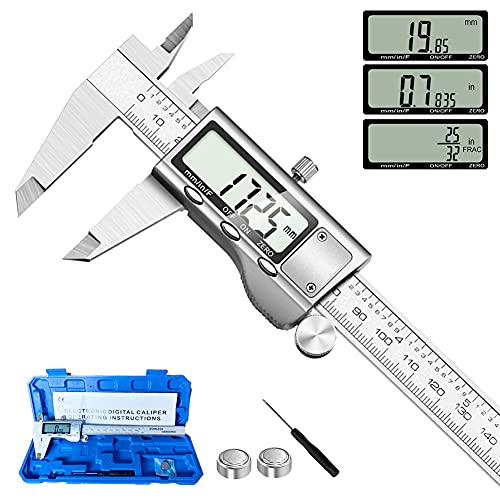
- Calipers. Accurate measurement is the only way to verify parallel results.
- Spare cutters. Having a second set means you can change cutters immediately instead of waiting.
- Protective gear. Earmuffs or plugs, safety glasses and a respirator.
- A planer sled. Simple to build from flat sheet stock, and it lets the planer flatten a face if you lack a jointer.
Buying used. A used planer can deliver more machine for the money, but inspect it: look for a bed without deep rust, rollers that are not hard or cracked, a head that spins without play, and a column that does not wobble. Confirm replacement cutters are still sold, and walk away from a seller who will not let you inspect it.
Setup and tuning for clean results
Mid-priced planers can give excellent boards when set up carefully.
- Disconnect power before any adjustment.
- Mount the machine firmly on a stand or bench, with the bed at a comfortable working height and room for long boards on both sides.
- Clean and wax the bed with paste wax, buffing it until smooth.
- Check roller condition. Wipe them with a recommended cleaner so they grip evenly.
- Test for parallel results. Plane a board with a light cut, then measure thickness at both edges and the middle. If the readings differ by more than you can accept, follow the manual’s steps for table or head adjustment.
- Confirm the depth scale against caliper readings and note the offset.
- Connect dust collection and check the airflow.
Technique matters as much as setup. Joint or flatten a face first, because a planer copies the shape of the bottom face to the top. Take shallow passes, typically no more than a small fraction of an inch, and lighter still on wide stock. Flip the board between passes so the wood releases stress evenly. Plane with the grain; if you see tear-out, reverse the board end for end or take a lighter cut.
To limit snipe, support the board at bed height at both ends, feed without stopping, and use the head lock if there is one. Run several boards end to end so the first and last absorb the snipe, and leave spare length to cut off.
Safety
- Hearing protection. Universal-motor planers are very loud, and hearing damage accumulates silently. Wear earmuffs or plugs every time.
- Eye protection. Splinters and chips can fly. Wear safety glasses.
- Respirator. Fine dust enters the lungs easily and some species are sensitizers. Use dust collection and a respirator.
- Kickback. Boards that are too short, split or have loose knots can be thrown back. Keep the minimum board length in mind, stay beside the feed path and never stand directly behind the board.
- Hands. Keep hands and fingers clear of the feed opening and never reach in while the head is turning. Release the board once the rollers have it.
- Metal and grit. Remove nails, staples and screws. Brush off dirt from rough or reclaimed boards. Dirt dulls cutters and flying metal can injure.
- Blade changes. Unplug first, handle knives with cut-resistant gloves, and follow the torque steps in the manual for insert screws.
- Clearing jams. Switch off, wait for the head to stop, unplug, and only then free the board.
- Dust and fire. Empty collectors often, since fine dust can burn, and keep sparks and heat sources away.
Maintenance
Planers need relatively little maintenance, but the small tasks matter.
After each session, vacuum chips, wipe the bed and rollers, and check for pitch build-up. Wax the bed periodically.
Blades and inserts. Replace or rotate when surfaces become fuzzy or ridged despite light cuts. For straight knives, change in matched sets so the head stays balanced. For spiral heads, rotate or replace individual inserts and clean the seats before installing new ones so they sit true.
Carbon brushes and lubrication. Universal motors wear brushes; check them if the motor sparks heavily or loses power. Lubricate columns and screws only as the manual says.
Alignment. Re-test with calipers after moving the machine, and every so often anyway.
Common mistakes
- Buying on width alone. A wide machine with a flimsy frame will not give you better boards.
- Spending the whole budget on the machine, leaving nothing for dust collection or support tables.
- Expecting miracle flatness. A planer does not remove cup or bow without a flat reference face.
- Heavy cuts to save time. They produce tear-out, snipe and strain.
- Ignoring the depth scale error. Always verify with calipers.
- Feeding unsuitable stock, such as short, wet, or metal-contaminated boards.
Who should choose what
The occasional builder who needs a planer a few times a year can choose a lightweight portable machine with sharp straight knives and invest in dust collection and a sled.
The regular weekend woodworker should look for a heavier portable machine with extended tables, a head lock and, if the budget allows, a spiral head.
The figured-wood enthusiast should prioritise the cutterhead, because tear-out is the main frustration, and pair it with careful technique.
The bargain hunter comfortable with tuning can look at used machines, inspect them carefully, and put savings into a better dust system.
Checklist
- Write down your maximum board width and thickness before comparing machines.
- Decide whether you can afford a spiral head without compromising frame quality.
- Check bed length and the quality of extension tables.
- Look for a head lock, a dust hood and two feed speeds.
- Confirm replacement cutters are easy to obtain.
- Read the manual for alignment and blade-change steps.
- Reserve part of the budget for dust collection, support stands and calipers.
- Buy hearing protection, eye protection and a respirator.
- Inspect any used machine for rust, roller wear and head play.
Frequently asked questions
Is a thousand dollars enough for a good thickness planer?
For most home shops, yes. That budget typically reaches well-built portable machines and sometimes compact stationary-style ones. Verify current pricing, and keep part of the budget for accessories.
Is a spiral cutterhead worth it?
If you plane figured or reversing grain, or want less noise, yes. For straight-grained softwood or ordinary hardwood, sharp straight knives can be sufficient. Do not trade away frame quality for a spiral head.
How can I stop snipe on a budget planer?
Support the board level on both ends, lock the head if possible, wax the bed, take light passes and feed boards end to end. Leave extra length to cut off.
Can a thickness planer replace a jointer?
Not directly. A sled lets a planer flatten one face, but squaring an edge still needs a jointer, table saw or hand tools.
Is it safe to buy a used planer?
It can be, with inspection. Check for rust, damaged rollers, play in the head and missing guards, and confirm replacement cutters are available.
What depth of cut should I use?
Shallow passes, lighter on wide boards and dense hardwoods. Treat the manual’s maximum as a limit, not a target.
Do I need a dust collector?
Planers make huge volumes of chips. A shop vacuum with a separator can handle light use, but a collector is better for regular milling. Wear a respirator either way.
How do I know the planer is cutting parallel?
Plane a test board and measure its thickness at both edges and the middle with calipers. If readings differ, follow the manual’s adjustment steps and repeat.
Conclusion
On a thousand-dollar budget, the best thickness planer is a rigid, well-supported machine whose cutterhead suits your wood, paired with decent dust collection and careful technique. Resist the pull of headline specifications. Frame rigidity, table support and an honest depth scale improve your boards more than extra width does.
Plan your total spending, not only the machine price, then set up carefully, take light passes and measure everything. A well-tuned mid-priced planer will serve a home shop for many years.
To start comparing, browse thickness planers, planers with spiral cutterheads, planer stands and roller supports, and digital calipers, and check each against the list above.
Disclosure: As an Amazon Associate, fdwoodworking.com may earn from qualifying purchases made through links on this page, at no extra cost to you.
Related guides
More from Amazon
Programs that pair well with the guide above. Offers and eligibility are set by Amazon and may change.
A free business account with business pricing and bulk-buying tools for work, shop or home office.
Create a business accountFree shipping on eligible items, Prime Video and more. Eligible new members can start with a free trial.
Start a Prime free trialAudiobooks and podcasts to listen to on the go. Eligible new members can start with a free trial.
Try Audible freeAd-free music streaming. Eligible new subscribers can start with a free trial.
Try Music Unlimited freeAs an Amazon Associate we earn from qualifying purchases.

Write Your Review
No reviews yet. Be the first to share your experience!