Best HP Laptops for Photo Editing: 5 Top Picks
What's inside
- Quick comparison: the five best HP laptops for photo editing
- 1. HP Spectre x360 16: best overall for a large editing canvas
- 2. HP OmniBook Ultra Flip 14: best portable 2-in-1
- 3. HP ZBook Studio 16 G11: best for professional Photoshop workloads
- 4. HP ZBook Power 16 G11: best value workstation
- 5. HP OmniBook X 14: best budget choice
- How to choose by actual Lightroom and Photoshop workload
- What Delta-E and gamut mean in practice
- Ownership details photographers often overlook
- Quick comparison: the five best HP laptops for photo editing
- 1. HP Spectre x360 16: best overall for a large editing canvas
- 2. HP OmniBook Ultra Flip 14: best portable 2-in-1
- 3. HP ZBook Studio 16 G11: best for professional Photoshop workloads
- 4. HP ZBook Power 16 G11: best value workstation
- 5. HP OmniBook X 14: best budget choice
- How to choose by actual Lightroom and Photoshop workload
- What Delta-E and gamut mean in practice
- Ownership details photographers often overlook
As an Amazon Associate I earn from qualifying purchases. This post may contain affiliate links at no extra cost to you.
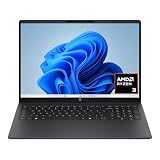
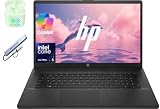
The best HP laptops for photo editing in 2026 are the HP Spectre x360 16 for a large OLED workspace, HP OmniBook Ultra Flip 14 for portability, HP ZBook Studio 16 for demanding Adobe workloads, HP ZBook Power 16 for value, and HP OmniBook X 14 for everyday editing on a budget.
As an Amazon Associate we earn from qualifying purchases at no extra cost to you.

Contents
- Quick comparison: the five best HP laptops for photo editing
- 1. HP Spectre x360 16: best overall for a large editing canvas
- 2. HP OmniBook Ultra Flip 14: best portable 2-in-1
- 3. HP ZBook Studio 16 G11: best for professional Photoshop workloads
- 4. HP ZBook Power 16 G11: best value workstation
- 5. HP OmniBook X 14: best budget choice
- How to choose by actual Lightroom and Photoshop workload
- What Delta-E and gamut mean in practice
- Ownership details photographers often overlook
Quick comparison: the five best HP laptops for photo editing
Panel specifications vary by region and configuration, so treat the figures below as buying targets and commonly available configurations rather than guarantees for every unit. A colorimeter check is still advisable when accurate print or client work matters.
| Laptop | Display and gamut | Typical color accuracy | Recommended RAM/GPU tier | Approx. weight and price range | Best for |
|---|---|---|---|---|---|
| HP Spectre x360 16 | 16-inch 3K OLED, 120 Hz, approximately 100% DCI-P3 | About Delta-E 2 or lower after calibration on strong samples | 32 GB; integrated graphics or RTX 4050 depending on configuration | About 4.1 lb; $1,400–$2,000 | Large-screen editing and creative versatility |
| HP OmniBook Ultra Flip 14 | 14-inch 2.8K OLED, 120 Hz, approximately 100% DCI-P3 | Roughly Delta-E 2–3 in well-tuned configurations | 32 GB; integrated Radeon graphics | About 3.1 lb; $1,200–$1,800 | Travel, touch, pen use, and Lightroom catalogs |
| HP ZBook Studio 16 G11 | 16-inch IPS options up to UHD, commonly 100% DCI-P3 | Often near Delta-E 2–3 with a DreamColor-class panel | 32–64 GB; NVIDIA RTX 1000 Ada to RTX 3000 Ada | About 4.4–4.8 lb; $2,000–$4,000+ | Professional Photoshop and mixed creative work |
| HP ZBook Power 16 G11 | 16-inch IPS, configuration-dependent; premium options can reach 100% sRGB or DCI-P3 | Approximately Delta-E 2–4 on higher-gamut panels | 32 GB; NVIDIA RTX 500 or RTX 1000 Ada | About 5.2 lb; $1,300–$2,500 | Maximum performance per dollar |
| HP OmniBook X 14 | 14-inch IPS, typically 100% sRGB rather than full DCI-P3 | Usually around Delta-E 2–4 after calibration | 16–32 GB; integrated graphics | About 3.1 lb; $850–$1,400 | Budget-conscious editing and mobile work |
1. HP Spectre x360 16: best overall for a large editing canvas
The Spectre x360 16 is the most balanced choice for photographers who want a generous screen without moving to a workstation. Its OLED panel’s near-complete DCI-P3 coverage is useful for images destined for modern displays, while the 16-inch 16:10 format leaves room for Lightroom’s filmstrip and adjustment panels.
Choose 32 GB of RAM if you regularly keep Lightroom, Photoshop, a browser, and cloud-sync software open together. The integrated-graphics version is adequate for raw development, masking, and moderate Photoshop compositing. An RTX 4050 configuration is preferable for large neural filters, AI denoise, GPU-accelerated blur effects, and high-resolution video alongside stills.
The trade-off is OLED behavior. Blacks are excellent, but brightness changes and PWM dimming may bother some users. OLED also needs sensible brightness settings and varied everyday use to reduce long-term image-retention risk. For print-critical work, calibrate it and use a soft-proofing workflow rather than trusting the screen’s vivid default mode.
2. HP OmniBook Ultra Flip 14: best portable 2-in-1
The OmniBook Ultra Flip 14 makes the strongest case for photographers who travel, cull on location, or annotate images with a pen. Its 2.8K OLED display provides wide-gamut coverage and a sharp 16:10 workspace, while the convertible design can be useful for reviewing proofs with a client.
Its integrated graphics are not a substitute for a discrete RTX GPU, but they are sufficient for Lightroom Classic catalogs, Photoshop layers, panoramas, and ordinary exports. Select 32 GB rather than 16 GB if your catalog is large or you edit 45-megapixel-plus files. Storage should be at least 1 TB; a 512 GB system drive can become cramped once previews, raw files, applications, and local backups accumulate.
Port selection is the practical limitation. Expect to rely on a USB-C hub for an SD-card reader, wired backup drive, and external monitor. The compact chassis also tends to reduce sustained performance during long exports compared with a ZBook.
3. HP ZBook Studio 16 G11: best for professional Photoshop workloads
Choose the ZBook Studio 16 when Photoshop is more than an occasional application. Its workstation-class design, higher memory ceilings, discrete NVIDIA RTX graphics, and color-focused display options make it better suited to enormous layered files, batch exports, 3D features, and simultaneous Adobe applications.
A practical configuration is 32 GB RAM with an RTX 1000 Ada or RTX 2000 Ada. Move to 64 GB if you use hundreds of layers, high-resolution panoramas, large smart objects, or multiple virtual machines. The RTX 3000 Ada option is justified for GPU-heavy creative work, but it adds cost, heat, and power consumption without making ordinary brush strokes or raw adjustments proportionally faster.
Look specifically for a panel advertised with full DCI-P3 coverage and a factory color profile. A high resolution alone does not indicate color quality: a sharp 100% sRGB panel can be less suitable for wide-gamut photography than a lower-resolution, properly profiled DCI-P3 display. The ZBook’s larger charger and higher weight are the price of sustained performance.
4. HP ZBook Power 16 G11: best value workstation
The ZBook Power 16 is the sensible compromise when you need workstation graphics but cannot justify ZBook Studio pricing. It is thicker and heavier, yet that extra chassis volume helps it maintain performance during long exports and batch processing.
For most photographers, 32 GB RAM, a 1 TB SSD, and an RTX 500 or RTX 1000 Ada GPU form the sweet spot. Avoid paying for a powerful GPU while selecting only 16 GB of memory: Lightroom and Photoshop responsiveness depends heavily on available RAM, especially when raw previews and large documents coexist.
Panel selection matters more than the ZBook name. Some configurations emphasize office productivity with ordinary sRGB coverage. For editing, choose the highest-gamut option available and confirm its stated coverage before ordering. If the suitable display is unavailable, budget for an external calibrated monitor instead of assuming every ZBook Power screen is photo-grade.
5. HP OmniBook X 14: best budget choice
The OmniBook X 14 is the right pick for photographers who primarily edit JPEGs, moderate raw files, and web images. Its 100% sRGB-class display is appropriate for most online publishing, while the efficient processor and light chassis offer good mobility.
It is less suitable for wide-gamut print preparation because sRGB coverage cannot show the full range of many DCI-P3 or Adobe RGB workflows. Integrated graphics also make it a poor fit for repeated AI denoise jobs or extensive GPU-accelerated effects. Choose 32 GB RAM if available, but 16 GB can work for lighter catalogs and disciplined multitasking.
How to choose by actual Lightroom and Photoshop workload
| Your situation | Recommended choice | Minimum sensible configuration |
|---|---|---|
| Mostly JPEGs, web galleries, and occasional raw edits | OmniBook X 14 | 16 GB RAM, 512 GB SSD, 100% sRGB display |
| Frequent travel and on-location culling | OmniBook Ultra Flip 14 | 32 GB RAM, 1 TB SSD, OLED display |
| Large raw files, panorama stitching, and daily Photoshop | Spectre x360 16 | 32 GB RAM, 1 TB SSD; RTX 4050 if using AI filters |
| Client work, huge layered files, and long export queues | ZBook Studio 16 | 32–64 GB RAM, 1 TB or larger SSD, RTX 1000 Ada or better |
| Workstation performance at a lower purchase price | ZBook Power 16 | 32 GB RAM, RTX 500 or RTX 1000 Ada, high-gamut panel |
What Delta-E and gamut mean in practice
Gamut describes how much of a color space the panel can reproduce. Adobe RGB is valuable for some print workflows, DCI-P3 is useful for modern display and video-oriented work, and sRGB remains the safest target for ordinary web delivery. Delta-E describes the difference between a displayed color and its reference value; lower is better. A result below 2 is strong, but a laptop can still be unsuitable if its gamut is narrow, its profile is wrong, or brightness is inconsistent.
After setup, select the laptop’s intended color profile, disable vivid or adaptive color modes, set a consistent brightness, and calibrate with a colorimeter when possible. Recheck calibration after major display-driver or operating-system changes.
Ownership details photographers often overlook
- Storage: A 1 TB SSD gives about 930 GB of usable capacity before the operating system and recovery partitions. If a 100-megapixel raw file averages 100 MB, 5,000 originals consume roughly 500 GB before previews, catalogs, exports, and backups.
- RAM: Memory is usually soldered in thin OmniBook models, so buy the capacity you expect to need. ZBook configurations offer more flexibility, but verify the specific model before purchase.
- Thermals: Thin convertibles may be fast for short edits but slow during a 40-minute export. Workstations are louder and heavier but better at sustained loads.
- Backups: Do not treat the internal SSD as an archive. Keep at least one separate backup, ideally with another copy away from the laptop.
- Cleaning: Keep vents clear, avoid using the laptop on fabric, and clean the screen with a microfiber cloth rather than household glass cleaner. Dust buildup first appears as louder fans and reduced export speed.
For most serious enthusiasts, the HP Spectre x360 16 is the best all-rounder. Pick the OmniBook Ultra Flip 14 for mobility, the ZBook Studio 16 for uncompromising professional workloads, the ZBook Power 16 for workstation value, and the OmniBook X 14 when sRGB editing and a lower price matter most.