Best Camera Bags for Mirrorless Cameras
What's inside
- Best Camera Bags for Mirrorless Cameras
- Quick comparison
- Best for a compact mirrorless kit: Peak Design Everyday Sling 6L
- Best discreet shoulder bag: Billingham Hadley Small Pro
- Best shoulder bag for a growing system: Tenba DNA 16 DSLR
- Best for a full-frame professional kit: Lowepro ProTactic BP 350 AW II
- Best for outdoor and travel kits: Shimoda Explore V2 25
- Decision matrix: choose by situation
- How to check whether a mirrorless kit will fit
- Durability and ownership considerations
- Best Camera Bags for Mirrorless Cameras
- Quick comparison
- Best for a compact mirrorless kit: Peak Design Everyday Sling 6L
- Best discreet shoulder bag: Billingham Hadley Small Pro
- Best shoulder bag for a growing system: Tenba DNA 16 DSLR
- Best for a full-frame professional kit: Lowepro ProTactic BP 350 AW II
- Best for outdoor and travel kits: Shimoda Explore V2 25
- Decision matrix: choose by situation
- How to check whether a mirrorless kit will fit
- Durability and ownership considerations
As an Amazon Associate I earn from qualifying purchases. This post may contain affiliate links at no extra cost to you.
Contents
- Best Camera Bags for Mirrorless Cameras
- Quick comparison
- Best for a compact mirrorless kit: Peak Design Everyday Sling 6L
- Best discreet shoulder bag: Billingham Hadley Small Pro
- Best shoulder bag for a growing system: Tenba DNA 16 DSLR
- Best for a full-frame professional kit: Lowepro ProTactic BP 350 AW II
- Best for outdoor and travel kits: Shimoda Explore V2 25
- Decision matrix: choose by situation
- How to check whether a mirrorless kit will fit
- Durability and ownership considerations
Best Camera Bags for Mirrorless Cameras
The best camera bag for mirrorless cameras is the Peak Design Everyday Sling 6L for a compact kit, the Tenba DNA 16 DSLR for a weather-resistant shoulder bag with room to grow, and the Shimoda Explore V2 25 for photographers carrying a full-frame system, several lenses, and outdoor equipment.
There is no single best design for every mirrorless setup. A small APS-C body with a 23mm lens needs fast access and minimal bulk, while a full-frame body with a 70-200mm zoom needs a deeper camera compartment, stronger dividers, and a more stable harness. The right choice depends on how much equipment you carry, how often you change lenses, and whether the bag must protect gear from rain, dust, and impact.
As an Amazon Associate we earn from qualifying purchases at no extra cost to you.
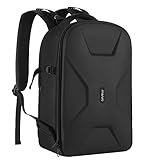
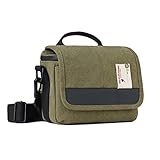


Quick comparison
| Bag | Capacity | Approx. empty weight | Best for | Weather protection |
|---|---|---|---|---|
| Peak Design Everyday Sling | 6L or 10L | About 0.45–0.63 kg | Compact mirrorless kits and fast street shooting | Weather-resistant shell; not a fully waterproof bag |
| Billingham Hadley Small Pro | About 5L | About 0.7 kg | One body, two small lenses, and discreet everyday carry | Water-resistant canvas or synthetic fabric with storm flap |
| Tenba DNA 16 DSLR | About 13L | About 1.1 kg | Mirrorless kits needing flexible shoulder-bag capacity | Water-repellent fabric and included rain cover |
| Lowepro ProTactic BP 350 AW II | About 16L | About 1.6 kg | Full-frame kits, multiple lenses, and modular storage | Built-in all-weather cover |
| Shimoda Explore V2 25 | About 25L, depending on the camera insert | About 1.5 kg before insert and accessories | Long outdoor days and camera-plus-hiking loads | Water-resistant materials with rain cover available or included by configuration |
Published dimensions and weights can vary slightly by fabric, insert, and regional configuration. More importantly, usable camera capacity is always lower than the headline volume because padding, dividers, batteries, and personal items consume space.
Best for a compact mirrorless kit: Peak Design Everyday Sling 6L
The 6L Everyday Sling suits a small Micro Four Thirds, Fujifilm X, Canon EOS R APS-C, Nikon Z DX, or Sony APS-C setup. It can generally accommodate one camera body with a compact lens attached, one additional lens, spare batteries, cards, and a small personal item. Its broad opening and movable padded dividers make it faster to use than a conventional backpack when photographing in crowded streets or while travelling.
The sling format is its main advantage and its main limitation. You can rotate it from your back to your front without taking it off, giving quicker access than a backpack. However, all the weight hangs from one shoulder. With a camera, two lenses, water, and a tablet, the strap becomes less comfortable than a two-shoulder system.
Choose the 10L version if your main lens is a compact telephoto or a professional standard zoom. For a small prime-based kit, the 6L is less bulky and less likely to encourage overpacking.
Best discreet shoulder bag: Billingham Hadley Small Pro
The Hadley Small Pro is a good match for photographers who want a traditional, understated bag rather than a technical-looking camera pack. Its padded insert is suitable for a small mirrorless body and a couple of modest lenses, while the outer pockets hold a phone, wallet, filters, or a compact notebook.
Its flap and covered construction provide useful protection against light rain and dust, but this is not the bag to leave exposed in a downpour. The opening is slower than a zippered sling because the flap and buckles must be moved aside. In return, the bag is quiet, visually discreet, and comfortable for short walks.
Fit is especially important. A full-frame body with a large grip may consume most of the insert, leaving little room for a second lens. Check the insert’s internal dimensions against the camera body with its largest battery grip, plate, or L-bracket attached.
Best shoulder bag for a growing system: Tenba DNA 16 DSLR
The Tenba DNA 16 DSLR offers a useful middle ground between a compact shoulder bag and a backpack. Despite its DSLR-oriented name, its padded compartment can accommodate many mirrorless combinations, including a full-frame body, standard zoom, telephoto zoom, and one or two smaller lenses, depending on their dimensions.
Its wide opening gives faster access than a backpack, and the adjustable dividers let you create a long compartment for a lens or divide the space into several smaller sections. The included rain cover is valuable because water resistance in the fabric alone does not protect an open bag during sustained rain.
This style is best for photographers who work from a vehicle, move between several nearby locations, or need to change lenses frequently. It is less ideal for steep trails: a shoulder bag swings while walking and can pull against your neck when heavily loaded.
Best for a full-frame professional kit: Lowepro ProTactic BP 350 AW II
The ProTactic BP 350 AW II is the stronger choice when impact protection and modular organization matter more than low weight. Its padded interior, adjustable dividers, and external attachment points can handle a full-frame mirrorless body, several lenses, a flash, batteries, and accessories. The backpack layout also distributes the load across both shoulders.
Access is more involved than with a sling. Depending on how the bag is packed, you may need to rotate it, open a side compartment, or take it off completely. Side access is useful for a camera with a lens attached, but it is slower if the required item is in the center of the pack.
The all-weather cover provides better rain protection than relying on a water-resistant shell alone. Remember that a cover does not protect gear while the bag is open, and water can still enter through exposed zippers or wet equipment placed inside.
Best for outdoor and travel kits: Shimoda Explore V2 25
The Explore V2 25 is designed around a removable camera insert, so it works as both a camera bag and a general outdoor pack. This is useful when the same pack must carry camera equipment, clothing, food, and a small tripod. The separate insert also makes it easier to reorganize or remove the camera system at the end of a trip.
Its capacity is more than most photographers need for a daily city walk, but it becomes worthwhile for hiking, landscape photography, and travel days. A compatible core unit can hold a full-frame body and multiple lenses, while the surrounding pack space carries non-camera items.
The trade-off is access speed. You get better carrying comfort and more usable total space, but changing lenses takes longer than with a top-opening sling. Pack the lens you expect to use most on the camera, and place the next likely lens in the most accessible compartment.
Decision matrix: choose by situation
| Your situation | Best bag type | Recommended choice | Why |
|---|---|---|---|
| One small body, one or two compact lenses, frequent street shooting | 6–10L sling | Peak Design Everyday Sling | Fast front access and low bulk |
| Discreet everyday carry and short walks | Small shoulder bag | Billingham Hadley Small Pro | Quiet, understated, and comfortable when lightly loaded |
| Full-frame body, three or four lenses, frequent lens changes | Medium shoulder bag | Tenba DNA 16 DSLR | Flexible dividers and faster access than a backpack |
| Heavy kit, flash, accessories, and stronger impact protection | Technical backpack | Lowepro ProTactic BP 350 AW II | Better weight distribution and modular organization |
| Hiking, landscape work, or camera gear plus outdoor equipment | Hiking-oriented camera pack | Shimoda Explore V2 25 | Separate camera insert and larger personal-load capacity |
How to check whether a mirrorless kit will fit
- Measure the packed camera, not the bare body. Include the attached lens, eyecup, strap lugs, battery grip, quick-release plate, and L-bracket.
- Measure the longest lens with both caps installed. Compare its length and diameter with the bag’s internal compartment, leaving room for padding.
- Add divider thickness. A compartment listed as 25 cm wide does not provide 25 cm of free space after dividers are installed.
- Allow roughly 20 percent spare capacity. This leaves space for a battery, card case, cleaning cloth, and easier access. A compartment packed completely full is slower to use and puts more pressure on zippers and seams.
For example, if your body and lens occupy about 6L of actual packed volume, a 6L bag will feel cramped because its advertised volume includes pockets and unpadded areas. A 10L sling or compact shoulder bag is a more practical target, particularly if you carry a second lens.
Durability and ownership considerations
The parts that usually show wear first are shoulder-strap edges, zipper pulls, hook-and-loop divider surfaces, and the bottom panel. Avoid placing a padded bag directly on wet ground, and remove mud before it dries into the fabric. Empty the bag regularly: loose grit can work into zippers and scratch camera bodies or lenses.
Do not store the camera bag permanently with damp equipment inside. After rain, remove the camera insert or open every compartment in a dry, ventilated room. Clean the exterior according to the manufacturer’s fabric instructions; aggressive detergents can reduce water repellency. Reapply a compatible fabric treatment only when water stops beading, and do not treat leather trim or coated materials unless the manufacturer permits it.
For most mirrorless owners, the best decision is simple: select the smallest bag that fits the camera with its main lens attached, then move up one size if you regularly carry a second lens or personal items. Choose a sling for speed, a shoulder bag for frequent access and moderate loads, and a backpack when comfort, weather protection, and total capacity matter more than instant access.