
What's inside
As an Amazon Associate I earn from qualifying purchases. This post may contain affiliate links at no extra cost to you.
The short answer: a cabinet table saw is the right tool for woodworkers who want maximum stability, power and dust control, and who have the space and electrical supply to support it. The best cabinet saw for you will have a heavy, flat top, a trunnion system fixed to the cabinet rather than hung from the table, a motor matched to your circuit, a rigid fence and a dust port that actually works. If you cut mostly softwood or thin stock occasionally in a small shop, a lighter saw may serve you better, and a cabinet saw can be more machine than you need.
Contents
Our Top Picks


Contents
- What makes a saw a cabinet saw
- Cabinet saws versus other table saw types
- Motor, power and wiring
- Key features
- Space, weight and moving it
- Setup and tuning
- Safety
- Dust collection
- Maintenance
- Common mistakes
- Who should choose what
- Checklist
- FAQ
- Conclusion
What makes a saw a cabinet saw
The name describes the base. A cabinet saw is built on an enclosed steel cabinet that houses the motor and the trunnions, the mechanism that holds the arbor and tilts the blade. In a true cabinet saw, the trunnions mount to the cabinet itself. That distinction is the heart of the design. Because the table top is a separate casting bolted on top, you can often adjust the top relative to the blade without disturbing the heavy mechanism underneath, and the mass of the cabinet absorbs vibration.
The result is a saw that runs smoothly, resists movement while cutting, and is easy to align and keep aligned. Enclosed construction also gives you a place to connect dust collection, which helps capture much of the dust below the table. Most cabinet saws use a belt drive, often with multiple belts, that delivers power smoothly and quietly compared with direct-drive saws.
These benefits come at a cost in weight, price and demand on the electrical system. For many woodworkers, the question is not whether a cabinet saw is excellent, but whether it is the right level of tool for the work and the shop.
Cabinet saws versus other table saw types
Table saws fall into broad classes, and the boundaries blur. The comparison below describes general tendencies, not the specifications of any single machine.
| Saw type | Typical construction | Mobility | Vibration and stability | Best suited to |
|---|---|---|---|---|
| Jobsite saw | Light frame, often direct-drive motor | Easy to carry | Lowest | Portable work and occasional cuts |
| Contractor saw | Open stand, motor hanging off the back | Moderate | Fair | Hobby shops on a budget |
| Hybrid saw | Enclosed or semi-enclosed base, trunnions often on the table | Moderate | Good | Serious hobbyists with limited space or power |
| Cabinet saw | Heavy enclosed cabinet, trunnions on the cabinet | Low; needs a mobile base | Excellent | Frequent, precise work and dense hardwoods |
A hybrid saw is the closest alternative. It borrows the enclosed base and belt drive of a cabinet saw but usually uses lighter castings and trunnions mounted under the table. For many home shops, a good hybrid is a very sensible middle path. The cabinet saw justifies its extra weight and cost when you cut thick hardwood regularly, run the saw for long sessions, or need alignment that stays put for years.
Motor, power and wiring
Cabinet saws tend to use larger induction motors than other classes. Many use motors in the neighborhood of several horsepower and run on 240-volt single-phase power. Some smaller cabinet saws use lower horsepower and can run on 120 volts, though they may then draw a high current. Larger machines may be offered in three-phase configurations for commercial shops.
| Power configuration | Typical shop | Advantages | Considerations |
|---|---|---|---|
| 120-volt, lower horsepower | Home garage with standard outlets | Plugs into common circuits | Needs a dedicated circuit; less reserve for thick hardwood |
| 240-volt single-phase, higher horsepower | Home or small commercial shop with a 240-volt circuit | Strong, steady cutting; lower current draw per horsepower | May require a new circuit installed by a licensed electrician |
| Three-phase | Commercial or industrial building | Smooth power delivery | Requires three-phase supply or a converter; not typical at home |
Do not guess about wiring. Read the motor’s nameplate and the saw’s manual for voltage, amperage and recommended circuit protection. Have a licensed electrician size the wire, breaker and receptacle, and ask whether the circuit should be dedicated. Do not alter plugs to fit the wrong outlet, and avoid extension cords for a machine of this class. A properly wired circuit protects the motor and your house.
More horsepower is not automatically better; a sharp, clean blade matters more to cut quality than raw power, and a full-kerf blade needs more power than a thin-kerf one.
Key features
Table top and extensions
A cabinet saw’s top is a thick cast-iron casting, ground flat. Check that extension wings are flat and flush with the main table, because a wing that droops or rises affects every long cut. The table surface should be clean and free of rust, and a coat of paste wax helps boards slide.
Trunnions and arbor
The trunnions should tilt smoothly and lock firmly, and the arbor should be rigid with minimal runout. Look for hand wheels that turn smoothly for blade height and tilt, and a design that lets you adjust the angle stops precisely.
Fence and rails
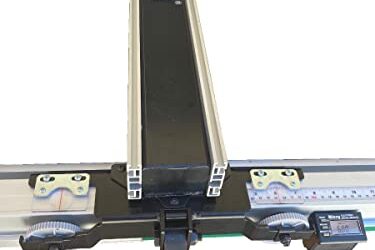
Many cabinet saws are sold with a high-quality T-square fence, but some are sold with only a basic one, or with no fence at all. A rigid, smooth-locking fence on solid rails is essential for accurate ripping. Check rail length against the largest panels you intend to rip.
Blade guard and riving knife
Modern saws provide a riving knife that rises and falls with the blade, plus a guard assembly. Look for a system that installs and removes without tools or with simple tools, because a guard that is annoying to reinstall tends to stay in the drawer. Check that the riving knife is compatible with the blade thickness you plan to use.
Switch and braking
A large paddle switch within easy reach, with a way to lock it off, is a basic safety feature. Some saws offer a motor brake that stops the blade quickly after power-off, and some offer flesh-sensing safety systems that stop the blade on contact. These add cost and have their own maintenance requirements, so read the manufacturer’s documentation to understand how they work and what happens after a trigger.
Space, weight and moving it
A cabinet saw is heavy. That weight is part of its stability, but it makes delivery and placement a real task. Plan the route from the truck to the shop, including doors, steps and slopes. Use a pallet jack, a hand truck rated for the load, or enlist enough helpers. Never try to lift a cabinet saw by the table extension or by the motor.
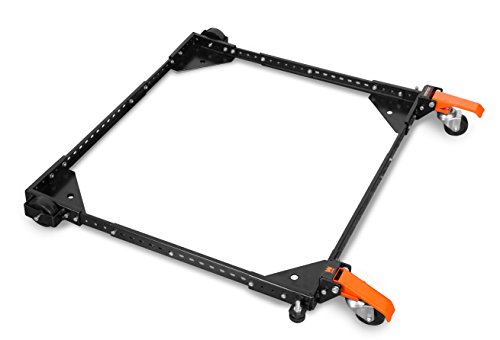
Think about how the saw will fit into your workflow. You need clear space in front for the operator, behind for outfeed support, and to the right for ripping wide panels. A common rule of thumb is that you need at least the length of your longest board in front of and behind the blade, minus whatever you support with outfeed tables or roller stands. A mobile base rated for the saw’s weight, with locking wheels that hold the saw firmly, lets you reclaim floor space when the saw is not in use. Make sure the saw cannot roll while cutting.
Setup and tuning
A well-made cabinet saw usually arrives close to correct, but the shipping process and your own standards call for a thorough check.
- Assemble and level. Attach the wings, flatten them to the main table with a straightedge, and level the saw on the floor.
- Clean the table. Remove protective grease with the solvent the manufacturer recommends, then wax.
- Check blade runout. With the saw unplugged, use a dial indicator on the blade body near the teeth to check for wobble. Excess runout may come from a bent blade, a dirty arbor flange or a worn bearing.
- Align the blade to the miter slot. Measure from the slot to a tooth at the front and the same tooth at the rear. Adjust the top or trunnions per the manual until the readings match.
- Set the stops. Verify ninety degrees and the forty-five degree bevel stops with a reliable square or digital angle gauge, and adjust.
- Align the riving knife. It should sit in line with the blade and close to the teeth, as the manual specifies.
- Align the fence parallel to the blade or miter slot, and check that it holds when locked.
- Test cuts. Rip and crosscut scrap and check the results for squareness and burn marks.
Safety
The table saw is among the most dangerous machines in a woodworking shop. A cabinet saw is powerful, so errors have severe consequences.
- Wear safety glasses or a face shield and hearing protection. Use a dust mask or respirator, particularly when cutting engineered panels or hardwoods that produce fine dust.
- Use the riving knife and guard for through cuts whenever possible. The riving knife prevents the kerf from closing and pinching the blade, a major cause of kickback.
- Use push sticks and push blocks, and keep hands well away from the blade, especially on narrow rips. Do not reach across or over the blade.
- Stand out of the line of kickback, to the side of the blade line, not directly behind the board.
- Keep the fence parallel, and never crosscut by trapping a piece between the fence and the blade.
- Rip only stock that is flat on the table and has a straight edge against the fence. Do not freehand cuts.
- Set blade height so that the teeth rise only a modest amount above the board.
- Avoid loose clothing, jewelry and gloves, and tie back long hair.
- Unplug the saw or lock out the switch before changing blades or making adjustments.
- Use outfeed support so long boards do not tip off the table and force a hand to catch them.
Dust collection
An enclosed cabinet helps contain dust, but only if airflow is adequate. Connect a dust collector or powerful vacuum to the lower port, and check that the cabinet has some provision for incoming air so that the collector can pull dust through. Many saws also accept an overarm or guard-mounted collection hose to capture dust above the table. Seal large gaps in the cabinet and keep the internal chute clear. Fine dust is a health hazard, so rely on collection plus a respirator rather than collection alone.
Maintenance
A cabinet saw is built to last decades with modest care. Keep the top clean and waxed to prevent rust, and remove pitch from blades regularly with a suitable cleaner. Clean and lightly lubricate the elevation and tilt mechanisms as the manual directs, using lubricants that do not attract dust. Inspect the belts for wear, glazing or cracking, and replace them as a set when needed. Check belt tension per the manual. Keep the miter slots clean. Re-measure blade-to-slot alignment and fence parallelism from time to time, and after moving the saw. Replace worn blades, throat plates and riving knives that become bent. Inspect the cord, plug and switch for damage.
Common mistakes
- Buying a cabinet saw without checking the electrical supply. Plan for the circuit before the saw arrives.
- Underestimating space. The footprint is only part of it; allow room for boards and outfeed.
- Choosing on horsepower alone. Trunnion quality, fence and alignment count for more in daily use.
- Removing the riving knife for convenience. Use it unless a non-through cut truly requires its removal, and replace it afterward.
- Using a dull blade. A dull blade overworks the motor, burns wood and invites kickback.
- Skipping alignment checks. A saw that is slightly off will pinch and burn.
Who should choose what
The full-time or production woodworker
A cabinet saw is the natural choice. Prioritize motor reserve, a rigid fence and sliding table or large-panel support.
The serious home hobbyist
If you build furniture regularly and have a 240-volt circuit and space, a cabinet saw gives you precision and stability that last. Check delivery logistics before ordering.
The hobbyist with limited power or space
A high-quality hybrid saw may be the better fit. Put the savings toward a good blade, a fence and dust collection.
The occasional builder
A lighter saw is probably adequate. A cabinet saw sitting idle most of the year is an expensive use of floor space.
When you are ready to compare, browse cabinet table saws and review the specifications for motor voltage, trunnion design and fence. A rated heavy-duty mobile base and a set of table saw push sticks and push blocks are worthwhile additions, and a good general-purpose table saw blade will improve cut quality.
Checklist
- Confirm the saw’s voltage and amperage and have a licensed electrician verify the circuit.
- Measure the delivery route and the final location, including outfeed space.
- Check that the trunnions mount to the cabinet and that the top is flat.
- Test fence rigidity, rail length and locking.
- Confirm riving knife, guard and switch design.
- Plan dust collection at the cabinet port and at the guard.
- Buy a rated mobile base if the saw must move.
- Have push sticks, push blocks, eye, ear and breathing protection ready.
- Check runout, blade-to-slot alignment and bevel stops on day one.
- Choose a sharp blade suited to the motor and the riving knife.
Frequently asked questions
What is the difference between a cabinet saw and a hybrid saw?
A cabinet saw has trunnions mounted to a heavy enclosed cabinet and typically a larger motor. A hybrid has an enclosed base but usually lighter construction with trunnions mounted to the table. Hybrids weigh less and often cost less.
Do I need a 240-volt circuit?
Many cabinet saws use 240 volts for their larger motors, while some smaller ones run on 120. Read the nameplate and ask a licensed electrician.
Is a cabinet saw safer than other saws?
It is more stable and often has better guarding, but a table saw is always dangerous. Safety depends on setup and technique.
How much horsepower do I need?
Enough for the stock you cut. Thick hardwoods benefit from more reserve, but a sharp blade and good alignment matter as much.
Can I use dado blades on a cabinet saw?
Many saws accept dado sets, but check the arbor length and the motor’s rating, and use the correct insert plate.
Are flesh-sensing systems worth it?
They can reduce injury severity, but they are not a substitute for safe practice and carry cost and maintenance considerations. Read how a given system works and what a trigger costs.
Do I need a mobile base?
Only if you need to move the saw. If you do, use a base rated for the weight and lock it before cutting.
How often should I realign a cabinet saw?
Check at setup, after moving the saw and every so often during regular use. A well-built saw holds alignment longer, but checking is quick.
Conclusion
A cabinet table saw rewards the woodworker who has the space, the circuit and the workload to use it. Its mass, trunnion design, belt drive and enclosed base give a stable, quiet and well-controlled cut. Focus your decision on stability, fence quality, the electrical requirements and dust collection, rather than horsepower alone, and be honest about whether a good hybrid would meet your needs. Set the saw up carefully, keep the riving knife in place, use push sticks and respect the blade every time you switch it on.
Disclosure: As an Amazon Associate, fdwoodworking.com earns from qualifying purchases. Links marked as sponsored may earn a commission at no extra cost to you.
Related guides
More from Amazon
Programs that pair well with the guide above. Offers and eligibility are set by Amazon and may change.
A free business account with business pricing and bulk-buying tools for work, shop or home office.
Create a business accountFree shipping on eligible items, Prime Video and more. Eligible new members can start with a free trial.
Start a Prime free trialAudiobooks and podcasts to listen to on the go. Eligible new members can start with a free trial.
Try Audible freeAd-free music streaming. Eligible new subscribers can start with a free trial.
Try Music Unlimited freeAs an Amazon Associate we earn from qualifying purchases.

Write Your Review
No reviews yet. Be the first to share your experience!