
What's inside
- Contents
- What a block plane is actually for
- Low-angle, standard and skew designs
- Features that separate good planes from frustrating ones
- Comparison table
- Size, weight and hand fit
- Setting up and using the plane
- Safety notes
- Care and maintenance
- Buyer checklist
- Mistakes to avoid
- Frequently asked questions
- Bottom line
As an Amazon Associate I earn from qualifying purchases. This post may contain affiliate links at no extra cost to you.
The short answer: the best block plane for most woodworkers is a low-angle model with an adjustable mouth, a flat sole and a blade that takes a keen edge. Its shallow bed angle slices end grain cleanly, and the adjustable mouth lets you close the gap for fine shavings or open it for thicker ones. A standard-angle plane is a fine alternative if you mostly work on face grain and edges. A skew-blade plane is a refinement for tricky grain and rabbets rather than a starting point. Whichever type you choose, flatness, blade quality and a smooth, positive depth adjuster matter more than any name stamped on the casting.
This guide compares plane types rather than ranking individual models. It explains what a block plane does, how the main variations differ, which features are worth paying for, how to set one up, and which mistakes lead to chatter and tear-out. Treat it as preparation for reading current listings and manufacturer instructions.
Contents
- Contents
- What a block plane is actually for
- Low-angle, standard and skew designs
- Features that separate good planes from frustrating ones
- Comparison table
- Size, weight and hand fit
- Setting up and using the plane
- Safety notes
- Care and maintenance
- Buyer checklist
- Mistakes to avoid
- Frequently asked questions
- Bottom line
Our Top Picks


Contents
- What a block plane is actually for
- Low-angle, standard and skew designs
- Features that separate good planes from frustrating ones
- Comparison table
- Size, weight and hand fit
- Setting up and using the plane
- Safety notes
- Care and maintenance
- Buyer checklist
- Mistakes to avoid
- Frequently asked questions
- Bottom line
What a block plane is actually for
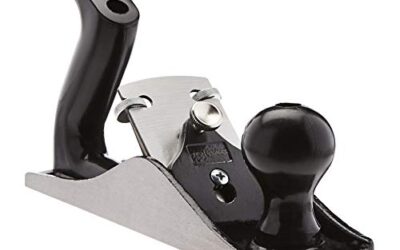
A block plane is a compact plane that fits in one hand. Unlike a longer bench plane, it is not intended for flattening wide boards or jointing long edges. Its job is the small, fiddly work that surrounds the main construction: trimming end grain, chamfering an edge, fitting a drawer front, easing the corner of a tabletop, flushing a proud joint, or taking a hair off a piece that is almost the right size.
The name is thought to come from its historical use by butchers and by people who trimmed blocks of wood, though the origin is less important than the practice. In a modern shop it is the plane people reach for most often, simply because it is always close to hand and takes seconds to adjust.
One structural difference is worth understanding. In most block planes the blade is bedded with its bevel facing up, rather than down as in a typical bench plane. That arrangement lets the designer use a very low bed angle without making the blade impossibly thin, and it allows a compact body. It also means the blade has no chipbreaker, so the plane relies on a tight mouth and sharp steel to prevent tear-out.
Low-angle, standard and skew designs
Low-angle block planes
A low-angle plane beds the blade at a shallow angle. Combined with the sharpening bevel, this gives a low cutting angle that severs end grain fibers with less effort. It is the classic choice for trimming the ends of boards, mitering small parts and cleaning up the edge of a crosscut. Because the blade presents a low angle, it tends to leave a bright surface on end grain and softer woods.
The drawback is that on wild or reversing grain a low cutting angle is more likely to lift fibers and tear out. You can compensate by closing the mouth, taking lighter shavings or planing from the opposite direction.
Standard-angle block planes
A standard-angle plane sets the blade at a steeper angle. It is slightly harder to push through end grain but handles face grain and edges with less tendency to tear. For people who mostly chamfer, ease edges and trim along the grain, this is a perfectly reasonable general plane. Some woodworkers keep both, one for end grain and one for awkward faces, though that is a luxury rather than a necessity.
Skew-blade and rabbeting designs
A skew plane angles the blade across the sole so it slices rather than chops, a bit like drawing a knife through the wood. That slicing action reduces effort and improves surface quality on difficult grain. Many skew designs are also built to cut right to the side of the body, which makes them useful as small rabbet planes for cleaning up shoulders and fitting joints. They cost more and are more specialized, so they make sense once you know what you need.
Fixed and adjustable mouths
The mouth is the slot in the sole that the blade passes through. A fixed mouth is simple and robust, but you cannot tune it. An adjustable mouth uses a movable plate at the front of the opening, so you can narrow the gap for fine cuts that resist tear-out or widen it for heavier removal and to clear shavings. For a general-purpose plane, an adjustable mouth is one of the most useful features available and is often worth the extra expense.
Features that separate good planes from frustrating ones
Sole flatness and finish
The sole is the foundation. If it is warped or has a pronounced hollow in front of the mouth, the plane cannot register consistently on the work, and you will struggle to take uniform shavings. Many manufacturers machine and grind soles, but quality varies. Look for descriptions of ground soles, and read buyer feedback for comments about flatness. Being able to flatten a sole yourself with abrasive on a reference surface is a useful skill, though a plane that needs heavy correction out of the box is a disappointment.
Blade steel and thickness
A thicker blade resists flexing and chatter, and good steel holds an edge longer between sharpenings. Some blades arrive sharp enough to use; many benefit from honing and flattening the back before first use. Blade material is more important than cosmetic features, so check how the listing describes it and whether replacement blades are available.
Depth adjuster and lateral adjustment
A screw or knob adjuster that raises and lowers the blade in small, predictable steps makes fine work far easier than tapping the blade with a hammer. Check that backlash, the free play before the blade begins to move, is small. A lateral adjustment lever lets you square the blade edge to the sole so the shaving comes out even across its width. Some simple planes lack one of these, which is acceptable at a modest level but irritating over time.
Lever cap and blade clamping
The cap holds the blade in place. A cap that clamps firmly and evenly prevents the blade from creeping, which is a typical cause of sudden thick cuts or chatter. Cam-style levers allow quick releases for sharpening, while screw clamps give very firm pressure. Either works if it is well made.
Body material and weight
Bodies are usually cast iron, ductile iron, or bronze in specialty versions. Mass helps the plane glide and resist chatter, while a lighter body is less tiring during a long session of small chores. Decide based on the work you do, and pay attention to how the hand supports the plane.
Comparison table
| Type | Best for | Advantage | Watch out for |
|---|---|---|---|
| Low-angle, adjustable mouth | End grain, mitres, general trimming | Clean end-grain cuts; tunable gap | Tear-out on reversing grain |
| Low-angle, fixed mouth | Light trimming on a budget | Simple and sturdy | No way to tighten the opening |
| Standard-angle | Edges and face grain, chamfers | Less tear-out on awkward grain | More effort on end grain |
| Skew or rabbeting | Difficult grain, shoulders, fitting | Slicing cut; reaches the side | Higher cost; specialized use |
| Palm-sized | Tight spaces, light chamfers | Fits small hands and tight corners | Hard to keep flat on larger parts |
If you want a sensible first purchase, browse a low-angle block plane with an adjustable mouth. If your work is mostly edges and faces, a standard-angle block plane may be a better fit, and a skew block plane is worth considering once you meet stubborn grain.
Size, weight and hand fit
Most block planes are compact enough to be held by the body in one hand with the heel of the palm over the rear and a finger on the front knob or the side of the casting. Comfort matters more than the listing suggests. A plane that does not sit well in your hand will make you grip harder, push unevenly and tire sooner. If you have large hands, look for a body that gives your fingers room. If your hands are small, the longest sole may feel unwieldy.
Sole length also influences results. A longer sole bridges small dips and gives straighter edges, while a short sole follows the surface contours. For squaring the end of a board, a longer sole helps. For chamfering and detail work, a shorter body is easier to control.
Setting up and using the plane
Preparing a new plane
Read the maker instructions first. Remove any protective oil or wax from the sole and blade. Check the sole against a known flat surface, such as a machined plate or thick glass, with a straightedge for a quick check of obvious problems. Flatten and polish the back of the blade near the cutting edge, then hone the bevel until it is truly sharp. A plane with a dull blade feels clumsy and breeds bad habits.
Setting the blade and mouth
Retract the blade fully, seat it with the bevel in the correct orientation, tighten the cap, and advance the blade until a thin shaving appears. Sight along the sole to see the edge projecting evenly, and use the lateral lever to fix any tilt. For delicate cuts, close the mouth until it is only a little wider than the shaving, then test on scrap. Open it only when you need to remove more material or the throat clogs.
Planing technique
Plane end grain by supporting the far edge so the fibers cannot break off as the blade exits. You can chamfer the far corner first, plane from both sides toward the center, or clamp a sacrificial piece against the back. Skew the plane slightly in the direction of travel to reduce effort. On long edges, take light passes and keep pressure on the front at the start and on the rear at the end, so the plane does not rock.
Safety notes
- Clamp or hold the workpiece securely. A small piece held in one hand while planing with the other is an easy way to slip and cut yourself on the blade or edge.
- Keep fingers away from the mouth and the cutting edge. When you set the plane down, rest it on its side or on a pad, never with the blade pointing down onto a hard surface.
- Take care when handling a freshly sharpened blade. The edge can slice skin with very little pressure, so retract the blade before storing the plane.
- Check reclaimed lumber for nails, screws and grit. Metal can chip the edge instantly, and abrasive dirt dulls it quickly.
- Wear eye protection when planing very dry or brittle wood, since chips can fly. Dust from certain species can irritate skin and lungs, so ventilate your space.
- Follow the manufacturer instructions for adjusting and disassembling the plane, and check current specifications on the listing before purchasing.
Care and maintenance
A block plane is durable, but cast iron rusts. Wipe the sole after use, keep it dry, and apply a thin film of wax or light oil if your shop is humid. Store the plane with the blade retracted and, if possible, on its side or in a drawer lined with a soft material. Hone the blade as soon as shavings begin to look ragged or the plane needs more pressure than it did before. Frequent light touch-ups are easier than occasional heavy regrinds.
Periodically remove the blade and clean the bed, the mouth and the adjuster threads of dust and resin. A small amount of lubricant on moving parts reduces backlash. If the sole picks up scratches or rust, light abrasive work on a flat reference can restore it, but stop once the surface is smooth rather than removing more metal than you need.
Buyer checklist
- Decide whether end grain or face grain will be your main work.
- Choose a low-angle plane for end grain, a standard angle for edges and faces.
- Prefer an adjustable mouth if your budget allows it.
- Check the description for a ground, flat sole and a thick blade.
- Look for a depth adjuster with smooth, low-backlash movement.
- Confirm there is a lateral adjustment lever or a clear way to square the blade.
- Make sure replacement blades are sold for the model you are considering.
- Think about hand size and sole length.
- Plan sharpening supplies, since most planes still need honing.
- Read recent feedback and confirm current specifications before ordering.
Mistakes to avoid
- Skipping the sharpening. A factory edge is rarely the best the plane can give. Hone it before judging the tool.
- Setting the blade too deep. A heavy cut causes tear-out and fatigue. Begin with a whisper-thin shaving.
- Leaving the mouth wide open. A big gap allows fibers to lift ahead of the blade on difficult grain.
- Planing end grain without support. Unsupported exit points break off as splinters.
- Mounting the blade upside down. In most block planes the bevel faces up, so check the instructions.
- Ignoring the sole. A sole that rocks or hollows will never produce consistent shavings.
- Using it as a substitute for a bench plane. Long boards need a longer reference sole.
- Dropping or banging it. Cast iron can crack, and a bent adjuster is difficult to fix.
Frequently asked questions
What is the difference between a block plane and a bench plane?
A block plane is smaller, one-handed and typically bevel-up with a low bed angle, built for trimming and end grain. A bench plane is longer, usually bevel-down with a chipbreaker, and used for flattening and jointing.
Which block plane is best for a beginner?
A low-angle model with an adjustable mouth is a versatile starting point, as long as you are ready to sharpen the blade. It handles end grain well and can be tuned for finer work.
Do I need a low-angle or standard-angle plane?
If you trim end grain and miters often, choose low-angle. If you mainly chamfer edges and work along the grain, standard angle can be easier to use.
Can a block plane replace a jointer or smoothing plane?
Not really. It can tidy small areas, but a longer plane flattens and straightens large surfaces more accurately and with less effort.
How often should I sharpen the blade?
Whenever the plane starts to need more force, leaves ragged surfaces or tears out where it did not before. Light honing at that point is quicker than waiting for the edge to fail completely.
Why does my plane chatter?
Common causes include a blade projecting too far, a loose cap, a dull edge or a thin blade. Retract the blade, tighten the cap, hone the edge and take a lighter cut.
Is an adjustable mouth worth paying for?
For most people, yes. It lets you tighten the opening for fine work and open it for heavier cuts, which broadens what the plane can do.
Can I use a block plane on hardwood?
Yes, with a sharp blade and a light cut. Dense species and interlocked grain benefit from a tight mouth and a skewed stroke. Check the maker guidance for any limits.
Bottom line
Pick the plane that fits the work you do most. A low-angle, adjustable-mouth model is the safest general choice, a standard-angle plane suits edge and face tasks, and a skew design rewards experience. Prioritize a flat sole, decent steel and a smooth adjuster, then budget for a sharpening setup so the plane performs as intended. Add a small supply of sharpening stones and always check current specifications and manufacturer instructions before you use or buy.
Disclosure: As an Amazon Associate, we earn from qualifying purchases. Links marked as sponsored may earn us a commission at no extra cost to you.
Related guides
More from Amazon
Programs that pair well with the guide above. Offers and eligibility are set by Amazon and may change.
A free business account with business pricing and bulk-buying tools for work, shop or home office.
Create a business accountFree shipping on eligible items, Prime Video and more. Eligible new members can start with a free trial.
Start a Prime free trialAudiobooks and podcasts to listen to on the go. Eligible new members can start with a free trial.
Try Audible freeAd-free music streaming. Eligible new subscribers can start with a free trial.
Try Music Unlimited freeAs an Amazon Associate we earn from qualifying purchases.


Write Your Review
No reviews yet. Be the first to share your experience!