Best Band Saws for Resawing Figured Lumber with Minimal Waste
What's inside
As an Amazon Associate I earn from qualifying purchases. This post may contain affiliate links at no extra cost to you.
Resawing figured lumber is where a band saw earns its floor space. The job is not simply cutting a board in half. Curly maple, quilted maple, birdseye maple, walnut crotch, and similar stock can change grain direction every few inches. A saw that is adequate for straight-grained boards may wander, scorch, or turn an expensive blank into firewood.
The best machine is one that keeps the blade tracking under load, has enough throat capacity for your stock, and lets you make accurate adjustments without fighting the guides. Motor horsepower matters, but it is only one part of the result. Blade choice, fence alignment, and how the lumber is prepared often determine whether you lose 1/16 inch or 1/4 inch to the cut.
As an Amazon Associate we earn from qualifying purchases at no extra cost to you.

Contents
What Makes a Good Resawing Band Saw
For most furniture and instrument work, look for at least 10 inches of resaw capacity. Twelve to 14 inches is more useful because it accommodates thicker slabs and gives the blade more room to clear sawdust. A 1- to 1-1/2-horsepower motor is a practical target for regular resawing. Smaller machines can work on 4-inch stock, but they usually require a slower feed rate and a sharper, narrower blade.
Frame stiffness is more important than a large horsepower number. A rigid cast-iron or welded-steel frame holds blade tension without flexing. If the upper wheel shifts as you tension the blade, or the table deflects when you lean a tall fence against it, the saw will not produce consistent veneers.
Wheel diameter also affects the choice. Larger wheels generally provide a smoother blade path and are easier on wide blades. A 14-inch saw is a common middle ground for serious hobbyists. Compact 9- and 10-inch machines cost less and take less space, but their smaller wheels and limited tensioning systems make them less forgiving with 3/4-inch-wide resaw blades.
Features That Matter for Figured Lumber
| Feature | What to look for | Why it matters |
|---|---|---|
| Resaw capacity | 10 inches minimum; 12-14 inches preferred | Allows thicker blanks and leaves room for a tall fence |
| Motor | 1-1/2 HP for frequent work; 1 HP for lighter stock | Maintains blade speed when the grain becomes difficult |
| Blade width | 1/2 to 3/4 inch for straight resawing | Resists deflection and produces a straighter cut |
| Guide adjustment | Independent thrust and side guides with little play | Supports the blade without forcing it sideways |
| Fence | Tall, rigid, and adjustable for drift | Keeps the board stable while following the blade’s natural path |
| Dust collection | 4-inch port, preferably with a lower blade pickup | Clears the gullets and reduces heat and airborne dust |
Which Band Saw Size to Buy
A compact benchtop saw is fine for occasional resawing of boards up to about 4 inches thick, especially if the stock is valuable and you are willing to make two passes or accept a slower feed. It is the economical choice for small furniture parts, guitar sides, and thin veneer. The trade-off is less stability, less blade capacity, and more sensitivity to tension and drift.
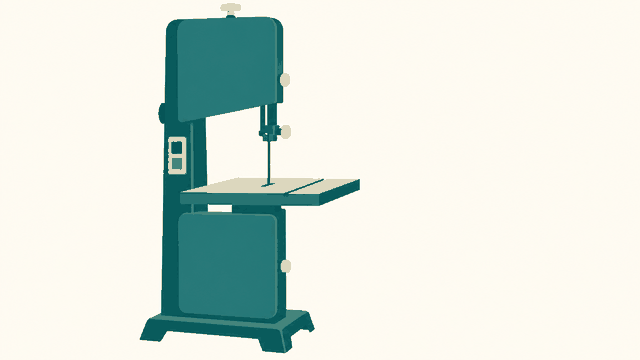
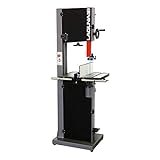
A 14-inch floor-standing saw is the best general-purpose choice for most woodworkers. It normally offers enough capacity for cabinet panels and small slabs without taking up the space or cost of a large industrial machine. Some models accept riser blocks, but adding height does not automatically add useful power. A riser-equipped saw may cut tall stock, yet its frame and motor can still be the limiting factors.
For regular work above 10 inches, a heavy 14- to 18-inch machine is easier to live with. These saws typically have stronger frames, larger wheels, better tension indicators, and more effective dust collection. They are expensive and take significant floor space, so they make sense only if you routinely process wide slabs or produce a lot of resawn stock. Compare current 14-inch band saws with resaw capacity rather than choosing by motor rating alone.
Blade Choice and Minimal Waste
Use a dedicated resaw blade, not the general-purpose blade supplied with many saws. A 1/2- or 3/4-inch blade with 2 to 3 teeth per inch is a sensible starting point. Fewer teeth create deeper gullets that clear chips from thick stock. A blade with about 0.025- to 0.035-inch kerf can save noticeable material compared with an overly thick blade, but an ultra-thin blade may deflect more readily.
Skip-tooth blades clear wet or resinous chips well. Hook-tooth blades feed aggressively and can work efficiently in straight-grained hardwood. For figured material, a blade with hardened teeth or a variable tooth pattern can last longer and reduce vibration. Keep a sharp spare available. A dull blade creates heat, burns the cut, and encourages you to push harder, which is a common cause of wandering.
Buy 3 TPI resaw blades in more than one width so you can match the blade to the stock. Use the widest blade that fits the saw and can still follow the required curve. A wide blade is excellent for straight veneers but is a poor choice for curved work.
Setup for Figured Lumber
Joint one face and one edge before resawing. The reference face should be flat enough to stay against the table, and the reference edge should not rock against the fence. If the board is cupped, twisted, or under internal stress, resawing can release that tension and pinch the blade. For expensive stock, make a short test cut from the end first and watch whether the kerf opens or closes behind the blade.
Install the blade with the teeth pointing down toward the table, tension it according to the saw’s scale as a starting point, and then check tracking. Set the side guides just behind the gullets, not against the tooth tips. Set the thrust bearing slightly behind the blade; constant contact overheats the blade and accelerates wear.
Do not assume the fence is parallel to the miter slot. Resaw blades have manufacturing variation and naturally drift. Make a cut in scrap, keep the board’s edge against the fence, and note the angle needed to prevent pushing the board sideways. Adjust the fence to that drift angle. A tall auxiliary fence, 6 to 8 inches high, makes wide boards much easier to control. A commercial band saw resaw fence is worthwhile if the supplied fence flexes or is too short.
Cutting Technique and Failure Modes
Mark the intended cut on the top and front faces, then feed at a steady rate. Let the blade cut rather than forcing the board through a difficult patch. If the saw slows noticeably, the blade is dull, the feed is too fast, or the blade is too fine. Stop if the board begins pulling away from the fence; correcting with a hard sideways shove usually produces a tapered veneer.
Leave roughly 1/16 inch of extra material when the cut is critical. After the pieces relax, flatten them with a planer or wide-belt sander. This small allowance is often cheaper than chasing a wandering cut with a second pass. For very valuable lumber, split the operation into a shallow relief cut followed by the final resaw only if the machine remains stable and the workpiece can be held safely.
Finally, use a push handle or featherboard only where it cannot contact the blade. Keep hands clear of the line of cut, and never resaw a board that cannot sit securely on the table. The cheaper saw is fine when your stock is narrow and your volume is low. Upgrade when the frame flexes, the motor bogs, or the guides cannot hold alignment—not merely because a larger horsepower label sounds better.