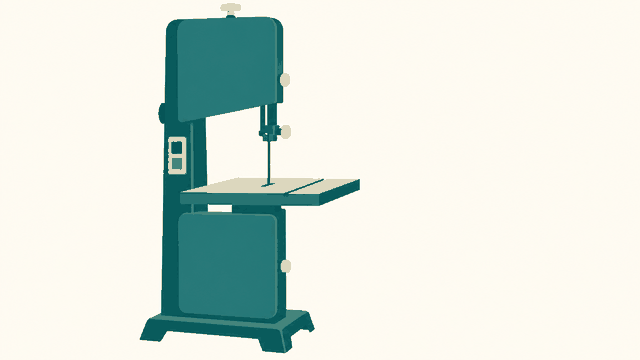
Best Band Saws for Processing Long Boards in a Home Shop
What's inside
As an Amazon Associate I earn from qualifying purchases. This post may contain affiliate links at no extra cost to you.
Processing long boards on a band saw is less about maximum horsepower than control. A long, heavy board can lever against the blade, twist during a resaw cut, or pull the operator off the intended line. The best machine for a home shop has enough resaw capacity for your stock, a rigid table and fence, reliable blade guides, and a way to support the board before and after the cut.
Contents
What Makes a Band Saw Good for Long Boards
For typical furniture work, a 14-inch band saw with roughly 10 to 12 inches of resaw capacity is the practical starting point. That gives enough room to split many 8/4 boards and some thicker stock after jointing. If you regularly process 10/4 or 12/4 lumber, a machine with 14 inches or more of resaw height is easier to use, but it will cost more and take up substantially more space.
Wheel diameter matters, but it is not the whole story. Larger wheels usually provide a longer blade and a smoother cut, while a heavy frame reduces vibration. A compact 10-inch saw may be perfectly adequate for cutting curves and resawing narrow boards. It becomes frustrating when the board is tall, long, or dense, especially if the saw flexes under load.
Look for a cast-iron or heavily braced table, a rigid upper wheel housing, and blade guides that adjust without excessive play. The table should lock firmly without shifting when the fence is tightened. A small amount of movement at the table or fence becomes a visible taper over a 6-foot cut.
Capacity and Shop Space
| Machine type | Typical resaw capacity | Best use | Main compromise |
|---|---|---|---|
| Compact 10-inch saw | 6 to 8 inches | Small shops, curves, thin stock | Less power and more vibration |
| 14-inch benchtop or entry-level floor saw | 10 to 12 inches | General furniture lumber and moderate resawing | May need upgrades to guides or fence |
| Heavy 14-inch floor saw | 12 to 14 inches | Frequent resawing and long boards | Higher cost and a larger footprint |
| 18-inch class saw | 14 inches or more | Thick stock and production-like work | Expensive, heavy, and often excessive at home |
Measure the complete setup, not just the machine. You need infeed and outfeed space equal to at least the board length, although a roller stand or auxiliary table can reduce the permanent footprint. A 6-foot board needs room to enter and leave the cut without hitting a wall, tool cabinet, or parked vehicle.
Mobile bases are useful, but a saw that moves during a cut is unsafe and inaccurate. Locking casters should be solidly engaged, and the machine should sit level. If the floor is uneven, leveling feet are preferable to relying on four small wheels.
Blade and Fence Selection
For straight resawing, use a wide blade with a low tooth count. A 3/4-inch blade with around 2 to 3 teeth per inch is a common choice on a robust 14-inch saw. A 1/2-inch blade is easier on a smaller machine and can still produce good results. The widest blade listed by the manufacturer is not automatically best; the frame must tension it correctly and the guides must support it.
Skip-tooth or hook-tooth blades clear sawdust better than fine-pitch blades in thick stock. A blade with too many teeth packs with dust, heats up, and begins wandering. A dull blade may still cut, but it requires more pushing force and can burn the edge or pull the board into the blade.
A tall resaw fence is helpful, but it should not be treated as a substitute for setup. Many factory fences are too short, too flexible, or difficult to align. A straight auxiliary fence made from stable plywood or hardwood can improve support. On long boards, the fence must be aligned so the blade follows the natural drift of the blade, or the board will press hard against the fence and bind.
If you are comparing machines, start with 14-inch woodworking band saws rather than shopping by motor horsepower alone. A 1-1/2 horsepower motor on a stiff saw is generally more useful than a higher advertised rating on a flexible frame.
Supporting Long Boards Safely
Long stock should be supported at the same height as the band saw table. A roller stand can work, but a broad outfeed table is steadier and prevents the board from dropping at the end of the cut. Set the support close enough that the board cannot sag into a gap. For a 6-foot board, one support before the saw and one or two after it is often worthwhile.
Roller stands are convenient for rough lumber, but their rollers can let a board move sideways. A plywood outfeed table or a shop-made support with a slick surface gives better control during resawing. Keep supports clear of the blade path and leave enough room to remove the board without reaching across the moving blade.
Do not force a long board through a wandering blade. Stop the saw if the cut begins closing, the motor slows noticeably, or the board starts lifting from the table. The usual causes are a dull or incorrectly tensioned blade, insufficient support, incorrect guide adjustment, or trying to remove too much material in one pass.
Setup Before the Cut
Joint one face and one edge before resawing. The jointed face should ride against the table, and the jointed edge should reference the fence. If both faces are rough or bowed, the board can rock, changing the cut thickness and increasing the chance of binding.
Install the blade with the correct tension, then check tracking, guide bearings, and thrust bearings. The side guides should sit just behind the blade gullets, not pressing against the teeth. Set them close to the blade—typically within a fraction of an inch—without restricting its movement.
Make a test cut in scrap before committing expensive lumber. Measure the thickness at both ends and in the middle. A gradual taper usually points to blade drift or fence alignment; a wavy surface often means the blade is dull, too narrow for the job, or being pushed too quickly.
When a Cheaper Saw Is Enough
A less expensive compact saw is fine if your boards are under about 6 inches thick, cuts are occasional, and you are willing to use a sharp, narrower blade. It can also be the better choice where space and electrical service are limited. Add proper supports and do not expect it to resaw wide hardwood continuously.
For frequent resawing, thick domestic hardwood, or boards longer than 6 feet, spend more on frame rigidity, guide quality, and table size before paying for cosmetic features. A wide resaw blade, a stable fence, and adequate support will often improve results more than a small increase in motor rating.
Useful Accessories
A roller stand for woodworking is useful for temporary infeed support, while a shop-made outfeed table is usually better for the finished cut. Keep a blade tension gauge, a reliable square, and a push stick nearby. A dust collector connection is also important: resawing produces a large volume of fine dust, and packed dust can hide the cut line while increasing heat.
For most home shops, a solid 14-inch floor-standing band saw is the sensible middle ground. Choose the heavier machine if resawing is routine; choose the compact saw if long-board work is occasional and your stock is modest. In either case, setup and support determine whether the saw produces a clean, straight board or an expensive, dangerous struggle.