Best Table Saws with Reliable Fence Systems for Furniture Making
What's inside
As an Amazon Associate I earn from qualifying purchases. This post may contain affiliate links at no extra cost to you.
Contents
What Makes a Table-Saw Fence Reliable?
For furniture making, a table saw fence must do more than lock in place. It needs to stay parallel to the blade, resist pressure from a wide board, and move predictably when you change settings. A fence that is 1/32 inch out of parallel can pinch stock against the rear of the blade, leave burn marks, or produce a tapered panel edge.
The most useful design is a rigid, front-rail-locking fence with a large handle and a readable scale. Good fences clamp firmly at the front and rear of the rail, rather than relying on a small clamp at one point. The fence should also remain square to the table when you move it. If you have to lift, twist, and tap it into position, it is a poor choice for repeat furniture work.
Look for a fence with at least 24 inches of rip capacity to the right of the blade. That is enough for most cabinet parts and shelves. A 30- to 36-inch capacity is useful for breaking down plywood, but it requires more shop space and a larger outfeed area. For precision work, the fence itself matters more than the maximum advertised capacity.
The Best Table-Saw Types for Furniture Work
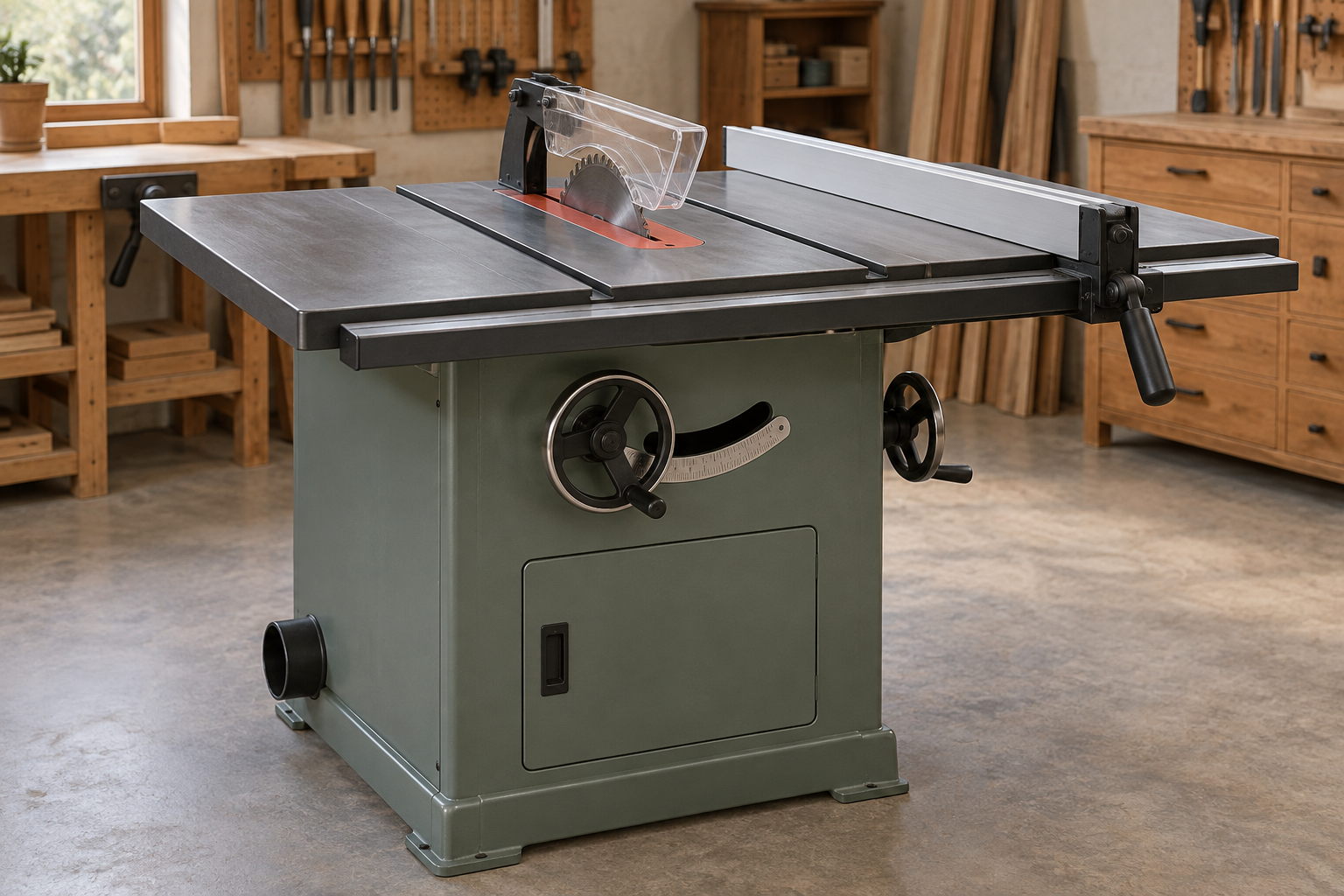
A full-size cabinet saw is the strongest option. Its enclosed base, heavy trunnions, cast-iron table, and robust fence provide low vibration and good repeatability. These saws are appropriate for frequent work, hardwood furniture, and large panels. They commonly use a 10-inch blade and a 3-horsepower motor, although electrical requirements can be significant. A 3-horsepower saw may need a 240-volt circuit.
A hybrid table saw is the sensible middle ground for many home shops. It usually has a cabinet-style base and cast-iron top but a smaller motor, often around 1-1/2 to 2 horsepower. It can handle furniture parts in hardwood if the blade is sharp and the cut is fed steadily. Its fence may be excellent, but quality varies more between brands and packages. Check the actual rail and fence construction rather than assuming every hybrid saw is equivalent.
A compact jobsite saw is cheaper, easier to store, and adequate for a small shop making occasional shelves, boxes, or narrow furniture components. However, its lighter table and shorter fence make wide-sheet work more difficult. Plastic or thin aluminum fences can flex when you press a board against them. A jobsite saw is fine when you use an outfeed table, break down panels with a track saw, and verify the fence before important cuts.
For shoppers comparing current options, start with cabinet table saws with precision fences if the saw will be a permanent centerpiece of the shop. For a smaller workspace, hybrid table saws with fences offer a better balance of cost and capability.
Fence and Saw Comparison
| Saw type | Typical rip capacity | Fence reliability | Best use |
|---|---|---|---|
| Cabinet saw | 30–50 inches | Excellent when properly aligned | Frequent furniture and cabinet work |
| Hybrid saw | 24–36 inches | Good to very good | Home shops and moderate hardwood work |
| Jobsite saw | 20–32 inches | Fair to good; varies widely | Small shops and occasional projects |
Fence Features Worth Paying For
A telescoping rail is useful, but it should not be the deciding feature. First inspect the fence body. A box-section steel fence is generally stiffer than a thin stamped section. The locking lever should engage with moderate hand pressure and should not pull the fence out of alignment. You should be able to lock it without leaning your body into the handle.
A magnified cursor is helpful when setting repeated cuts, but do not trust the printed scale without checking it. Set the fence to a known measurement using a steel rule or calipers, then confirm the cursor. A split cursor or adjustable pointer is preferable because it lets you correct small scale errors.
Also check whether the fence accepts replaceable faces. Straight wooden faces are useful for delicate stock, featherboards, and sacrificial setups. Some fences allow tall auxiliary faces for cutting narrow molding or supporting taller work. A fence that cannot accept a simple screwed-on face is less versatile for furniture making.
Alignment, Maintenance, and Common Failures
Even an expensive saw can cut poorly if the fence is not aligned. The fence should be parallel to the miter slot, or very slightly farther from the blade at the rear. A practical target is parallel within about 0.005 inch over the fence length. Use a dial indicator, a reliable combination square, or a careful measurement from the miter slot at the front and rear.
The most common failure is a fence that locks in a different position each time. Dirt on the rail, a loose locking mechanism, or a bent front rail can cause this. Clean the rail, inspect the clamp pads, and adjust the mechanism according to the manual. Do not compensate by forcing the fence sideways after locking it; that creates inconsistent settings.
Another failure is fence deflection. Press a straight board against the fence and watch for a visible gap or movement while locking. If the fence flexes, reduce pressure and use a featherboard positioned before the blade. For wide panels, support the panel with an outfeed table or side table so its weight does not pull the fence out of position.
How Much Saw Do You Actually Need?
Buy the heaviest saw your floor space, electrical service, and budget reasonably allow, but do not overlook setup. A mediocre fence on a heavy saw remains frustrating. Conversely, a well-aligned hybrid saw with a rigid fence can produce furniture-grade parts.
The cheaper option is fine when you mainly cut boards narrower than 24 inches, work in plywood or softwood, and can verify the fence before use. Spend more on a cabinet or better hybrid saw when you routinely cut thick hardwood, make wide panels, or need repeated batches of identical parts. In those cases, reduced vibration and a fence that locks the same way every time save more time than a low purchase price.
If you choose a compact saw, prioritize a rigid fence and a stable stand over extra rip capacity. A quality blade, proper outfeed support, and a repeatable setup will improve results more than a large but flexible extension table. For replacement or aftermarket options, table-saw replacement fence systems can upgrade an otherwise serviceable machine, provided the rails fit your table and you are comfortable drilling or shimming during installation.
Safety Details That Affect Fence Performance
Keep the riving knife installed and aligned with the blade. It reduces the chance of a board closing on the blade and pushing against the fence. Use a push stick for narrow cuts, and never reach over the blade to retrieve an offcut. A fence that is perfectly aligned cannot prevent kickback caused by twisted stock, hidden internal stress, or poor feeding technique.
Before cutting expensive furniture stock, make a test cut in scrap. Measure both ends of the piece, check the edge with a straightedge, and confirm that the fence has not shifted. That short test is cheaper than correcting a tapered cabinet side or a mismatched set of table parts.

