Best Band Saws for Resawing Boards Taller Than Six Inches
What's inside
As an Amazon Associate I earn from qualifying purchases. This post may contain affiliate links at no extra cost to you.
Contents
What counts as tall resawing?
Resawing means cutting a board along its thickness to make thinner boards, veneer, or book-matched panels. For boards taller than six inches, the saw needs enough throat clearance to pass the stock upright, plus a frame and blade that stay steady under load. A machine advertised with a 12-inch resaw capacity may not cut 12 inches comfortably in practice: blade width, guide adjustment, fence height, motor power, and the board’s condition all matter.
For regular work above six inches, a 14-inch bandsaw with a riser block can be a budget entry point, but it is not automatically the best choice. A larger-frame saw with factory capacity around 12 to 14 inches is generally less fussy. If you’ll resaw wide hardwood every week, look at a 17- or 18-inch class machine with a substantial motor and a fence designed for resawing.
As an Amazon Associate we earn from qualifying purchases at no extra cost to you.
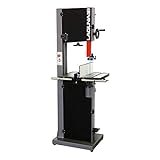

Compare the practical options
| Type | Typical useful capacity | Best fit | Main trade-off |
|---|---|---|---|
| 14-inch saw with riser | About 10–12 inches, depending on model | Occasional resawing and smaller shops | Less frame rigidity; setup and blade choice matter more |
| 17-inch floor-standing saw | Often about 12–14 inches | Regular furniture and cabinet work | Costs more and needs floor space and a suitable circuit |
| 18-inch or larger saw | Often 12 inches or more | Frequent wide-stock work | Higher price, larger footprint, and heavier blades to tune |
Capacities vary by machine, so verify the manufacturer’s published resaw height rather than assuming all saws in a size class match. Also check whether that figure requires an optional riser. The 14-inch bandsaw riser-block category can make sense when you already own a compatible saw, but a riser does not upgrade its motor, frame, or table support.
Choose by workload, not capacity alone
For a few boards a month, a well-tuned 14-inch saw with a riser can be adequate. It is the least expensive route if the saw is compatible with a riser and has enough power for your species and feed rate. Expect to take light, steady cuts rather than forcing the stock. If the blade wanders, slowing down may help; pushing harder usually makes the cut worse and can overheat the blade.
For repeated cuts in dense hardwood, a 17-inch saw is a sensible middle ground. Larger wheels and a heavier frame commonly provide more support for a wide blade, while the higher motor capacity helps maintain speed. A 17-inch bandsaw for resawing is worth considering when the work is frequent enough that setup time and cut consistency matter. Check the motor’s voltage and amperage requirements before buying; a machine that needs a 230-volt circuit may add electrical work to the purchase.
A larger saw is not a cure for poor stock preparation. Twisted boards, embedded grit, and internal stress can pinch a blade or steer it off the line. Flatten one face and joint one edge before resawing when accuracy matters. If the board is bowed or unstable, make it safe and manageable first rather than trying to control it against a tall fence.
Blade and setup determine the result
For general resawing, a sharp blade around ¾ to 1 inch wide with roughly 2 to 3 teeth per inch is a common starting point, provided the saw can tension it correctly. A wider blade resists twisting, but it is useful only if the machine’s guides, wheels, and tension system support it. Too many teeth pack with sawdust in thick cuts; too few can leave a rough surface. Keep a dedicated resaw blade if you switch often between narrow scroll-style cuts and wide stock.
Set the blade guides close to the board without touching it when idle, and set the thrust bearing just behind the blade. Check tracking and tension according to the saw’s instructions. A blade that is under-tensioned may drift; excessive tension can strain the saw. Test on scrap of similar species and thickness, then adjust feed rate and fence angle to compensate for drift. A fence that is not parallel to the blade’s actual cut line can steer the board into the blade.
Use a tall resaw fence or a stable auxiliary fence to support the board’s full height. Keep the stock pressed against the fence without twisting it, and use a push device or other safe method to keep hands away from the blade near the end of the cut. Never reach behind a moving blade to catch a falling offcut. Long boards also need infeed and outfeed support; sagging stock can rotate, bind, or pull the cut off course.
What to check before buying
Confirm the usable throat height with the fence installed, the maximum blade width, and whether the stated capacity requires an accessory. Compare motor rating and electrical requirements, but don’t judge performance by horsepower alone: blade condition, tension, wheel alignment, and feed rate have a major effect. Inspect table size and trunnion support, fence rigidity, dust collection port size, and availability of replacement tires and guides.
For occasional softwood or modest hardwood resawing, the cheaper 14-inch saw can be fine, especially if you already own it. For frequent boards taller than six inches, a larger factory-capacity saw usually saves frustration. Buy for the species, width, and frequency you actually cut—not the biggest capacity printed on the carton.