Best Table Saws for Accurate Half-Lap Cuts in Hardwood
What's inside
As an Amazon Associate I earn from qualifying purchases. This post may contain affiliate links at no extra cost to you.
Contents
Why half-lap joints need a good table saw
A half-lap joint is only as accurate as the shoulders on both pieces. If the cuts are too deep, the joint leaves a gap or weakens the stock. If they are too shallow, the parts will not sit flush. Hardwood makes the problem less forgiving because dense fibers resist the cut and expose small errors rather than compressing around them.
For most work, the best choice is a rigid table saw with a stable fence, minimal arbor runout, and a reliable height adjustment. A cabinet saw is the strongest option, but a well-tuned contractor saw can produce equally accurate half-laps on normal-sized stock. The saw matters, but setup matters more: a fence that shifts 1/32 inch can ruin a joint even if the blade is excellent.
Look for a cabinet table saw if you regularly cut thick hardwood, use dado blades, or need repeatable production accuracy. For occasional furniture work, a quality contractor table saw is often the better value.
Features that improve half-lap accuracy
| Saw feature | Why it matters | Minimum worth having |
|---|---|---|
| Rigid rip fence | Controls the shoulder location and prevents tapered cuts | Locks firmly at both ends with less than 1/64-inch movement |
| Accurate blade-height adjustment | Sets the lap depth without repeated guesswork | Fine adjustment with little backlash |
| Arbor capacity | Determines whether a stacked dado set can be used | Enough length for the intended dado width and washers |
| Low arbor runout | Prevents a wandering or uneven dado bottom | Blade wobble that is not visibly detectable |
| Solid outfeed support | Keeps long hardwood pieces level as they leave the blade | Support extending at least 24 inches behind the blade |
A riving knife is also important. It reduces the chance of the work binding behind the blade, especially when cutting long or stressed boards. For through-cuts, keep it installed. For a half-lap made with a dado blade, use the manufacturer-approved configuration; never remove safety parts casually just to make a setup fit.
Which table saw type is best?
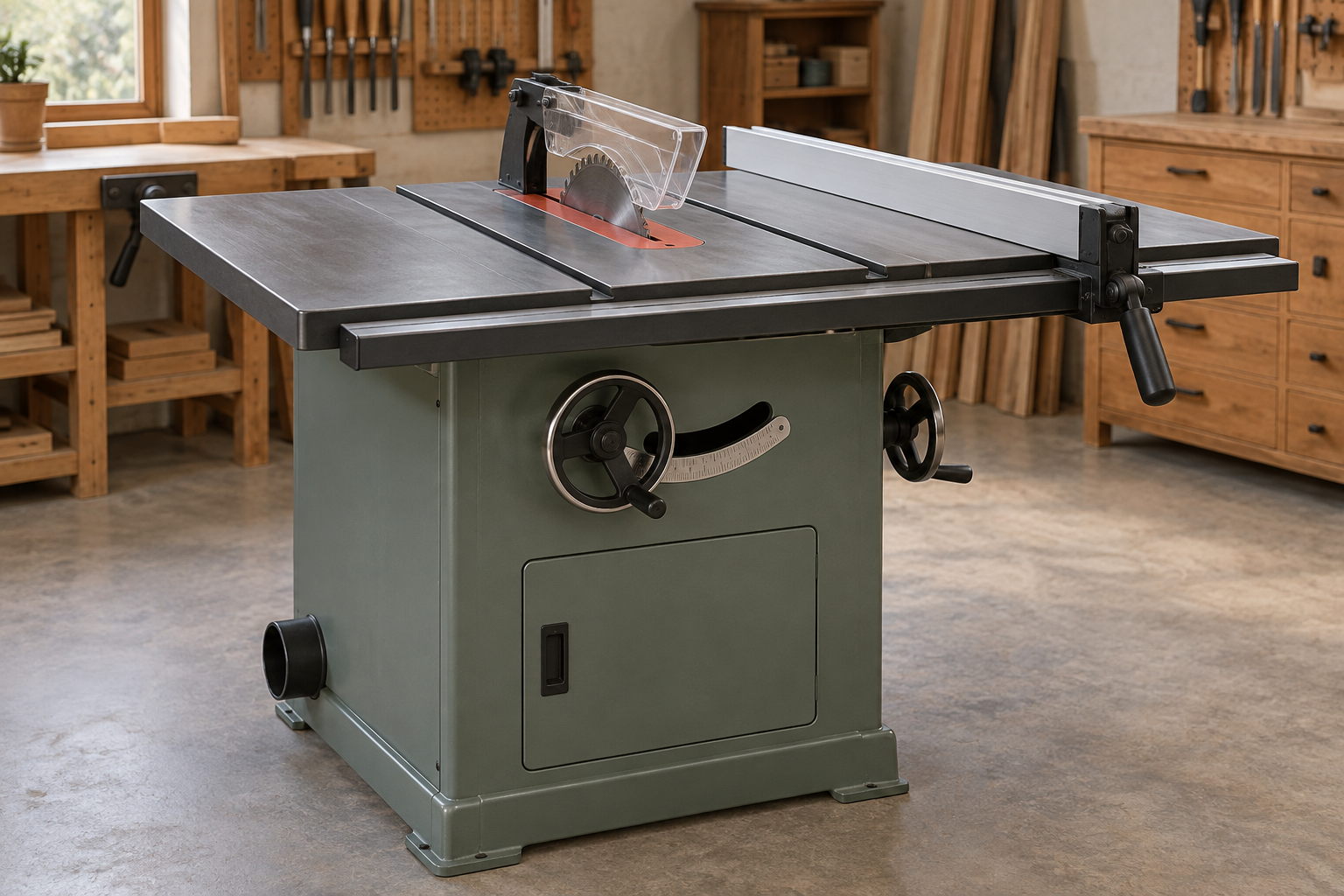
Cabinet saws offer the best combination of mass, power, dust collection, and fence stability. Their enclosed bases reduce vibration, and their heavier trunnions usually hold blade height and alignment well. They are the right choice for a shop cutting 1-1/2-inch or thicker hardwood regularly. The disadvantages are cost, weight, and the need for a permanent location.
Contractor saws are suitable for most home shops. A 1-3/4 to 2 horsepower motor can cut typical oak, maple, cherry, and walnut stock when the blade is sharp and the feed rate is controlled. The cheaper versions may have lighter fences, less convenient dust collection, and more vibration. Those shortcomings can be corrected to a degree, but the upgrades reduce the price advantage.
Compact jobsite saws can cut half-laps, but they are the least forgiving choice. Their smaller tables and short fences make it harder to support wide or long pieces. They are acceptable for occasional small joints in 3/4-inch stock, particularly if you add an outfeed table and a sacrificial auxiliary fence. They are not my first choice for repeated hardwood joinery.
Dado blade or multiple blade passes?
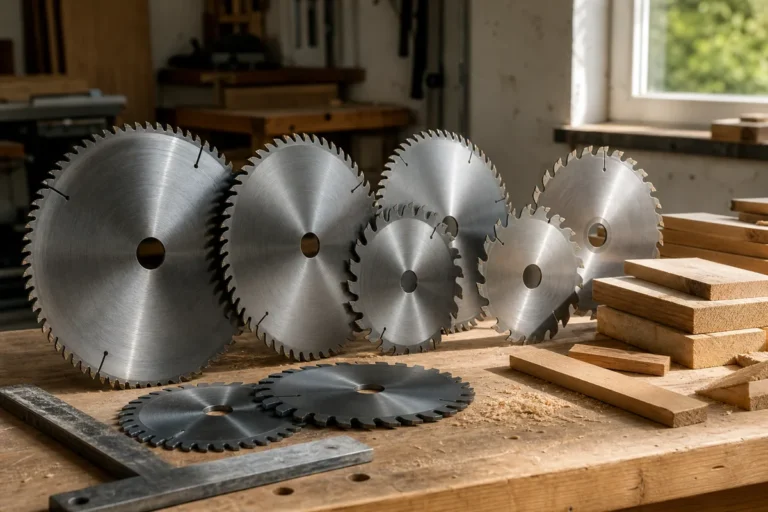
A stacked dado set is the fastest way to cut a clean half-lap. For a 3/4-inch board, remove exactly half the thickness: 3/8 inch. A dado stack lets you remove that material in one pass, but the stack must be assembled carefully and checked against the actual stock thickness. “Three-quarter-inch lumber” is often closer to 11/16 inch after milling.
Use a stacked dado blade set when you need repeatability or when the joint is wide enough that many standard-blade passes would be tedious. Confirm that the saw accepts the set, supports the required dado width, and permits the correct throat plate. Some saws have limited arbor length or do not support dado blades at all.
Multiple passes with a standard combination or flat-top ripping blade are slower but cheaper and often safer for owners of smaller saws. Set the blade height to the target depth, make a shoulder cut at each edge of the waste, then remove the remaining material with overlapping passes. Do not freehand the work between the shoulder cuts. Use a tenoning jig, miter gauge with a stop, or a securely clamped crosscut sled so the piece cannot twist into the blade.
A reliable setup procedure
Mill the stock first. Opposing pieces should match in thickness within about 0.005 inch if you want a flush joint. Measure with calipers at several points; do not assume nominal dimensions. Mark the waste clearly, then calculate the cut depth as half the actual thickness of the mating stock.
Use a test piece from the same board. Raise the blade or dado stack in small increments, checking the fit after each pass. A good starting tolerance is a joint that closes with firm hand pressure and leaves the faces flush. If it needs hammering, the cut is too tight or the stock is not square. If it slides loosely, glue will not compensate for the lost mechanical fit.
For repeat work, clamp a stop block to the fence or use a crosscut sled stop. Never trap a cutoff between the blade and a rip fence; that creates a dangerous pinch point. If cutting across the grain, use a sled or miter gauge and keep your hands well away from the blade. A push block is useful when the remaining material becomes narrow.
Common failures and their causes
A visible gap at the shoulder usually comes from a stop that moved, a board that was not held square, or a dado bottom that was not flat. A joint that is flush at one end but not the other points to bowed stock, an out-of-square sled, or fence misalignment. A rough bottom is commonly caused by a dull blade, too-fast feed rate, or a dado stack with poor chip clearance.
Check the saw before blaming the technique. With the blade lowered, verify that the fence is parallel to the miter slot and that the blade is square to the table. Check arbor washers for packed dust and make sure the blade is seated cleanly. On hardwood, a sharp 40-tooth combination blade is adequate for occasional work; a flat-top grind or dado set generally leaves a better shoulder and bottom.
Where to spend the budget
Spend first on a fence that locks consistently, a flat support surface, and accurate measuring tools. More horsepower will not fix a wandering fence or bowed stock. If you already own a dependable contractor saw, a good table saw crosscut sled and a sharp blade may improve half-lap results more than replacing the saw.
Choose a cabinet saw when you need heavy daily use, large hardwood parts, or dependable dado work. Choose a contractor saw when space and cost matter and you are willing to verify alignment. Choose a compact saw only when the workpieces are small and occasional. In every case, make the final cut from a test piece—not from the expensive project stock.