30-Inch vs 36-Inch Table Saw Fence for Furniture Shops
What's inside
As an Amazon Associate I earn from qualifying purchases. This post may contain affiliate links at no extra cost to you.
Contents
What the numbers mean
A table saw’s fence capacity is the maximum distance from the blade to the fence. A 30-inch fence can rip a panel about 30 inches wide on the fence side of the blade; a 36-inch fence reaches about 36 inches. Those numbers do not describe the saw’s cutting depth, motor power, or the length of the fence rail.
For a furniture shop, the extra 6 inches matters when breaking down sheet goods and ripping wide stock. It matters less for the routine work of cutting rails, stiles, legs, and narrow strips. Before comparing capacities, check which side of the blade the manufacturer measures and whether the stated figure requires the rails to extend beyond the saw cabinet.
As an Amazon Associate we earn from qualifying purchases at no extra cost to you.
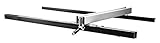
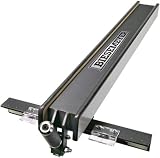
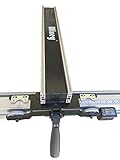
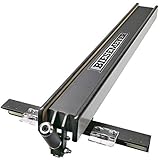
30-inch vs. 36-inch capacity
| Consideration | 30-inch fence | 36-inch fence |
|---|---|---|
| Typical shop work | Furniture parts, solid wood, many cabinet components | Same work, with more room for wide panels |
| Sheet-goods rip capacity | Often adequate for breaking down 4-by-8-foot sheets into narrower pieces | More useful for wide rips and oversized panels |
| Shop footprint | Shorter rail extension; easier to fit in a compact shop | Longer rails need more clear space to the right |
| Cost and installation | Usually the less expensive, simpler option | May cost more and require longer rails or added support |
| Best reason to choose it | Most work is solid lumber or panels cut to manageable widths | You regularly rip panels wider than 30 inches at the saw |
How often will you use the extra capacity?
Measure your actual work, not the largest piece you might cut someday. If most of your sheet goods are broken down with a track saw or at a panel saw before reaching the table saw, a 30-inch fence is often enough. A 4-by-8-foot sheet is awkward to handle alone on a table saw regardless of fence capacity; a longer fence does not make the panel safer or easier to control.
A 36-inch setup earns its keep if you regularly rip panels wider than 30 inches, cut wide glue-up panels to final width, or work on furniture with broad tops and sides. Check the finished dimensions of recent projects. If you rarely need a rip wider than about 28 inches, the extra capacity may sit unused.
There is also a practical way to avoid handling a full sheet at the saw: rough-cut it with a track saw, leaving a little extra width, then make the final rip on the table saw. That workflow reduces the load on the operator and the risk of a large panel binding or lifting. It can make a 30-inch fence a sensible choice even in a shop that builds case furniture.
Space, support, and setup
A 36-inch fence needs more than a longer rail. Measure from the blade to the nearest wall, storage rack, or machine. Allow room for the rail itself, the workpiece, and your body position. A long rail can turn a clear aisle into a snag point, and a sheet extending far to the right needs support that stays level with the saw table.
Use a properly aligned outfeed and side-support setup for large panels. A roller stand that tilts or shifts is not a substitute for a stable, level surface. Unsupported stock can sag, steer into the blade, or pinch the offcut. On either fence size, keep the work firmly against the fence and use a push stick or push block when the cut brings your hands near the blade. Never try to control an unwieldy panel by reaching across the blade.
Fence quality matters more than six inches
A fence that locks square and parallel to the blade is more valuable than unused capacity. A fence that shifts as it locks can leave a tapered rip or cause burning. If the fence is not parallel, the work may bind against the back of the blade, increasing kickback risk. Check alignment with a reliable measuring method and follow the saw maker’s adjustment instructions; do not assume a longer rail guarantees better accuracy.
Before buying an upgrade, confirm that the rails and fence are compatible with your saw. A retrofit may require drilling, rail supports, or changes to the extension table. Verify the actual maximum rip capacity after installation, not just the length printed on the product listing. For a replacement or upgrade, compare 30-inch table saw fence systems and check the manufacturer’s fitment details before ordering.
When 36 inches is worthwhile
Choose 36 inches when wide rips are frequent enough to justify the floor space and cost. This often applies to shops making large casework, desks, dining tables, or furniture from sheet goods. It can also reduce the number of intermediate cuts when a panel needs to stay wide until later in the build.
Still, capacity is not a substitute for handling equipment. A wide panel may require a second person, a panel cart, or a track saw for safe breakdown. If your saw’s extension table or outfeed setup cannot support the stock, the extra six inches may be a liability rather than a benefit. For shops that routinely process full sheets, consider whether a panel saw or track-saw workflow would solve the handling problem more directly.
When 30 inches is the better buy
For a small furniture shop focused on solid wood, a 30-inch fence is usually the better value. It handles ordinary ripping and many panel tasks without taking as much space. Put the savings toward a straight, dependable fence, a stable outfeed table, or a track saw for sheet breakdown. If you later find that you repeatedly need more capacity, then price a compatible rail extension rather than paying for unused reach now.
Buy 36 inches if you can point to regular jobs that need it and have room to support the work. Otherwise, 30 inches is not a compromise in cut quality; it is simply less reach. In either case, prioritize fence alignment, support, and safe control of the stock. Those factors determine whether a wide rip goes cleanly more often than the capacity number alone.