Best Stationary Table Saws with Cast-Iron Wings
What's inside
As an Amazon Associate I earn from qualifying purchases. This post may contain affiliate links at no extra cost to you.
Contents
What counts as a cast-iron-wing table saw?
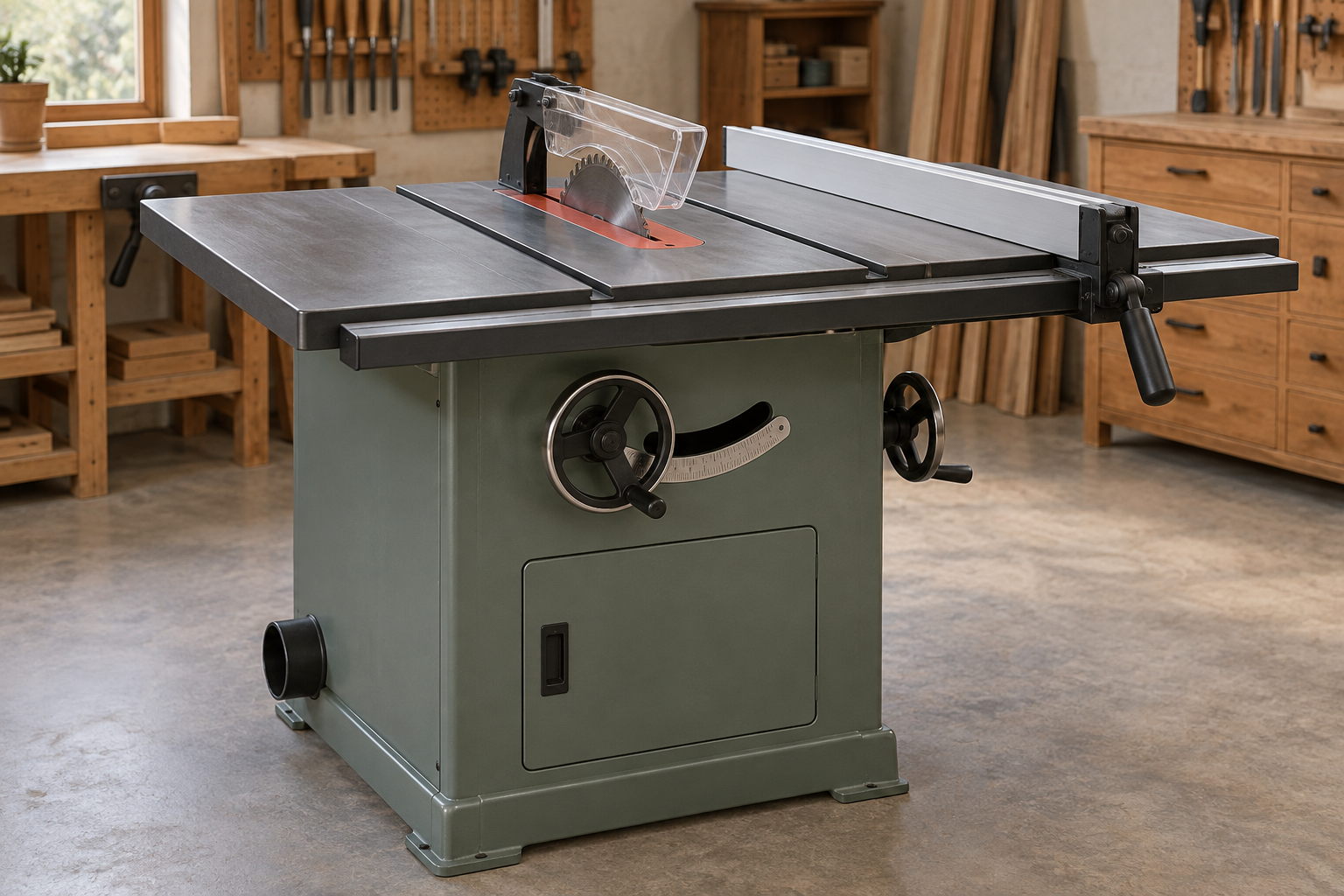
A stationary table saw has a fixed base and a heavier work surface than a jobsite saw. Here, “cast-iron wings” means the side extensions are cast iron, not stamped steel or aluminum. Cast iron adds mass and can provide a broad, stable surface for sheet goods and long boards. It does not, by itself, guarantee accurate cuts: a straight fence, aligned blade and trunnions, and a flat tabletop matter just as much.
Before buying, check the exact configuration. Some saws include cast-iron wings; others offer them as an upgrade, or ship with only a cast-iron center table. Compare the delivered saw’s wing material, fence, motor, and electrical requirements—not just the product-family name.
As an Amazon Associate we earn from qualifying purchases at no extra cost to you.


Compare the main saw types
| Type | Typical fit | Advantages | Trade-offs |
|---|---|---|---|
| Contractor-style saw | Small shop, occasional furniture work | Lower cost; often runs on 120-volt household power; easier to move than a cabinet saw | Less mass and dust containment; confirm whether wings are cast iron and whether the motor is enclosed |
| Hybrid saw | Regular hobby or small-shop use | Cabinet-like enclosure and better dust collection than many contractor designs, often without the cost or power needs of a full cabinet saw | Performance and included features vary; some require 240 volts |
| Cabinet saw | Frequent, demanding shop work | Heavy, stable base; enclosed cabinet; commonly built for larger motors and sustained use | Higher purchase and installation cost; heavy to move; may need a 240-volt circuit |
These categories overlap, and a saw’s actual specifications matter more than its label. For a first stationary saw, compare stationary table saws with cast-iron wings by fence quality and power requirements before paying extra for a heavier cabinet.
What to check before choosing
Fence and rip capacity: The fence should lock securely at the front and stay parallel to the blade when repositioned. Check it at both ends with a reliable straightedge or measuring setup; a fence that shifts during a cut can pinch the workpiece. Rip capacity is the distance between the blade and fence at the far-right setting. Around 30 inches suits many furniture parts, while breaking down full 4-by-8-foot sheets is easier with greater capacity and outfeed support. A large number on the spec sheet does not replace safe support for heavy panels.
Power and wiring: A 120-volt saw is simpler to install, but can be less suited to heavy, continuous ripping than a properly configured 240-volt machine. Verify the motor voltage, amperage, plug, and circuit requirements in the manual. Do not assume a saw can be converted merely because a listing mentions 240 volts. A long extension cord or undersized circuit can cause voltage drop and nuisance breaker trips.
Blade and safety equipment: Check that the saw accepts a common 10-inch blade if you want broad blade availability, and confirm the arbor size and maximum blade diameter. A riving knife, blade guard, and anti-kickback pawls should be present and usable. Make sure the knife can stay in place for non-through cuts where appropriate, and that the fence and guard do not interfere with routine setup. A brake system may reduce injury severity, but it adds cost and does not make hands near the blade safe.
Table flatness and alignment: Cast-iron wings can arrive slightly proud, low, or twisted relative to the center table. Check with a straightedge across the joints, then adjust the wings before doing precision work. Inspect the tabletop for deep damage and check that the blade is square to the table and parallel to the miter slots. Small setup errors show up as burning, uneven cuts, or a workpiece that binds against the fence.
Which category makes sense?
Choose a contractor-style saw if budget, household power, and occasional use matter most. It can be enough for trim, small furniture parts, and modest amounts of hardwood. Be realistic about its limits: lighter construction may vibrate more, and the dust path may leave more debris in the shop. Look at a contractor-style saw with cast-iron wings only after confirming the wings are included in that exact package.
Choose a hybrid saw for regular hobby work when you want a more enclosed base and a steadier platform but do not need a production-duty cabinet saw. It is a practical middle ground for a small shop, provided its fence, motor, and dust port suit the work you actually do. Budget for an outfeed table or roller support if you routinely cut long boards.
Choose a cabinet saw for frequent ripping of thick stock, larger batches, or a shop where the saw stays put. Its mass and enclosure can improve stability and dust collection, but neither removes the need for a dust collector, push sticks, and careful feed technique. Check delivery access and floor capacity: a fully assembled cabinet saw can weigh several hundred pounds.
Setup problems that can spoil a good saw
Plan for assembly and calibration, not just unboxing. A cast-iron surface is heavy and brittle: lift wings with help, support them close to their mounting points, and avoid striking edges with metal tools. Use a straightedge to align the wings with the main table; a small step can catch a workpiece, while excessive tightening can pull a wing out of alignment.
After leveling the table, align the blade to the miter slot according to the manual, then check the fence against the slot. Make a test cut in scrap and look for burning, drift, or a changing cut width. If the blade is aligned but stock still binds, check the fence, blade condition, and feed method before forcing the cut. Keep the saw unplugged while making adjustments.
Budget for the whole station
The saw is only part of the cost. Include a sharp blade suited to the material, dust collection, a stable mobile base if needed, outfeed support, and a circuit upgrade if the motor requires one. A cheaper saw is fine when its capacity matches your projects and it can be aligned reliably. Paying more for cast iron makes sense when you value mass and a durable work surface; it is not a substitute for a good fence, correct setup, or safe support around the blade.