Best Propane Space Heaters for Indoor and Outdoor Use
What's inside
As an Amazon Associate I earn from qualifying purchases. This post may contain affiliate links at no extra cost to you.
The best propane space heaters depend on where you will use them: a listed indoor-rated radiant heater for emergency or workshop heat, a forced-air construction heater for ventilated garages, and a wind-resistant patio heater for outdoor seating or job sites.
As an Amazon Associate we earn from qualifying purchases at no extra cost to you.


Contents
Quick picks by intended setting
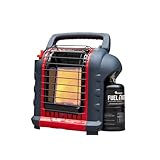
- Best for a small, occasionally used indoor room: Mr. Heater Portable Buddy, when the model is approved for the intended indoor use and the space can be ventilated safely.
- Best for a larger workshop or garage: Mr. Heater Big Buddy or a comparable indoor-rated radiant heater with multiple heat settings and a larger cylinder connection.
- Best for a drafty, ventilated job site: A forced-air “torpedo” heater in the 30,000–60,000 BTU range, provided the manufacturer permits that environment.
- Best for outdoor seating: A 40,000–48,000 BTU freestanding patio heater with a wide reflector and weighted base.
- Best for compact outdoor tasks: A portable radiant propane heater with a tip-over shutoff and a hose-compatible cylinder connection.
Do not treat “indoor” as meaning safe in every enclosed area. Check the current manual and certification label for the exact model. Propane combustion consumes oxygen and produces carbon monoxide, water vapor, and other combustion products. Never use a portable propane heater in a bedroom, tent, vehicle, or other space where the manufacturer prohibits it, and never use one while sleeping.
Head-to-head comparison
| Heater type | Typical output | Practical coverage | Typical runtime | Ventilation and safety | Portability |
|---|---|---|---|---|---|
| Compact radiant indoor heater | 4,000–9,000 BTU/h | Up to about 225 sq. ft. | 5–6 hours on a 1 lb cylinder at medium output | Indoor-listed model, oxygen-depletion sensor, tip-over shutoff; fresh-air ventilation still required | Usually 10–15 lb; easiest to carry |
| Large radiant indoor heater | 4,000–18,000 BTU/h | Up to about 450 sq. ft. | 3–5 hours on a 1 lb cylinder at high output; substantially longer with a 20 lb cylinder and approved hose | Indoor-listed model, automatic shutoff systems, ventilation required | 15–20 lb; portable but less convenient |
| Forced-air job-site heater | 30,000–60,000 BTU/h | About 750–1,350 sq. ft. in a reasonably enclosed, insulated area | Approximately 7–14 hours from a 20 lb cylinder, depending on output | Requires substantial fresh air; noisy and generally unsuitable for occupied, sealed rooms | 25–35 lb; handle and cord required |
| Freestanding patio heater | 40,000–48,000 BTU/h | About 100–200 sq. ft. of comfort zone outdoors | About 8–12 hours from a 20 lb cylinder | Outdoor use only; tip-over protection and flame-failure shutoff are important | 40–55 lb with base; difficult to move on uneven ground |
Coverage figures are working estimates, not guarantees. A woodshop with open doors, high ceilings, uninsulated walls, or frequent dust collection airflow may need considerably more heat than the same floor area in a finished room.
Best propane space heaters by situation
For a small room or short power outage: Mr. Heater Portable Buddy
The Portable Buddy is a sensible choice when you need modest, directional heat rather than whole-building heating. Its two heat levels, compact footprint, built-in carry handle, and radiant burner suit a small utility room, enclosed porch, or workshop used for brief periods. Many versions are rated around 4,000 or 9,000 BTU/h and are designed to run from a disposable 1 lb propane cylinder.
Its main limitation is fuel capacity. At the high setting, a 1 lb cylinder may last only several hours, and the heater is not a substitute for a permanently installed heating system. For repeated use, an approved hose and properly sized refillable cylinder can reduce waste and operating interruptions, but the hose must match the heater and be installed according to the manual.
For a larger garage or workshop: Mr. Heater Big Buddy
The Big Buddy class provides more useful radiant heat for a drafty garage, shed, or woodworking area. Depending on the version, output can reach approximately 18,000 BTU/h, with low, medium, and high settings. It can typically use one or two disposable cylinders or a larger cylinder through an approved connection.
Radiant heat is valuable in a workshop because it warms people and nearby surfaces instead of trying to heat all the air immediately. Position it away from sawdust, finishes, solvents, lumber, and traffic paths. The large housing and reflector make it less nimble than a compact heater, but the trade-off is longer operation and better personal comfort.
For ventilated construction areas: a forced-air propane heater
Forced-air heaters, often called torpedo heaters, deliver much more heat per dollar of equipment. Models commonly range from 30,000 to 60,000 BTU/h, with metal housings, electric fans, piezo or electronic ignition, and a hose-and-regulator assembly for a 20 lb cylinder.
They are effective in a garage under construction or a large workshop with doors and windows open, but their fan noise can interfere with woodworking tasks. They also circulate dust, and the combustion process requires a continuous supply of fresh air. Do not use this type to warm a tightly closed occupied room merely because its output is high. Before buying, verify whether the model is approved for indoor construction use, temporary heating, or outdoor use only.
For patios and outdoor work: a freestanding infrared patio heater
A 40,000–48,000 BTU patio heater is the better match for a deck, covered patio, or outdoor finishing area. Its overhead reflector directs infrared heat downward, so it can feel comfortable even though the surrounding air remains cold. This is more effective outdoors than a small fan heater whose warmth is quickly carried away by wind.
Look for a stable base, a flame-failure device, a tilt shutoff, protected controls, and a reflector that will not wobble in normal wind. These heaters need generous clearance from ceilings, awnings, walls, and combustible furniture. They are not appropriate inside a garage, even with the door partly open, unless the manufacturer explicitly approves that use.
How to size the heater without overspending
Start with the space rather than the largest BTU number. A rough starting point for a moderately insulated room is 20–30 BTU per square foot. A 300 sq. ft. workshop would therefore need approximately 6,000–9,000 BTU/h for steady heating, before accounting for drafts and ceiling height.
For example, suppose a 300 sq. ft. garage loses enough heat to require about 12,000 BTU/h on a cold, windy day. A heater capable of 18,000 BTU/h gives useful reserve without forcing you to run it continuously at maximum. A 9,000 BTU/h unit may warm the operator standing in front of it but will struggle to raise the whole space.
Runtime can be estimated from fuel consumption. One pound of propane contains roughly 21,600 BTU. At 9,000 BTU/h, a 1 lb cylinder theoretically lasts 2.4 hours, before accounting for regulator limits and the fact that cylinders are not always used to complete exhaustion. At 4,000 BTU/h, the theoretical figure is about 5.4 hours. Real-world runtime varies with temperature, cylinder pressure, heater efficiency, and the condition of the regulator.
Safety features that matter most
- Tip-over shutoff: Stops or interrupts operation if the heater is knocked over. It is particularly important in busy workshops and around pets or children.
- Flame-failure protection: Closes the gas supply if the flame goes out.
- Oxygen-depletion sensor: Found on many indoor-listed radiant heaters, but it does not eliminate the need for ventilation or a carbon monoxide alarm.
- Regulator and hose protection: A damaged hose can leak or become a trip hazard. Inspect it before each season.
- Stable base and clearance: A safety switch cannot compensate for placing a heater beside sawdust, cardboard, rags, lacquer, or stored propane cylinders.
Install a working carbon monoxide alarm according to local guidance, keep the heater on a level noncombustible surface, and follow the manual’s clearance distances. Keep a propane cylinder upright, outdoors when it is not connected for use, and away from heat sources.
Ownership costs and maintenance
The first parts to suffer in a woodworking environment are usually the reflector, burner screen, hose, regulator, and ignition components. Fine dust can restrict air passages; overspray or finishing residue can contaminate the burner; and outdoor storage can corrode fasteners and controls. Store the heater clean and dry, and cover it only after it has cooled completely.
Before each use, inspect the cylinder connection and hose for cracks, abrasions, or a propane odor. Clean dust from external air inlets with a soft brush or compressed air used according to the manual. Do not poke burner ports with wire or disassemble gas controls unless the manufacturer specifically permits that service. If the flame is yellow, unusually weak, unstable, or produces soot, shut the heater down and have it inspected.
For occasional heating, a compact 1 lb-cylinder heater has the lowest purchase and setup burden but the highest disposable-cylinder cost. For frequent use, a larger radiant heater or forced-air model connected to a refillable cylinder usually reduces interruptions and waste. The correct choice is the one whose ventilation requirement, heat pattern, and fuel capacity match the space—not simply the model with the highest BTU rating.