Best Cotton Candy Machines for Home Parties
What's inside
As an Amazon Associate I earn from qualifying purchases. This post may contain affiliate links at no extra cost to you.
Contents
Best Cotton Candy Machines for Home Parties
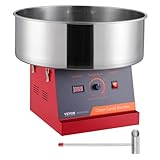
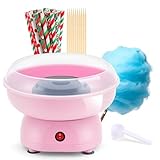
The best cotton candy machines for home parties are compact countertop models with a roughly 12–16-inch bowl, simple disassembly, and a heat-up time of about five minutes; choose a larger commercial-style unit only if you expect to serve guests continuously. For most homes, the Nostalgia Vintage Cotton Candy Maker is a practical pick for occasional parties, while the VEVOR 20-inch machine suits bigger events where serving capacity matters more than storage.
One important caveat: manufacturers do not publish comparable batch-time tests, and output depends on operator technique, sugar type, and room conditions. The ranges below are planning estimates, not guaranteed production rates. Check the current manual and product listing before buying, since specifications and included accessories can vary by model and market.
As an Amazon Associate we earn from qualifying purchases at no extra cost to you.


Compare by party size and setup
| Machine | Bowl diameter | Power | Approx. heat-up | Planning pace | Best fit |
|---|---|---|---|---|---|
| Nostalgia Vintage Cotton Candy Maker | About 12 in | 500 W | About 5 minutes | Roughly 1 serving every 1–2 minutes once warmed | Small parties and occasional use |
| VEVOR 20-inch cotton candy machine | About 20 in | 1,000 W | About 3–5 minutes | Designed for faster continuous serving; actual pace varies | Large gatherings and frequent events |
| VEVOR 21-inch cotton candy machine | About 21 in | 1,000 W | About 3–5 minutes | Designed for faster continuous serving; actual pace varies | Events with room for a cart-style setup |
Dimensions and wattage are representative published specifications for these product lines; confirm the exact model because versions can differ. “Planning pace” is deliberately a range: a machine’s motor or wattage alone does not establish how many finished cones it can produce per hour.
Which one should you choose?
- Small kitchen, occasional birthday parties: Choose the Nostalgia model or another compact 500-watt machine with a removable bowl. It takes less room to store and is easier to manage on a regular counter. Expect a serving queue if many guests want cones at once.
- A party of 20–40 guests: A compact unit can work if cotton candy is one of several treats and you start making it early. For a dedicated serving station, step up to a larger 1,000-watt machine and allow space around it for the bowl, cones, and sugar.
- Frequent events or a high-volume line: Consider a 20- or 21-inch VEVOR-style machine. The larger bowl gives floss more room to collect, and the higher power is suited to sustained use. It is heavier, louder, and more awkward to store than a countertop model.
- First-time operator: Prioritize a stable base, a removable bowl, and a clear manual over extra wattage. Practice a few cones before guests arrive; technique affects both speed and how much floss ends up on the cone.
What matters beyond the headline specs
Batch speed and heat-up
Compact machines generally need several minutes to warm up before sugar begins spinning consistently. Larger units may warm faster, but that does not eliminate the time needed to load sugar, spin each serving, and hand it to a guest. For a party, switch the machine on before the serving window and plan for an adult to operate it. Avoid filling a queue by promising a fixed number of cones per minute.
As a rough schedule, allow 20–30 minutes to serve 15 guests on a compact machine if each person wants a cone and you are still learning. Add time for refills and pauses. A larger machine may shorten the wait, but the operator and serving method remain bottlenecks.
Bowl size, noise, and counter space
A 12-inch bowl is easier to fit on a kitchen counter and in a cupboard, but leaves less room to gather long strands. A 20-inch bowl gives more working space and helps keep floss contained; it also needs a wide, level surface. Cotton candy machines use a spinning head and motor, so expect noticeable mechanical noise rather than quiet appliance operation. Larger, higher-powered machines can be especially intrusive in a small room.
Measure the full footprint, including room to reach the controls and lift the bowl off for cleaning. Also check the machine’s weight and whether it has a stable base. A cart-style unit is not automatically easier to store: its bowl and frame can take up substantial closet or garage space.
Cleanup and what wears out
Most home machines are easiest to clean soon after they cool, before sugar residue hardens. Unplug the unit, let the spinning head cool completely, and follow the manual’s instructions for removing the bowl and cleaning parts. Wash removable components as directed, then wipe the motor base with a damp cloth. Do not immerse the electrical base or pour water into the heating assembly.
Sugar buildup around the spinning head is the common maintenance nuisance. Never scrape or handle the head while it is hot. If floss output becomes uneven, stop and inspect the unit only after it is unplugged and cool; accumulated sugar or incorrect loading can affect performance. The heating head and motor are the critical components to protect, while cones and sugar are ongoing consumables. Keep spare cones and flossing sugar on hand for a party.
Accessories and sugar
Compact kits often include paper cones, a reusable cone, or a measuring scoop, but the count and type vary. Commercial-style machines may include a scoop and basic tools rather than a large supply of cones. Check the box contents before ordering, and treat included cones as a starter quantity, not a party plan. Some machines work with flossing sugar; others can use granulated sugar according to their instructions. Do not assume every model supports both, and avoid adding flavorings or colorants unless the manufacturer permits them.
Estimate the serving cost before buying
Suppose a party needs 30 cones. If a bag of sugar makes about 30 servings and costs $8–$15, the sugar costs roughly 27–50 cents per cone. Add cones, which may cost a few cents each when bought in larger packs, and the per-serving consumable cost remains modest. The machine itself changes the calculation: a $50 compact machine used for five parties costs $10 per event before supplies; used for 20 parties, it costs $2.50 per event. These are illustrative calculations using general market ranges, not a guarantee of a particular product’s price or yield.
For one annual celebration, renting or borrowing may be more sensible than buying a bulky machine. For several events a year, a compact model is easier to justify. If you regularly serve a crowd, the larger machine’s footprint and higher purchase cost may be worthwhile.
Bottom line
For most home hosts, a removable-bowl compact machine is the sensible choice: it is easier to store, clean, and set up, even if guests wait longer between servings. Choose a VEVOR 20- or 21-inch machine when your events are frequent, your serving line is larger, and you have room to leave it assembled or store it safely. Whichever size you pick, check the exact bowl dimensions, warm-up guidance, cleaning instructions, and included accessories for the specific model before purchase.