Best Budget Track Saws for Clean Cuts Without Overspending
What's inside
As an Amazon Associate I earn from qualifying purchases. This post may contain affiliate links at no extra cost to you.
Contents
Best Budget Track Saws for Clean Cuts Without Overspending
The best budget track saw for most occasional woodworkers is the Makita SP6000J: it offers a smooth plunge, reliable cut control, and broad compatibility with common rail systems without entering premium-tool pricing. For the lowest-cost corded setup, consider the WEN CT1274; for a cordless system, the DEWALT DCS520 is a stronger choice if you already own compatible batteries.
Budget track saws involve trade-offs: the saw’s cut quality matters, but so do rail cost, splinter-strip availability, and whether the supplied kit includes a useful guide. Prices vary by country and kit, so the ranges below are general market estimates, not live quotes. Check the exact package before buying; some listings include a rail or connectors while others sell the saw alone.
As an Amazon Associate we earn from qualifying purchases at no extra cost to you.


Shortlist: which saw fits your situation?
| Saw | Power and blade | Typical max cut depth | General saw-only price range | Best fit |
|---|---|---|---|---|
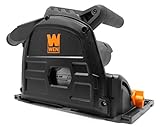
| WEN CT1274 | 1,100 W corded; 6-1/2 in blade | About 2-1/3 in at 90° | $150–$250 | Lowest-cost corded entry |
| Makita SP6000J | 12 A corded; 6-1/2 in blade | About 2-3/16 in at 90° | $400–$600 | Frequent cutting and established rail options |
| DEWALT DCS520 | 60 V cordless; 6-1/2 in blade | About 2-1/8 in at 90° | $450–$700, tool only | Job-site work or existing DEWALT 60 V batteries |
Specifications and package contents can vary by market and revision. Verify the manual and seller’s included-items list, especially when comparing cut depth, rail length, battery inclusion, and blade.
Ranked picks by cutting situation
1. Makita SP6000J — best balance for regular workshop use
The SP6000J is the most balanced pick here for someone who wants a budget-conscious saw but expects to use it regularly. Its plunge mechanism and depth adjustments are designed for controlled entry into sheet goods, and the variable-speed motor helps match the cut to the material and blade. Its 12 A motor is corded, so it avoids battery cost and charging interruptions.
Makita’s rails are widely available, and the saw can work with some third-party rails when the profile and saw-base adjustment are compatible. Compatibility is not universal: check the rail maker’s fit information before buying, and confirm that the saw can be adjusted to remove sideways play without binding. Rail connectors, clamps, and replacement splinter strips add to the ownership cost.
Choose it if: you make cabinets, built-ins, or repeated plywood cuts and value predictable setup more than the very lowest entry price.
2. WEN CT1274 — best low-cost corded starter
The CT1274 provides a lower-cost route to guided cuts, with a 1,100 W motor and a 6-1/2-inch blade. It can make sense for occasional breakdown of sheet goods, particularly when the complete package includes a rail. Its motor has less reserve than more expensive corded options, so feed steadily rather than forcing the saw through thick or dense material.
Budget kits deserve a closer rail inspection. Check that the rail is straight, that its connectors hold adjoining sections flush, and that replacement splinter strips are available. A short or proprietary rail can erase the savings if you later need to cut full sheets or replace a damaged strip. Confirm the package’s rail length and blade specification before checkout.
Choose it if: you are learning track-saw technique, cut only occasionally, and can get a complete rail-equipped kit at a sensible price.
3. DEWALT DCS520 — best cordless option if you own the batteries
The DCS520 is a practical cordless choice for site work, garage shops without convenient outlets, or setups where moving a cord around large panels is a nuisance. Its 60 V platform can deliver useful cutting performance, but the saw-only price does not tell the whole story: a compatible battery and charger may be a substantial extra expense.
DEWALT rails are available, and some third-party rails may fit, but confirm the exact saw-and-rail pairing. A rail that accepts the saw is not automatically compatible with another brand’s connectors or splinter strip. For repeated long cuts, consider battery runtime and charging time alongside the saw’s purchase price.
Choose it if: portability is important and you already own compatible 60 V batteries. If not, compare the cost of the full kit against a corded saw and rail.
What matters more than the lowest sticker price
- Accuracy: A track establishes the cut line, but the saw must sit square to its base and the rail must stay aligned. Check bevel calibration and rail play before judging cut quality.
- Plunge smoothness: A smooth plunge makes it easier to start and stop a cut without jolting the blade into the work. Test the mechanism through its full travel if shopping in person; otherwise, consult the manual and return policy.
- Motor performance: Power matters most when cutting thick hardwood or making long cuts. A sharp, suitable blade and steady feed often matter more than forcing a small saw through material too quickly.
- Accessories: Compare the full kit: rail length, clamps, connectors, dust bag or port, and blade. A saw-only deal can cost more after adding a usable guide.
- Replacement-track cost: Look up rail sections, joining bars, and splinter strips before committing. These parts are brand- and profile-dependent, and damaged edge strips directly affect how cleanly the rail supports the cut.
Make the purchase decision by use case
| Your situation | Best starting point | Why | Check before buying |
|---|---|---|---|
| First saw, occasional plywood cuts, tight budget | WEN CT1274 kit | Lower entry cost can include the essentials | Rail length, straightness, and strip availability |
| Regular cabinet or furniture work | Makita SP6000J | Good balance of control, corded power, and rail options | Whether the rail and clamps are included |
| Mobile work; compatible batteries already owned | DEWALT DCS520 | Cordless convenience without buying a new battery platform | Battery capacity, charger, and rail compatibility |
| Small shop with limited storage | Any saw with a short rail, plus a joining option | Short sections store more easily | Connector cost and whether joints stay aligned |
Setup habits that protect cut quality
Before the first precision cut, calibrate the saw to the rail and make a shallow test cut in scrap. Set the depth so the blade passes just through the workpiece; excessive blade exposure increases the chance of tear-out and makes the cut less controlled. Support the full panel so the offcut cannot pinch the blade, and use clamps when the rail might shift.
Keep the rail’s underside and saw’s sliding surfaces free of sawdust, pitch, and glue. Debris can lift the rail or make the saw track unevenly. Replace a worn or nicked splinter strip when it no longer sits at the cut line: the strip is a consumable, not a permanent zero-clearance edge. Use a sharp blade suited to the material, and check that the blade is installed in the correct direction.
Bottom line
For a dependable corded saw with room to grow, the Makita SP6000J is the strongest all-round choice in this shortlist. The WEN CT1274 is the sensible low-cost entry when its kit includes a useful rail, while the DEWALT DCS520 makes most sense for buyers already invested in its cordless platform. Compare the complete system—not just the saw—because rails, connectors, clamps, batteries, and replacement edge strips determine what a clean cut actually costs.